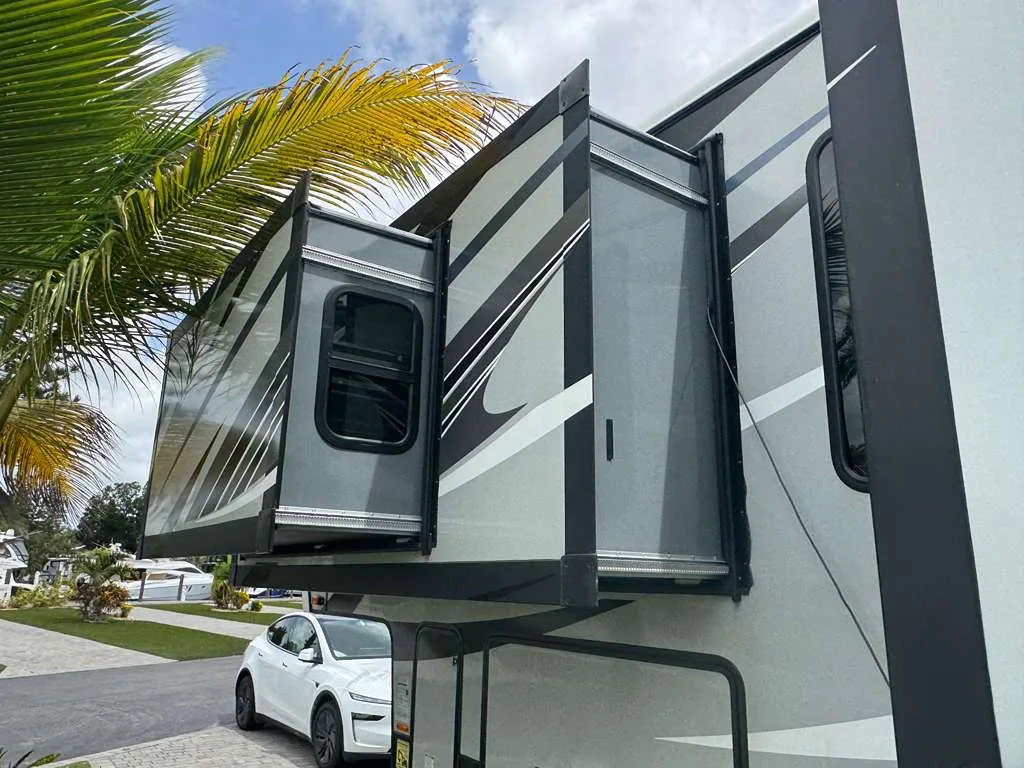
RV Slide Out Repair Florida - Identify Your Slide System
Slide out will not move, runs crooked, grinds or leaks? Identify your Schwintek, cable, rack and pinion or hydraulic system first. Call 888-759-1438.
RV slide rooms run on four different drive mechanisms - Schwintek in-wall gear tracks, cable and drum, rack and pinion, and hydraulic - and almost every repair decision follows from which one you have. Identify yours by looking: motors buried in the vertical channels beside the room, drums and pulleys under the floor, a toothed rail with a cross shaft, or two cylinders and a fluid reservoir. Symptom triage comes second.
What we handle in this category
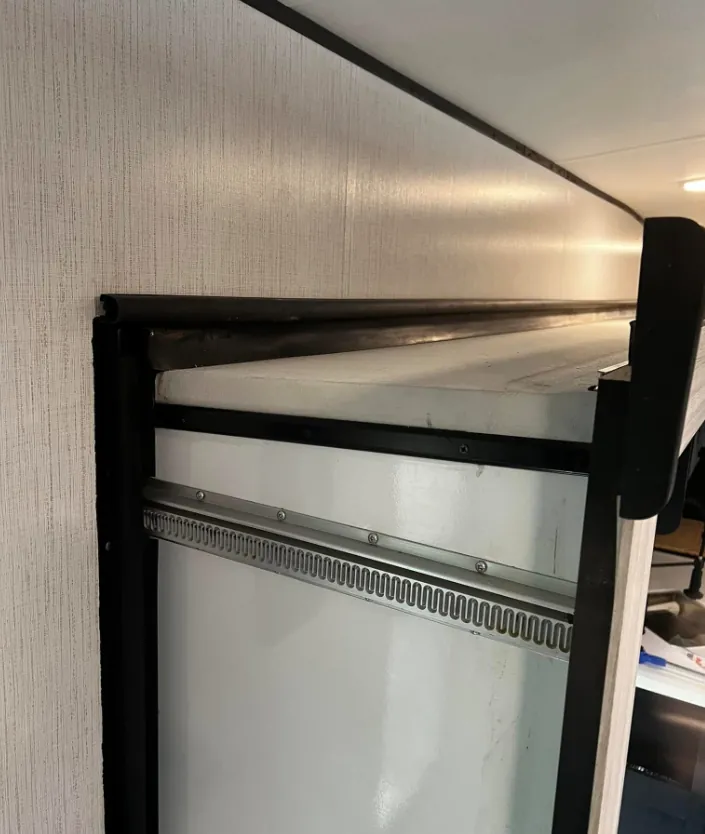
Schwintek in-wall slide
See what this involves →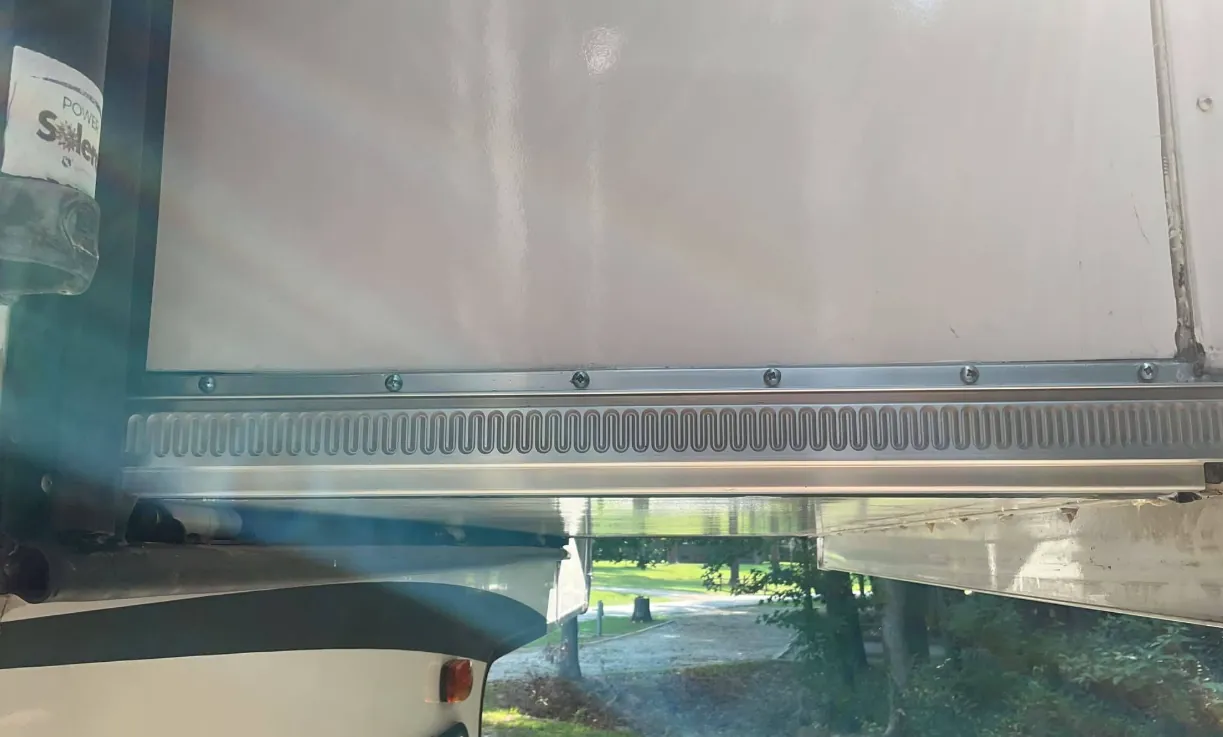
Lippert through-frame hydraulic slide
See what this involves →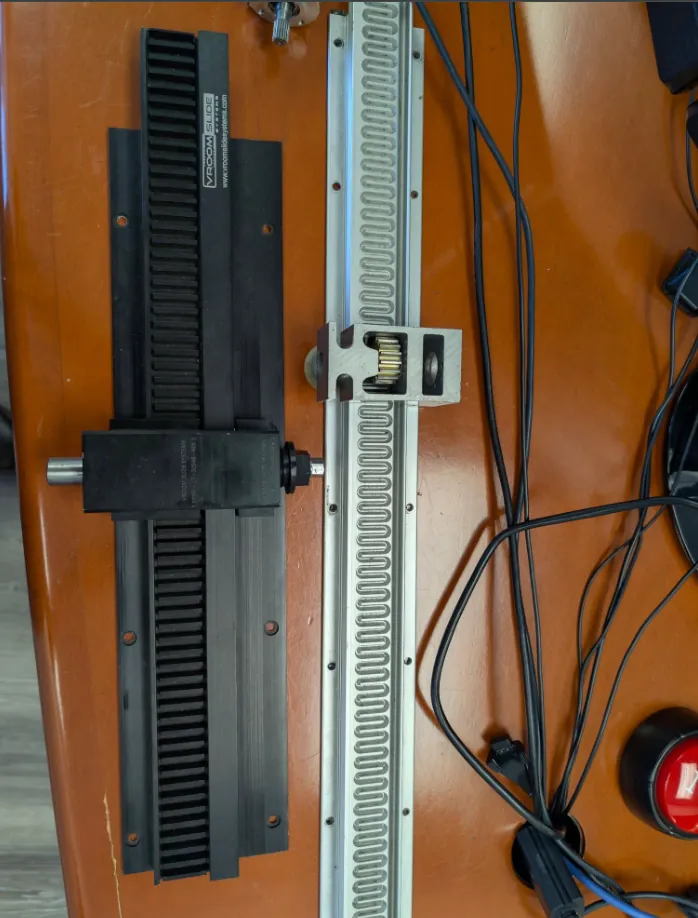
Lippert cable-driven slide
See what this involves →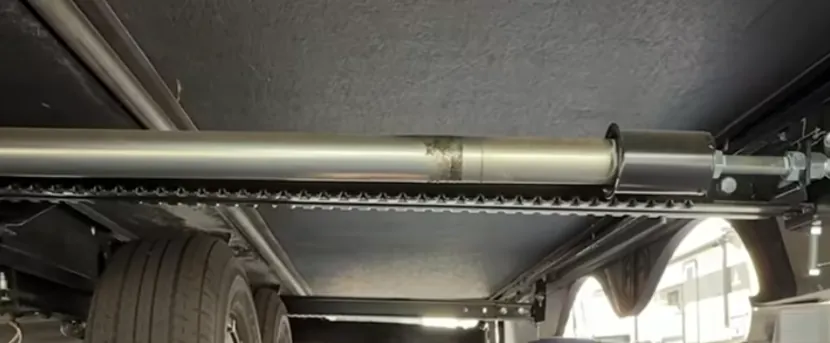
Rack and pinion slide drive
See what this involves →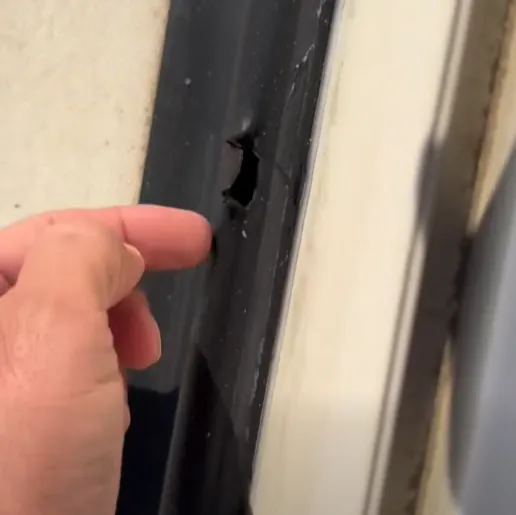
Slide seal + wiper replacement
See what this involves →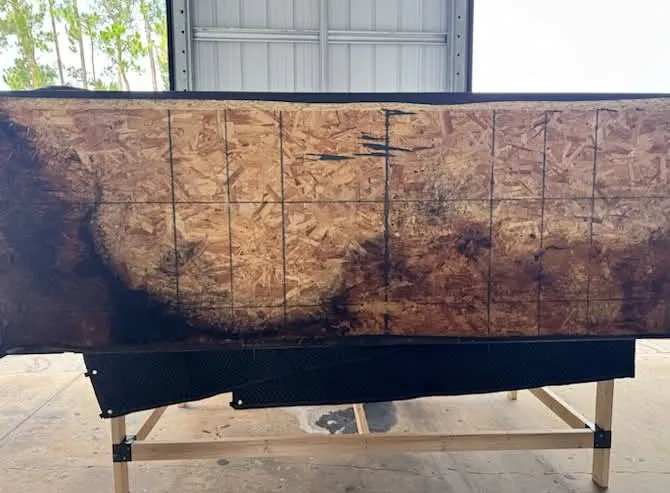
Slide floor rot repair
See what this involves →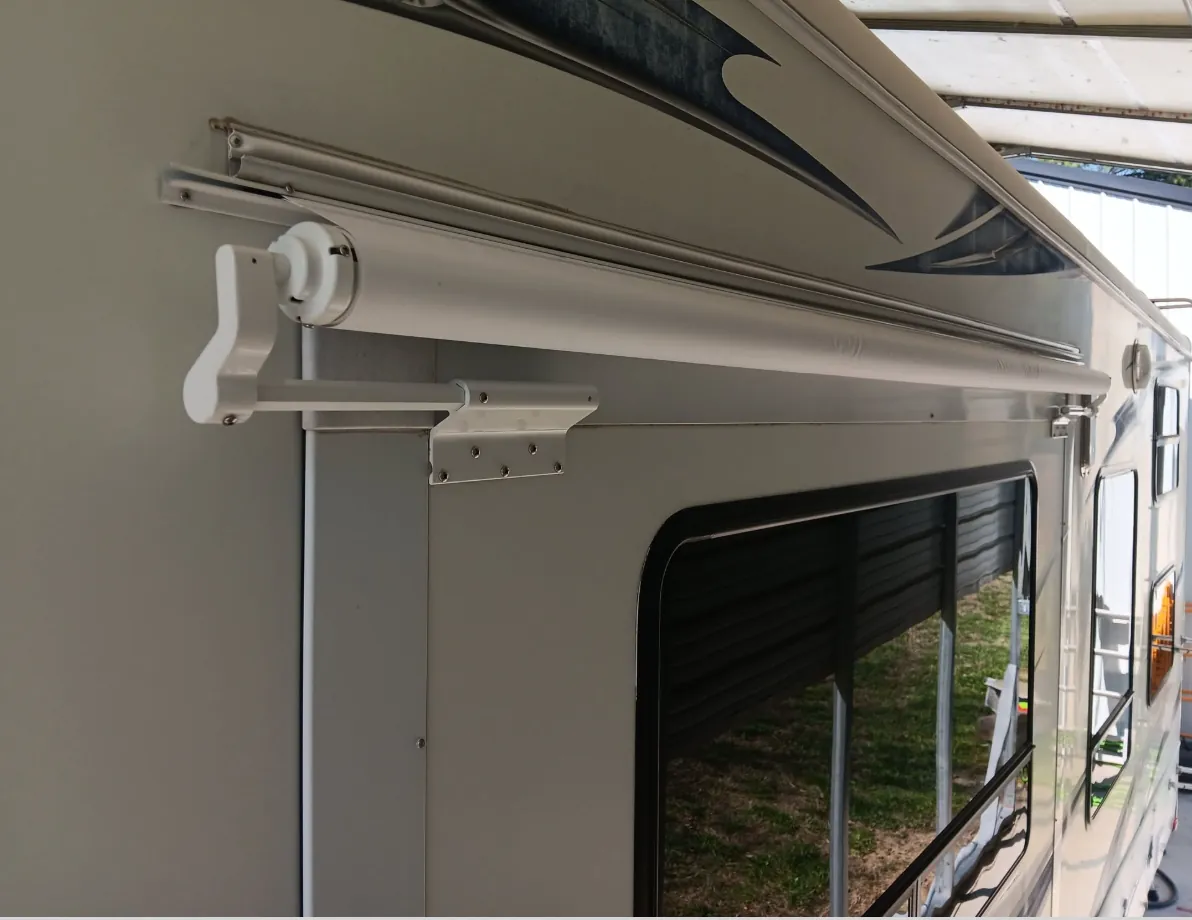
Slide topper awning
See what this involves →Which Slide System Do You Have? Identify It Before Anything Else
Four drive mechanisms cover essentially every slide room on the road, and they are told apart by where the moving parts sit rather than by the badge on the coach. A Schwintek in-wall slide hides a gear motor inside each vertical channel at the leading edge of the room, so you see two narrow tracks flanking the box and no hardware under the floor at all.
A cable system puts drums and corner pulleys beneath the room and runs steel cable out to threaded studs at the corners. BAL's Accu-Slide belongs in this group and is frequently miscalled a geared system, but BAL describes it as a frame within a frame moved by stainless steel cables with no hydraulics, rods or stabilizers.
A rack and pinion drive shows a toothed steel rail along the slide arm and a cross shaft running under the floor. A hydraulic room has no gear rail at all: two cylinders lie across the frame rails, fed by a small pump and reservoir in a bay or under the entry steps.
Triage: What Your Slide Is Actually Telling You by How It Moves
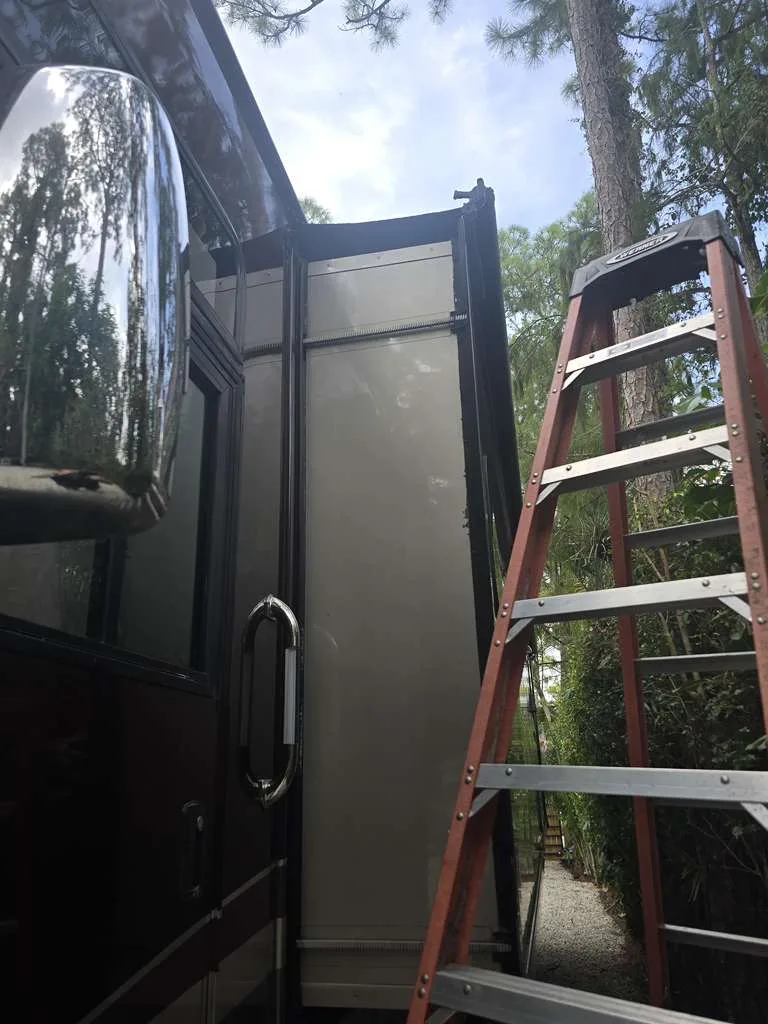
Symptoms sort by what the room does, not by how alarming it sounds. A room that will not move at all, giving a click or silence, is a power question before it is a mechanism question, and battery voltage under load, ground and switch feed get ruled out first. A room that starts, travels partway and stops is reporting resistance somewhere in its stroke.
A room that runs crooked or leads on one corner is the most useful clue you get, because it points straight at a system. On a Schwintek that is lost electronic synchronization, covered on our Schwintek in-wall page. On a cable slide it is stretch or a slipped drum wrap, covered on the cable slide page. On rack and pinion it must be physical, since one cross shaft ties both sides mechanically.
Grinding or ratcheting under load means teeth are skipping rather than engaging. A room that retracts but will not extend, or the reverse, points at one direction circuit or one valve instead of the whole drive.
Manual Overrides, and Why a Stuck Room Is Never Forced
Nearly every slide system built has a manual way to bring the room in, and the afternoon to find yours is a dry one, not the night before you need to travel. On an above-floor geared drive the override sits at the back of the motor gearbox. Schwintek puts a drive on each motor inside the wall, worked evenly side to side so the room comes in square.
A cable slide overrides at the drive motor shaft, and a hydraulic system carries a release at the power unit that opens the circuit back to the reservoir so the room can be pushed in by hand. Lippert publishes override procedures for both the geared and the hydraulic families.
Forcing is the expensive mistake. Lippert's above-floor manual warns that continuing to crank once the room has reached full travel strips the gears, and a stripped gear means the gearbox is replaced rather than repaired. A room already out of square gets diagnosed before it is cycled again, because every further cycle drives a racked room deeper into its rails.
Seal, Mechanism or Structure: Three Jobs That Present Identically
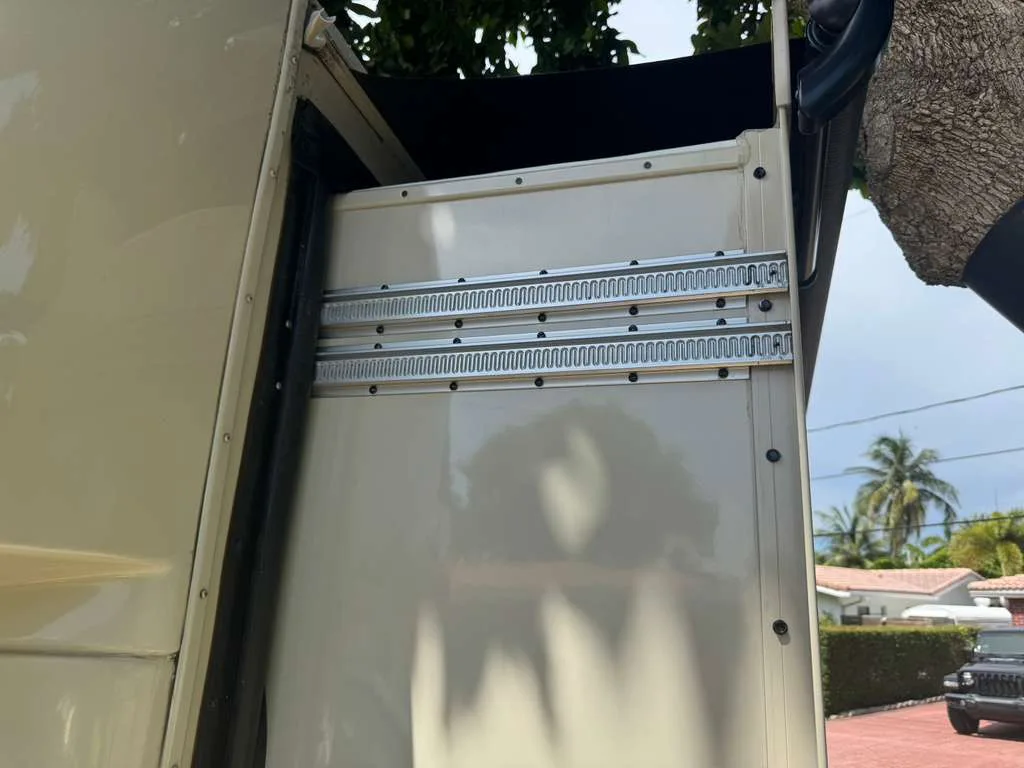
Three completely different repairs arrive as the same two sentences: my slide leaks, or my slide sticks. Separating them is the decision this page exists to make. A seal fault shows as water or staining at the opening while the room still travels normally, and it belongs on our slide seal and wiper page.
A structural fault is a spongy patch at the leading edge of the room floor or a room that noses down when extended, and it belongs on the slide floor rot page. The trap is that structure imitates mechanism. A room floor crushed where a roller bears on it pulls the box out of square, so the room binds and racks long before anybody presses a heel into the floor and finds it soft.
That is why a binding room gets its floor read, not only its drive. Sitting upstream of all three is the topper: a canopy that sags and pools drags debris across the wiper every time the room comes in.
The Florida Chain: Why a Slide Leak Smells Long Before It Shows
A slide leak here rarely announces itself as a puddle. The USDA Forest Products Laboratory sets the conditions plainly: serious decay requires wood moisture above the fiber saturation point, averaging thirty percent, and water vapor in humid air alone will not wet wood that far, though it will permit mold fungi to develop.
That is the entire chain. A hardened seal in this climate does not have to admit standing water to cause damage. It admits humid air to the cavity at the slide floor edge, the lauan and its adhesive stay damp, mold establishes at moisture levels well below what rot needs, and the coach smells musty months before anything underfoot feels soft. Owners chase that smell with the air conditioner and find nothing visibly wet.
The same document notes decay essentially ceases near thirty-five degrees Fahrenheit and runs slowly below fifty. A coach stored up north gets that pause every winter. A coach stored in Florida never gets it.
Sources
Every figure on this page comes from a manufacturer document or a standards body, not from another repair site. Here is where each one comes from.
- Lippert Customer Care Center - Slide-Outs support indexThat a single manufacturer carries slide-out systems under many separate trade names - In-Wall, SlimRack, SlimRack Plus, SureSlide, Through Frame, Hydro-Sync, HappiJac, Dewald, Kwikee, Above Floor, with Embedded Rack and F.A.S.T. Track flagged OBSOLETE - which is why the identification in 'Which Slide System Do You Have' is made from the mechanism rather than the name on the coach.
- BAL RV Products (Norco Industries) - Accu-Slide slide-out systemBAL's own description of Accu-Slide as a frame-within-a-frame system whose room is moved by stainless steel cables, with no hydraulics, rods or stabilizers, and each support cable rated above 2,000 pounds tensile. This is the taxonomy correction in H2 1: Accu-Slide is a cable system, not a rack and pinion drive.
- Lippert Above Floor Slide-out OEM Installation Manual (CCD-0001597)That the above-floor geared system carries its manual override at the motor gearbox, and the manual's own warning that continuing to crank past full travel strips the gears and requires the gearbox to be replaced - the basis for 'a stuck room is never forced'.
- Lippert FAQ - One side of my slide room is moving faster than the other sideThat a room running crooked is triaged by checking the slide racks for debris and obstructions and then re-synchronizing the motors, supporting the crooked-travel branch of the symptom triage.
- Lippert FAQ - My slide-out is stuck out, how can I manually retract itThat a manual retract path is a published, expected feature of these systems rather than an improvisation, supporting the instruction to locate the override before it is needed.
- USDA Forest Products Laboratory, Wood Handbook Chapter 14: Biodeterioration of WoodThe info-gain chain: serious decay occurs only above the fiber saturation point, averaging 30 percent moisture content; water vapor in humid air will not wet wood that far but will permit mold fungi to develop; and decay is slow below 50 F and essentially ceases near 35 F.
Related systems
Where we work
What this usually costs
| Item | Price | What it covers |
|---|---|---|
| Service call | $299 | Includes the trip out to your RV and the first hour on site |
| Work past the first hour | Quoted after diagnosis | We tell you what it will take before we carry on |
| Parts | Quoted per job | Special-order parts may need a deposit before we order them |
| Written estimate | No charge | You approve the estimate before any work starts |
The service call covers the trip out to your RV and the first hour on site. Anything beyond that depends on what we find, and we quote it and get your approval before carrying on.
The price ranges on this page come from our own recent jobs across Florida, not from an industry average. What you pay depends on the rig, the parts it needs and what we find on site, so we give you a written estimate before any work begins and you approve it first.
Frequently asked questions
How do I know which slide-out system my RV has?
Look at the room and the coach rather than the brochure. Two motors buried in the vertical channels at the leading edge of the room means a Schwintek in-wall system. Drums, corner pulleys and steel cable under the room means a cable system, and BAL's Accu-Slide sits in that group despite often being called geared. A toothed rail with a cross shaft beneath the floor is rack and pinion. Two cylinders across the frame rails plus a pump and reservoir is hydraulic.
Is there a manual way to bring my slide in if it quits?
On almost every system there is, though the location differs completely between them. Geared above-floor drives put it at the rear of the motor gearbox, Schwintek puts a drive on each motor inside the wall, cable systems use the drive motor shaft, and hydraulic units carry a release at the pump that lets the room be pushed in. Find yours and photograph it now. Hunting for it with weather coming is how rooms get forced and gearboxes get stripped.
My slide will not move at all. Where does diagnosis start?
With power, every time. A room that clicks or does nothing has not proven a mechanical fault yet, so battery voltage measured while the motor is actually loaded, the ground connection, the fuse and the switch feed all come first. If the motor clearly runs and the room still does not travel, the fault has moved downstream to a sheared key, a parted cable or a valve that is not passing fluid, and which of those it is depends entirely on your system.
Water gets in when it rains. Is that a seal problem or a floor problem?
By the time an owner notices, it is often both, which is why the order matters. Water at the opening with the room moving normally is a seal and wiper question. A musty smell with nothing visibly wet, or a spongy patch at the leading edge of the room floor, means moisture has already reached the deck. New seal over a wet deck hides the damage rather than stopping it, so the panel gets read with a moisture meter before anything is replaced.