
RV Winterization in Florida: Who Needs It and Who Does Not
Most Florida coaches never face a freeze - heat, humidity, biofilm and pests are the real storage threats. Mobile RV service statewide: 888-759-1438.
Winterization means freeze protection everywhere else in the country. On the Florida peninsula it usually does not apply, because what damages a stored coach here is heat, standing humidity, biofilm in a system that sat warm and wet, ultraviolet exposure and pests. Freeze work belongs to two groups only: owners in north Florida and the panhandle, and owners taking the coach north.
What we handle in this category

Florida summerization
See what this involves →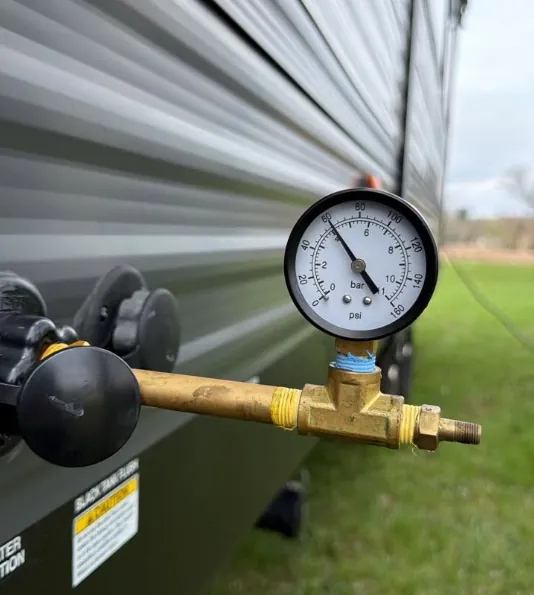
Water system blowout
See what this involves →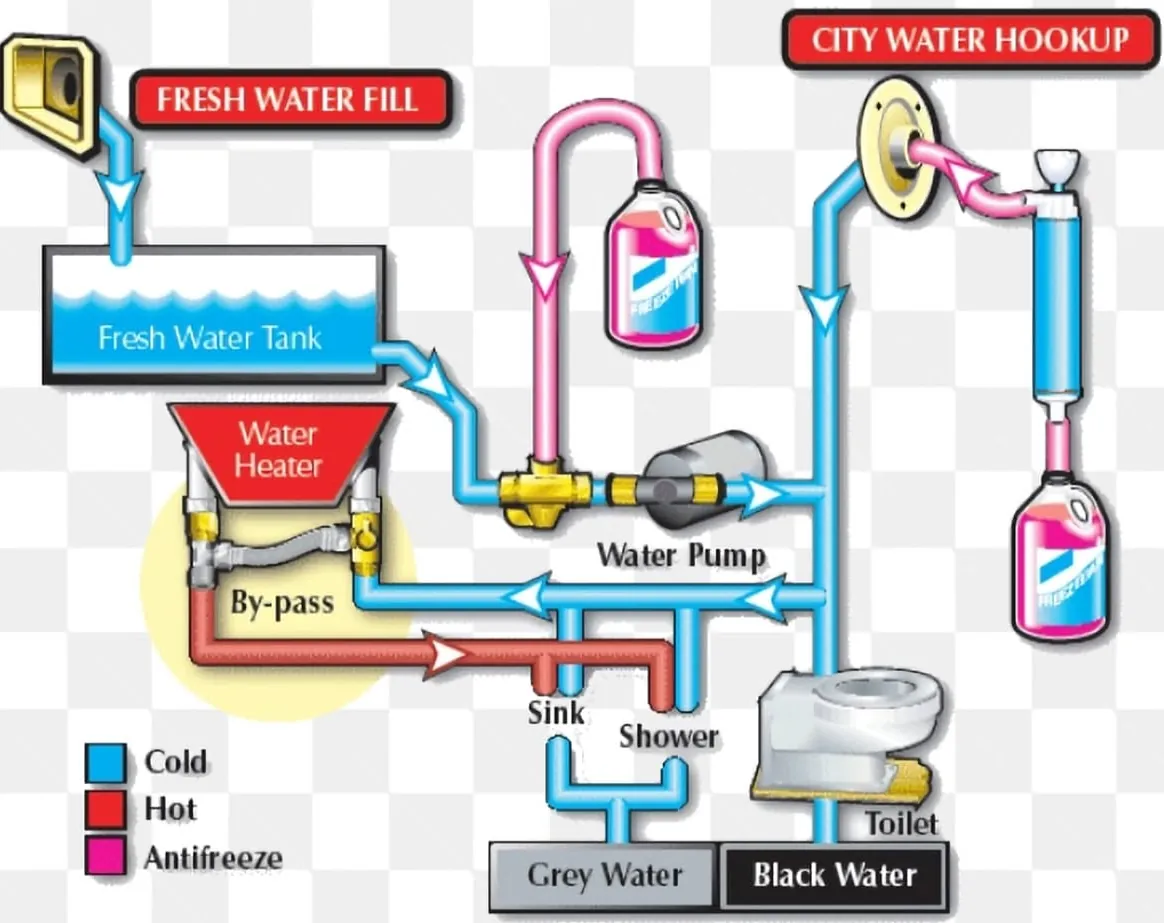
RV antifreeze fill
See what this involves →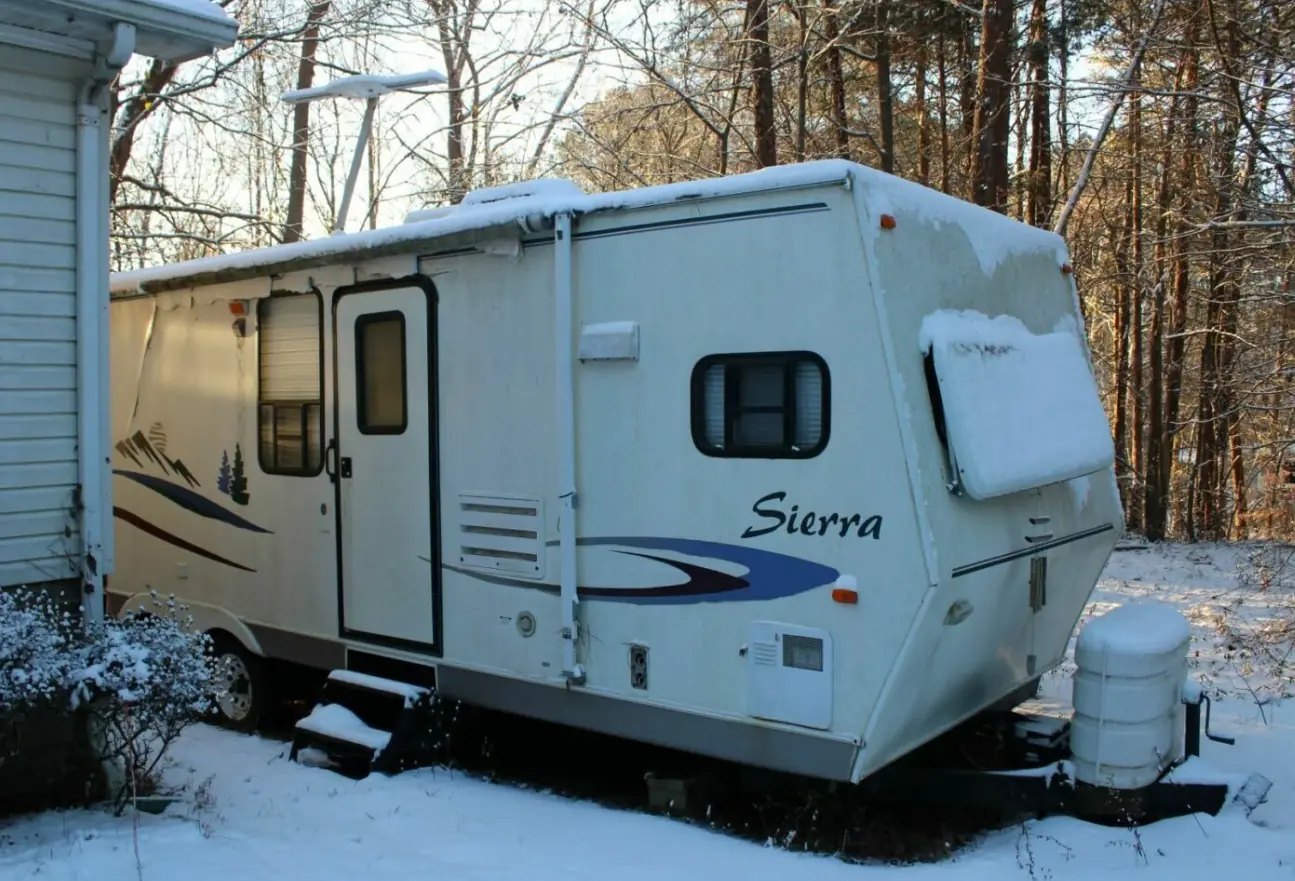
De-winterization and sanitise
See what this involves →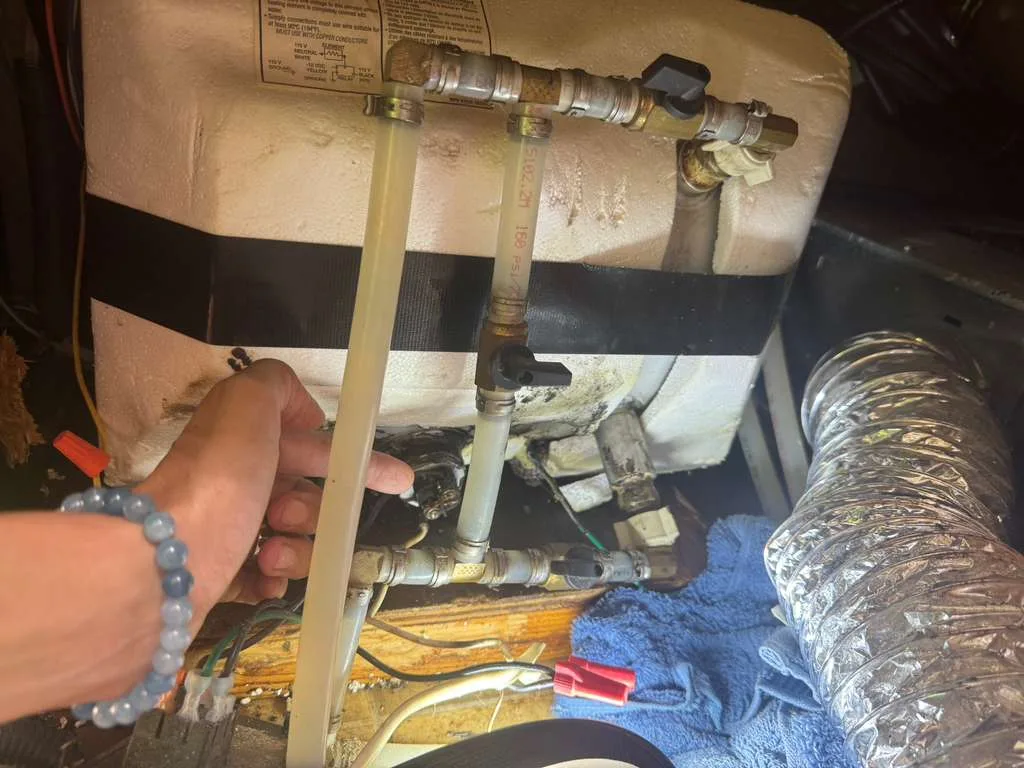
Long-term storage prep
See what this involves →Freeze Protection or Florida Storage: Which Problem You Actually Have
Winterization is a freeze procedure. The entire method exists because water expands as it turns to ice and splits whatever contains it, so the job is to leave nothing in the plumbing that can freeze. That risk is real in the northern part of the state. Pensacola, Tallahassee and the Gainesville and Ocala corridor drop below freezing most winters, and a hard freeze there can split a supply line overnight. South of roughly Orlando the risk thins out, and along the coast below Fort Myers and Boynton Beach it effectively disappears. Two groups still need the freeze work: owners in north Florida and the panhandle, and owners driving the coach north for the season, who meet the same weather in Georgia and the Carolinas well before they arrive. Everyone else has the opposite problem. A coach parked here from May to November is worked on by heat, standing humidity, biofilm growing in warm water, ultraviolet exposure at the roof, and pests looking for shelter.
Blowout or Antifreeze: The Rule That Decides Between Them
The two freeze methods are not alternatives, because they protect different parts of the coach. Compressed air clears the supply side: the PEX runs, the cold and hot manifolds, the pump head and every fixture. Non-toxic propylene glycol antifreeze protects what is built to hold water on purpose and therefore cannot be blown empty, which is each P-trap under the galley, lavatory and shower, the toilet bowl and the charge sitting behind its flush valve, plus the holding tanks. So the rule is both, in order: dry the supply lines, then charge the traps and the bowl, and only pump the whole system full of glycol when the lines cannot be dried or the coach faces a real northern winter. Two limits sit above that rule. Air is capped at 30 psi by the fresh water pump and not by the pipe, since Pentair rates the SHURflo Revolution 4008 at 30 PSI maximum inlet pressure. The water heater also leaves the loop first, bypassed and drained, whichever method is used.
Florida Summer Storage: The Short List That Actually Matters
For a coach staying here, storage prep is a humidity, pest and ultraviolet job. The one number worth holding is relative humidity, because EPA advises keeping indoor humidity below 60 percent and ideally between 30 and 50 percent, and sustained damp is what lets mold take hold on ceiling board, cushions and closet walls. Hitting that target is a shore power question rather than a temperature one, and the summerization page covers the dehumidifier and passive vent options in full. The rest of the list is short. Seal the openings pests already use, take every crumb out of the coach, leave the batteries at the state of charge their chemistry wants, stabilize generator fuel before the set sits, and correct roof sealant and vent flanges in May rather than in November, when the same hairline crack has become ceiling and subfloor work. A sit longer than one season adds a second layer of decisions, which the long-term storage prep page handles.
Coming Back Out: Why a Coach That Sat Warm Needs Sanitizing
The step owners skip is the one that matters most here. A coach that sat warm and wet through a Florida summer is not holding antifreeze to be flushed, it is holding biofilm bonded to the inside of the fresh tank, the lines and the water heater, and volume alone does not lift it. The published procedure is a measured chlorine charge held for a full day. Minnesota's method for a non-pressurized potable storage tank is a minimum of 50 ppm free chlorine held for 24 hours with a measurable residual still present at the end, and its only shortcut is 200 ppm for three hours. California's Division of Drinking Water sets a lower floor of 10 mg/L free chlorine but keeps the identical 24 hour hold, then flushes to 2.0 mg/L or less before a total coliform sample. Two independent public health agencies, one dwell time. The four hours RV sources repeat is short by a factor of six.
Which of the Five Jobs You Need, and What a Visit Covers
One question routes almost every caller: where is the coach spending the next six months? Heading north, the answer is a water system blowout, with an antifreeze charge for the traps, the bowl and the tanks. Staying parked in Florida, it is summerization for a single season or long-term storage prep for anything longer. Coming back into use after either, it is de-winterization and sanitizing, and that one is not optional for a rig that sat full and warm. Owners in the panhandle and north Florida are the overlap case, needing the freeze work and the humidity work in the same visit. All of it happens where the coach sits, including storage yards around Kissimmee, Daytona Beach, Boynton Beach and Lakewood Park. Our service call covers the trip out and the first hour on site, and anything past that hour is quoted from what the diagnosis turns up and approved by you before our technicians carry on.
Sources
Every figure on this page comes from a manufacturer document or a standards body, not from another repair site. Here is where each one comes from.
- Pentair SHURflo Revolution 4008 product technical data sheetInlet Pressure: 30 PSI Max, the fresh water pump rating that caps compressed air pressure for a blowout
- Truma AquaGo winterizing guidanceTruma does not recommend high-pressure air or antifreeze solutions when winterizing the AquaGo, so neither freeze method applies to that heater
- Minnesota Department of Health, Cleaning and Disinfecting Non-Pressurized Water Storage TanksA minimum of 50 ppm free chlorine held in the tank for 24 hours with a measurable residual, and the single alternative of 200 ppm for three hours
- California State Water Resources Control Board, Division of Drinking Water, Procedures for Disinfection of Tanks with Hypochlorite SolutionAn independent second method: 10 mg/L free chlorine minimum, the same 24 hour hold, then flushing to 2.0 mg/L or less before a total coliform sample
- US EPA, A Brief Guide to Mold, Moisture and Your HomeKeep indoor humidity below 60 percent, ideally between 30 and 50 percent relative humidity, which is the control target for a closed coach through a Florida summer
Related systems
Where we work
What this usually costs
| Item | Price | What it covers |
|---|---|---|
| Service call | $299 | Includes the trip out to your RV and the first hour on site |
| Work past the first hour | Quoted after diagnosis | We tell you what it will take before we carry on |
| Parts | Quoted per job | Special-order parts may need a deposit before we order them |
| Written estimate | No charge | You approve the estimate before any work starts |
The service call covers the trip out to your RV and the first hour on site. Anything beyond that depends on what we find, and we quote it and get your approval before carrying on.
The price ranges on this page come from our own recent jobs across Florida, not from an industry average. What you pay depends on the rig, the parts it needs and what we find on site, so we give you a written estimate before any work begins and you approve it first.
Frequently asked questions
Does an RV that never leaves the Florida peninsula need to be winterized?
For freeze protection, no. Below the Orlando line a stored coach is far more likely to be damaged by humidity, heat and pests than by ice. Draining the fresh tank and drying the lines is still worth doing, because warm standing water is where biofilm and the sulfur smell come from. Pumping the system full of antifreeze creates work that did not exist, since all of it has to be flushed and the system disinfected before anyone drinks from it again.
How far north in Florida does freeze risk actually start?
Practically speaking, the panhandle and the northern tier. Pensacola, Tallahassee and the Gainesville and Ocala corridor see nights below freezing most winters, and inland areas run colder than the coast at the same latitude. Central Florida gets an occasional freeze that rarely lasts long enough to freeze a full water line, and the southern coasts effectively do not. The other trigger ignores your address entirely: a coach traveling north meets a real winter wherever it sits today.
If I blow the lines out, do I still need antifreeze anywhere?
Yes, for the parts designed to hold water. Air cannot empty a P-trap under the galley, lavatory or shower, and it will not clear the toilet bowl seal or the water sitting behind the flush valve. Those get a pour of non-toxic propylene glycol, along with the holding tanks. That is a much smaller job than pumping glycol through the entire coach, and it is the usual right answer for a rig heading north.
The water smells after a summer in storage. Is that leftover antifreeze?
Almost never, because most Florida coaches were never winterized in the first place. A stale or rotten egg smell after months of sitting is usually biofilm in the fresh water system, or hydrogen sulfide generated at the water heater anode rod when the odor shows up on the hot side only. Those are two different fixes, which is why diagnosis comes before chlorine. Sanitizing a system whose real fault is an anode rod wastes the dwell and delays the repair.
Can this be done at my storage lot, and how long does it take?
Yes, the work is done where the coach is parked, which for most customers is a storage yard rather than a driveway. What matters is gate access and, if you want the humidity setup tested before you leave, shore power at the space. Blowout and antifreeze work fits in one visit. A full sanitize does not, because the chlorine has to sit for a full 24 hours, so that job is normally staged across two visits.