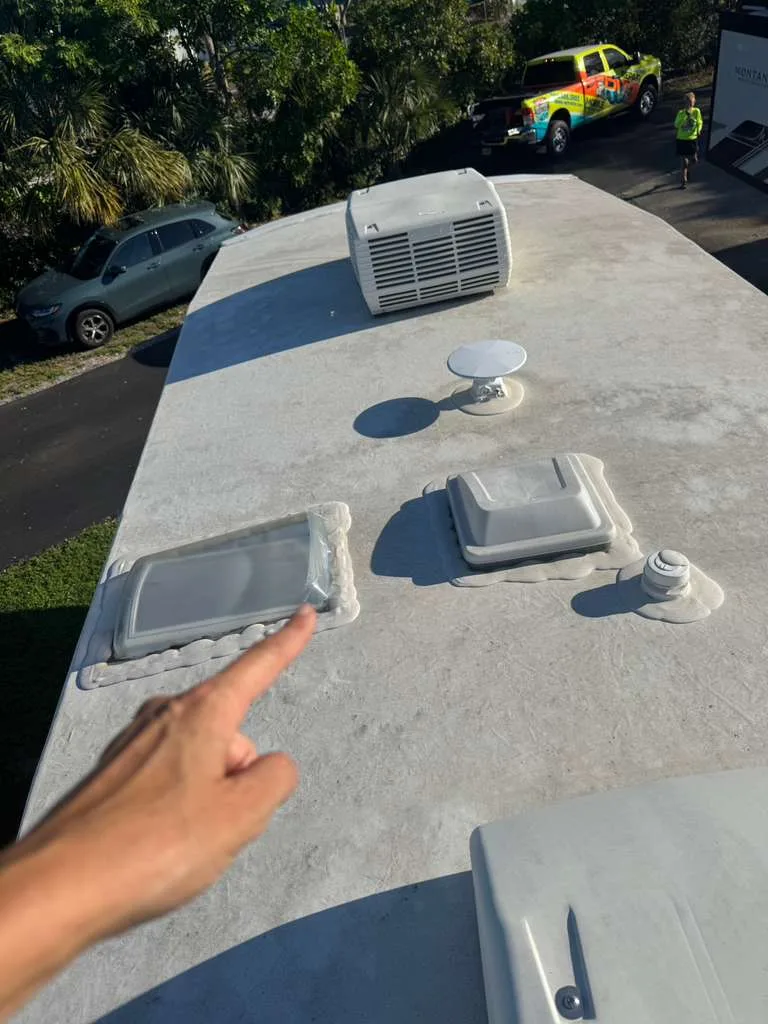
RV Roof Repair Florida: Identify the Membrane, Fix the Leak
Ceiling stain, chalky streak or a soft spot underfoot? Identify your RV roof membrane, match the symptom to the right repair. Call 888-759-1438 in Florida.
Most RV roof calls start the same way: a stain on the ceiling, a chalky streak down the sidewall, or a spot that gives underfoot. Which repair you need depends first on which membrane is over your head, because EPDM, TPO, fiberglass and PVC take different adhesives, coatings and repair methods. Identify the material, match the symptom to the system that failed, then decide between a reseal, a recoat and a replacement.
What we handle in this category
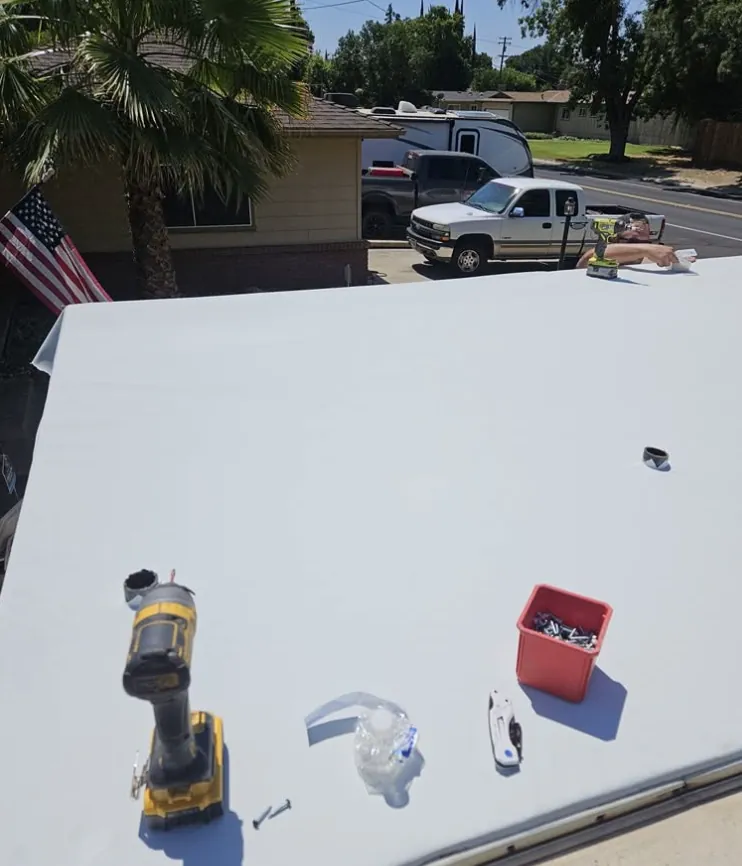
EPDM rubber roof replacement
See what this involves →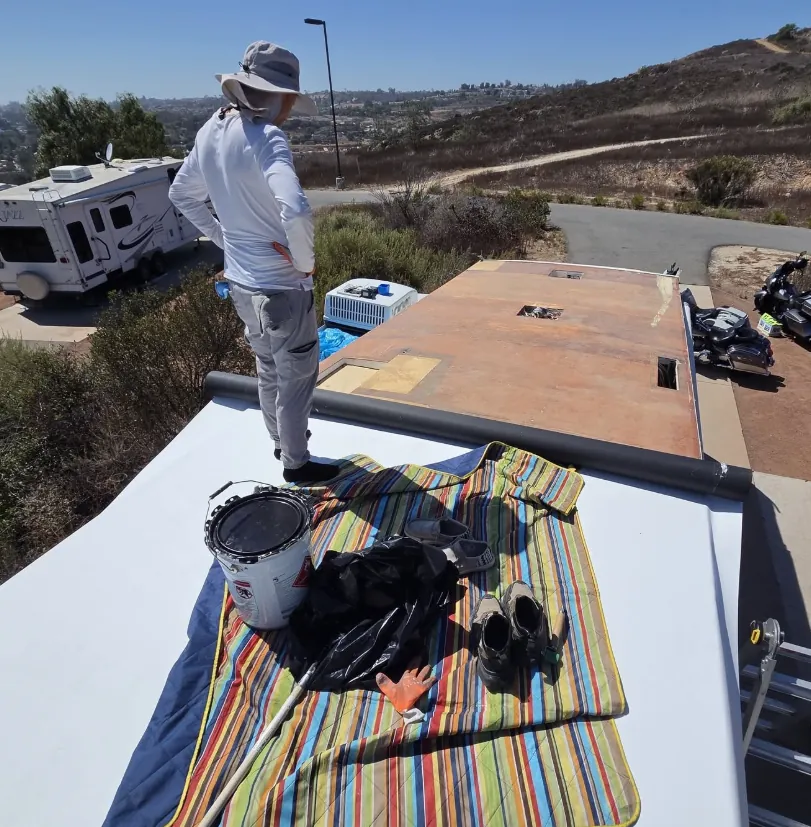
TPO roof replacement
See what this involves →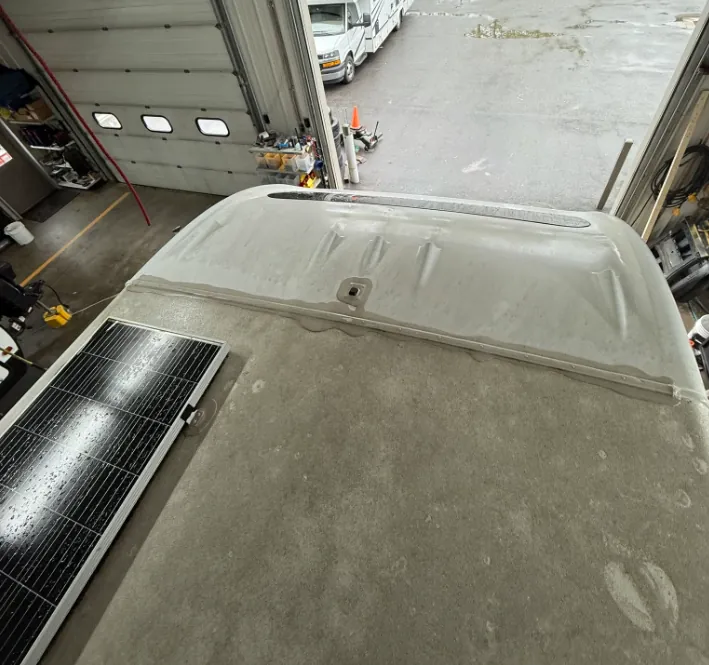
Fiberglass roof repair
See what this involves →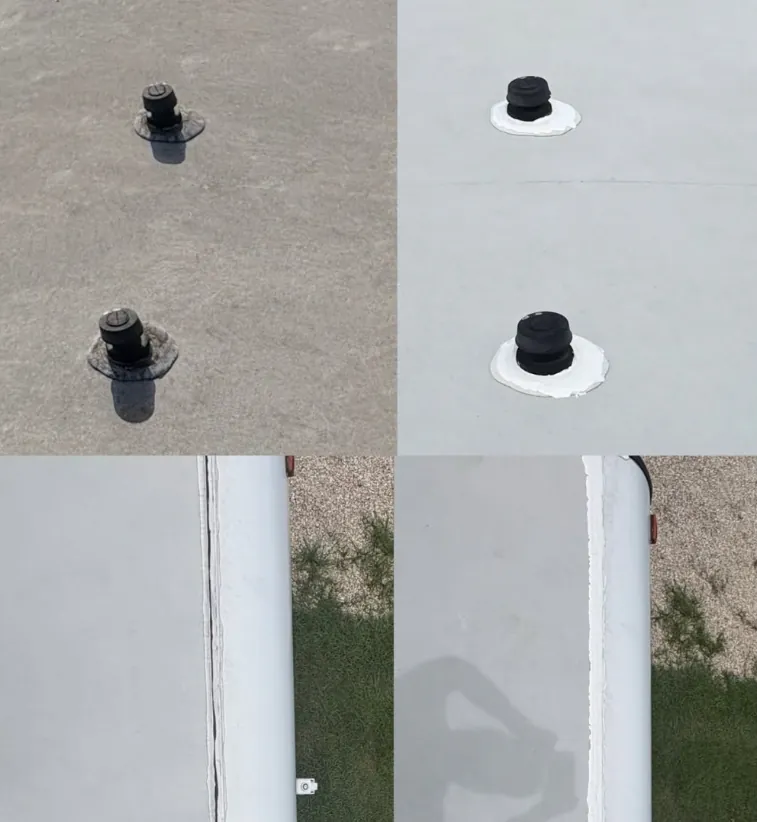
Annual reseal + lap sealant
See what this involves →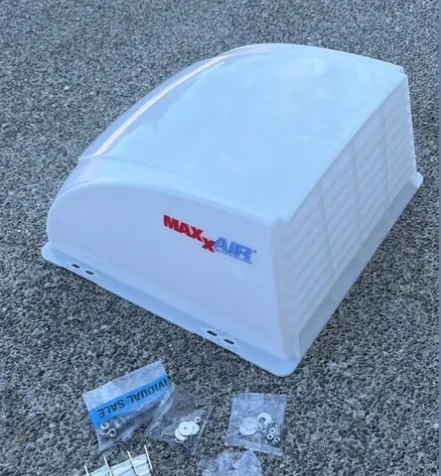
MaxxAir / Fan-Tastic vent fan
See what this involves →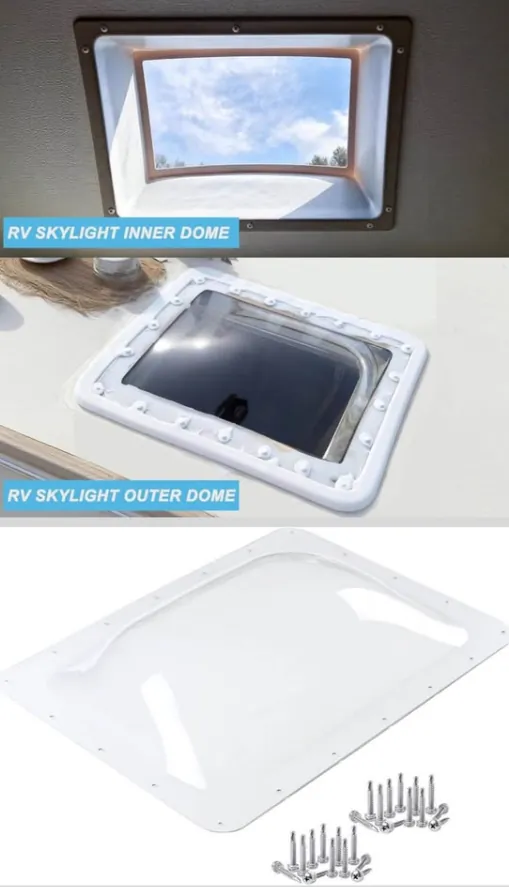
Skylight dome replacement
See what this involves →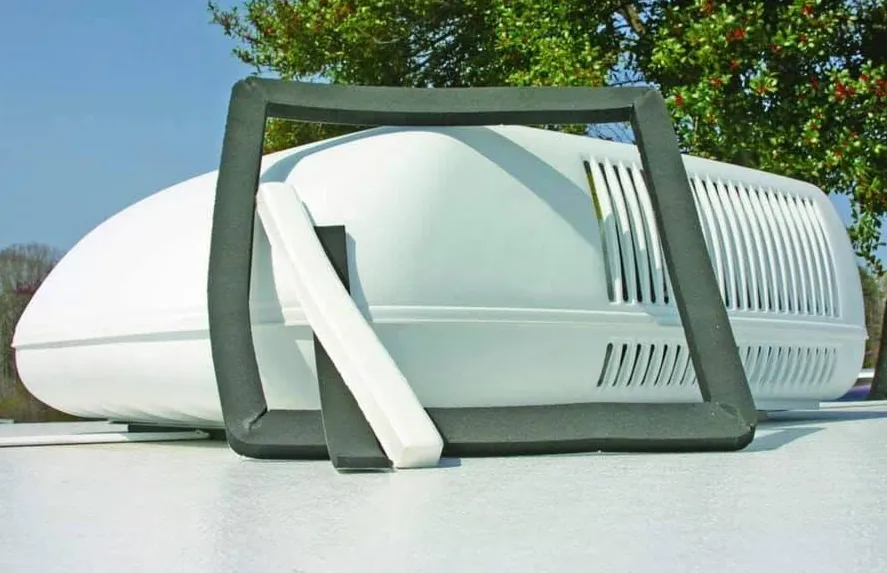
Rooftop AC gasket reseal
See what this involves →Four Roof Materials, Told Apart Standing on the Roof
Four materials cover almost every RV on the road, and you can separate them by hand in under a minute. EPDM rubber gives slightly under thumb pressure, and a palm wiped across it comes back gray with chalk. TPO is harder and slicker, does not chalk, and a cut edge under a vent flange shows the woven scrim that ASTM D6878 requires in every thermoplastic polyolefin sheet. Fiberglass has no give at all and knocks solid rather than hollow, because it is a structural laminate panel and not a sheet glued over decking. The VALTO Filon Flexroof data sheet lists that panel at 0.04 inch nominal thickness with a two inch minimum bend radius, which is how it wraps the roof-to-sidewall radius with no seam along the edge of the coach. PVC, sold for RVs as Dicor Tufflex, reads much like TPO and takes its own bonding adhesive. Get the material wrong and every product choice after it is wrong too.
Match Your Symptom to the Repair That Owns It
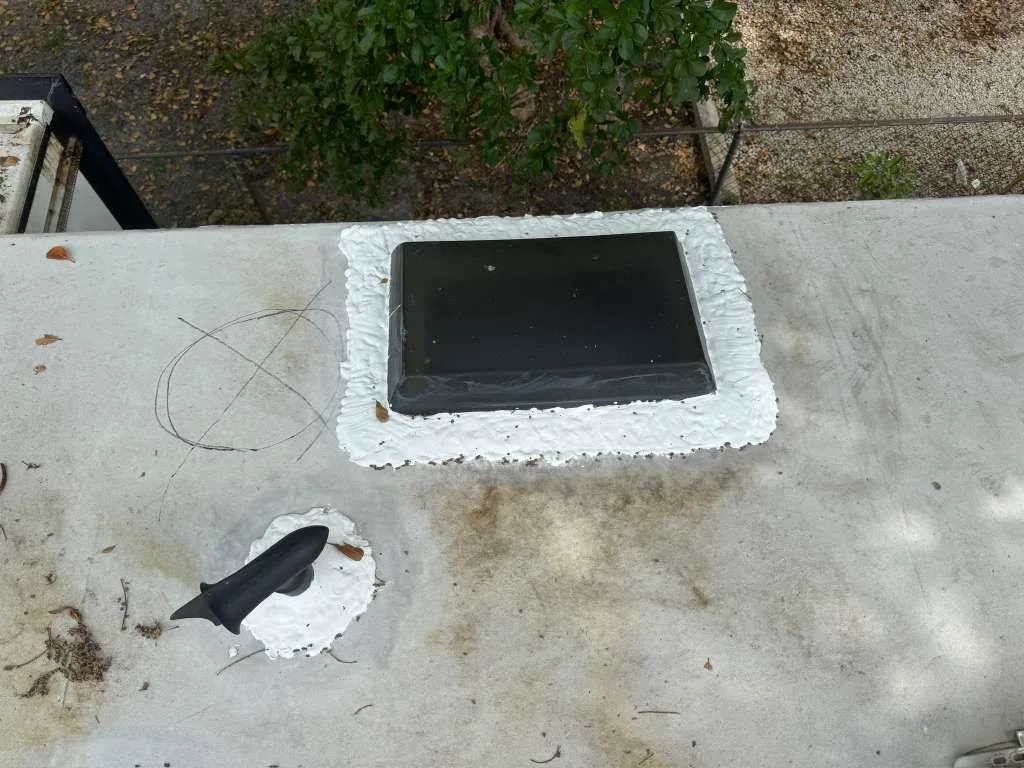
Six symptoms account for most roof calls, and each one has a page here that handles it in full. A stain spreading around the rooftop air conditioner is usually the compressed foam mounting gasket rather than the membrane, and that is our rooftop AC gasket reseal page. A chalky streak down the sidewall means something different on each material, so read the section below before acting on it. A spot that gives underfoot is decking rather than sealant, which pushes the job toward the EPDM or TPO replacement pages, or toward fiberglass repair on a laminate roof. A lifted or cracked bead at a flange, a seam or a cap joint belongs to our roof reseal and lap sealant page. A crazed or split dome over the shower is the skylight dome replacement page. A lid that will not close, or a fan that hums without turning, is the roof vent fan page. Naming the symptom accurately is most of the triage.
Reseal, Recoat or Replace: The Rule That Decides
Three outcomes exist, and only one of them is right for any given roof. A reseal is correct when the membrane is still bonded, the decking is firm, and the failure is confined to sealant at flanges, seams and cap joints. A recoat is correct when the surface has aged but the sheet is sound, and only with a product matched to the substrate, since a coating formulated to key into oxidized EPDM has nothing to grip on a chalk-free thermoplastic face. A replacement is the honest answer once the sheet has released from the decking, the deck gives under palm pressure, or a fiberglass panel thuds where it should ring. The rule underneath all three is short. Sealant and coating are surface work, and neither one can re-bond what has already let go or dry out what is already wet, so applying either to a roof that is leaking traps the water instead of stopping it.
Why the Leak Gets Diagnosed Before Anything Is Bought
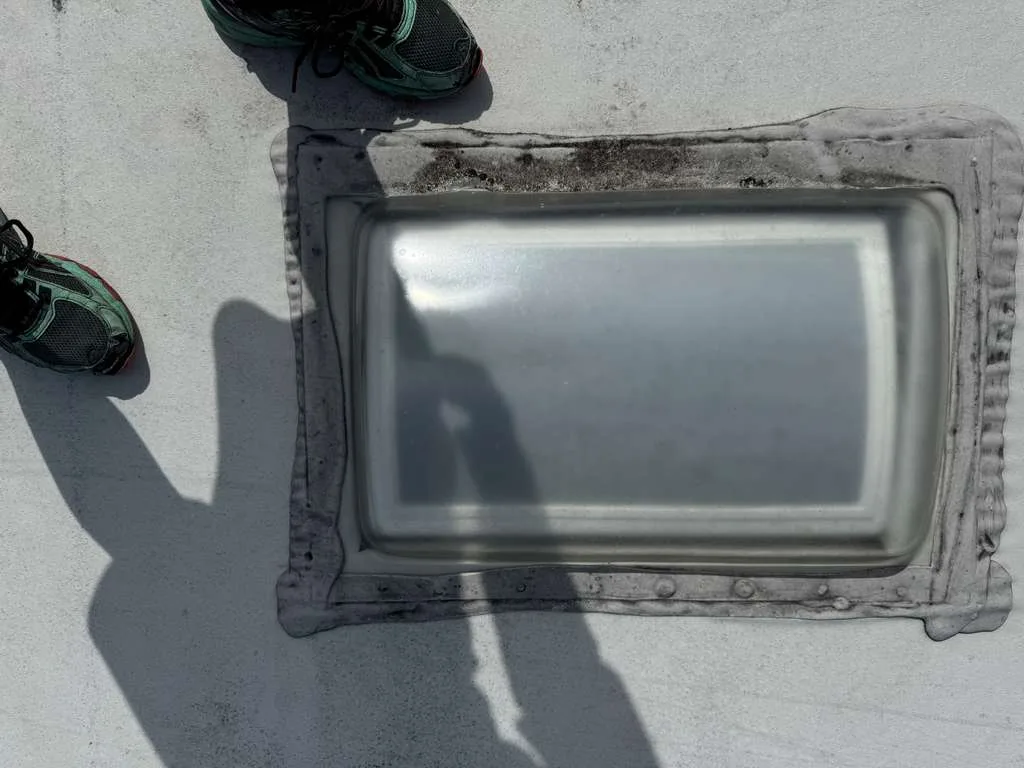
Water does not fall straight down. It enters at a screw head, a flange edge or a released seam, runs sideways along the top of the decking until it reaches a rafter, then drops at the lowest point it can find, often several feet from where it got in. That is why nothing gets ordered before the roof has been read. The order runs cheapest finding first: roof-mounted components, then seams and edge trim, then the open field of the sheet, then the decking. The component step is not a formality. Dometic publishes 40 to 50 inch pounds for the mounting bolts on a Penguin II and warns that sliding the unit damages the neoprene gasket and creates a leaky installation, so a gasket leak is a specified component job with its own procedure. Our service call covers the trip out and the first hour on site, and anything past that is quoted after diagnosis and approved before work starts.
Twice a Year, Not Once: The Florida Roof Calendar
An inspection interval borrowed from a northern state does not survive down here. The National Hurricane Center puts the Atlantic season at June 1 through November 30, and those two dates set the schedule: one look before June 1, so lifting sealant and sun-brittle plastic are found ahead of the first named storm, and one after November 30 to catch what the summer actually did. Between them the load is relentless rather than seasonal. Ultraviolet exposure runs year round instead of pausing for a winter lay-up, and afternoon storms flood the same flat seams and vent flanges most days through the summer. A roof looked at once a year in Florida is being inspected on a calendar written for a climate it does not live in. Add an unscheduled look after any storm that put branches on the coach.
Sources
Every figure on this page comes from a manufacturer document or a standards body, not from another repair site. Here is where each one comes from.
- ASTM D6878/D6878M-21, Standard Specification for Thermoplastic Polyolefin-Based Sheet RoofingThe standard requires a TPO sheet to contain reinforcing fabrics or scrims and to be capable of being heat welded, fused or adhesively bonded to itself. That is the basis for the identification test on this page: a woven scrim visible in a cut edge, and a fused lap band, both mean thermoplastic rather than rubber.
- VALTO Engineered Materials - Filon Flexroof Smooth (G4SR) technical data sheetThe RV fiberglass roof panel is a smooth gel-coat finished fiberglass reinforced plastic panel of 0.04 inch nominal thickness with a two inch minimum bend radius, which is why it behaves as a rigid laminate that knocks solid and wraps the roof-to-sidewall radius without a seam at the edge of the coach, unlike a membrane glued over decking.
- American Composites Manufacturers Association - Gel Coat BasicsGel coat protects the laminate by resisting ultraviolet light and water, gel coats do not have the exterior durability of automotive grade paints, chalking is listed among gel coat failure modes, and a severely weathered gel coat is generally easy to restore to a high-gloss finish by buffing and polishing. This is the source for the chalk triage on a fiberglass roof.
- Dometic Penguin II rooftop air conditioner installation instructionsMounting bolts are tightened evenly to a torque of 40 to 50 inch pounds, which compresses the roof gasket to approximately one half inch, and the unit must not be slid because that damages the neoprene gasket and creates a leaky installation. It shows the rooftop unit is a component with its own published spec, which is why it gets cleared before the membrane is blamed.
- Specialty Recreation - 2026 Replacement RV Skylight Quick Reference ChartThe manufacturer chart carries hole size, flange size and height as three separate columns, so an SL1422W covers a 14 by 22 opening on a 17.5 by 25.5 flange at 5 inches tall while a K1422WT covers the same opening at 8 inches. It is the evidence that a skylight cannot be ordered from a symptom before the roof itself is measured.
- NOAA National Hurricane Center - Tropical Cyclone ClimatologyThe Atlantic hurricane season runs from June 1 to November 30, which anchors the twice-yearly Florida inspection schedule this page recommends: one inspection before the season opens and one after it closes.
Related systems
Where we work
What this usually costs
| Item | Price | What it covers |
|---|---|---|
| Service call | $299 | Includes the trip out to your RV and the first hour on site |
| Work past the first hour | Quoted after diagnosis | We tell you what it will take before we carry on |
| Parts | Quoted per job | Special-order parts may need a deposit before we order them |
| Written estimate | No charge | You approve the estimate before any work starts |
The service call covers the trip out to your RV and the first hour on site. Anything beyond that depends on what we find, and we quote it and get your approval before carrying on.
The price ranges on this page come from our own recent jobs across Florida, not from an industry average. What you pay depends on the rig, the parts it needs and what we find on site, so we give you a written estimate before any work begins and you approve it first.
Frequently asked questions
How do I tell whether my RV roof is EPDM, TPO or fiberglass?
Press it and wipe it. EPDM rubber gives under a thumb and leaves gray chalk on your palm. TPO is stiffer and slicker, does not chalk, and shows a woven reinforcing scrim at a cut edge under a vent flange. Fiberglass has no give and sounds solid when knocked, because it is a structural laminate panel rather than a membrane glued down over decking. If none of that settles it, the build sheet or the decal near the front cap normally names the material.
There is a chalky streak running down my sidewall. Does that mean the roof is failing?
It depends on what the chalk is coming off. On EPDM, chalking is the membrane weathering as designed by sacrificing its own top layer, so a gray streak after rain is normal rather than a leak. On a gelcoat fiberglass roof, the American Composites Manufacturers Association lists chalking as a gel coat failure mode that buffing and polishing will restore. On TPO the sheet is not supposed to chalk at all, so a chalky thermoplastic roof usually means a coating somebody applied is breaking down.
Can a roof coating take the place of a membrane replacement?
No, and treating it as a substitute is the expensive mistake. A coating is surface work that adds a film to a sound membrane. It cannot re-bond a sheet that has released from the decking, and it cannot dry a deck that is already wet. It also has to match the substrate, since an EPDM coating has nothing to key into on a chalk-free TPO face. Worst of all, a fresh film hides the condition of everything underneath it.
My ceiling stain is nowhere near a vent or the air conditioner. Where is the water getting in?
The stain marks where water left the roof structure, not where it entered. Water getting past a screw head or a lifted flange runs sideways on top of the decking until a rafter stops it, then drops through at the lowest point available, which can be several feet away and on the opposite side of the coach. That is why a leak gets traced from the roof surface downward rather than from the ceiling stain upward.
How often does a Florida RV roof need to be inspected?
Twice a year here, not once. Time the first look before June 1, when the Atlantic hurricane season opens, and the second after it closes on November 30. Add a check after any storm that put branches on the roof. Year round ultraviolet exposure and near-daily summer storms age sealant and plastic faster than the annual habit most owners bring down from a northern state allows for, and that gap is where a large share of leaks begin.