RV Leveling Repair in Florida: Hydraulic and Electric Jacks
Hydraulic or electric RV leveling jacks that will not move, hold or retract. Mobile jack, pump and sensor diagnosis across Florida. Call 888-759-1438.
RV leveling systems come in two kinds, and telling them apart decides everything that follows. A hydraulic system has a pump, a fluid reservoir and cylinders, which is how HWH and Lippert Level-Up are built. An electric system has a motor and gearbox on each leg turning a steel screw, with no fluid anywhere in it, which is how BAL builds its jacks. Neither system's troubleshooting transfers to the other.
What we handle in this category
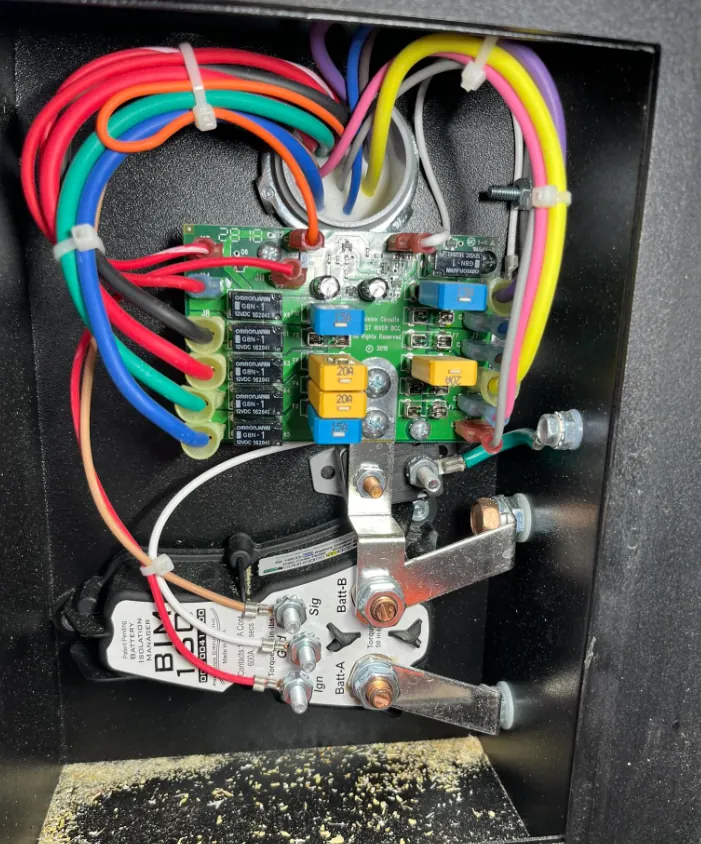
Lippert Level-Up control board
See what this involves →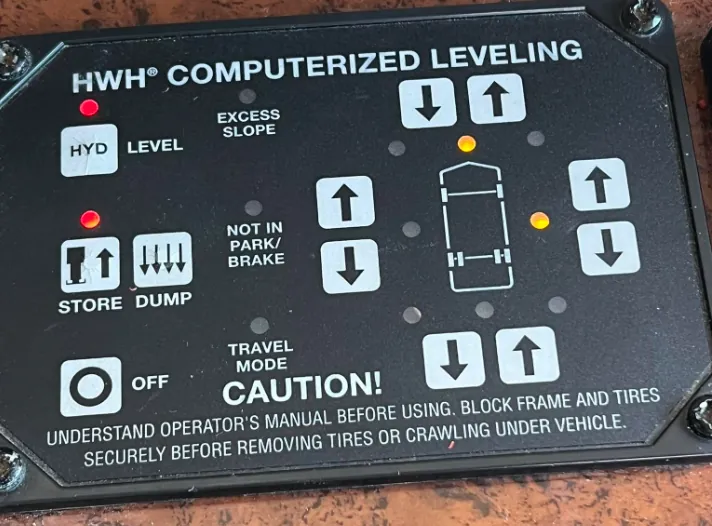
HWH hydraulic leveling
See what this involves →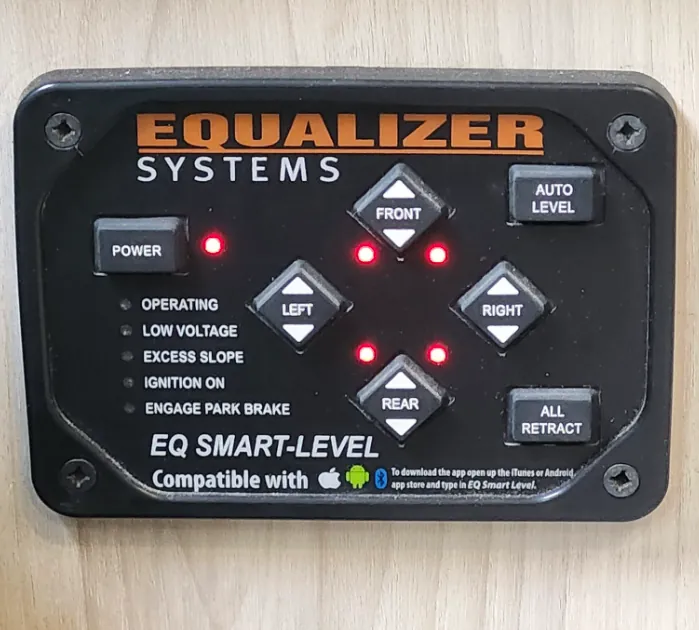
BAL / Accu-Level electric leveling
See what this involves →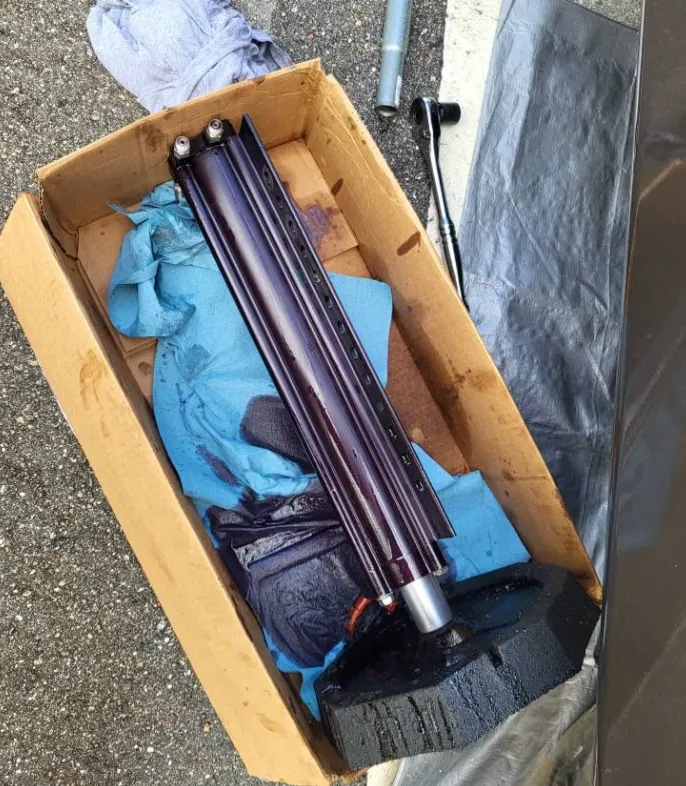
Jack cylinder reseal
See what this involves →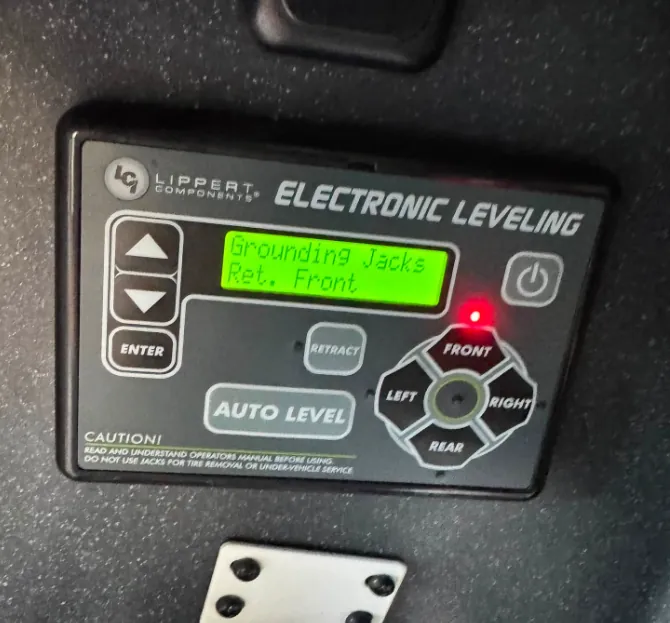
Sensor calibration + zero point
See what this involves →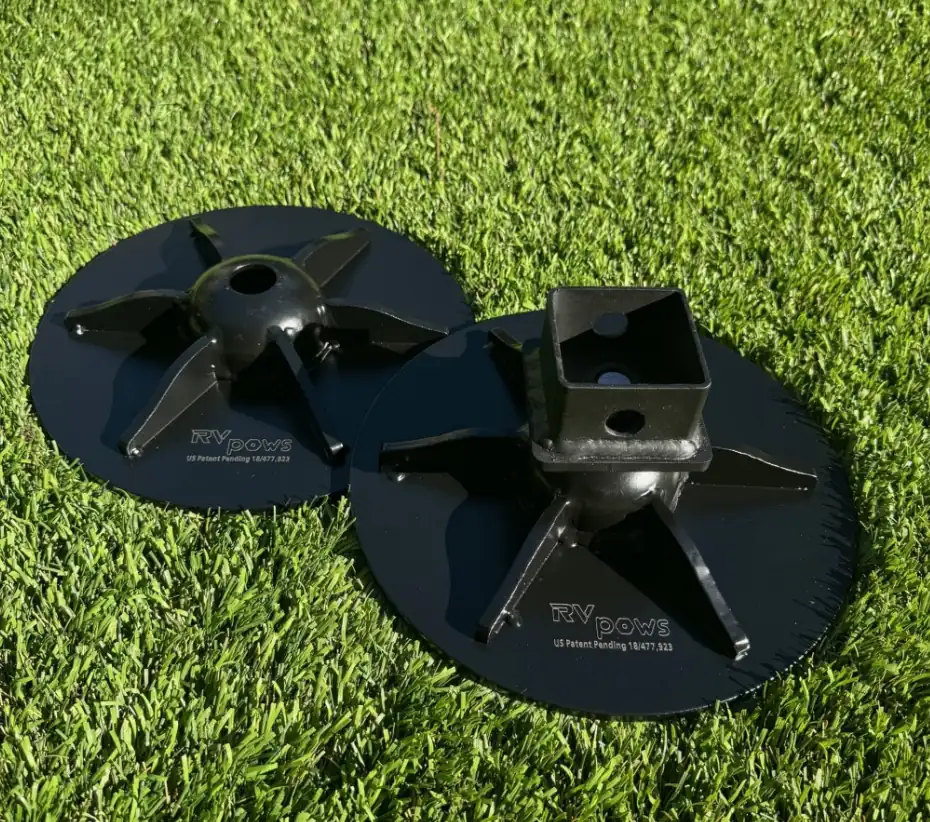
Fifth wheel landing gear
See what this involves →Hydraulic or Electric: Which Leveling System Is Under Your Coach
Two different machines share the name leveling system, and you tell them apart by looking rather than guessing. Open the bay doors and hunt for a pump. A hydraulic system carries a 12 volt electric motor driving a pump, a fluid reservoir and a bank of valves, with hoses running out to a cylinder at each corner, and that is how HWH and Lippert Level-Up are built. Then look at a leg instead. An electric screw jack system has a small motor and gearbox bolted to each individual leg, no hose anywhere near it and no reservoir to find, because it raises the coach on a threaded steel screw rather than on fluid. BAL, a Norco Industries brand, builds that kind. A hydraulic fault lives in fluid, valves and pressure, while a screw jack fault lives in gears, couplers and threads, and no diagnostic habit crosses cleanly between them.
Leveling Jacks Stabilize a Coach, They Do Not Lift One
This is the one point on the page that outranks every repair on it. A leveling jack is built to steady a coach that is still resting on its own wheels, not to pick it up, and all three manufacturers say so in their own documents. HWH prints the blunt version: block the frame and wheels securely before crawling under a vehicle, never use leveling jacks or air suspension to support it while you are underneath, and understand that the vehicle may drop and may also move forward or backward without warning. Lippert states that its hydraulic system is designed as a leveling system only, and that using it to support the coach for service work is prohibited by the Lippert limited warranty, which makes this a coverage question as well as a safety one. BAL and Lippert both add that the wheels must never be lifted completely clear of the ground. Rated stands under the frame first, and nobody underneath until they are set.
Triage: Reading the Symptom Before Anyone Opens a Bay
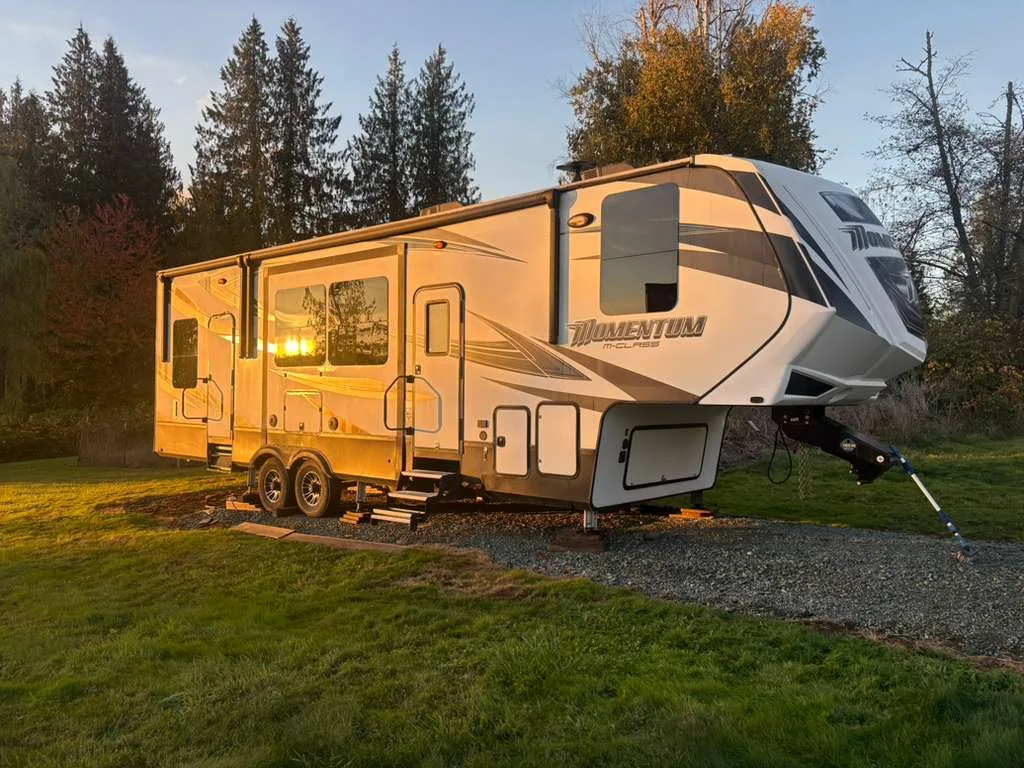
Leveling complaints sort into a short list, and each one points somewhere different. Nothing at all when the button is pressed is usually supply or an enabling condition rather than a jack, because these systems are designed not to run until the ignition, park brake and safety circuits agree. One leg frozen while the others move is a valve or a cylinder on a hydraulic coach, and on a fifth wheel front end it is more often the cross shaft that keeps the two legs in step. Jacks that go down but will not come back up mean different things on different systems, since most HWH cylinders retract on internal springs rather than on pressure. A puddle under a leg is only ever hydraulic. A worded error on the touchpad names what the controller observed, which is not the same thing as a diagnosis. A coach that finishes its cycle and still sits crooked on flat ground, every single time, is a stored zero point rather than a broken jack.
Every System Has a Manual Override and Yours Is Not Where You Think
Every leveling system on the market can be driven by hand with the power dead, and almost nobody finds theirs until the night they need it. That single piece of knowledge is the difference between an inconvenience and a coach that cannot leave. The tool and the location change completely between systems. On a Lippert hydraulic coach the override is a hex key turned on the manual override of each cartridge valve at the manifold, which lets trapped fluid return so the coach can settle. On an HWH coach it is a set of T-handles or release nuts at the valve manifold, opened in a published order rather than all at once. On a BAL screw jack it hides under a round rubber plug at the bottom center of each leg motor, with a separate drive for a tongue jack. On Lippert electric landing gear it is a crank handle that couples onto the reduction gearbox shaft. Find yours on a dry afternoon and confirm the tool actually fits.
Sand, Salt and Year-Round Cycling: What Florida Does to Leveling
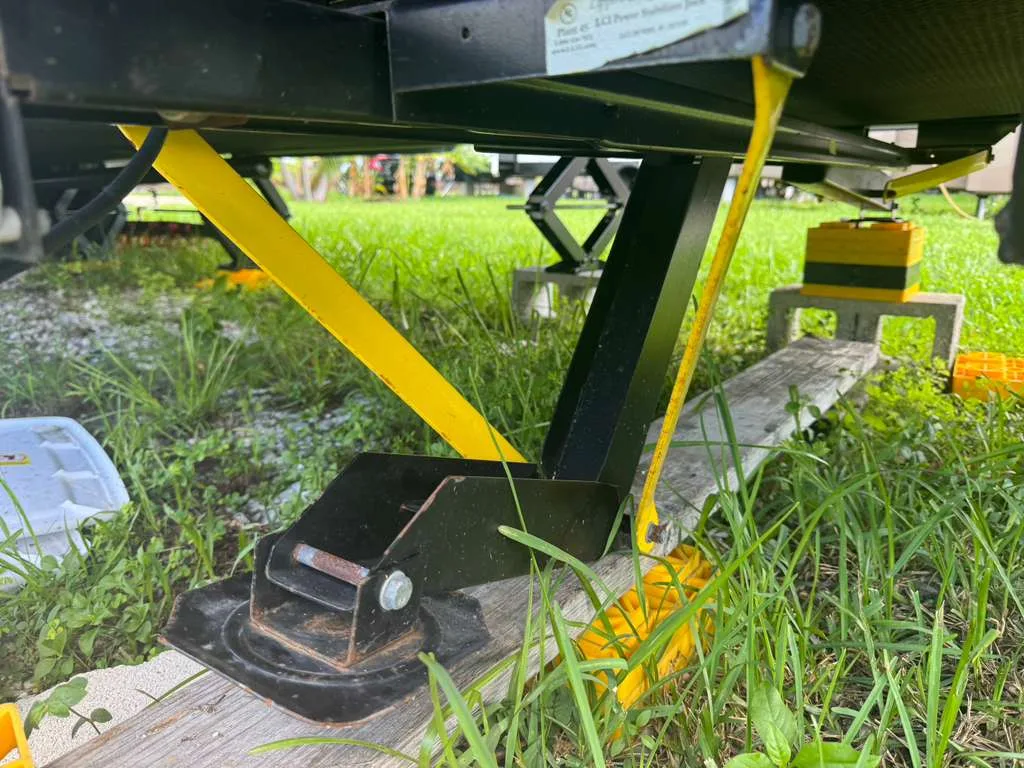
Three local conditions do most of the damage here. The first is what the foot pad is standing on, because shell driveways, sugar sand and soft grass let a pad punch in on one side, so the leg extends into a hole instead of loading straight down. BAL and Lippert both call for load distribution pads under each jack on soft surfaces, and HWH sets a limit owners routinely break, allowing one good wood block or pad per jack and no more, while warning that a straight acting jack extends at a slight angle and can slide off a pad it is not centered on. The second is salt. A hydraulic rod retracts into a sealed barrel, while a screw jack leaves its thread hanging in coastal air. The third is simply use, since with no winter lay up these systems cycle far more here than in a seasonal state. Apex does not take on chassis work, so a bent frame outrigger or a damaged suspension hanger is documented and referred out.
Sources
Every figure on this page comes from a manufacturer document or a standards body, not from another repair site. Here is where each one comes from.
- HWH Corporation - Frequently Asked QuestionsHWH's own warning to block the frame and wheels before crawling under a vehicle and never to use leveling jacks or air suspension to support it, including that the vehicle may drop and/or move forward or backward without warning; the answer that a coach on unpaved ground can settle and that fluid contraction as the fluid cools allows some settling, before an internal valve leak is considered; the allowance of one good wood block or pad per jack with the note that HWH does not recommend more than one; and the warning that straight-acting jacks extend at a slight angle so an off-center foot can slide off its pad.
- HWH Corporation - Leveling and Stabilizing System Identification and NomenclatureThat HWH leveling systems are identified by their control panels, control boxes, control modules and sensing units, and that hydraulic, air and air/hydraulic variants are separate system types, supporting the identify-before-you-diagnose premise of the opening section.
- BAL Electric Leveling System User Manual (Norco Industries)That a BAL system is an electric screw jack with a motor on each leg and no hydraulic fluid; the warnings never to use the leveling system as a lift for working under the unit and never to lift the wheels of the unit completely off the ground; the instruction to park on a reasonably solid surface and use load distribution pads under each jack on extremely soft surfaces; and the manual jack override under the round rubber plug at the bottom center of each leg motor, with a separate drive for the tongue jack.
- Lippert Hydraulic Leveling with LCD Touchpad, 4 Point 3 Valve Motorized, OEM Installation Manual (CCD-0002372)That a Lippert hydraulic system is a 12 volt electric motor driving a pump that moves fluid through hoses, fittings and jacks; that the system is designed as a leveling system only and must not be used to provide service under the coach, with such use prohibited by the Lippert limited warranty; that the coach must never be lifted completely off the ground; and that the manual override is performed with a hex key on the manual override of each cartridge valve.
- Lippert Universal Electric Landing Gear 6K Owner's Manual (CCD-0010317)That fifth wheel electric landing gear must not be used to service the trailer and the trailer must be supported per the manufacturer's recommendations before working underneath; that the trailer must never be lifted completely off the ground; and that the manual override is a crank handle coupler fitted onto the manual override shaft of the reduction gearbox.
Related systems
Where we work
What this usually costs
| Item | Price | What it covers |
|---|---|---|
| Service call | $299 | Includes the trip out to your RV and the first hour on site |
| Work past the first hour | Quoted after diagnosis | We tell you what it will take before we carry on |
| Parts | Quoted per job | Special-order parts may need a deposit before we order them |
| Written estimate | No charge | You approve the estimate before any work starts |
The service call covers the trip out to your RV and the first hour on site. Anything beyond that depends on what we find, and we quote it and get your approval before carrying on.
The price ranges on this page come from our own recent jobs across Florida, not from an industry average. What you pay depends on the rig, the parts it needs and what we find on site, so we give you a written estimate before any work begins and you approve it first.
Frequently asked questions
Can you repair an RV leveling leg?
Usually, and the first job is deciding what failed, because the leg is often not the fault. On a hydraulic coach a leg leaking at the rod is a seal job, while a leg that drops with a dry rod is normally a valve no longer holding. On an electric screw jack the motor, gearbox and coupler are all replaceable, but a lead screw pitted through its thread, or a leg bent by a side load, gets replaced rather than repaired.
How do I tell whether my RV has hydraulic or electric leveling?
Look for fluid. Open the bays and find the leveling power unit: a hydraulic system has an electric pump motor, a fluid reservoir and hoses running out to the corners, which is how HWH and Lippert Level-Up are built. If instead there is a motor and gearbox bolted to each individual leg, and no hose or reservoir anywhere in the coach, it is an electric screw jack system such as BAL.
The coach was level at bedtime and leaning by morning. Is a jack leaking?
Not necessarily, and this is worth knowing before paying for a repair. HWH answers that exact question by naming two causes that are not faults at all before it reaches a component: a coach parked on unpaved ground can settle into it, and the hydraulic fluid contracts as it cools overnight, letting the coach down slightly. Only then does an internal valve leak enter the list. Marking the rod position and rechecking in the morning separates a settling site from a bleeding jack.
Is it safe to get under my RV while it is standing on its leveling jacks?
No, and every manufacturer here says so plainly. HWH warns that a vehicle supported on jacks or air suspension may drop, and may also move forward or backward, without warning. Lippert states that using its leveling system to support the coach for service is prohibited by its limited warranty. BAL says never to use the leveling system as a lift for working under the unit. Support the frame on rated stands before anyone goes underneath.
Can I stack blocks under the jacks to gain height on a soft site?
Not more than one. HWH allows one good wood block or pad for support under each jack and specifically does not recommend using more than that, and it warns that a straight acting jack can extend at a slight angle, so a foot that is not centered on its pad may slide off and damage the jack. On genuinely soft ground the answer is a wider load distribution pad rather than a taller stack.