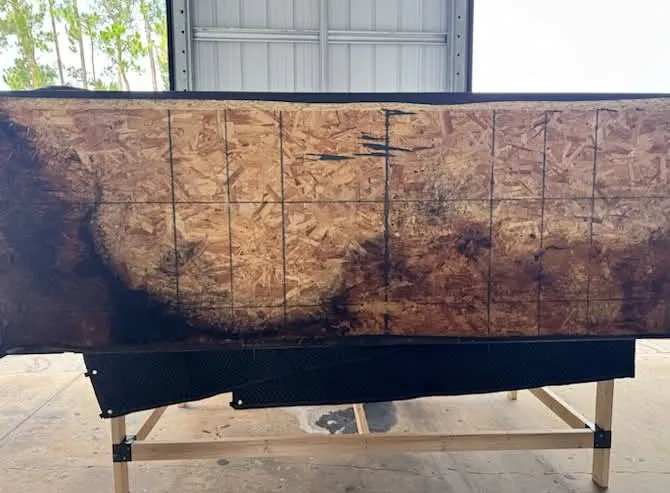
Slide Out Floor Rot Repair - Soft Spots to Room Removal
Slide-out room floor soft at the leading edge? Mobile Florida repair, moisture mapped and seals closed first, then the rotted deck. Call 888-759-1438.
A slide-out room floor is not the coach subfloor. It is a thinner bonded deck built into the room box, unsupported along its outer half whenever the room is extended, and carrying the room's furniture the entire time. Water reaches it from above, over the top wiper seal, rather than up from the frame.
The Slide Room Floor Is a Different Structure From the Coach Floor
A slide-out room is a box that rides in and out of the sidewall, and its floor belongs to that box rather than to the coach deck. Typical construction is a thin sandwich: a lauan or thin plywood face, a foam or tube-frame core, and a lower skin, bonded together rather than nailed down. The coach subfloor beneath it is thicker, sits on the frame rails, and is supported continuously along its length. Two things make the room panel behave differently. It is held only where the mechanism and rollers touch it, so its outer half cantilevers into open air every time the room goes out. And it carries whatever lives in that room, which is usually a dinette, a sofa or a bed. Lippert rates the F.A.S.T. Track flush floor slide for a maximum loaded room weight of 700 pounds across 40 inches of stroke, and that number includes the contents.
Water Comes In Over the Wiper Seal, Not Up From Below
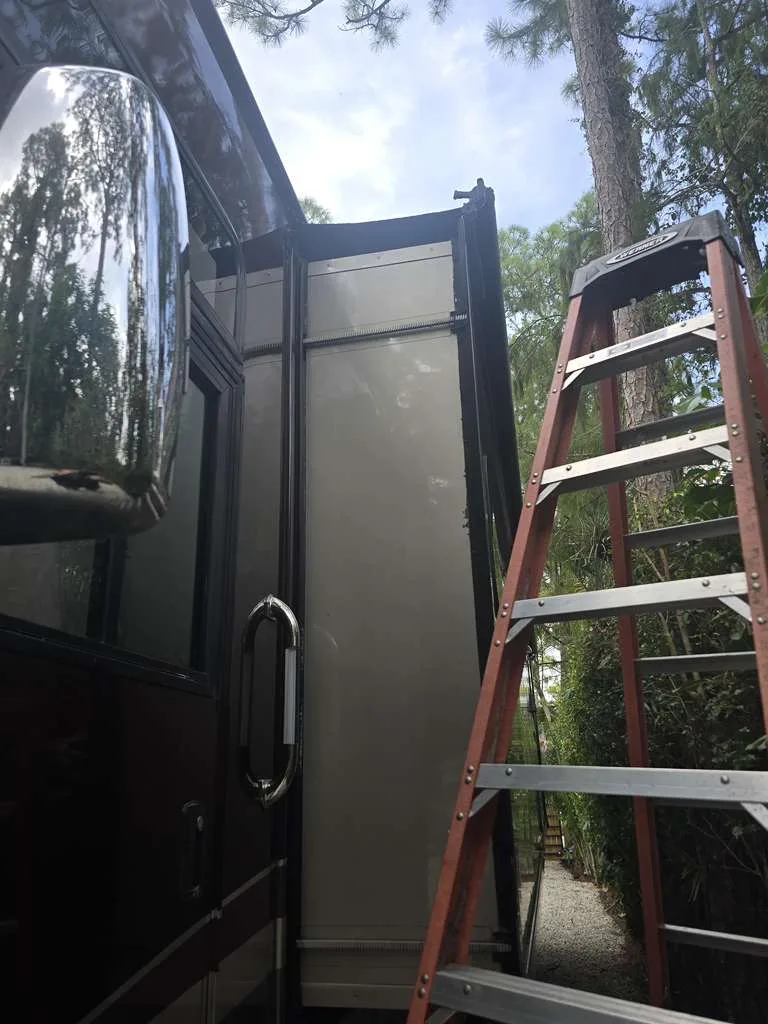
On a slide room the leak path runs downward. The exterior wiper seal lies along the top of the wall opening and squeegees the room roof as it travels, while the bulb seals close the gap once the room is parked. Anything that gets past that top wiper lands on the outer wall of the room and runs to the corner where the wall meets the floor edge. An afternoon thunderstorm gives that path a harder test than a vertical shower ever does. Wind-driven rain hits the wall sideways, often while the room is extended and the wiper is riding on a wet, gritty roof surface, so water is being pushed at the one joint that is open. That is the reverse of coach subfloor rot, which normally starts at a plumbing line, a tank fitting or the frame. Same word, opposite direction, different repair.
The Three Things Owners Notice First
The first sign is almost always underfoot at the leading edge of the room, meaning the strip that ends up closest to the outside wall once the room is retracted. A patch there feels spongy or gives under a heel while the rest of the room floor still feels solid. The second is the surface lifting. Vinyl plank opens its seams, glued-down sheet vinyl bubbles, or carpet releases along that same edge, because the adhesive is bonded to a face veneer that has already started to let go. The third is geometry. The room sits low or noses down when extended, the top wiper stops touching evenly across the opening, or one corner begins rubbing the fascia on the way in. A typical case shows all three in that order across a season or two, and any one of them on the leading edge is worth looking at early.
Why a Soft Room Floor Shows Up as a Binding Slide
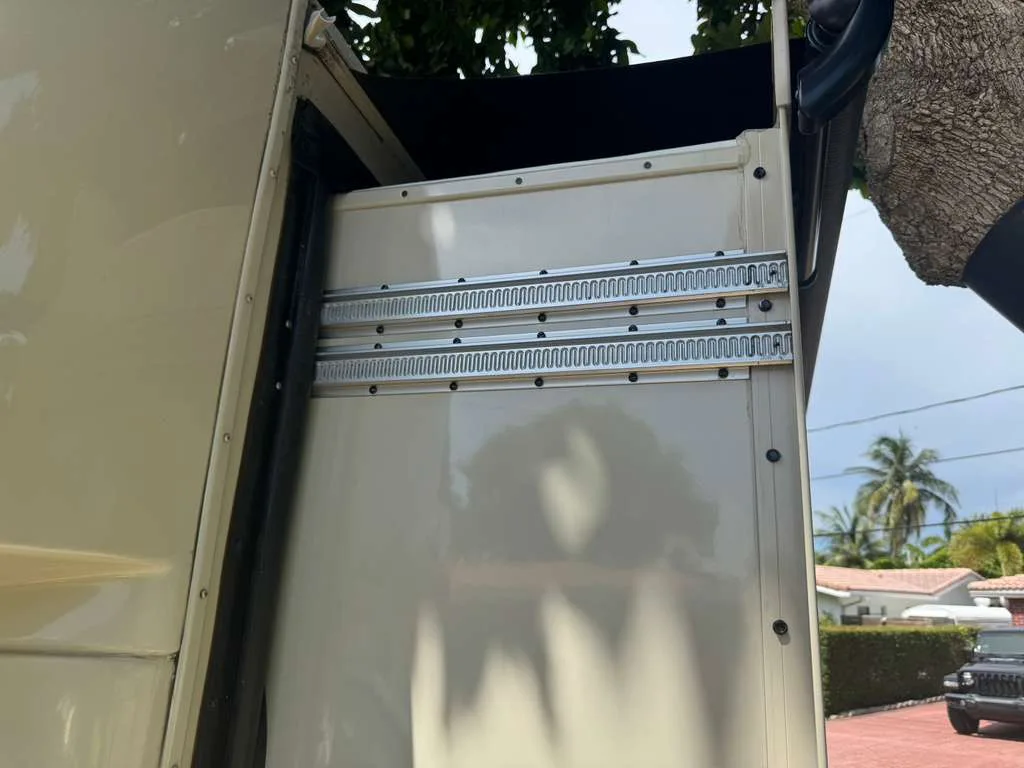
Lippert builds a hard tolerance into the room box itself. The In-Wall Slide-Out OEM installation manual, document CCD-0001397, requires the slide box and the wall opening each to be square within 1/4 inch on the corner-to-corner diagonals, and the post-installation audit calls anything past 3/8 inch a critical fail. The same manual states that the floors must be supported at all points, and that rooms over 650 pounds estimated gross room weight or over 72 inches long require floor rollers, with a wear bar such as the Boyd 3157 series permitted only on smaller rooms. Estimated gross room weight there means the room plus its contents. A rotting floor edge spends that tolerance. The panel crushes where a roller or wear bar bears on it, the box drifts out of square, and the room binds, racks or trips its motor long before anyone suspects the floor is the reason.
How Our Technicians Check a Suspect Slide Floor, In Order
First the room runs out and in while somebody watches from outside. A lagging corner, a new rub mark on the fascia or a change in travel noise says the box has already moved. Second, a four-foot digital level or straightedge goes across the floor with the room extended, then again retracted, because a panel that has lost its core often reads flat unloaded and dishes under weight. Third comes probing. An awl along the seam under the wiper line and at both outer corners finds soft face veneer without opening anything up. Fourth, a pin-type moisture meter maps a grid across the deck so the wet area gets a boundary instead of a guess. If those readings carry past the room and into the coach deck, that is a subfloor scope and a separate conversation. Last, the underside gets inspected from outside with the room out.
Why the Room Comes Out, and What That Does to the Price
The room floor is captured on every side. Its outer wall sits down on the floor edge, the interior fascia and trim overlap it, and the perimeter is bonded and stapled into the box frame, so there is no honest way to cut a patch in from above the way a coach deck sometimes allows. Reaching the panel means disconnecting the drive, releasing the room from the mechanism, and walking the whole box out of the sidewall onto stands. That labor is the cost driver, not the plywood. The repair itself gets quoted once the panel is mapped, because a damp leading edge and a fully delaminated deck are different jobs.
That is also why a photo of the leading edge and the seal is worth sending before anyone quotes a number. It rarely settles the price on its own, but it usually settles whether this is a panel repair or a room-out job, which is the part that moves the figure.
Seals First, or the New Floor Rots Too
Sequencing is the part owners argue with, and it is the part that decides whether the repair lasts. Building a new deck before the water path is closed buys a panel with an expiry date, and the second failure looks exactly like the first. The correct order is to find and close the entry, then set the room travel and seal compression, then build the floor. In practice that means the top wiper and the bulb seals, the corner drain cups if the system has them, the topper if it has begun pooling water onto the room roof, and the hard stops so the seals actually compress when the room is parked. Materials matter too. Wood panels bonded with urea-formaldehyde resins are interior-grade by design, and the Forest Products Laboratory notes that moisture exposure breaks down those bond-forming reactions, which is why a wet deck goes soft at the glue line first.
Sources
Every figure on this page comes from a manufacturer document or a standards body, not from another repair site. Here is where each one comes from.
- Lippert In-Wall Slide-Out OEM Installation Manual (CCD-0001397)Slide room box squareness tolerance of 1/4 inch corner to corner with 3/8 inch a critical fail, the requirement that slide room floors be supported at all points, and the 650 pound estimated gross room weight and 72 inch length thresholds that require floor rollers or a wear bar.
- Lippert F.A.S.T. Track Flush Floor Slide-Out Owner's ManualThe published maximum loaded room weight of 700 pounds and 40 inches of stroke for a flush floor slide room, showing the room floor is a load-carrying structure rated with its contents included.
- USDA Forest Products Laboratory, Wood Handbook Chapter 11: Wood-Based Composite MaterialsThat urea-formaldehyde bonded wood panels are interior-grade because moisture exposure breaks down the bond-forming reactions, which is why a wet slide room deck loses stiffness at the glue line before the wood itself visibly decays.
Related repairs
- Slide Topper Replacement
- our Schwintek In Wall Repair service
- Lippert Hydraulic Slide Repair in Florida
Other systems we service
Where we work
Service category
What this usually costs
| Item | Price | What it covers |
|---|---|---|
| Service call | $299 | Includes the trip out to your RV and the first hour on site |
| Work past the first hour | Quoted after diagnosis | We tell you what it will take before we carry on |
| Parts | Quoted per job | Special-order parts may need a deposit before we order them |
| Written estimate | No charge | You approve the estimate before any work starts |
The service call covers the trip out to your RV and the first hour on site. Anything beyond that depends on what we find, and we quote it and get your approval before carrying on.
The price ranges on this page come from our own recent jobs across Florida, not from an industry average. What you pay depends on the rig, the parts it needs and what we find on site, so we give you a written estimate before any work begins and you approve it first.
Frequently asked questions
Do you guys do repairs on the floor of RVs?
Yes, and the first question is which floor. The slide-out room floor is part of the room box and is a self-contained repair. The main coach subfloor is a larger structural job with its own scope. Both start the same way, with a probe and a moisture map, because the fix and the price change completely depending on which panel is wet.
Did the subflooring get damaged too, or just the slide room floor?
That is exactly what the moisture map answers. Water that comes over the wiper seal usually soaks the room's leading edge first and can stop there. If it has been running for several seasons it spills off the room and onto the coach deck under the opening, and then the readings will not stop at the room edge. The two repairs are quoted separately.
Can the slide out floor be repaired without pulling the room out?
Rarely, and only for very small damage right at an accessible edge. The room's outer wall sits on the floor perimeter and the interior fascia covers the inboard edge, so most of the panel is buried by structure that has to come off anyway. Patching from above what you cannot reach from below is how a floor gets fixed twice.
What does slide out floor rot repair cost in Florida?
Our service call covers the trip out and the first hour on site at the rate in the pricing table on this page; anything past that first hour is quoted and approved before we carry on. The visit is priced first. The repair total depends on how far the wet area runs and whether the room has to come out, so it gets quoted after the panel is mapped, not over the phone.
Is it safe to keep running the slide with a soft floor?
Cycling it makes the damage worse and can turn a floor job into a mechanism job. Once the panel crushes where a roller or wear bar bears on it, the room box drifts out of square, and Lippert's own build tolerance for that box is a quarter inch on the diagonal. Past that the room starts racking, which loads the rails and the motor.
How do I tell floor rot from a slide mechanism problem?
Mechanism faults usually show up as noise, a stall or one side leading the other from the very first inch of travel. Floor rot shows up at the ends of travel, as a room that will not seal at the top, sits low when extended, or catches a corner on the way in. A spongy patch at the leading edge settles it.