RV Propane System Repair in Florida: Leaks and Regulators
Smell propane? Get out, shut the tank valve, call from outside. Mobile RV LP gas leak, regulator, line, tank valve and detector repair. Call 888-759-1438.
If you smell propane in an RV, get everyone out of the coach before anything else. Do not touch a switch, use a phone inside, light a burner, or start the engine or generator, because propane is heavier than air and has already settled at floor level. Shut the gas off at the container valve, then call from outside. Leave it off until the leak is repaired.
What we handle in this category
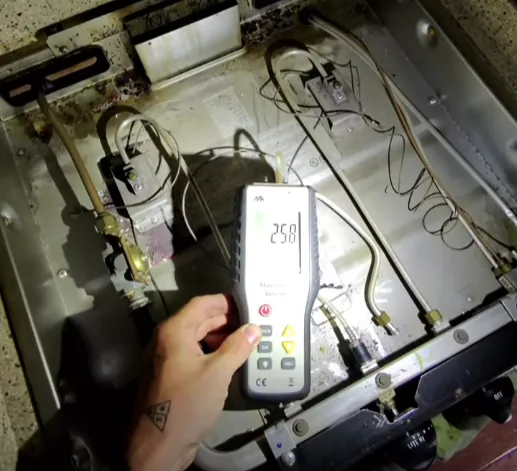
LP leak test + certification
See what this involves →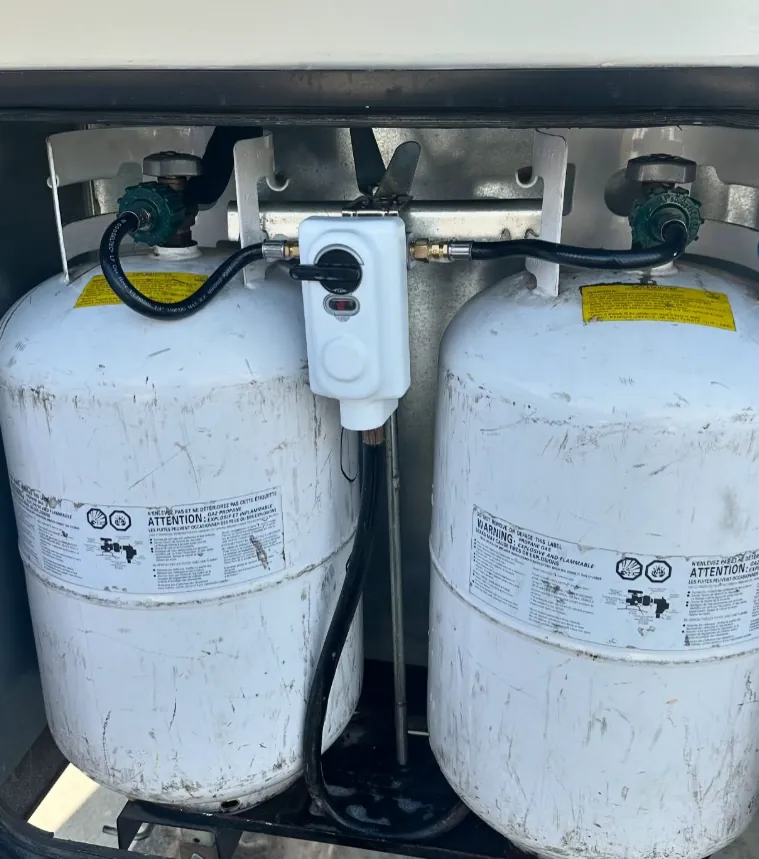
Two-stage regulator replacement
See what this involves →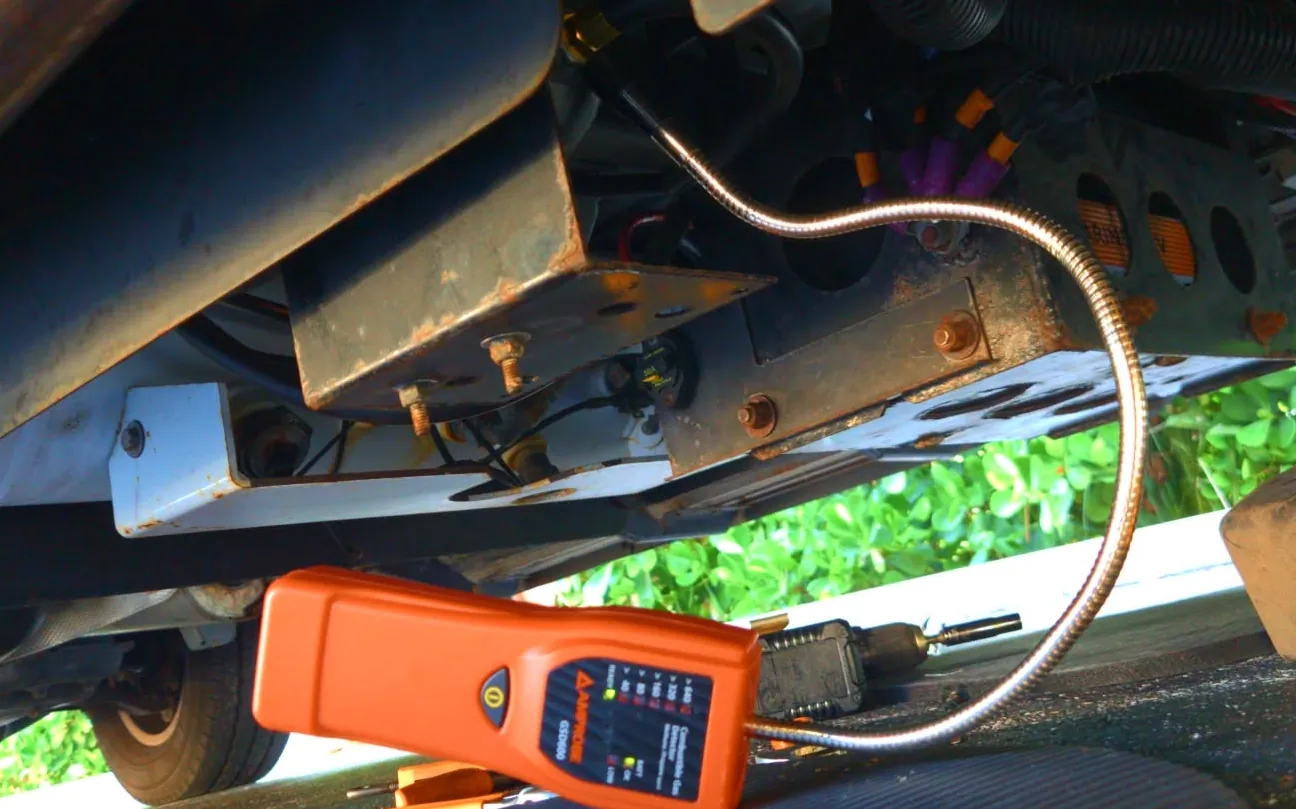
LP line and fitting repair
See what this involves →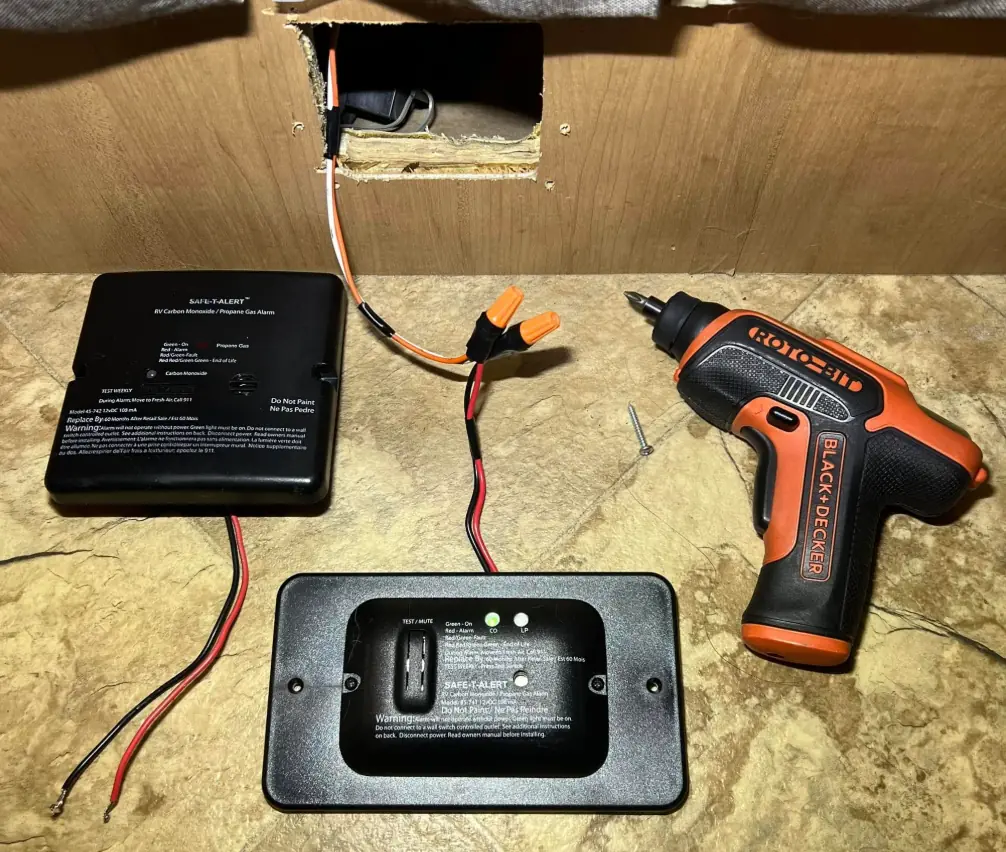
LP detector replacement
See what this involves →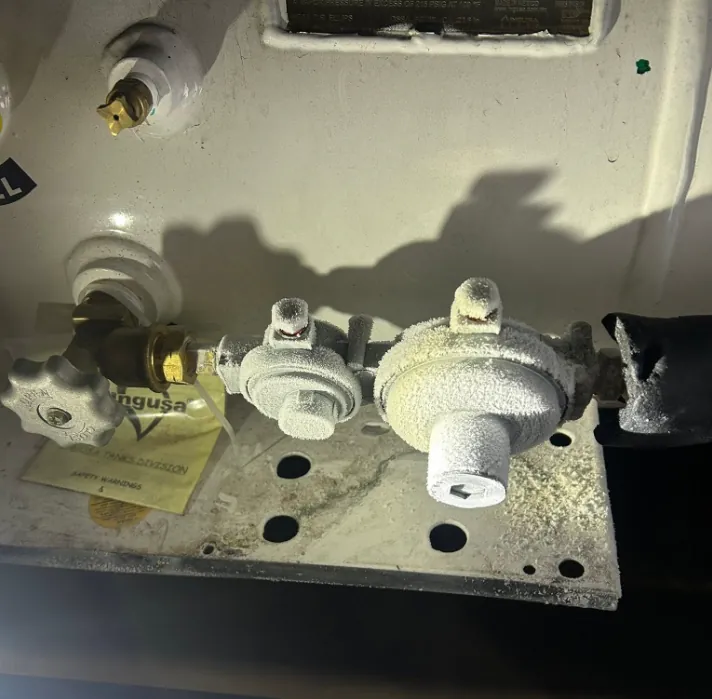
Tank valve + OPD service
See what this involves →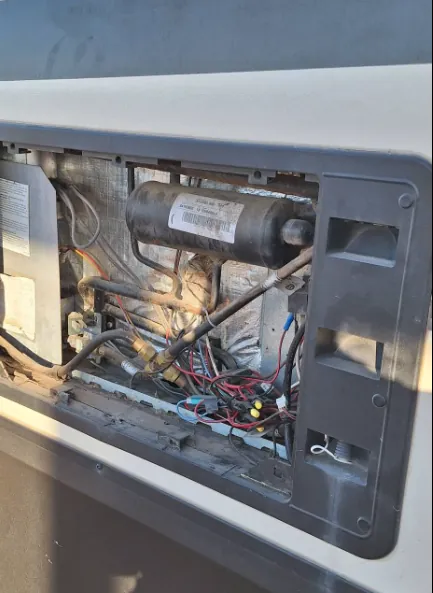
Appliance orifice + burner service
See what this involves →If You Smell Propane in Your RV, Do This First
Two manufacturers print an emergency sequence inside almost every coach, and the versions reconcile cleanly. Suburban's tank water heater guide says to evacuate all persons from the vehicle, shut off the gas supply at the gas container or source, touch no electrical switch and use no phone or radio inside, and do not start the engine or generator. Dometic's refrigerator manual adds open windows, extinguish any open flame, make sure all appliances are off, and call emergency services. Read together, the order is people, gas, then the phone call. Ventilation happens on the way out rather than instead of leaving, and the call is made from outside, because a phone is an ignition source in a vapor filled coach. Close the cylinder or tank valve only if you can reach it from outside without walking through the vapor. Dometic states that LP gas is heavier than air and collects at floor level, which is why a bay, a low locker or a stepwell holds it longest. Nothing goes back on until the leak is found and repaired.
The Stages of an RV Propane System, and What Each One Owns
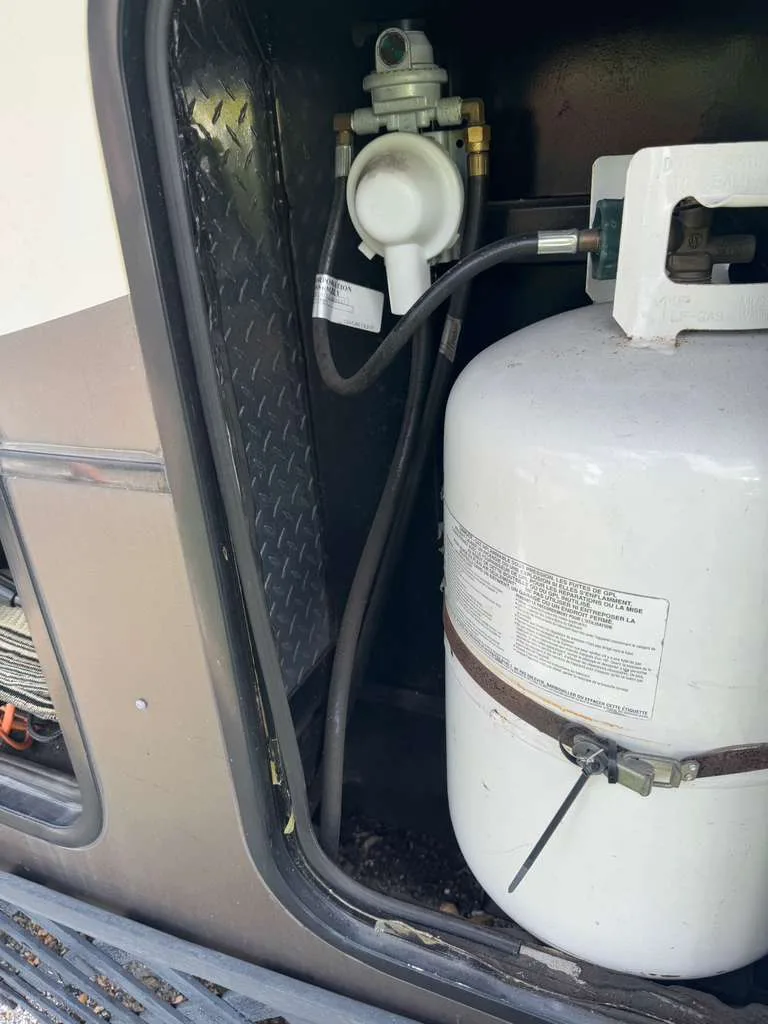
Propane reaches a burner through six stages, and a symptom usually names one of them. Stage one is storage: removable DOT cylinders on a trailer A frame, or an ASME tank bolted to a motorhome chassis. Stage two is the service valve on that container, carrying the overfill prevention device that decides whether a station can fill it. Stage three is the pair of flexible pigtail hoses feeding stage four, the two stage regulator under its vented cover, which turns swinging container pressure into the steady low pressure every appliance orifice is drilled for. Stage five is the distribution run under the coach: copper tube and black iron, flare and pipe thread joints, a branch shutoff at each appliance. Stage six is the appliance itself: gas valve, orifice and burner. The LP detector sits at floor level watching all six, a monitor rather than a stage. Florida ages the stages unevenly: salt aerosol works on brass valve threads and the regulator vent outdoors, while pests and chafe take the lines and burners.
Which Stage Is Failing? Read the Symptom, Not the Part
Everything on gas quitting at once is a supply side fault, not six broken appliances. Check the changeover indicator and both bottle valves, then the regulator; that path leads to regulator replacement. One appliance misbehaving while the others run normally is that appliance, so a lazy flame, soot or a burner that will not stay lit belongs to orifice and burner service. A tank a station turns away is a valve, overfill device or collar stamp problem and goes to tank valve and OPD service. That refusal lands hardest in hurricane season, when fill lines are long and counter staff read the collar carefully. A detector sounding with no other symptom is a decoding job before it is a leak hunt, and a propane smell with no obvious source is what the documented leak test exists for. A regulator that hisses continuously, frosts over or has a webbed vent is reporting a compromised diaphragm or vent path. Corrosion or a chafe mark on a line under the coach points at line and fitting repair.
A Rotten Egg Smell Is Not Always Propane
The odorant blended into propane smells of rotten eggs, and so do two harmless things on the same coach. Suburban's own water heater guide says odor from the hot water system is not a service problem, because many water supplies carry enough sulfur to produce a rotten egg smell, and it is unpleasant rather than harmful. That one appears only when a hot tap is running, and it follows the plumbing rather than the floor. The second is ammonia. Dometic instructs that if an absorption refrigerator stops cooling or emits an ammonia smell, turn it off, leave the vicinity and contact a service center, because that is the sealed cooling unit leaking rather than a gas line. Ammonia is sharp and stinging rather than eggy, and it concentrates at the refrigerator vent outside. Propane sinks, sulfur water arrives with hot water, and ammonia lives at the fridge. Treat any smell you cannot place as propane until a pressure test proves otherwise.
What You Can Do Yourself, and What Florida Reserves for a Licensed Technician
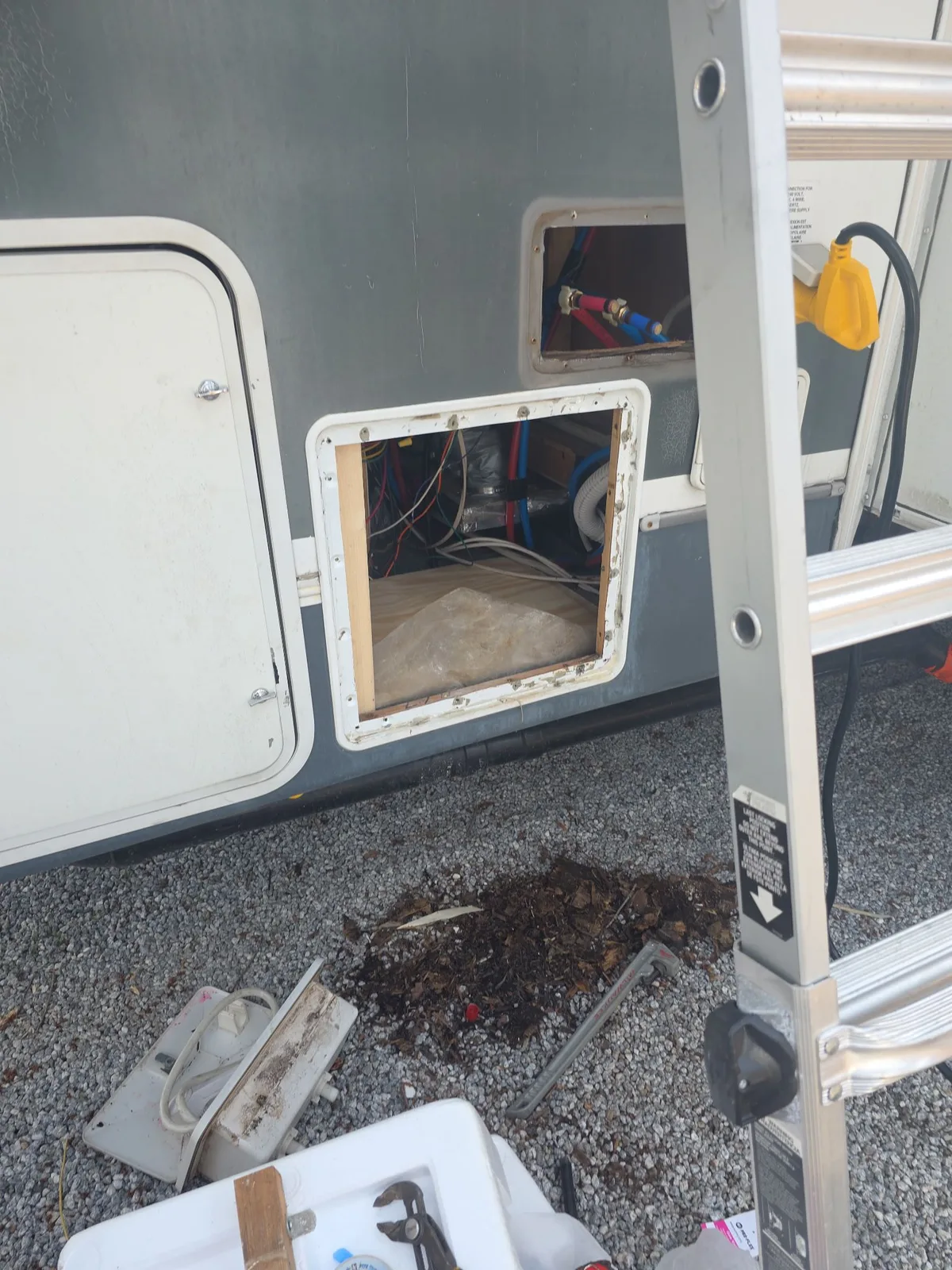
Plenty here is yours. Running the emergency sequence, confirming a bottle valve is open, resetting the changeover handwheel toward the full cylinder after a refill, keeping the regulator cover in place and its vent clear, and swapping a surface mount detector are all reasonable owner tasks. So is clearing mud dauber nesting out of an open bay on a coach that sits, because those wasps are hunting a sheltered cavity of the right bore to pack with paralyzed spiders, not following the odorant. Three jobs are not owner work, for mechanical reasons rather than legal ones. A flare joint seals metal to metal, so a cone formed with a worn tool seats, feels tight and still passes gas under pressure, and no torque figure rescues it. Manifold pressure cannot be judged by eye; it needs a gauge on a test port. A leak test only means something timed and documented. Florida also makes it unlawful to engage in the LP gas activities its statutes define without a license from the Department of Agriculture and Consumer Services.
Sources
Every figure on this page comes from a manufacturer document or a standards body, not from another repair site. Here is where each one comes from.
- Suburban (Airxcel) Tank Water Heaters Operation and Maintenance Guide, Part Number 206244Verified by reading the PDF: the WHAT TO DO IF YOU SMELL GAS block on page 3 lists evacuate all persons from the vehicle, shut off the gas supply at the gas container or source, do not touch any electrical switch or use any phone or radio in the vehicle, do not start the vehicle's engine or electric generator, contact the nearest gas supplier or qualified service technician, contact the nearest fire department if you cannot reach one, and do not turn on the gas supply until the gas leak has been repaired. The maintenance section also states that odor from the hot water system is not a service problem because many water supplies contain enough sulfur to produce a rotten egg odor, and that soot anywhere on the water heater means shutting the unit down immediately.
- Dometic DM, RM and DMA Refrigerators Installation Manual, Form No. 3313238.036Verified by reading the PDF: the IF YOU SMELL GAS warning lists open windows, do not attempt to light any appliance and make sure all appliances are OFF, extinguish any open flame, do not touch any electrical switches, do not use electronic devices such as cell phones or landline phones, evacuate the building or recreational vehicle, shut off fuel supply at LP tank, and call emergency services. The venting section states that LP Gas is heavier than air and will collect at floor level if not vented correctly, and a separate warning instructs owners to turn the refrigerator off, leave the vicinity and contact a service center if it stops cooling or emits an ammonia smell.
- Florida Statutes Chapter 527, Sale of Liquefied Petroleum GasVerified by reading the page: it is unlawful for any person to engage in this state in the activities defined in s. 527.01(6)-(11) without first obtaining a license from the Department of Agriculture and Consumer Services, those categories cover designing, installing, servicing, altering or modifying apparatus, piping, tubing and equipment for the use of liquefied petroleum gas, and every business organization in license category I, II or V must employ at all times a full-time qualifier who has passed the corresponding examination.
- Missouri Department of Conservation, Field Guide: Mud DaubersMud daubers are solitary wasps that build mud nests in sheltered cavities and provision the cells with paralyzed spiders for their larvae. Supports the hub statement that a nest in a burner tube, regulator vent or appliance intake is the wasp choosing a sheltered cavity of the right bore, not an insect attracted by the odorant in propane.
Related systems
Where we work
What this usually costs
| Item | Price | What it covers |
|---|---|---|
| Service call | $299 | Includes the trip out to your RV and the first hour on site |
| Work past the first hour | Quoted after diagnosis | We tell you what it will take before we carry on |
| Parts | Quoted per job | Special-order parts may need a deposit before we order them |
| Written estimate | No charge | You approve the estimate before any work starts |
The service call covers the trip out to your RV and the first hour on site. Anything beyond that depends on what we find, and we quote it and get your approval before carrying on.
The price ranges on this page come from our own recent jobs across Florida, not from an industry average. What you pay depends on the rig, the parts it needs and what we find on site, so we give you a written estimate before any work begins and you approve it first.
Frequently asked questions
What is the first thing to do if I smell propane in my RV?
Get everyone out. Suburban's instruction is to evacuate the vehicle, shut off the gas at the container or source, and touch no electrical switch and no phone or radio inside. Dometic adds opening windows, extinguishing open flames and making sure appliances are off. Never start the engine or generator. Call the fire department or a licensed LP technician from outside, and leave the gas off until it is repaired.
Should I open the windows first or get out first?
Get out. The two manufacturer placards differ because they solve different halves of the same problem, and the safe reading is to ventilate on the way out rather than instead of leaving. Open a window or door you are already passing, but never stop to hunt for more, never operate a switch or a powered fan to do it, and never go back inside. Ventilation helps only after the people are clear.
Every propane appliance quit at the same time. What does that mean?
Almost always a supply side fault rather than several failed appliances. Check that both cylinder valves are open and read the changeover indicator, because a red flag only reports that supply crossed to the reserve bottle and needs the handwheel rotated after a refill. If both bottles have gas and the handwheel is right, the fault sits at the regulator, the pigtails or the tank valve, and pressure has to be measured.
My LP detector is alarming but I cannot smell anything. Is it wrong?
Treat it as real first. Propane pools at floor level where the detector sits, so it can find vapor you cannot smell standing up. These alarms also respond to other combustible vapors such as aerosols and solvents, and they carry an end of life signal that sounds different from a gas alarm. The manual decodes the pattern, and a timed pressure test settles whether the system or the detector is at fault.
Can I work on my own RV propane system in Florida?
Owner maintenance is one question and paid work is another. Florida statutes make it unlawful to engage in the defined LP gas activities, which include installing, servicing, altering or modifying LP apparatus and piping, without a license from the Department of Agriculture and Consumer Services. A licensed business must also keep a full time qualifier who passed the state exam. So anyone you pay has to be licensed, and a pressure test should close any job that opened a gas joint.