RV Awning Repair Florida: Brand, Symptom and Wind Rules
Solera, Dometic or Carefree? Identify your RV awning, read the symptom, and learn the wind rule that saves sidewalls. Mobile service, call 888-759-1438.
Three companies build almost every RV awning and they share no parts: Solera is a Lippert brand, while Dometic and Carefree of Colorado are separate manufacturers. Identify yours from the end caps, the head assembly and the arm shape before ordering anything. A coach also carries up to four different awnings, patio, slide topper, window and door, and owners call every one of them the awning.
What we handle in this category
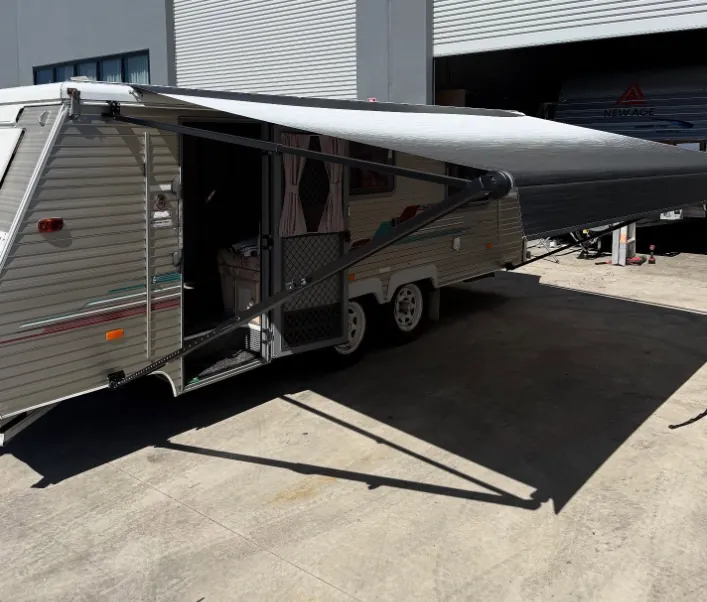
Carefree of Colorado awning
See what this involves →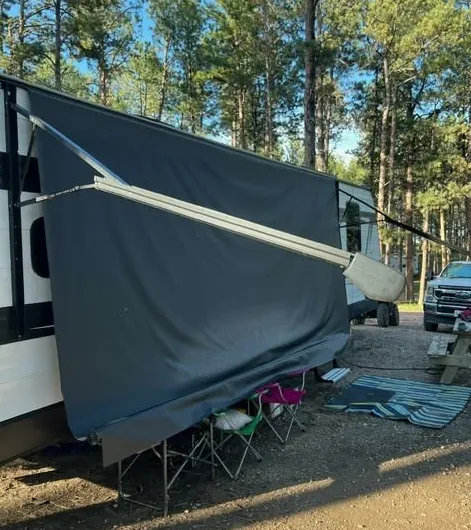
Dometic Solera awning
See what this involves →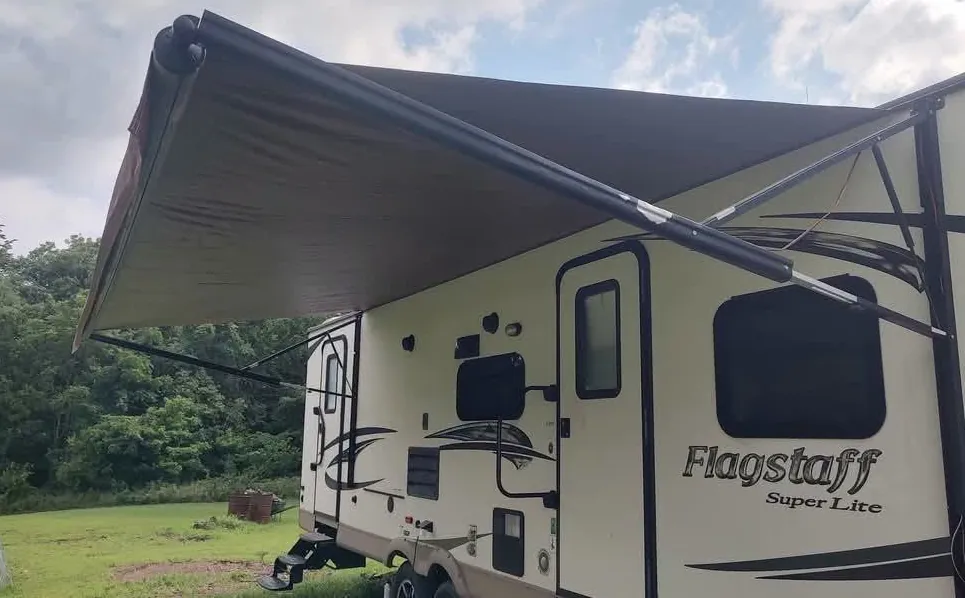
Fabric replacement
See what this involves →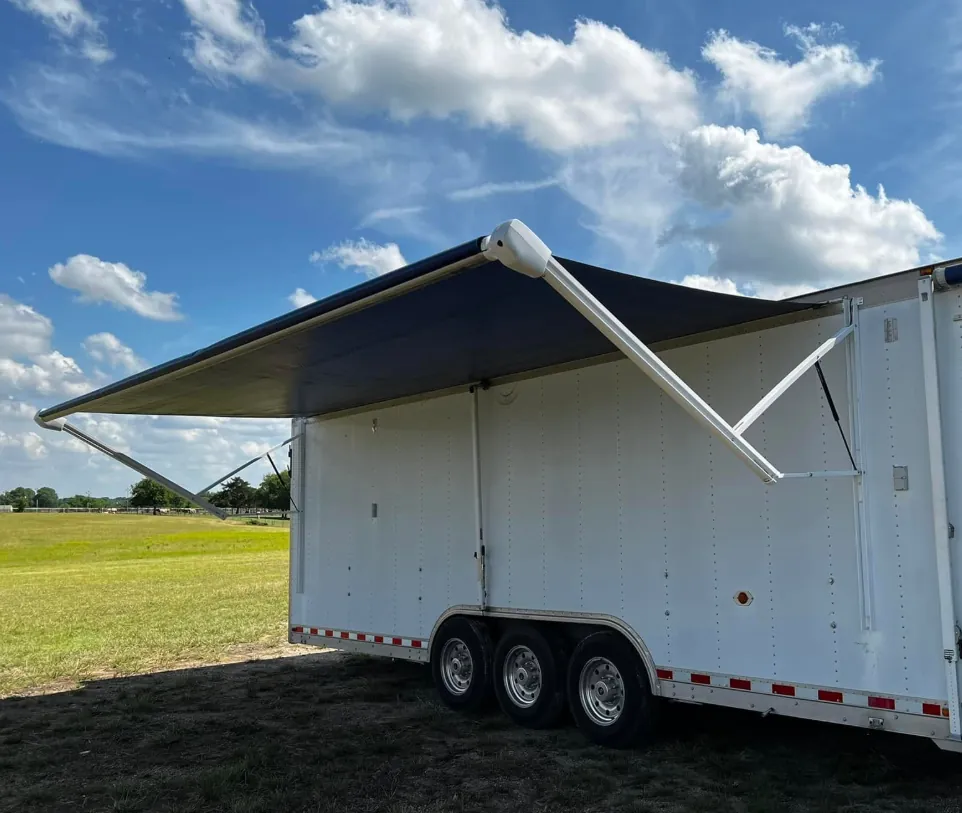
Manual to electric conversion
See what this involves →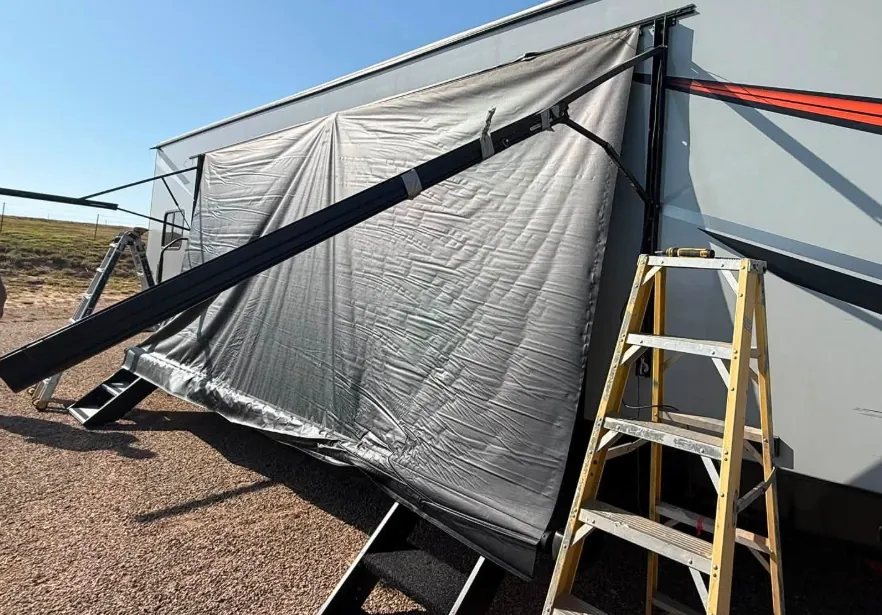
Storm damage rebuild
See what this involves →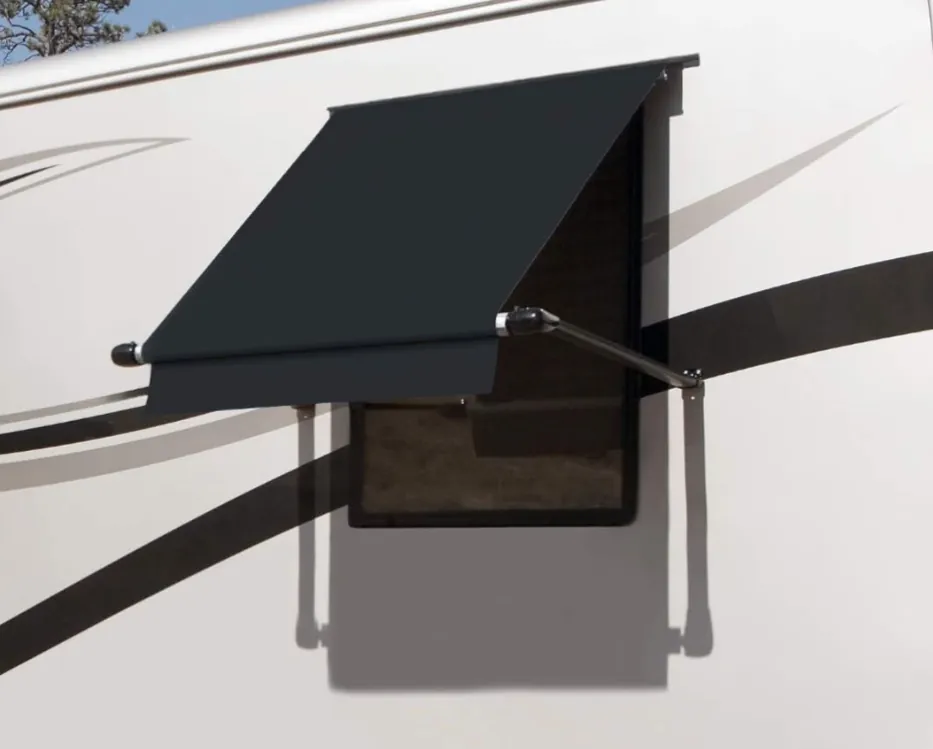
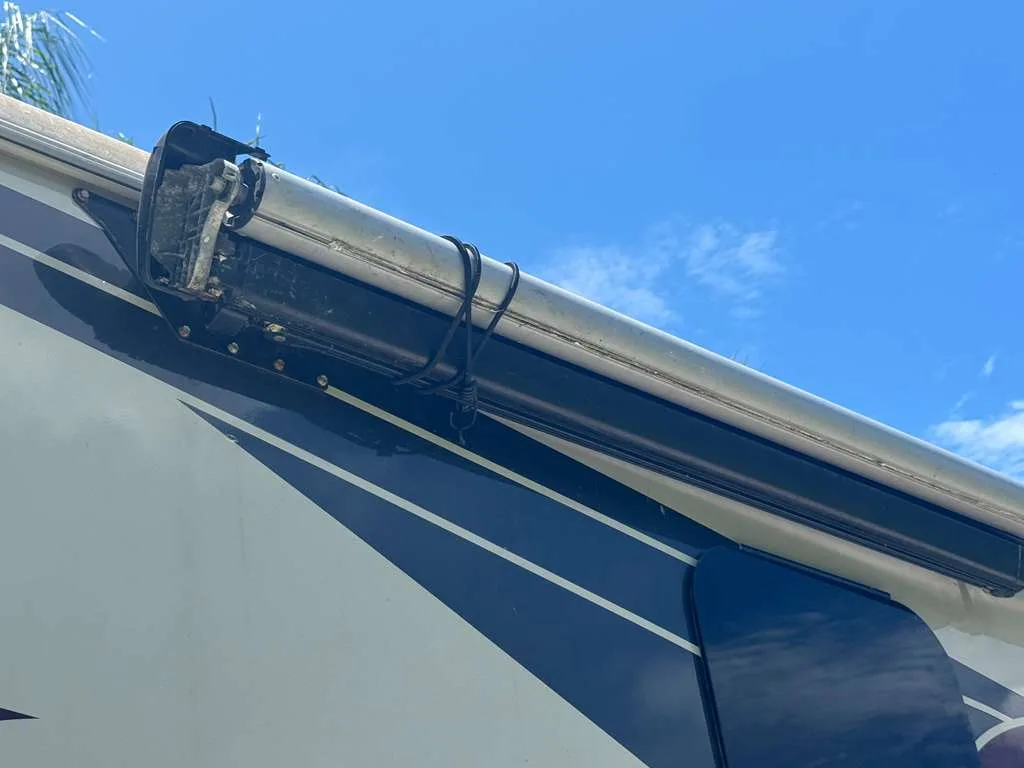
Window and door awnings
See what this involves →Solera Is Lippert, and Dometic and Carefree Are Neither
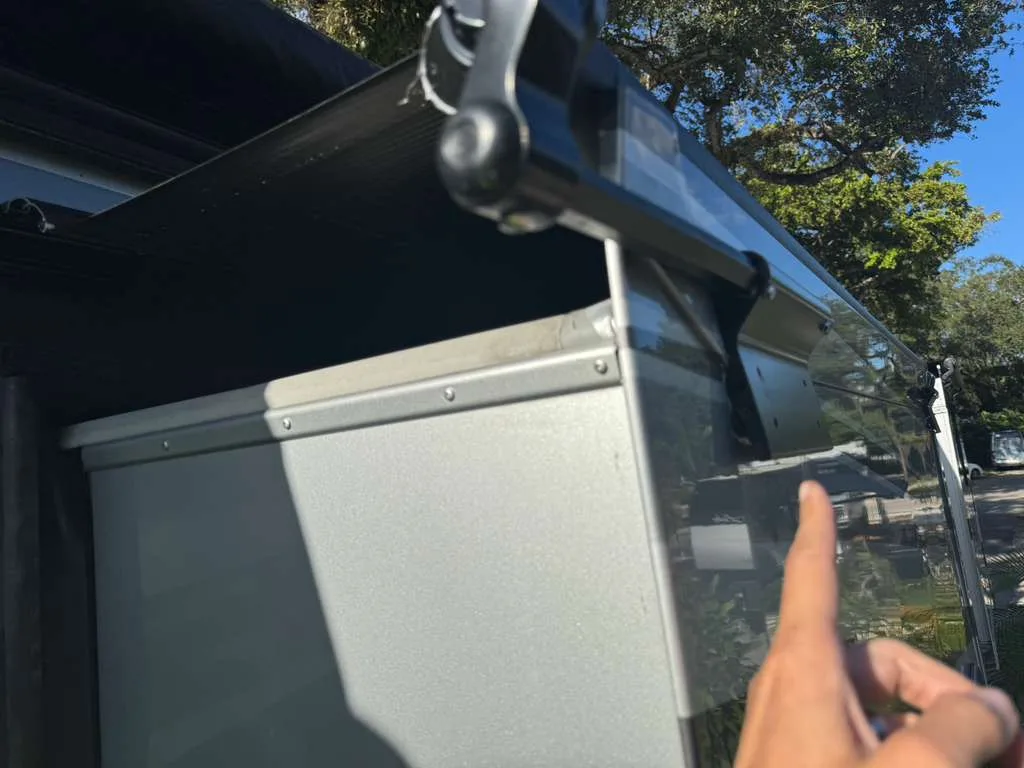
The most expensive mistake in awning work is ordering the right part from the wrong company. Solera is a Lippert brand, and Lippert's own awning documentation index carries the Solera series and no model from any other maker. Dometic publishes a separate index of its own families, and Carefree of Colorado publishes its own manuals and part numbers under its own name. Three parts systems, and no head casting, arm or end cap crosses between them. Identify yours at the ends of the roll tube rather than from the fabric, because fabric is the one component that gets replaced with whatever was in stock. Look at the end cap profile, the shape of the head assembly at the drive end, and whether the arms articulate against a gas strut or fold as sprung rafter arms. Photograph both ends and the arm where it meets the wall. That photograph settles the brand question before anyone is dispatched, which is the difference between one visit and a week waiting on an exchange.
Four Awnings, One Word: Patio, Slide Topper, Window and Door
Owners call all of them the awning, and that single word sends a technician to the wrong side of the coach. The patio awning is the large one over the entry side, with folding support arms, fabric on a roll tube and often a motor. A slide topper is a separate spring-loaded vinyl canopy fixed above a slide-out room, with no support arms, no pitch adjustment and no wind sensor, and it travels with the room rather than being deployed for shade. Window and door awnings are small pull-down canopies bolted straight through the sidewall above the glass or the entry door, with no motor and nothing that folds. Lippert catalogs all four as distinct product lines with distinct part numbers, and Carefree and Dometic do the same. So when you call, name which one is damaged and roughly where it sits on the coach. Half the wasted trips in this category start with that word doing too much work.
Triage: What the Symptom Says Before Anyone Opens a Part
Seven complaints cover nearly every awning call, and each one points somewhere different. An awning that will not extend or will not retract at all is an electrical question first on a powered unit and a spring question on a manual one. An awning that retracts on its own has usually done exactly what it was built to do, because a wind sensor tripped. Fabric that sags and holds water is stretched vinyl or lost spring winds, and on a slide topper that is a tension number rather than a new canopy. A tear is a fabric job only if the arms still fold along a straight path. Arms bent after wind, and any leak at the mounting rail, are a different animal, because the rail sits at the roof-to-wall joint and a leak there is sidewall work wearing an awning's clothes. Read the rail line and the arm castings first. The fabric is the loudest symptom and the least informative one.
The Wind Rule: No RV Awning Is Rated to Be Left Out
This is the paragraph worth reading twice. Lippert states it plainly in the owner's manual for its wind-sensor awning: the awning must be retracted completely during incidents of high wind, heavy rain, or any extended time away from the unit. That instruction ships with the awning that retracts itself, which tells you what a wind sensor actually is. It is a backstop for the gust nobody saw coming, not permission to leave a panel out over an empty site, and it needs battery voltage and a working motor to act at all. The National Weather Service classes a thunderstorm severe at gusts above 58 miles per hour, and awnings come apart well below that. The failure mode is why this is a safety rule and not a maintenance tip. Every screw supporting the assembly lands in a backer inside the wall, so wind does not shear an awning off cleanly. It peels the brackets, elongates the holes and takes the sidewall with it.
Repair or Replace: Fabric Alone, Hardware Alone, or the Assembly
Three honest outcomes exist, and the number of failed subsystems picks one. Fabric alone is the cheapest and the most common: if the support arms fold straight, the roll tube is not bowed and the mounting rail is sound, a new panel restores the awning and nothing else gets touched. Hardware alone covers a failed motor, a stripped gearbox, a tired spring or one cracked arm casting, all replaceable in place on a mobile visit. Once two of the four subsystems are gone, fabric plus an arm, or an arm plus the rail, a complete assembly usually beats rebuilding piece by piece, because every subassembly carries its own removal and alignment labor. Wall repair is a separate line either way and does not disappear by buying a new awning. Coastal rigs land in the replacement column sooner, because salt aerosol drives galvanic corrosion between the steel rivets and the aluminum castings holding them.
Sources
Every figure on this page comes from a manufacturer document or a standards body, not from another repair site. Here is where each one comes from.
- Lippert Customer Care Center - Awnings documentation indexSolera is a Lippert brand: Lippert's own awning index lists the Solera patio series together with the Solera slide topper and window awning as separate product lines, and carries no Dometic or Carefree model at all.
- Dometic - Awnings (US) support product listDometic is a separate manufacturer with its own awning families, including 8500, 9000, 9100, 9200, 9500 Case, Sunchaser and WeatherPro, and no Solera model appears on it.
- Carefree of Colorado - SL Window Awning installation and operations manualCarefree of Colorado is a third manufacturer publishing its own manuals, product style codes and part numbers under its own name, so its hardware is a separate parts system from both Lippert and Dometic.
- Lippert - Solera 3000WS Series Awning with Wind Sensor Owner's Manual (CCD-0007002)The manual shipped with the wind-sensor awning still states that the awning MUST be retracted completely during incidents of high wind, heavy rain and/or any extended time away from the unit, which is why a wind sensor is a backstop rather than permission to leave the awning out.
- Lippert - Solera 3000 Series Power Awning OEM Installation Manual (CCD-0001655)Every screw supporting the awning assembly must land in a backer within the wall structure, which is why a wind failure peels brackets and elongates fastener holes rather than shearing the awning off cleanly, and takes sidewall with it.
- National Weather Service - Severe Thunderstorm SafetyA thunderstorm is classed as severe at wind gusts over 58 miles per hour, the reference point for Florida afternoon storm-season gusts that damage awnings well below that threshold.
Related systems
Where we work
What this usually costs
| Item | Price | What it covers |
|---|---|---|
| Service call | $299 | Includes the trip out to your RV and the first hour on site |
| Work past the first hour | Quoted after diagnosis | We tell you what it will take before we carry on |
| Parts | Quoted per job | Special-order parts may need a deposit before we order them |
| Written estimate | No charge | You approve the estimate before any work starts |
The service call covers the trip out to your RV and the first hour on site. Anything beyond that depends on what we find, and we quote it and get your approval before carrying on.
The price ranges on this page come from our own recent jobs across Florida, not from an industry average. What you pay depends on the rig, the parts it needs and what we find on site, so we give you a written estimate before any work begins and you approve it first.
Frequently asked questions
How do I tell which brand of awning I have?
Look at the ends of the roll tube, not at the fabric. A Solera drive head is a squared cast housing, and a Solera 3000WS carries a QR and MAC address label on the front of the drive side arm. Carefree of Colorado uses its own end caps and arm castings across families such as Eclipse, Altitude, Fiesta and Campout. Dometic runs its own numbered families including 8500, 9000 and WeatherPro. Photograph both ends and one arm where it meets the wall before you call.
Is the awning over my slide-out the same as my patio awning?
No, and the parts are not related. A slide topper is a spring-loaded vinyl canopy mounted above the slide-out room that extends and retracts with the room, with no support arms, no pitch adjustment and no wind sensor. Its job is keeping leaves and debris off the slide roof so none of it rides back across the wiper seal when the room comes in. Water pooling on a topper is more often lost spring winds than a torn panel.
Can I leave the awning out if it has a wind sensor?
No. The owner's manual for Lippert's wind-sensor awning still requires the awning to be retracted completely during high wind, heavy rain, or any extended time away from the unit. A sensor is a backstop for a gust nobody anticipated, and it needs power and a working motor before it can save anything. A Florida afternoon cell can build while a site sits empty, and a sensor that trips on the first gust has already lost the race.
Do you repair awnings, or do you only replace them?
Both, and the diagnosis decides which. If the arms fold straight and the mounting rail is sound, a fabric panel or a single hardware part is the fix and the rest of the assembly stays on the wall. Once two subsystems are damaged, a complete assembly is usually the cheaper route. Our service call covers the trip out and the first hour on site, and anything beyond that is quoted and approved before work continues. Sidewall repair behind a torn-out rail is always a separate line.