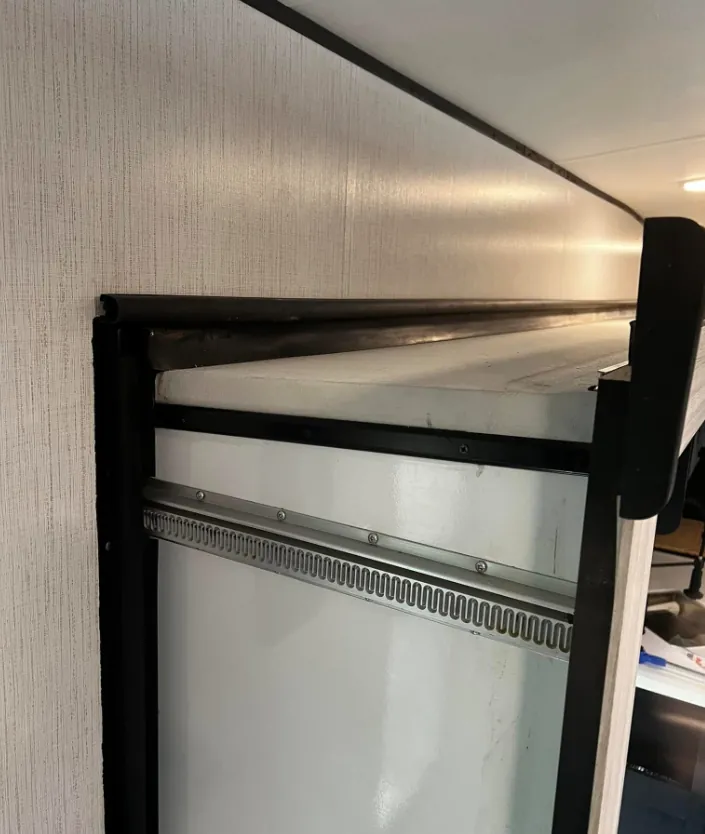
Schwintek In-Wall Slide Repair | Mobile RV Service Florida
Schwintek in-wall slide out of sync, stalling or stripping gear teeth? Mobile motor, rail and controller repair across Florida. Call 888-759-1438.
Owners describe it the same way almost every time: the slide is going out crooked, or one side is running way ahead of the other. On a Schwintek in-wall slide that is a synchronization failure between the two sidewall motors, not a broken ram or a snapped cable. The left and right motors are tied together only by the Lippert controller's timing, so once one side stalls the room racks in its rails and the gear teeth begin to chew.
How the Schwintek In-Wall System Actually Moves the Room
The Schwintek system, sold by Lippert as the In-Wall Slide-Out, never touches the floor of the coach. Two 12-volt gear motors sit in the vertical channels at the leading edge of the room, one buried in each sidewall, and they carry the whole room between them.
Each motor spins a small pinion that walks up and down a toothed rail bolted inside that wall cavity. The room climbs its own track instead of being pushed by a ram or dragged by a cable, which is exactly why the system fits inside a thin wall and steals no floor height from the living space.
Both motors answer to one brain, most commonly the Lippert 379283 In-Wall Slide-Out Controller. There is no shaft, chain, or torque tube physically tying the two sides together. The room stays square only because the controller feeds both motors in step and watches what each one is drawing, and that is the strength and the weakness of the entire design.
Out of Sync: Why One Side Leads and the Room Racks
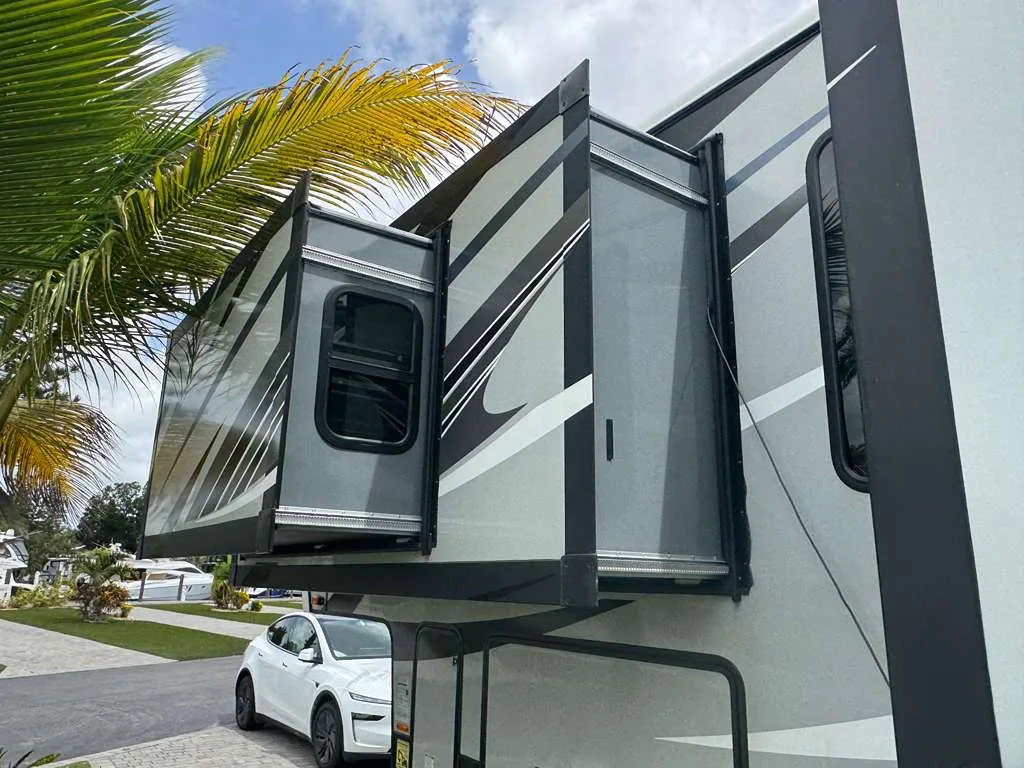
Synchronization on a Schwintek is electronic, not mechanical. The controller watches the current each motor pulls and holds the pair in step, so the instant one side meets more resistance than the other, the timing relationship it was holding is gone.
That resistance is rarely dramatic. A dry seal grabbing, grit packed into the rail teeth, a room that has settled a few millimeters, or a battery too flat to spin both motors under load will all do it. One side slows, the controller throttles or cuts it, the other keeps walking, and the room enters the wall diagonally.
Recovering from that is a deliberate step, not something that fixes itself. The room has to be driven fully in and the switch held roughly five to ten seconds past the point where all movement stops, so the controller relearns both motors' home position. Skip that and a mechanically perfect repair drifts straight back out of sync.
Stripped Gear Teeth, Chewed Rail, and the Sound That Comes First
The noise owners report first is a clacking or ratcheting on one side while the room is still moving, or a room that travels partway and quits. That sound is the pinion skipping across the rail teeth instead of engaging them cleanly.
Schwintek gear packs and rails wear as a matched pair. Once a pinion has rounded off it will round off a fresh rail within a handful of cycles, and a new rail run against a worn pinion does the same damage in reverse, which is why the motor and the rail on a failed side are normally replaced together.
Inspection is direct and does not require guessing. Run the room out as far as it safely goes, pull the interior fascia, and put a flashlight up the channel. Sharp square rail teeth are fine; rounded crowns or bright polished wear on one face of each tooth are not, and metal filings in the bottom of the channel confirm it.
Reading the System: Voltage, Current Draw, and Which Side Is Faulty
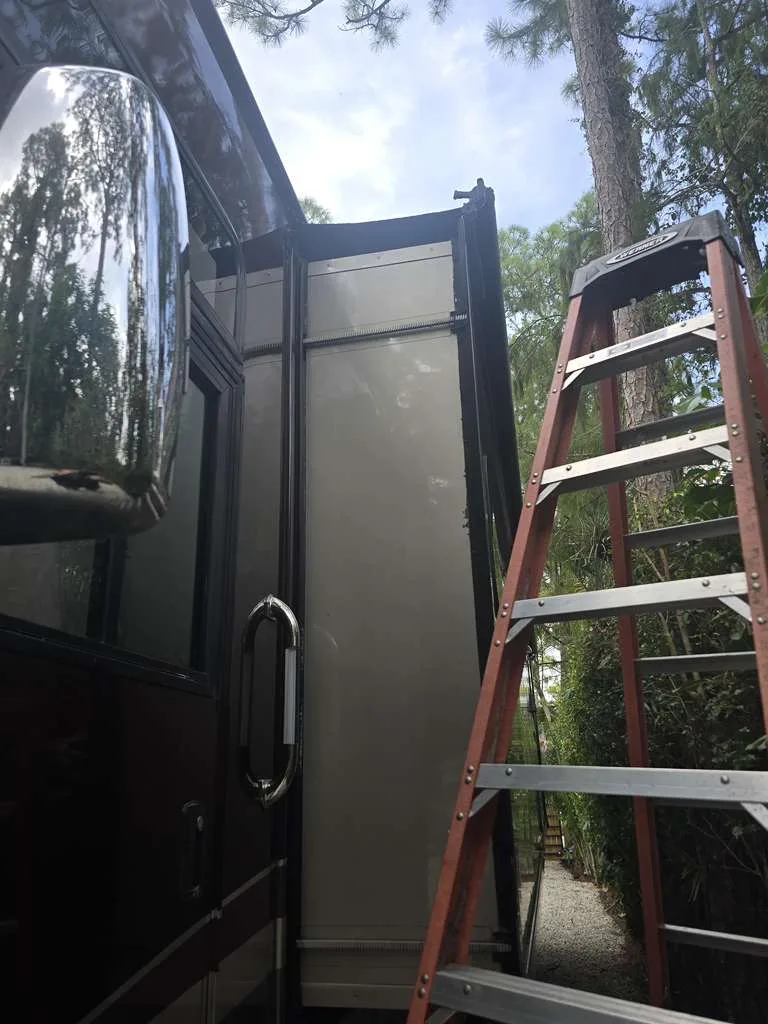
Lippert's own troubleshooting starts at the battery, and there is a good reason for that. Schwintek motors are torque hungry, and a pack that reads a healthy 12.6 volts at rest can sag below 11 volts the moment both motors load up, which the controller reads as a stall.
So the first two readings on any Schwintek call are a digital multimeter on the controller's power terminals while the room is actually moving, and a clamp meter around each motor lead during the same run. A side pulling meaningfully more current than its partner is the binding side, and that narrows the job before anything is unbolted.
The cleanest test for a suspect motor is a swap. Move the left motor lead to the right output on the controller and run it. If the fault follows the motor, the motor is bad; if it stays on the same side of the coach, the problem is the rail, the wiring, or that controller output.
Why Florida Schwintek Systems Wear Out Ahead of Schedule
A Schwintek wears by the cycle, not by the calendar. A rig parked up north from November through April is not putting cycles on anything, and its gear teeth get a five month rest whether the owner planned one or not.
Rigs down here never get that pause. Seasonal residents, park models on annual sites, and full-timers run the room in and out right through the year, so a Florida coach can stack up the cycle count of two or three northern seasons inside a single one. Wear on the pinion and rail simply never stops accumulating.
The rail environment compounds it. Those vertical channels sit open at the bottom, and sand, pollen, and coastal salt haze settle into the tooth profile where they behave like grinding paste under load. That added drag is precisely the resistance the controller interprets as an out-of-sync condition, which is why so many Schwintek faults here begin as a cleanliness problem and end as a hardware one.
What a Mobile Schwintek Repair Involves and What It Typically Costs
The work happens at the coach because none of it needs a shop. Interior fascia and trim come off around the room, the motor unplugs from its harness, and the motor and gear pack slide out of the wall channel; a cordless drill with a nut driver, torx bits, a digital multimeter, and a clamp meter cover most of the job.
The time should be budgeted honestly. One motor plus the rail on that side is realistically a three to five hour visit once fascia removal, rail alignment, resync, and test cycles are counted, and doing both sides runs closer to a full day.
Parts pricing moves with supply, but Schwintek motors typically land in the low hundreds of dollars each, a rail set for one side falls in a similar band, and an In-Wall Slide-Out Controller usually costs less than either. Complete repairs commonly sit in a several hundred to roughly fifteen hundred dollar range depending on how many of those three pieces are damaged.
Sources
Every figure on this page comes from a manufacturer document or a standards body, not from another repair site. Here is where each one comes from.
- Lippert Customer Care Center - In-Wall Slide-Out product supportThat the Schwintek system is sold by Lippert as the In-Wall Slide-Out and is supported as two sidewall-mounted gear motors walking the room on toothed rails, as described in 'How the Schwintek In-Wall System Actually Moves the Room'.
- Lippert FAQ - One side of my slide room is moving faster than the other sideLippert's own answer is to check for debris in the slide racks and then re-synchronize the slide-out motors, which backs the claim in 'Out of Sync' that grit in the rail teeth causes the lead-side condition and that resync is the required correction rather than an optional step.
- Lippert service video - In-Wall Slide-Out Resynchronizing MotorsThat resynchronizing the two motors is a defined Lippert service procedure, supporting the info-gain point that a Schwintek repair is not finished until the controller has relearned both motors' home position.
- Lippert In-Wall Slide-Out Troubleshooting and Service ManualThe troubleshooting order used in 'Reading the System', where battery voltage and motor current draw are measured before any motor, gear pack or rail is condemned.
Related repairs
- Lippert Hydraulic Slide Repair
- our Lippert Cable Slide Repair service
- Rack Pinion Slide Repair in Florida
Other systems we service
Where we work
Service category
What this usually costs
| Item | Price | What it covers |
|---|---|---|
| Service call | $299 | Includes the trip out to your RV and the first hour on site |
| Work past the first hour | Quoted after diagnosis | We tell you what it will take before we carry on |
| Parts | Quoted per job | Special-order parts may need a deposit before we order them |
| Written estimate | No charge | You approve the estimate before any work starts |
The service call covers the trip out to your RV and the first hour on site. Anything beyond that depends on what we find, and we quote it and get your approval before carrying on.
The price ranges on this page come from our own recent jobs across Florida, not from an industry average. What you pay depends on the rig, the parts it needs and what we find on site, so we give you a written estimate before any work begins and you approve it first.
Frequently asked questions
Can I retract a Schwintek slide manually if a motor has failed?
Yes, though not by hand. Each Schwintek motor has a hex drive on its output that can be turned with a socket once the fascia is removed, and Lippert also offers a manual override arrangement for the system. The important part is working both sides evenly and a little at a time, so the room comes in square instead of racking further and damaging the rails on the way.
Why did my slide suddenly go crooked when it worked fine last week?
Nothing has to break for that to happen. One stall, one start on a low battery, or one seal grabbing on a hot afternoon is enough for the controller to lose the timing relationship between the two motors. The room then travels diagonally on every cycle after that, and the damage to the gear teeth is a consequence of the lost sync rather than the original cause of it.
Do both Schwintek motors have to be replaced at the same time?
Not always, but pairing them is often the smarter call. A new motor working beside a worn one drives at a slightly different effective speed under load, and that mismatch is the same condition that put the room out of sync originally. If the failed side also chewed its rail, replacing that rail along with the motor matters more than matching the opposite side.
What does a Schwintek slide repair usually cost?
It depends on which of the three pieces failed. Motors typically run in the low hundreds of dollars each, a rail set for one side lands in a similar band, and a replacement In-Wall Slide-Out Controller is usually less than either. With mobile labor added, most single side repairs fall in a several hundred to roughly fifteen hundred dollar range. Those are typical ranges, not quotes.
How is a Schwintek slide resynchronised?
By teaching the controller where home is. With the batteries charged, and on shore power if possible, run the room fully in and keep holding the retract switch about five to ten seconds after all movement has stopped. The controller uses that stall on both motors as its reference point. If the room is badly racked, free the binding first, because syncing a jammed room only locks in a bad reference.
Can a weak battery really cause Schwintek faults?
It is one of the most common causes we find. Both motors draw hard at the same instant, and a pack that reads fine at rest can drop under 11 volts during that surge. The controller sees the slowed motor as a stall, cuts it, and the room walks out of sync. Checking voltage at the controller while the room is moving, rather than at the battery while parked, is the meaningful test.