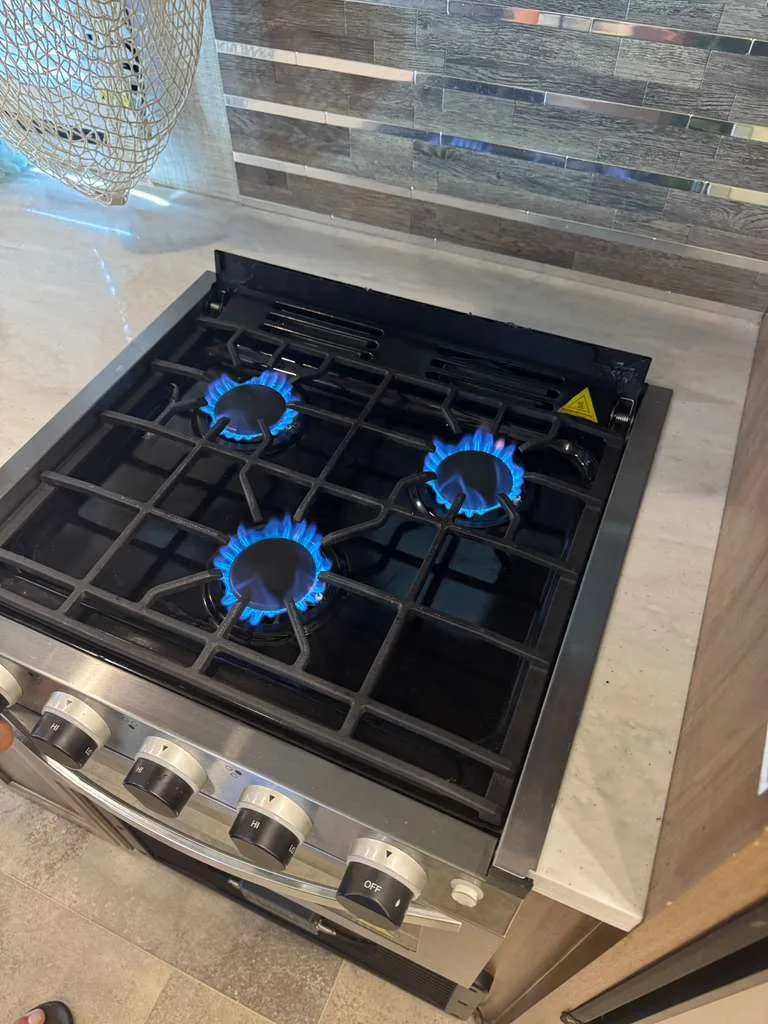
RV Appliance Repair: Refrigerator, Microwave and Cooktop
Fridge not cooling, microwave dead or a cooktop that will not light? Mobile RV appliance diagnosis and repair across Florida. Call 888-759-1438.
An RV appliance runs on a power source that changes as the coach moves between shore power, generator and battery, so the first question is never what broke but which source it failed on. Refrigerators run on 120 volt AC, LP gas and sometimes 12 volt DC, and testing each source separately splits the diagnosis before anything is opened.
What we handle in this category
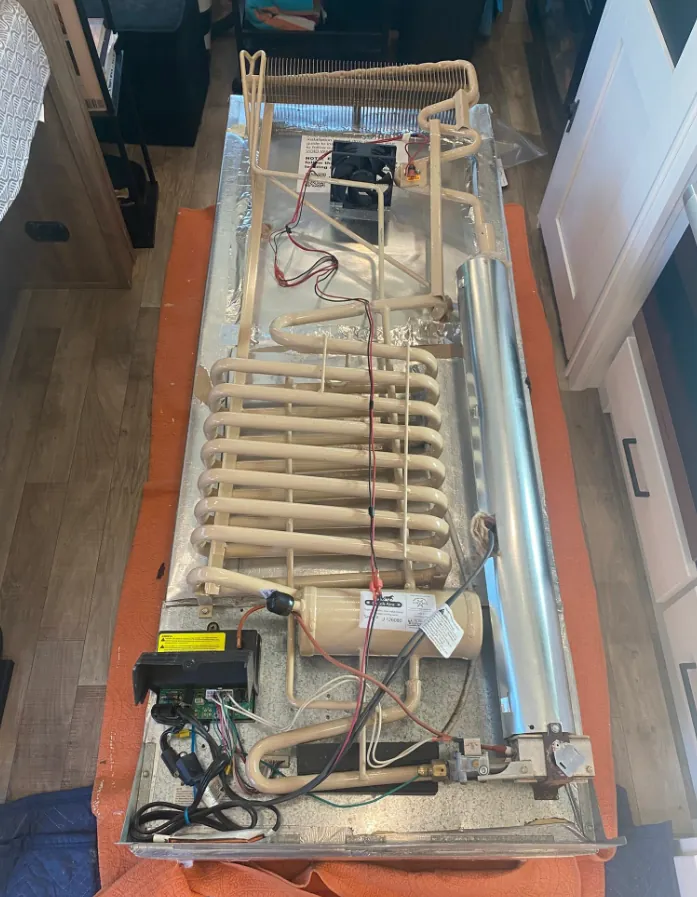
Norcold absorption cooling unit
See what this involves →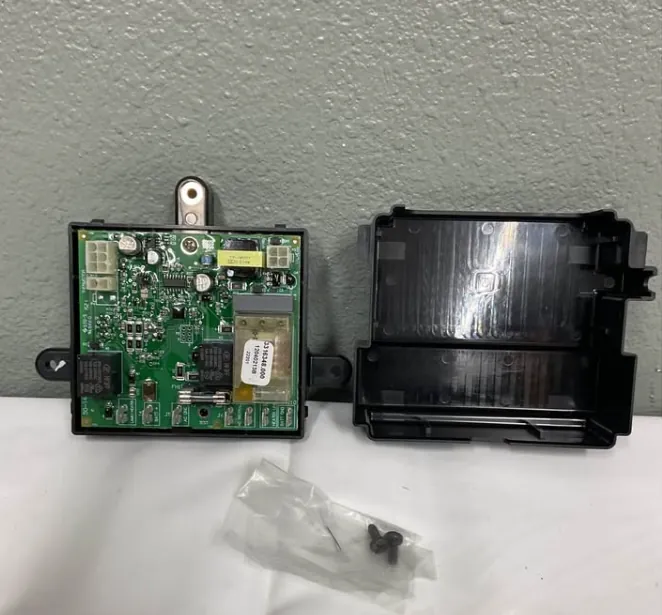
Dometic fridge control board + eyebrow
See what this involves →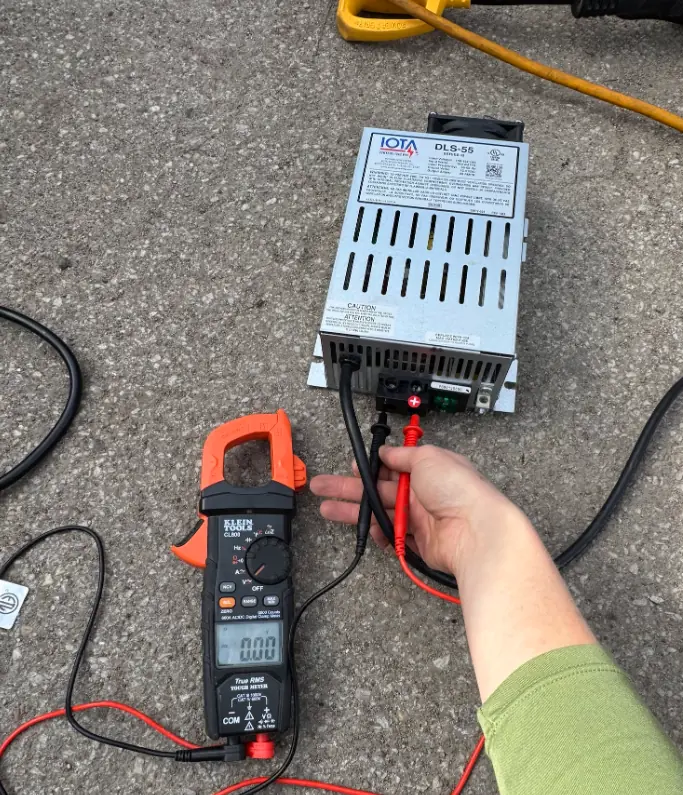
Absorption to residential 12V conversion
See what this involves →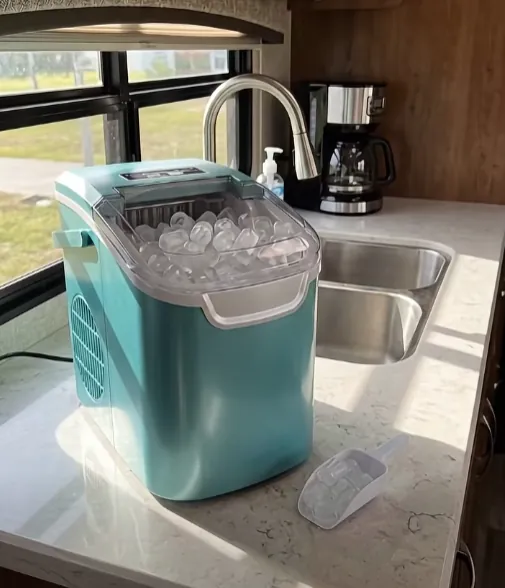
Ice maker + water line
See what this involves →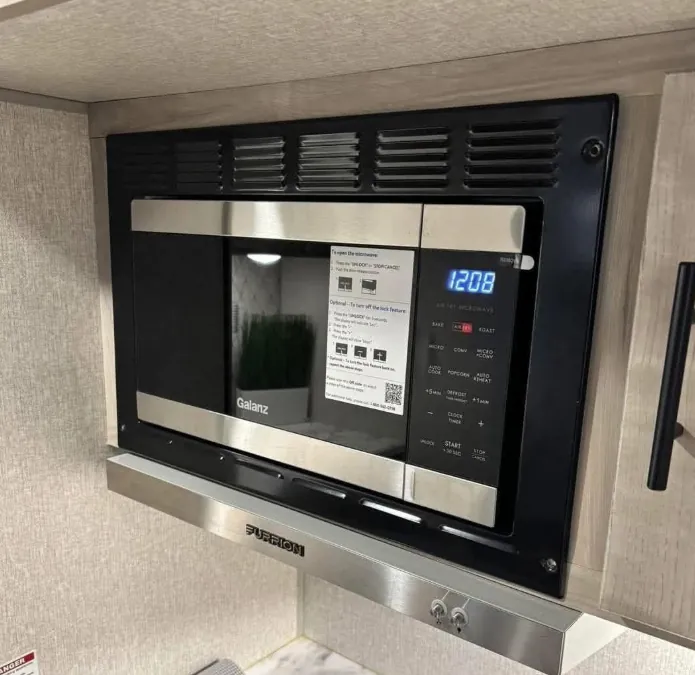
Convection microwave replacement
See what this involves →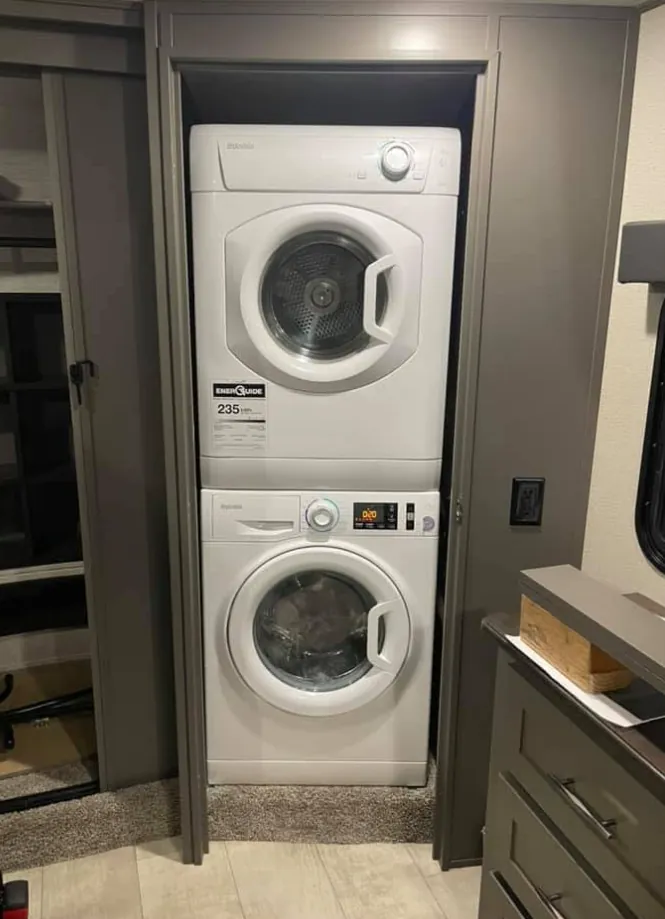
Washer/dryer install + venting
See what this involves →Which Power Source Did It Fail On? Test That First
An RV appliance is rarely a single-power appliance. A refrigerator is usually two-way, running on 120 volt shore power or on LP gas, and three-way models add 12 volt DC. Norcold lists the N4150 as an AC, DC and LP gas absorption refrigerator with automatic power source selection between electric and gas, and Dometic's energy selector does the same job, choosing the most suitable source available.
That automation is why the fridge stopped working is not yet a diagnosis. The coach moves between the pedestal, the generator and the battery bank, and the appliance quietly follows it, so the failure you noticed may belong to one leg rather than to the box.
Test one source at a time. Switch the automatic mode off, run on LP gas for a few hours, then restore shore power and force the unit to electric. Whichever source holds temperature has just proved the sealed cooling system is alive and moved the fault onto the other leg.
Absorption or Compressor: The Distinction That Decides Everything
Two different machines get called an RV refrigerator. An absorption unit has no compressor and no moving parts: a welded steel loop charged with ammonia, water and hydrogen, driven around by heat alone from an LP burner or a 120 volt element, with gravity and thermosiphon doing the pumping. A compressor unit works like your kitchen refrigerator, a motor circulating refrigerant on 12 volt DC or through an inverter.
Three things tell them apart. An absorption box has a GAS or AUTO mode on the panel and a lower sidewall vent door with a burner and flue behind it, and Norcold puts the data tag above the top shelf on the right on gas absorption models, on the left on DC and AC/DC models.
Gravity is the absorption pump, which is why Dometic instructs the refrigerator be kept level whenever the RV is parked for several hours or more, warns that loss of cooling can follow out of level, and notes level is not critical while traveling. A compressor ignores it.
Match the Symptom to the Right Repair

Cold on shore power but warm on propane clears the sealed system and moves the fault onto the gas leg: supply pressure, a blocked burner orifice, the electrode or the flame sense path. Cold on gas but warm on electric points at the AC heating element, its fuse or the relay switching it, and Norcold requires 115 volts minimum on both sides of the fuse to perform on AC.
Warm on both, with heat proved going into the boiler, is a failed cooling unit.
A microwave with a lit display and a cold plate is a high voltage or interlock fault inside the oven; a breaker tripping when the roof air starts is a load budget problem. A cooktop that will not light is LP supply, regulator or orifice work, an oven that drifts off temperature is usually its thermostat. A burning smell outranks all of it: shut that appliance off at both LP and 120 volts first. A damp cabinet base near the fridge is the ice maker line until proved otherwise.
Florida Heat, the Ammonia Warning, and a Documented Fire History
Heat is the defining stressor here. Dometic states its refrigerators should not be operated above 110 degrees Fahrenheit for periods longer than 12 hours, and the air in a sidewall chase behind a sun-facing wall reaches that more easily than owners assume. An absorption unit rejects heat by convection off its condenser into that same chase, so capacity falls exactly when you need it.
Dometic classes both an ammonia smell and a refrigerator that has simply stopped cooling as a fire or explosion hazard, and its procedure for an ammonia smell is to switch the unit off at the front control panel, leave the doors shut, open the RV windows and doors and evacuate, then shut the manual LP valve and disconnect the 120 volt supply at the rear.
The history is documented. NHTSA recall 10V563 covers Norcold 1200, 1201, 1210 and 1211 gas absorption refrigerators built between December 1996 and October 2010, with a faster thermocouple sensing system fitted to cut power before an overheating boiler can cause a fire.
Repair or Replace: The Rule That Cuts Across Every Appliance
Several RV appliances cost more to repair than to replace, so the useful answer is a rule rather than a price. Ask three questions in order.
Is the core of the appliance alive? On a refrigerator that is the sealed cooling system, and the test is thermal: if heat is proved going in and the box still will not cool, no board, sensor or element changes the outcome. On a microwave it is the magnetron and high voltage section, and on a washer/dryer combo it is the drum bearing and motor.
Is the failed part a component or the appliance itself? A thermistor, heating element, control board, igniter, door switch or thermostat is a component and is worth replacing. A vented cooling unit is effectively the appliance, because a welded loop cannot be evacuated and recharged in your driveway.
What can the coach already carry? Replacing absorption with a compressor refrigerator is an electrical project, not an appliance swap, and it ends propane cooling permanently. Repair the component, replace the core.
Sources
Every figure on this page comes from a manufacturer document or a standards body, not from another repair site. Here is where each one comes from.
- Dometic DM2672 Refrigerator Operating Manual (media.dometic.com PDF)The FIRE OR EXPLOSION HAZARD warning that names two triggers - 'If the refrigerator stops cooling - or - if it emits an ammonia smell, immediately turn the refrigerator off and contact a Service Center'; the troubleshooting procedure for an ammonia smell (turn off at the front control panel, do not open the refrigerator doors, open RV windows and doors and evacuate, turn off the manual LP gas valve at the rear, disconnect the 120 VAC at the rear); the Safe Operation limit of 110 degrees F maximum for periods in excess of 12 hours at one time; the automatic energy selector that picks the most suitable source and can be set to AUTO, LP only or DC; and the leveling rule that the refrigerator must be kept level when the RV is parked for several hours or more, that loss of cooling could occur in a noticeable out-of-level position, and that level is not critical when traveling.
- Thetford (Norcold) N4150 AC/DC/LP gas absorption refrigerator - support and FAQThat a current Norcold gas absorption model is a three-way AC, DC and LP gas appliance with 'automatic power source selection between electric and gas'; the manufacturer statement that Norcold refrigerators require a minimum of 115V on both sides of the fuse to perform as expected on AC; the answer that the warmer it is outside, the higher the refrigerator setting must be to maintain proper cooling; and the location of the model data tag - inside on the right-hand side above the top shelf on gas absorption models, on the left-hand side on DC and AC/DC models.
- NHTSA recall 10V563 - Norcold 1200, 1201, 1210 and 1211 gas absorption refrigeratorsThe documented fire history: that the recall covers all Norcold 1200, 1201, 1210 and 1211 models manufactured between December 1996 and October 2010, that it supersedes four earlier recalls (02E-045, 08E-030, 09E-026 and 09E-027), and that the remedy is a faster responding thermocouple high temperature sensing system fitted to interrupt power to the refrigerator when it detects high temperatures that could lead to a fire.
- Thetford (Norcold) Polar Elite N20DC - 12V DC compressor RV refrigeratorThat a 12 volt DC compressor refrigerator is a manufacturer-supported alternative to an absorption box: Norcold lists the Polar Elite N20DC as a 19 cu. ft. 12V DC compressor RV refrigerator that fits an 18 cu. ft. cutout and runs up to 20 hours on a single battery charge, which is the battery-capacity dependency behind the convert-or-replace answer.
- Dometic Refrigerators Limited Two-Year Warranty (Form 3316980.000)That the manufacturer warranty on a Dometic refrigerator runs two years from the date of purchase by the original purchaser and covers labor, specified parts and freight, so most coaches facing the repair-or-replace decision on a refrigerator are facing it out of warranty and at their own cost.
Related systems
Where we work
What this usually costs
| Item | Price | What it covers |
|---|---|---|
| Service call | $299 | Includes the trip out to your RV and the first hour on site |
| Work past the first hour | Quoted after diagnosis | We tell you what it will take before we carry on |
| Parts | Quoted per job | Special-order parts may need a deposit before we order them |
| Written estimate | No charge | You approve the estimate before any work starts |
The service call covers the trip out to your RV and the first hour on site. Anything beyond that depends on what we find, and we quote it and get your approval before carrying on.
The price ranges on this page come from our own recent jobs across Florida, not from an industry average. What you pay depends on the rig, the parts it needs and what we find on site, so we give you a written estimate before any work begins and you approve it first.
Frequently asked questions
My RV refrigerator stopped cooling. Is that a food problem or a safety problem?
Treat it as a safety problem until it is diagnosed. Dometic's own manual puts a fire and explosion hazard warning on two symptoms, not one: an ammonia smell, and a refrigerator that has simply stopped cooling. Its instruction for either is to turn the refrigerator off immediately and contact a service center rather than restarting it repeatedly. If you smell ammonia, leave the doors shut, open the RV windows and doors, get everyone out, then shut the manual LP valve and disconnect the 120 volt supply at the rear.
How do I tell whether I have an absorption or a compressor refrigerator?
Look at three places. The control panel: a GAS, AUTO or LP setting means absorption, while a plain thermostat with no gas mode means compressor. The outside wall: a lower vent door with a burner, flue and LP line behind it is absorption only. The data tag, which Norcold puts inside on the right-hand side above the top shelf on gas absorption models and on the left-hand side on DC and AC/DC models. A compressor unit also cycles audibly on and off, and an absorption unit is silent.
Why does my absorption fridge need the RV level when a household one does not?
Because gravity is the pump. An absorption loop has no compressor moving anything, so the liquid returning from the absorber has to run downhill to the boiler on its own. Tip the coach and that return slows or puddles. Dometic instructs that the refrigerator be kept level whenever the RV is parked for several hours or more and warns that loss of cooling can follow if it runs noticeably out of level, while noting that level is not critical while the coach is traveling and the liquid is sloshing anyway.
Is it worth replacing a cooling unit, or should I convert to a residential refrigerator?
Decide it on the coach, not the fridge. A compressor refrigerator cools harder in sustained Florida heat, ignores leveling and has no ammonia to vent, but it draws continuously from the battery bank and needs inverter and battery capacity many coaches do not have. It also ends propane cooling permanently, which matters if you dry camp. If the bank and inverter are already there, converting is reasonable. If they are not, a replacement cooling unit is the cheaper and simpler answer.