LP Gas Leak Test and Certification for RVs Across Florida
Smell propane or need a documented LP test? Mobile RV manometer leak test and written pass or fail record, statewide in Florida. Call 888-759-1438.
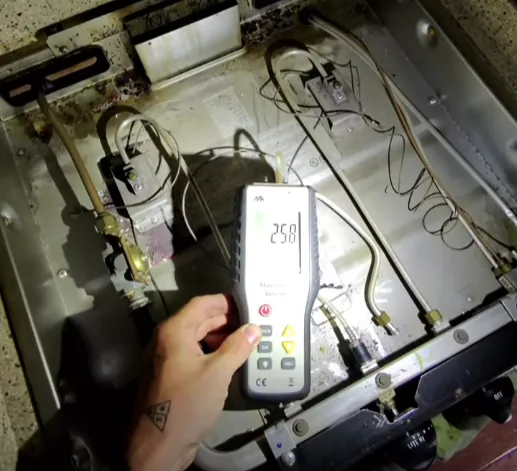
An RV LP gas leak test is a timed pressure test, not a sniff around the fittings with soapy water. Our technicians connect a manometer to the regulator test port, bring the system to 11 inches of water column, close the tank valve and watch the column hold for a full three minutes with no measurable drop. A pass is documented in writing.
Where Are the Leaks Coming From? What the Test Actually Measures
An LP leak test measures whether the whole propane system will hold a set pressure for a set time. It is not a walk around with soapy water. Soap only finds leaks large enough to bubble at a joint you can reach, which leaves out buried lines, appliance gas valves and anything behind a wall or above the underbelly. Almost nobody calls and asks for the test by name. Owners call and say they smell gas at the front of the coach, that the fridge quit on propane, that the alarm keeps going off, or simply where are the leaks coming from. Those are system level symptoms, so a system level test is the honest first step. The manometer answers one question with a number: does the system lose pressure with every appliance shut off. If it holds, the plumbing is sound and the fault sits in an appliance or a detector. If it drops, gas is escaping and everything else waits until that is found.
The Manometer Test Step by Step, and What Gets Shut Off First
A manometer reads inches of water column, the very low pressure LP appliances run on. Our technicians use a digital manometer such as a Testo 510 on the 1/8 inch NPT test port of the two stage regulator. Before the hold every appliance is shut off at its own control: refrigerator off LP and off auto, furnace thermostat down, water heater off at the panel, cooktop and oven valves closed, any pilot out. Then the branch valves, where a manufacturer instruction governs. Dometic requires that at test pressures of 1/2 psi or less the refrigerator be isolated by closing its individual manual shutoff valve, and disconnected outright above that. Eleven inches water column is about 0.397 psi, so that valve closes for the documented hold, along with any appliance whose maker says the same. Operating pressure is confirmed at 11 inches with one burner lit, then the burner and tank valve close. Three minutes with no measurable drop is a pass; transport and pre purchase paperwork get a ten to fifteen minute hold.
Why a Documented Pass Matters More Than a Verbal One
A verbal all clear is worth nothing to anyone who was not standing there. A written test record is what other people accept, and several of them can ask for it. Long term and seasonal RV parks sometimes want to see a current LP test before you hook up, transport companies can ask before they move a coach, insurers can ask after a claim, and buyers ask during a pre purchase inspection. We are not a certifying authority and we do not issue a state sticker, so we will never tell you we certified anything we did not. What our technicians hand you is a dated test record: the coach and VIN, the regulator operating pressure measured, the test pressure, the hold time, the result, and the technician who performed it. That single page turns a safety check into something you can show. Keep it with the registration, because the moment somebody asks for it is rarely the moment you have time to book a test.
Is It Leaking or Broken? What Happens When the System Fails the Hold
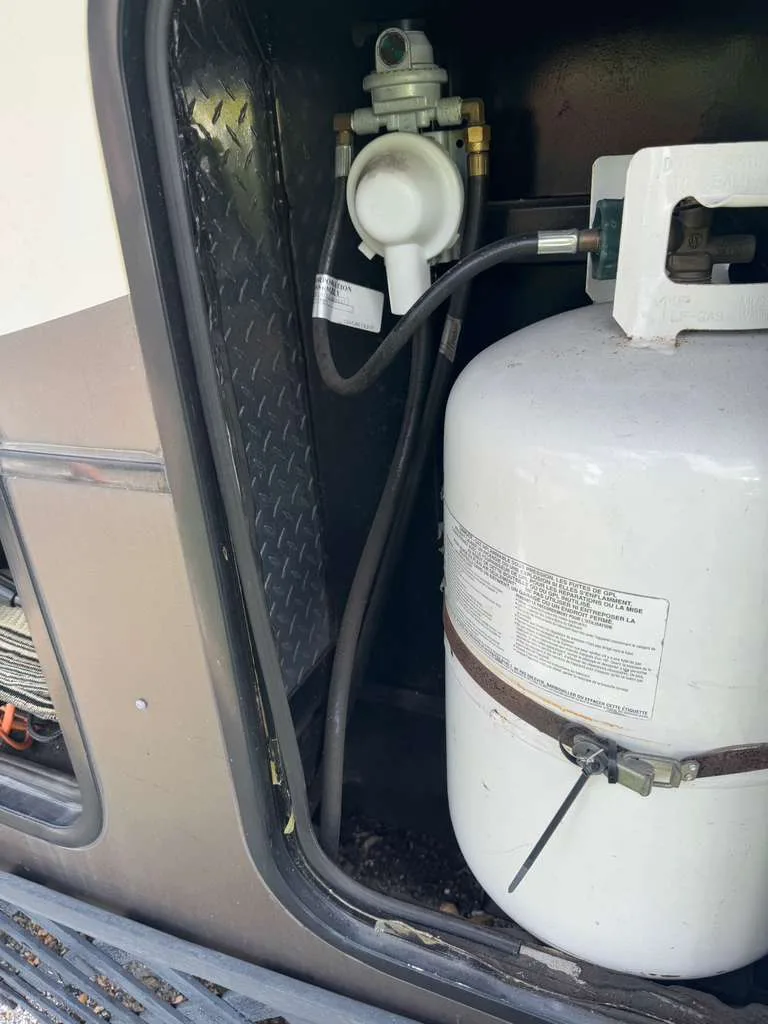
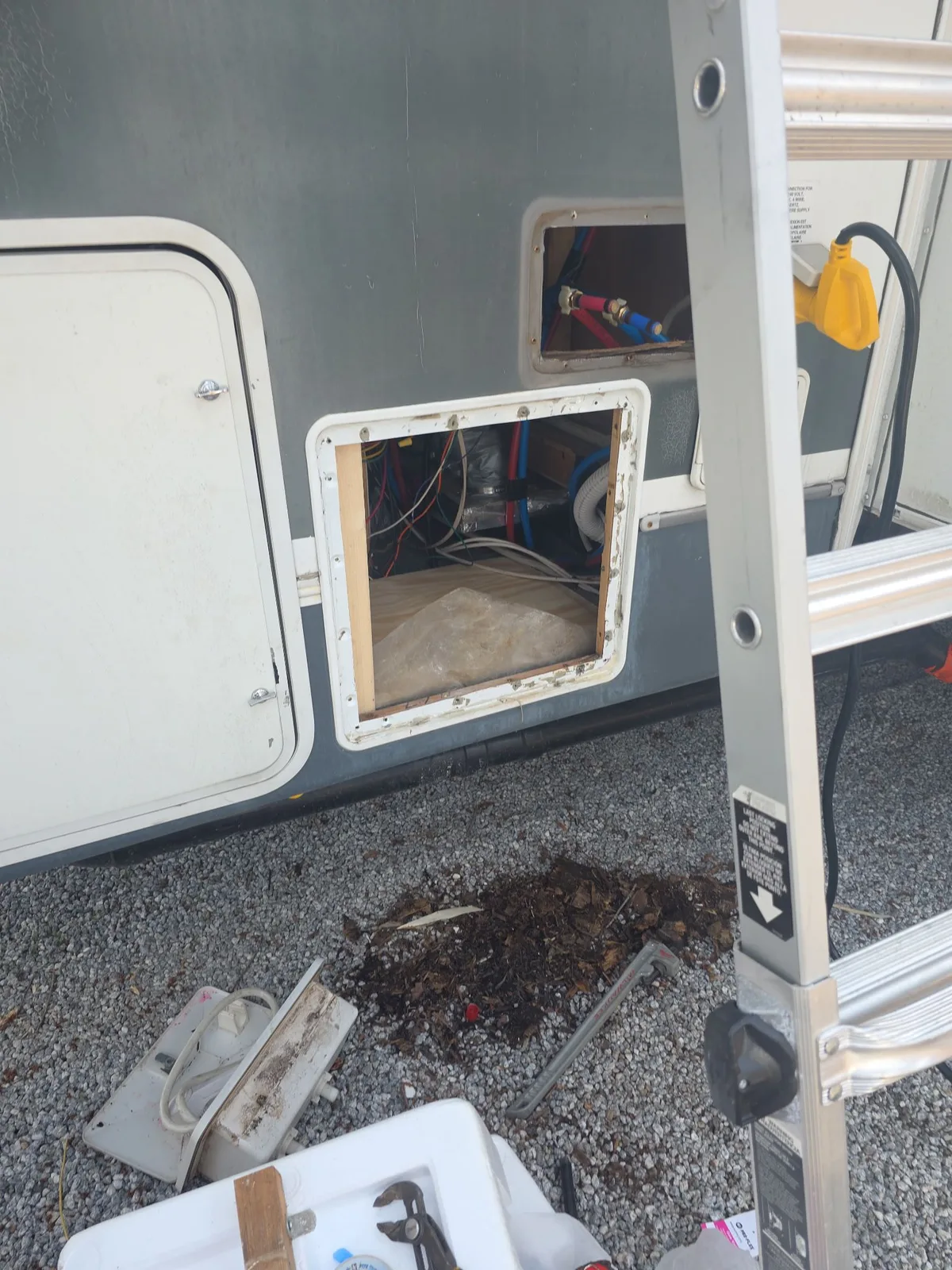
A failed hold tells us gas is escaping but not yet where. Our technicians pinpoint it with an electronic combustible gas detector along the line runs and leak detection fluid at accessible joints, then split the system by closing one branch valve at a time and repeating the hold until the drop stops. One pass runs the other way. When the documented hold passes with the refrigerator isolated and the owner can still smell gas, we reopen that branch valve and hold again, because an appliance valve seeping internally only shows up while its appliance is in the test. What the isolation finds decides the repair. A leaking regulator seat or diaphragm goes to regulator replacement, a weeping flare nut or cracked pigtail goes to LP line and fitting repair, a seeping tank valve goes to valve and OPD service, and a yellow burning appliance goes to burner orifice service. Left alone, a small seep empties a tank, leaves appliances short of pressure and dropping out mid cycle, and eventually finds an ignition source.
Why LP Detectors Expire, and Why Chirping Is Not Automatically a Leak
Almost no owner knows the LP detector expires. MTI Industries specifies a five year sensor service life across its Safe-T-Alert range, counted from the installation date, or the production date on the case when that is unknown. It is printed on units like the MTI Safe-T-Alert 30-442 and 40-441 and the older Atwood 36681. The element drifts as it ages, and past it the reading is untrustworthy. A chirp is not an alarm. End of life chirps, low voltage chirps and a real gas alarm sound different, and your manual says which is which. MTI rates its 20 and 30 Series down to 8 volts DC, below which the unit flags a malfunction, not gas. Detectors also react to things that are not propane: hairspray, aerosol cleaners, spilled alcohol and hydrogen off a charging battery bank nearby. A screaming detector on a system that passes the hold points at the detector, which is a replacement rather than a leak repair.
Salt Air, Humidity and Spider Webs: How Florida Coaches Fail
Two things put Florida coaches on the failed side more than anything. Coastal salt air and humidity corrode brass flare fittings and the steel line along the frame, and eat the regulator vent screen. The second is pests. Coaches sit still through the summer, and spiders and mud daubers move into the regulator vent, the vent tube and the burner tubes. A webbed vent makes lock up pressure behave erratically. A webbed orifice does something else. Because the gas jet is what pulls primary air into the burner venturi, choking the gas chokes the air with it, so the flame arrives small and slow to prove, or the control locks out. Suburban states that consequence for the ST-42 and ST-60 as flame out protection shutting the gas supply off. Yellow and sooty is the air path failing by itself, which is why Suburban has owners check the door screen for material blocking combustion and ventilating air. Our technicians inspect the vent, vent tube and accessible orifices, because a blocked vent skews the numbers before the clock starts.
Sources
Every figure on this page comes from a manufacturer document or a standards body, not from another repair site. Here is where each one comes from.
- Testo 510 differential pressure manometer - manufacturer product pageThe digital manometer specification behind the timed hold test, including differential pressure measurement in inches of water column at the regulator test port.
- RV Industry Association (RVIA)The industry body whose standards inspection program covers propane system installation and LP gas alarm requirements on new recreational vehicles.
- MTI Industries Safe-T-Alert 70 Series CO and Propane Alarm User's ManualThe manufacturer stated five year sensor service life, the end of life signal, and the rule to replace no later than five years after the production date on the back when the installation date is unknown.
- MTI Industries Safe-T-Alert Model 20-441-P RV Propane Gas Detector ManualThe five year replacement interval measured from the installation date, and the specification that the detector operates normally down to 8 volts DC, below which low voltage triggers the malfunction alarm rather than a gas alarm.
- Dometic DM, RM and DMA Refrigerators Installation Manual, Form No. 3313238.036The requirement that the gas supply system hold no more than 11 inches water column, and the instruction that when the piping is tested at 1/2 psi or less the refrigerator must be isolated from the gas supply piping system by closing its individual manual shutoff valve, and disconnected entirely above 1/2 psi.
- Suburban (Airxcel) ST-42 and ST-60 On Demand Water Heater User's Manual, PN 206212-1Flame Out Protection, which shuts the gas supply off should the flame be extinguished inadvertently due to low propane gas pressure or burner malfunction. The manufacturer stated consequence of low supply pressure is flame loss, not a yellow flame.
- Suburban Tank Water Heaters Operation and Maintenance Guide, Part Number 206244Soot is a sign of incomplete combustion and must be corrected before operating the water heater, paired with the instruction to check the screen in the door so no foreign material prevents the flow of combustion and ventilating air, which places soot on the air path rather than the gas orifice.
Related repairs
Other systems we service
Where we work
Service category
What this usually costs
| Item | Price | What it covers |
|---|---|---|
| Service call | $299 | Includes the trip out to your RV and the first hour on site |
| Work past the first hour | Quoted after diagnosis | We tell you what it will take before we carry on |
| Parts | Quoted per job | Special-order parts may need a deposit before we order them |
| Written estimate | No charge | You approve the estimate before any work starts |
The service call covers the trip out to your RV and the first hour on site. Anything beyond that depends on what we find, and we quote it and get your approval before carrying on.
The price ranges on this page come from our own recent jobs across Florida, not from an industry average. What you pay depends on the rig, the parts it needs and what we find on site, so we give you a written estimate before any work begins and you approve it first.
Frequently asked questions
Can you check and fix a propane regulator leak?
Yes. Our technicians start with the manometer test so we know whether the regulator is actually the leaking part or just the place where you can smell it. We measure operating pressure and lock up at the test port, then hold the system with the tank valve closed. If the regulator is passing gas past its seat or diaphragm, replacement is the fix and it becomes a separate job from the test itself.
Where are the leaks coming from if the soap test showed nothing?
Soap only bubbles at joints you can reach, so it misses buried line, hose inside a chase and anything sealed inside an appliance. A failed hold with dry joints usually means an appliance gas valve is seeping internally. Our technicians close one appliance branch valve at a time and rerun the three minute hold until the pressure stops falling, which names the culprit without guessing.
How much does an RV LP leak test cost and how long does it take?
Our service call covers the trip out and the first hour on site at the rate in the pricing table on this page; anything past that first hour is quoted and approved before we carry on. The first hour of diagnostics is normally included. A clean test with documentation usually fits inside that first hour. Pinpointing a failure adds time, so we quote the repair separately once we know what it is.
My LP detector keeps chirping. Is that a leak?
Often it is not. MTI Industries gives its Safe-T-Alert detectors a five year sensor service life, counted from the installation date or, when unknown, the production date on the case. An end of life chirp is one of the most common reasons we get called out. Low voltage chirps too, though MTI rates its 20 and 30 Series alarms down to 8 volts DC before a malfunction signal starts. A passing manometer hold tells you the detector is the problem.
Do I need an LP test before transport or before selling my RV?
Nobody in Florida hands you a mandatory sticker, but the request comes up often enough to be worth having on file. Transport companies can ask before they move a coach, long term and seasonal parks can ask at check in, insurers can ask after a claim, and buyers ask during a pre purchase inspection. A dated test record answers all four without rebooking anything.