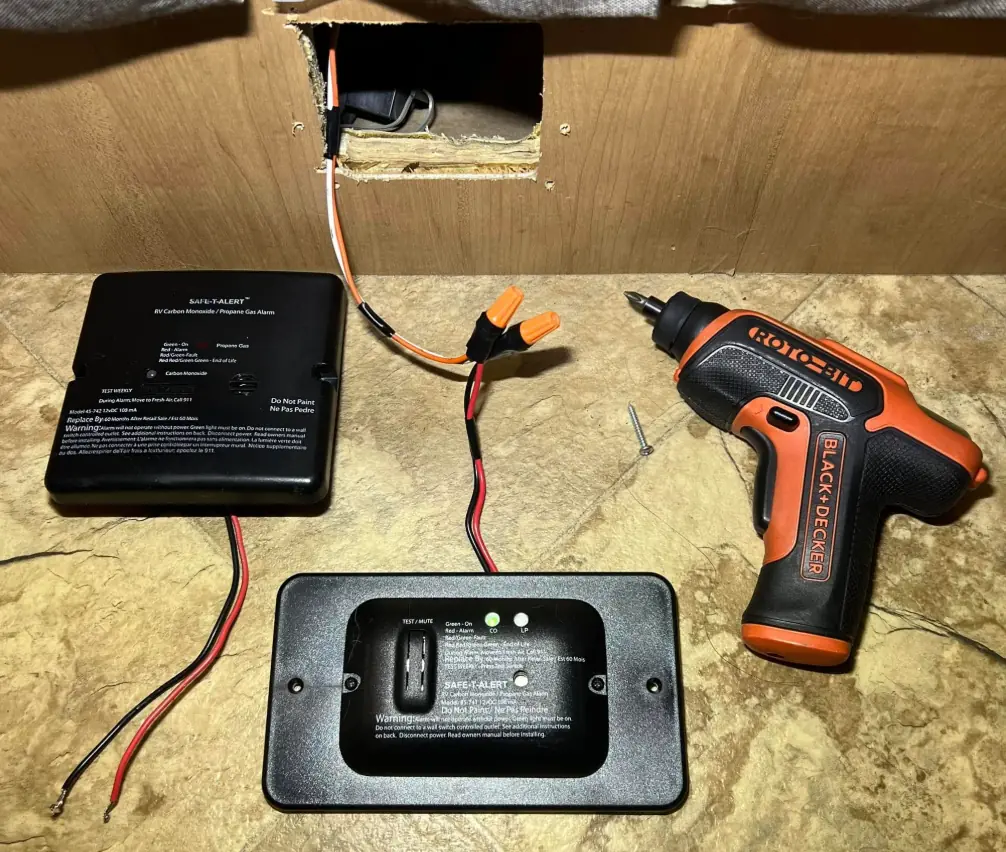
RV LP Gas Detector Replacement and Expired Propane Alarms
Expired RV propane alarms still test fine and still fail. We read the LED pattern, supply voltage and production date, then replace. Call 888-759-1438.
An LP detector complaint gets decoded before anyone touches a propane bottle. Our technicians read the LED pattern first, then supply voltage at the alarm, then the production date stamped on the back of the case. Red red green green with a beep every 25 to 30 seconds is end of life, not gas.
What We Check First When a Propane Alarm Will Not Stop Beeping
A beeping propane alarm is a signal, not a diagnosis, and it has to be decoded before anyone starts hunting for gas. Our technicians read the LED pattern first, because the alarm is already reporting which of four states it is in. On a Safe-T-Alert 20-441-P or 30-442-P, steady green is normal, flashing red with a constant tone is propane, alternating red and green with one beep every 30 seconds is a malfunction or low supply voltage, and flashing red red green green with a beep every 25 to 30 seconds is the end of life signal. Second comes voltage, measured at the alarm terminals rather than at the battery. MTI Industries specifies normal operation down to 8 volts DC, and lower voltage triggers that same malfunction pattern. So a tired house battery or a corroded ground stud reads exactly like a broken detector. Third is the production date on the case, and only then does propane become the suspect.
Where the Replacement Date Is Printed and How to Read It
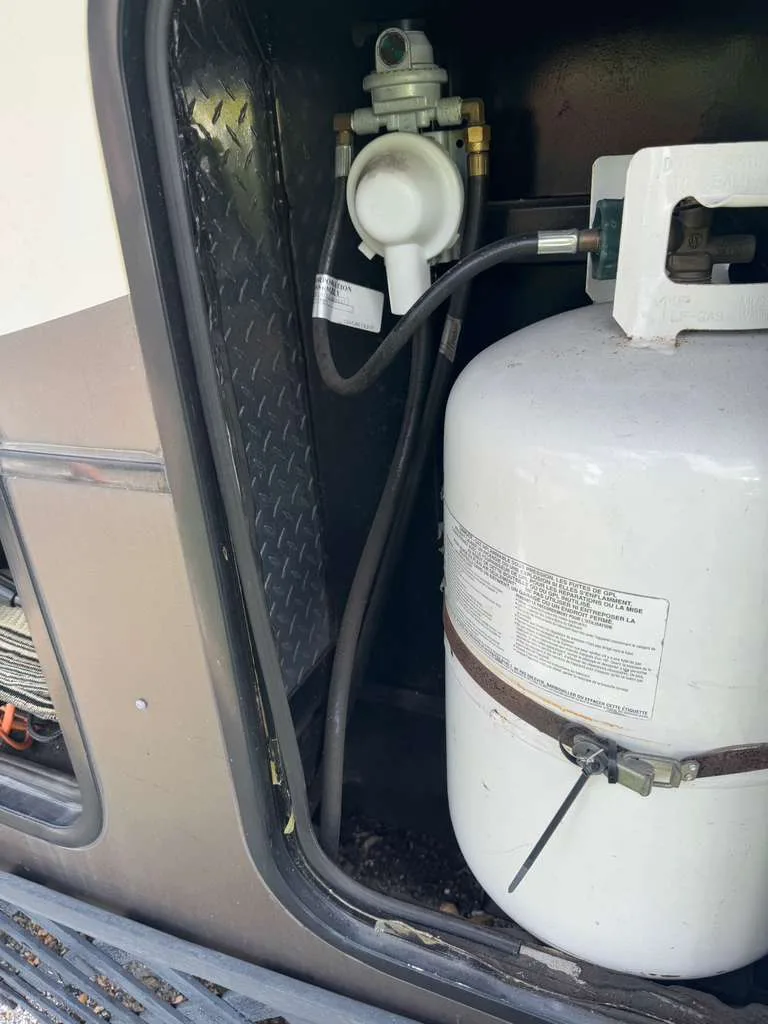
Every RV propane alarm has a service life, and the date that starts the clock is printed on the unit rather than recorded anywhere you are likely to look. MTI Industries prints a production date on the back of the case, and its Owner's Replacement Record asks you to enter the installation date and calculate a replace by date five years later. When the installation date is unknown, the 70 Series manual gives the fallback in plain language: replace the alarm no later than five years after that production date. For a coach you did not buy new, the same manual offers a second rule worth knowing, which is to use the month and year the RV was built, or the month and year you bought it, or May plus the model year, whichever is earliest. Two self-adhesive labels ship with the alarm for exactly this reason. One goes beside the unit with the replace by date written on it.
Chirping Is Almost Always End of Life or Low Voltage
A real propane alarm does not chirp. When gas crosses the trigger threshold, which MTI sets below 25 percent of the lower explosive limit of propane, the LED flashes red and the sounder runs continuously at 85 decibels until the air clears or the mute button is pressed. Intermittent beeping every 25 to 30 seconds is a different message entirely. That interval belongs to the end of life signal. Pressing TEST or RESET silences it for 72 hours, and the manual allows that reset to be repeated for a total of up to 30 days, after which it cannot be silenced at all. That 30 day window is a grace period for ordering a part, not a reprieve, and the countdown is the sensor aging out rather than a fault appearing. MTI's instruction is blunt about it: do not disconnect the alarm until you have a replacement in hand to install.
Why the Alarm Sits Between 4 and 20 Inches Off the Floor
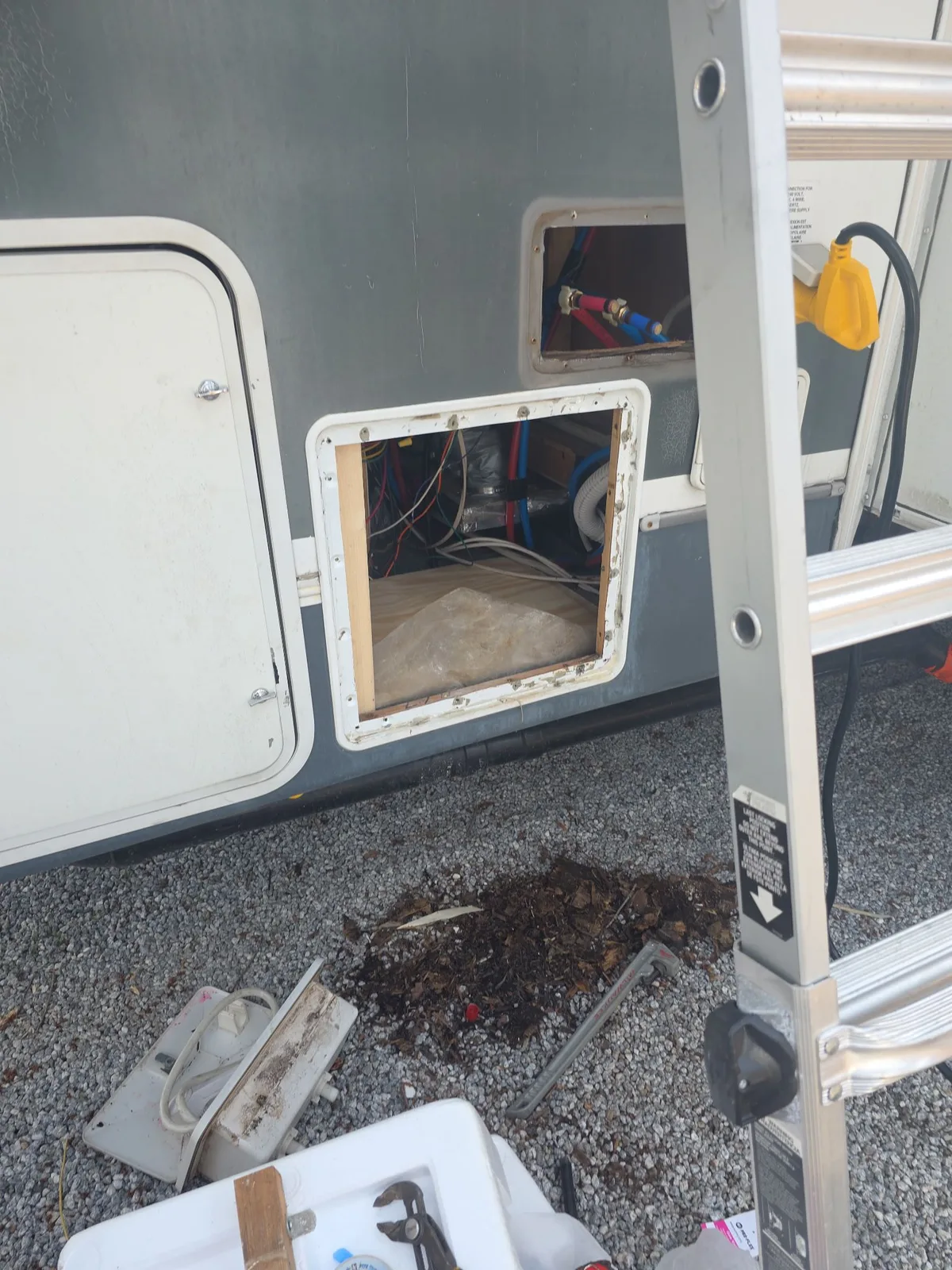
Propane vapor is heavier than air, so a leak sinks and pools at floor level instead of rising the way smoke does. That single physical fact sets the mounting rule. MTI specifies installation at least 4 inches but not more than 20 inches off the floor, positioned near the appliances that could leak, which usually means the furnace, water heater, range or refrigerator bay. The exclusions matter just as much. Do not mount within 12 inches of an exterior door, an opening window, or a heating or return vent, because moving air sweeps the sample away from the sensor. Outside walls, closets, and anywhere behind furniture or drapes are out for the same reason. Relocating a detector up onto a wall to tidy up a remodel is a common and quiet mistake. The unit still lights green, still passes its button test, and no longer sits where propane actually collects.
False Alarms, Humid Storage and a Sensor Full of Debris
These alarms are not propane specific. MTI lists acetone, alcohol, butane and gasoline among the gases that will set one off, which is why hairspray, aerosol cleaners, contact adhesive, spilled sanitizer and the off-gassing from new vinyl or carpet in a hot closed coach all read as a leak. The alarm is behaving correctly and the air genuinely is loaded with something combustible. Cleaning products damage sensors as well as trigger them. The 35 Series manual says not to spray cleaning agents or waxes onto the front panel and not to use silicone-based products on or near the alarm, because it can reduce the unit's ability to detect gas at all. Then there is where the alarm lives. A coach shut up through a Florida summer collects insect debris, roach frass and mud dauber nesting at floor level, which is the exact band the sensor sits in.
What Replacement Costs, How Long It Takes, and What It Becomes
A detector swap is a small job with one expensive trap in it. A surface mount unit is a short visit; a recessed one is not, because a 35-742 needs a 5 3/8 by 2 inch cutout and an inch of clearance behind the wall, so swapping footprints means trim work. The trap is wiring. MTI warns that Atwood and CCI Controls detectors may have two power leads while a Safe-T-Alert has one, and connecting both will flatten the chassis battery. Left alone, an unresettable alarm gets muted or fused out, and then the coach has no propane warning at all. If the system itself is suspect, that becomes a leak test, a regulator job or an orifice job instead.
Check the date stamp on the detector rather than trusting that it works. These units expire on a schedule regardless of whether they have ever alarmed, and an expired one is a false sense of safety rather than a safety device.
Sources
Every figure on this page comes from a manufacturer document or a standards body, not from another repair site. Here is where each one comes from.
- MTI Industries Safe-T-Alert 70 Series CO and Propane Alarm User's ManualFive year service life, the end of life signal pattern and its 72 hour reset up to a 30 day limit, and the fallback rule to replace no later than five years after the production date on the back of the alarm, using May plus the model year when the install date is unknown.
- MTI Industries Safe-T-Alert Model 20-441-P RV Propane Gas Detector ManualSensor five year service life, the LED and sounder signal table, normal operation down to 8 volts DC with low voltage triggering the malfunction alarm, the alarm trigger below 25 percent LEL, 85 dB output, mounting 4 to 20 inches off the floor because propane is heavier than air, and the warning that the test button checks the alarm circuit and not the sensor.
- MTI Industries Safe-T-Alert 35 Series Combination CO and Gas Alarm ManualThe Atwood and CCI Controls two power lead warning and the dead chassis battery it causes, the 5 3/8 by 2 inch recess cutout for the 35-742, false alarms from acetone, alcohol, butane and gasoline, and the instruction not to spray cleaning agents or use silicone-based products on or near the alarm.
- MTI Industries Safe-T-Alert 25 Series CO and Gas Alarm ManualConfirms the same five year service life, end of life signal and production date fallback across a second RV alarm series, showing the interval is a product line specification rather than one model's quirk.
Related repairs
Other systems we service
Where we work
Service category
What this usually costs
| Item | Price | What it covers |
|---|---|---|
| Service call | $299 | Includes the trip out to your RV and the first hour on site |
| Work past the first hour | Quoted after diagnosis | We tell you what it will take before we carry on |
| Parts | Quoted per job | Special-order parts may need a deposit before we order them |
| Written estimate | No charge | You approve the estimate before any work starts |
The service call covers the trip out to your RV and the first hour on site. Anything beyond that depends on what we find, and we quote it and get your approval before carrying on.
The price ranges on this page come from our own recent jobs across Florida, not from an industry average. What you pay depends on the rig, the parts it needs and what we find on site, so we give you a written estimate before any work begins and you approve it first.
Frequently asked questions
How do I know if my RV propane detector has expired?
Look at the back of the case for a production date. MTI Industries alarms carry a five year service life, and its 70 Series manual says that if you do not know the installation date, replace the unit no later than five years after that production date. Do not assume one number covers every alarm, because service life is model specific. Read the label on your own unit.
My LP detector beeps every 30 seconds but I cannot smell propane. What is it?
Almost certainly not gas. A genuine propane alarm sounds continuously with a flashing red LED, not in short intervals. A beep roughly every 25 to 30 seconds with a red red green green flash is the end of life signal, and a single beep every 30 seconds with an alternating red and green LED is the malfunction signal, which low supply voltage will also produce. Check voltage at the alarm before replacing anything.
Does pressing the test button prove my propane sensor still works?
No, and this is the most important misunderstanding on the subject. MTI states plainly that the test button checks the alarm circuit only, not the sensor. It confirms the LED changes, the horn sounds and the unit has power. An expired sensing element passes that test perfectly while no longer responding reliably to propane, which is why an in date sticker matters more than a successful button press.
Can I just pull the fuse or unplug a propane alarm that will not stop beeping?
Please do not. MTI's own instruction is to leave the alarm connected until a replacement is physically on hand, and the reset only holds for 72 hours at a time up to a 30 day limit. A disconnected detector leaves the coach with no propane warning at all, and the alarm should never be wired to a switch or a circuit that can be turned off. Use the 30 days to book the swap.
Why did my detector go off right after I cleaned or sprayed something?
Because it is not propane specific. Acetone, alcohol, butane and gasoline all trigger these alarms, so hairspray, aerosol cleaner, adhesive and spilled sanitizer will do it. Ventilate, press mute and let it clear. Never spray cleaner or wax onto the panel and keep silicone-based products away from it, because those can damage the sensing element rather than simply setting it off.
How much does RV propane detector replacement cost and how long does it take?
Our service call covers the trip out and the first hour on site at the rate in the pricing table on this page; anything past that first hour is quoted and approved before we carry on. A surface mount alarm is a quick swap. A recessed unit takes longer, because a different model footprint may need the wall opening altered, and we verify supply voltage and mounting height before we leave.