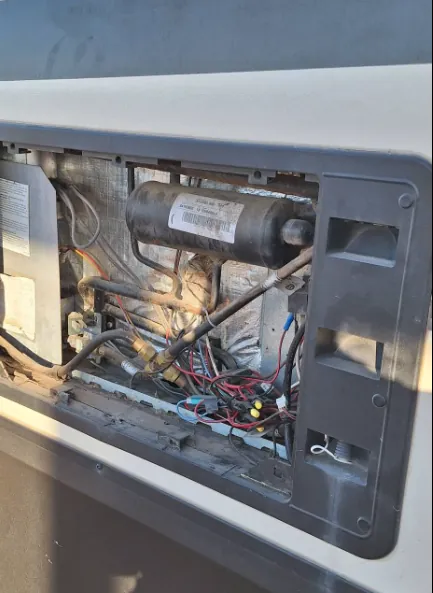
RV LP Burner and Orifice Service: Yellow Flame Diagnosis
Yellow flame, soot, or a burner that will not stay lit? Mobile RV LP burner and orifice cleaning, testing and replacement across Florida. Call 888-759-1438.
An RV burner orifice is not a nozzle you clean and adjust. It is a brass plug with one precisely drilled hole, and that hole alone decides how much propane the burner gets. On a Suburban ST-42 on demand water heater that hole measures 0.037 inch. Change the hole and you have changed the appliance, which is why a blocked orifice is replaced and never opened up.
What a Burner Orifice Is, and Why It Is Really the Appliance Rating
Every propane appliance in a coach meters its fuel through one small part. It is a brass orifice, called a burner jet by Dometic, threaded into the outlet of the gas valve ahead of the burner. It is solid except for a single hole drilled through the center, and at a given supply pressure that hole alone sets how much gas reaches the flame. Suburban's on demand manual puts the relationship in one table: the ST-42 is rated at 42,000 BTU per hour on a 0.037 inch orifice, and the ST-60 at 60,000 BTU per hour on a 0.047 inch orifice. Ten thousandths of an inch of diameter is the whole difference between them. Tank water heaters run a smaller hole again, a number 61, supplied as kit 180323 for the 161255 gas valve. Furnace orifices range from a #55 on an SF-20 to a #50 on an SF-42. None of it is a wear part. All of it is calibration.
Reading the Flame: A Crisp Blue Cone Versus a Lazy Yellow One
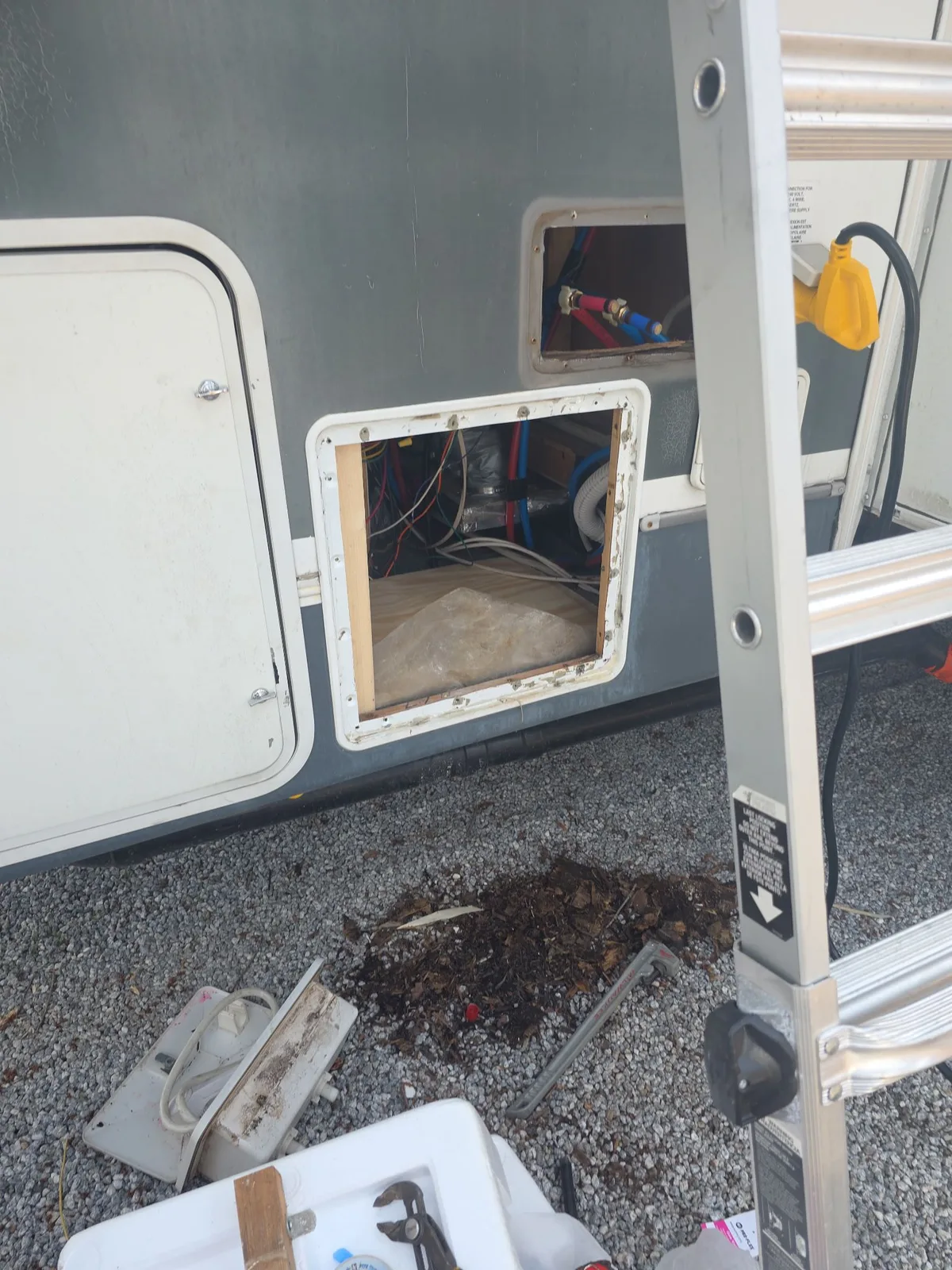
A correct LP flame on an RV appliance is small, steady and blue, with a defined inner cone sitting close to the burner ports and barely any yellow above it. That appearance means the gas collected most of the air it needed before it ever reached the flame, which is the whole job of the burner venturi. A lazy yellow flame that licks and wanders is reporting a wrong mixture, not simply a dirty appliance. Yellow light is incandescent carbon: fuel burning without enough oxygen in the right place, glowing instead of combusting cleanly. That is why soot is the finding which ends the visit rather than one detail among several. Suburban treats it as urgent in its own words, telling owners to shut the unit down on sight of soot because soot forms whenever combustion is incomplete and is a visual warning the appliance is operating unsafely. The color is the reading. Everything after it is deciding which side of the mixture failed.
Gas Side or Air Side: Two Blockages That Behave Nothing Alike
Two different faults get described with the same sentence, and telling them apart is most of the diagnosis. A restriction at the orifice sits on the gas side. Less propane passes, and because the gas jet is also what drags primary air into the venturi, the air falls away with it. The ratio therefore stays roughly correct while the flame turns small, weak and slow to establish. On a direct spark unit it usually ends in lockout instead of a bad flame, which is what Suburban describes as flame out protection, shutting the gas off when low propane pressure or a burner fault kills the flame. A restriction in the burner tube, the air shutter or the intake screen sits on the air side. Gas arrives at full rate, air does not, and the mixture goes rich and yellow. Put plainly, a plugged orifice tends to mean no flame at all, while a plugged air path means a bad one.
Mud Daubers and Spiders: The Blockage Florida Coaches Get Worst
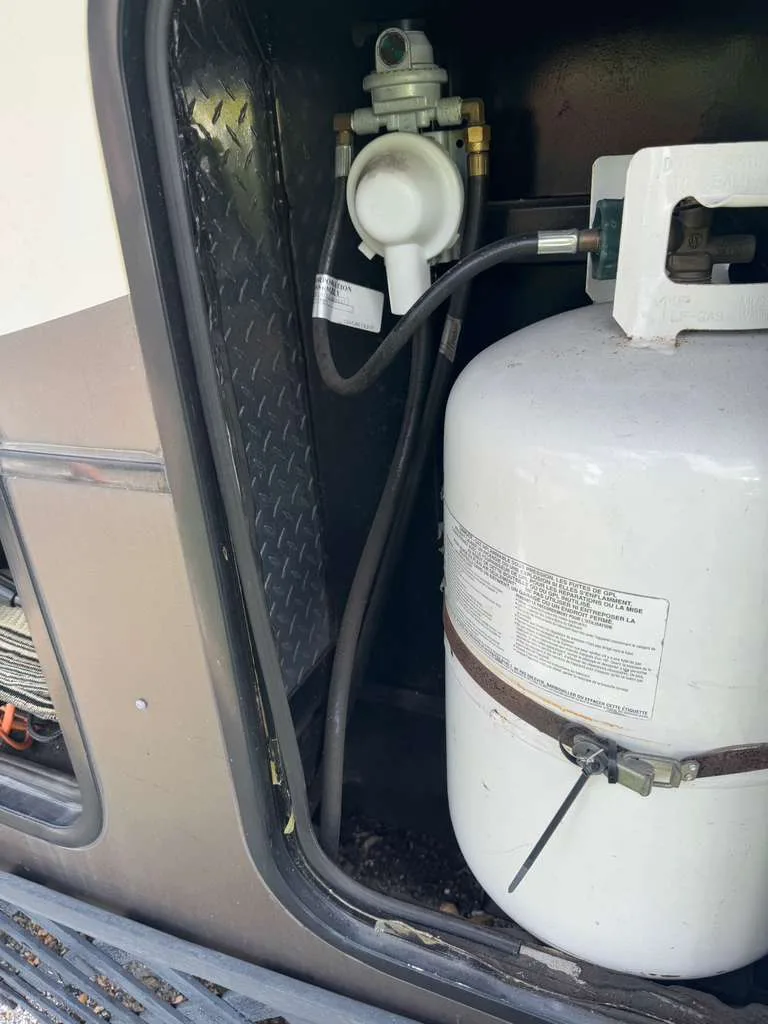
The classic RV burner blockage is not carbon at all. It is a nest. Mud daubers are solitary wasps that look for a sheltered tube of roughly the right bore, build mud cells inside it, and pack every cell with paralyzed spiders for the larvae to feed on, a habit the Missouri Department of Conservation sets out in its field guide. The black and yellow mud dauber, Sceliphron caementarium, and the organ pipe species are the ones doing it in propane bays. A furnace burner tube, a water heater intake behind the door screen and an absorption refrigerator flue are precisely the cavity they hunt for. They are not following the odorant in the gas. They are following a dry, quiet tube that nothing has used lately. A coach left standing through a hot Gainesville or Clermont summer, furnace idle and water heater switched off, hands them months of undisturbed access to all three.
Why an Orifice Is Never Drilled, Reamed or Picked Clean
Manufacturers converge on this instruction, and it is the one owners break most often. Dometic's refrigerator installation manual is blunt: never use a wire or pin to clear obstructions from the burner jet because damage will occur, and do not attempt to adjust the burner jet. Suburban permits no cleaning or adjustment of its on demand burners at all and routes the work to a service center. The reason is arithmetic rather than caution. A drill bit or a torch tip cleaner does not lift a blockage so much as recut the hole, and flow rises with the square of diameter, so a hole opened ten percent passes roughly twenty-one percent more propane. The appliance then overfires into a heat exchanger and a vent sized for its rated input. Scorching, sooting and a cracked exchanger follow in that order. A blocked orifice gets replaced, and Suburban's warranty language already treats cleaning or replacing one as routine maintenance.
What We Check First, What Each Finding Costs, and What It Becomes
Owners call about the symptom, never the part. The usual description is that the refrigerator will not hold on gas, the furnace runs and runs without heating, or there is a scorched smell and a dark streak above the water heater door. Our technicians work from the outside in: door screen and intake, then burner tube and venturi, then the orifice, then electrode gap and flame sense. Gas pressure comes last on purpose. A manifold pressure reading is what separates one sick appliance from a whole coach running low, and a low figure at every appliance points to two-stage regulator replacement rather than burner work. Our service call covers the trip out and the first hour on site at the rate in the pricing table on this page; anything past that first hour is quoted and approved before we carry on. Ignored, a sooting burner consumes its own flue and then the exchanger.
Sources
Every figure on this page comes from a manufacturer document or a standards body, not from another repair site. Here is where each one comes from.
- Suburban (Airxcel) ST-42 and ST-60 On Demand Water Heater Operation and Maintenance Manual, PN 206212-1Verified by reading the PDF: the specification table gives Orifice Size 0.037 in for the ST-42 and 0.047 in for the ST-60 against Max Heat Input of 42,000 and 60,000 BTU/hr, with Rated Gas Inlet Pressure 11 in-wc, Min 10.5 and Max 14. It also states No cleaning or adjustment of the burners is permitted, describes Flame Out Protection shutting the gas off when the flame is lost to low propane pressure or burner malfunction, and excludes cleaning or replacement of the burner orifice from warranty as normal maintenance.
- Dometic DM, RM and DMA Refrigerators Installation Manual, Form No. 3313238.036Verified by reading the PDF: the gas connection section states Never use a wire or pin to clear obstructions from burner jet (damage will occur) and Do not attempt to adjust burner jet, names the metering part the burner jet in its component diagrams, and requires the gas supply system to incorporate a pressure regulator maintaining a supply pressure of not more than 11 inches water column.
- Suburban RV Factory Replacement Parts Manual, 205624 Rev GVerified by reading the PDF: the furnace section lists burner orifices by drill number per model, including #55 for the SF-20, #52 for the SF-30, #51 for the SF-35 and #50 for the SF-42, and lists one burner assembly, 010865, for both the SF-30 and the SF-35. The water heater section lists burner orifice #61 as kit 180323 for the 161255 gas valve, plus the orifice retainer clip 063827.
- Suburban Tank Water Heaters Operation and Maintenance Guide, Part Number 206244Verified by reading the PDF: the maintenance section instructs owners to inspect for soot, to shut the unit down immediately if soot is present anywhere on the water heater because soot is a sign of incomplete combustion that must be corrected before operating, and to check the screen in the door so no foreign material has accumulated to prevent flow of combustion and ventilating air.
- Missouri Department of Conservation, Field Guide: Mud DaubersVerified by reading the page: mud daubers are solitary wasps that build mud nests in sheltered cavities such as hollows, overhangs and man-made structures, and adults pack paralyzed spiders into the nest cells as provisions for their young. It names the black and yellow mud dauber Sceliphron caementarium and the organ pipe mud dauber. Supports the mechanism that these wasps seek a sheltered tube and their prey rather than being drawn by propane odorant.
Related repairs
Other systems we service
Where we work
Service category
What this usually costs
| Item | Price | What it covers |
|---|---|---|
| Service call | $299 | Includes the trip out to your RV and the first hour on site |
| Work past the first hour | Quoted after diagnosis | We tell you what it will take before we carry on |
| Parts | Quoted per job | Special-order parts may need a deposit before we order them |
| Written estimate | No charge | You approve the estimate before any work starts |
The service call covers the trip out to your RV and the first hour on site. Anything beyond that depends on what we find, and we quote it and get your approval before carrying on.
The price ranges on this page come from our own recent jobs across Florida, not from an industry average. What you pay depends on the rig, the parts it needs and what we find on site, so we give you a written estimate before any work begins and you approve it first.
Frequently asked questions
What should the flame on my RV furnace or water heater look like?
Small, steady and blue, with a sharp inner cone near the burner ports and barely any yellow above it. It should sound like a low even hiss rather than a flutter. Any lazy orange tongue, any wandering, and any black streak on the flue or the appliance door means combustion is incomplete. Suburban's own guidance is to shut the appliance down when soot appears and have it looked at before running it again.
Can I clean the orifice with a wire, a needle or a torch tip cleaner?
No, and the manufacturers say so directly. Dometic's installation manual instructs owners never to use a wire or pin to clear an obstruction from the burner jet because damage will occur, and not to attempt to adjust it. A wire burnishes and enlarges the hole rather than clearing it, and the damage stays invisible until the appliance starts sooting. The correct repair is a new orifice, which is a low cost part.
Can the orifice be drilled out to get more heat from my furnace?
It would produce more heat and an unsafe appliance. Gas flow scales with the square of the hole, so a modest reaming can add a fifth again to the burn rate while the heat exchanger, the vent and the combustion air path all stay sized for the original rating. Suburban's parts manual lists the same burner assembly, 010865, under both the SF-30 and the SF-35 furnace. Only the orifice number separates them.
Why do spiders and mud daubers block RV burners so badly in Florida?
Because the nesting season here barely closes and the coach sits still through the worst of it. Mud daubers want a sheltered tube of the right bore to fill with mud cells and paralyzed spiders, and an idle furnace burner tube, a water heater intake and a refrigerator flue all qualify. Storage months with the appliances switched off give them uninterrupted access, which is why the fault surfaces on the first cold night.
What does RV burner and orifice service cost, and how long does it take?
Clearing a nested burner tube and fitting a new orifice usually fits the first hour. A burner assembly or a gas valve is a parts order, so we confirm the fault before quoting the repair.