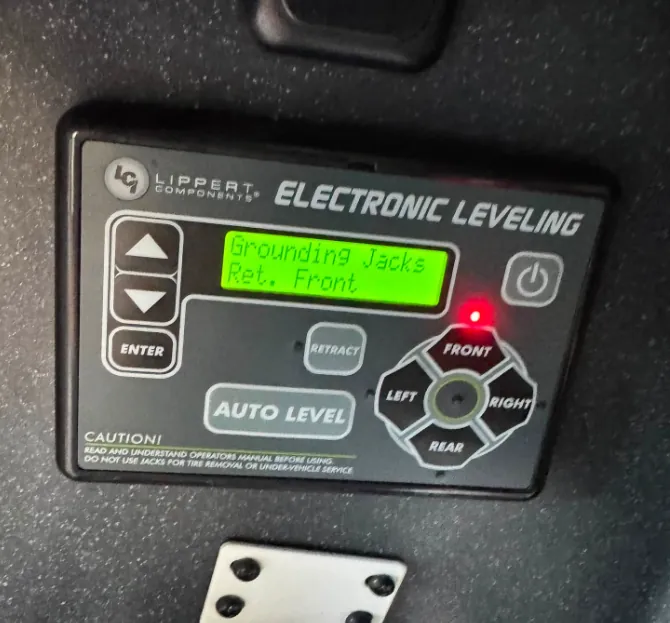
RV Leveling System Sensor Calibration and Zero Point Reset
Auto level parking your coach on the wrong plane? Mobile RV leveling sensor calibration and zero point reset anywhere in Florida. Call 888-759-1438.
Leave a leveling system calibrated to the wrong reference and the coach will park itself out of level on purpose, on ground that is perfectly flat. The zero point is the attitude the controller has stored as level, so a bad one gets reproduced faithfully every cycle. The absorption refrigerator loses cooling first, then doors and slide rooms start to bind.
What the Zero Point Actually Stores
The zero point is the single stored reference a leveling controller returns to every time Auto Level runs. Lippert's Ground Control 3.0 LCD manual puts it plainly: once the calibration completes, the system sets that position as its level state. Nothing about that number is measured against gravity in the way an owner assumes. It is measured against whatever the coach was doing at the moment somebody pressed ENTER. That is why calibration and hardware condition are two different diagnoses. A system with healthy jacks, a healthy pump and a healthy sensor will still finish its cycle nose low if the reference it is chasing is nose low. The controller has no way to know it is wrong, because the reference is the definition of right. Reading the error text matters here. Auto Level Fail with the note that the zero point was set incorrectly is a calibration problem, while Bad Calibration means sensor values are out of range and the controller itself is the fault.
The Symptom: A Coach That Levels Itself To the Wrong Plane
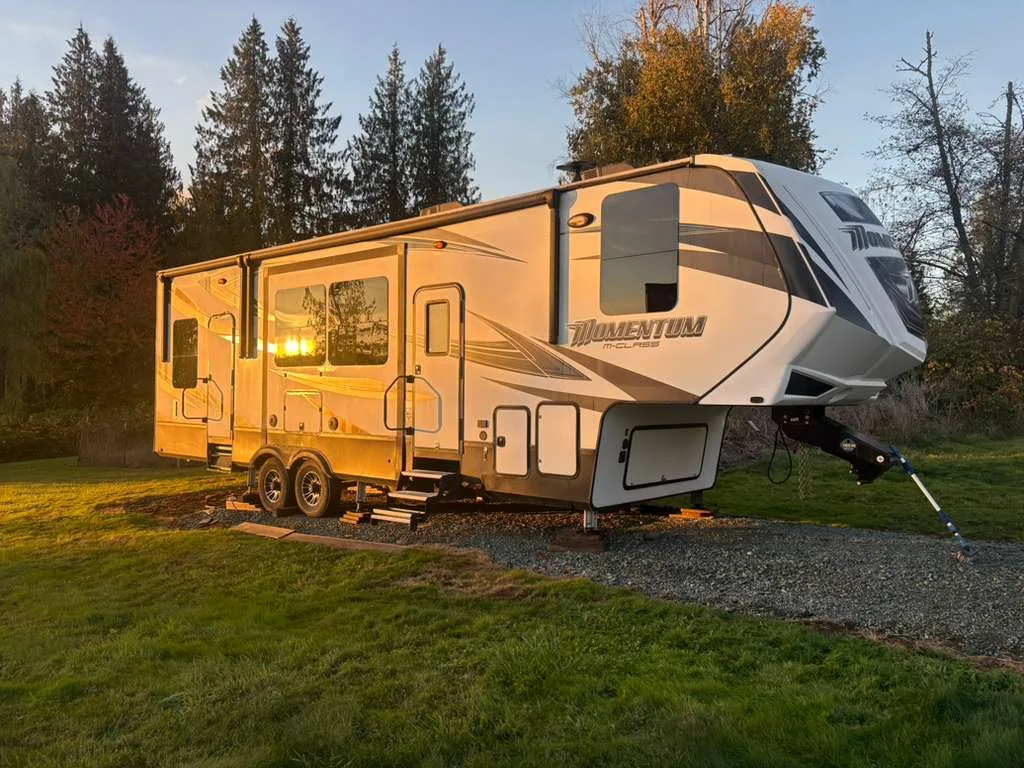
Owners rarely call and say the sensor is out of calibration. They call and say the rig finishes its cycle, reports that it is level, and the shower door still swings closed on its own. Or the freezer frosts on one side, or a slide room scuffs its seal on the low corner. The tell is consistency. A hardware fault is erratic, because a weak jack sinks at a different rate on shell, sand and concrete, so the rig sits differently every night. A calibration fault repeats. Park on three different flat sites in three different Florida parks and the coach will settle into the same lean each time, to roughly the same degree, because it is faithfully reproducing a stored attitude. That repeatability is the single most useful thing an owner can report on the phone, and it separates a calibration visit from a jack or a pump visit before anyone crawls underneath.
Why the Zero Point Must Be Set on Genuinely Level Ground
Both Lippert procedures start the same way, and the step is easy to skip. TI-333 instructs the technician to set a carpenter's level on the floor inside the unit and manually level front to back and side to side before entering calibration mode. The Ground Control 3.0 LCD manual says the same in different words. If that step is done on a sloped driveway, the slope becomes the definition of level and the coach will chase that driveway for the rest of its life. This is the most common reason a system that was fine last season is suddenly wrong. Somebody recalibrated at home on a pad that drains toward the street, or the reference was set on a sales lot built with a crown. Nothing failed. The reference simply got taught a lie, and the system is honoring it exactly as designed.
Why the Floor Bubble and the Controller Can Both Be Right
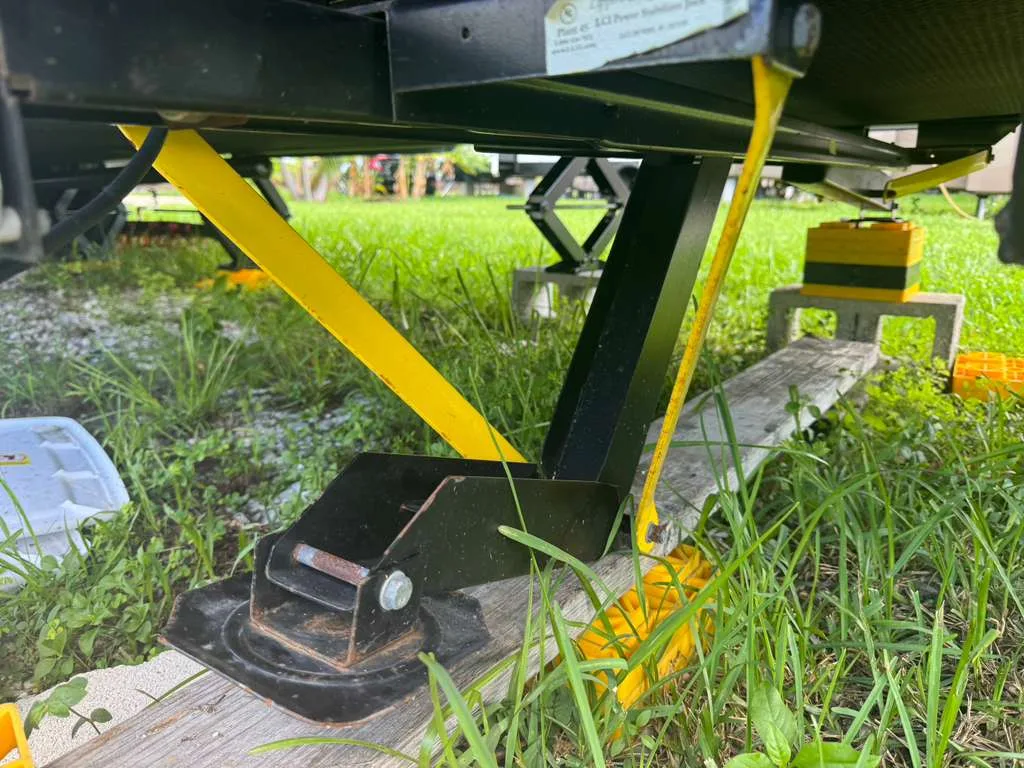
This is the argument that ends most driveway debates. The controller does not read the floor. On Ground Control 3.0 the rear sensor mounts to a frame crossmember, in line with the center of the frame and behind the rear jacks, and the manual states that its orientation is imperative for correct operation. The controller module has its own narrow mounting window near the center of the frame. So the system reads frame attitude, while the bubble level on the galley floor reads floor attitude. On a coach with a flexed frame, a settled suspension hanger or a floor that was never laid perfectly parallel to the rails, those two planes differ by a real amount. Neither instrument is lying. Calibration is what reconciles them: you level by the floor, then teach the frame-mounted sensor that this frame attitude is what floor level looks like on this specific coach.
The Absorption Refrigerator Is Why Level Matters at All
Strip away comfort and the engineering reason to be level is the refrigerator. Dometic's DM and DMA operating manual is explicit that the unit must be kept level when the RV is parked for several hours or more, and that loss of cooling can occur if it runs noticeably out of level for several hours. Travel is exempt, because motion keeps the fluid moving. An absorption unit has no compressor. It circulates ammonia solution by gravity through sloped tubing, and when the rig sits tilted the liquid pools instead of draining, starving the boiler and eventually leaving a crystallized blockage that no amount of releveling reverses. That is a cooling unit replacement, not an adjustment. In Florida this bites harder than most places because rigs are lived in year round with no winter lay-up, so a coach parked wrong is parked wrong for weeks at a time.
How We Diagnose It, In Order, and What Each Step Costs
The sequence matters more than the tools. First we read the stored error text and confirm which family it belongs to, calibration or hardware. Second we take a reading with a digital angle gauge on a frame rail and a separate one on the interior floor, so the two planes are documented before anything is changed. Third we check jack disposition, because Out Of Stroke and a bent leg both look like a leveling complaint. Only then do we recalibrate. A clean recalibration on a coach that is otherwise sound is usually inside that first hour. Our service call covers the trip out and the first hour on site, with the current rate shown in the pricing table on this page. Anything past that first hour depends on what the diagnosis turns up, and it is quoted and approved before we carry on.
When a Recalibration Is Hiding a Bent Frame Member or a Sagging Jack
A recalibration always succeeds at making the current position the new normal, which is exactly why it can be the wrong repair. If a rear leg is sagging under load, recalibrating on top of that sag teaches the controller to accept it, and the number simply drifts again in a few weeks. The Ground Control 3.0 error table points at the difference: Out Of Stroke tells you to check for bent or damaged jacks, while Excess Angle can mean the controller itself is no longer properly secured. Before touching the reference we measure corner to corner across the frame and compare frame rail readings front and rear against the floor. If those disagree by a growing amount, the correct answer is structural, and the calibration is a symptom. Left alone, that path ends in racked door frames, a slide room that no longer meets its seal, and a refrigerator that quietly stops cooling.
Sources
Every figure on this page comes from a manufacturer document or a standards body, not from another repair site. Here is where each one comes from.
- Lippert Ground Control 3.0 LCD Installation and Owner's Manual (CCD-0001498)Defines the zero point as the programmed point the trailer returns to and states the system sets that position as its level state; gives the rear sensor mounting to a frame crossmember in line with the center of the frame with orientation imperative; lists the Auto Level Fail, Bad Calibration, Excess Angle and Out Of Stroke error text and remedies; gives the touch pad off, five FRONT then five REAR calibration entry sequence and the Zero point stability check.
- Lippert TI-333, Setting Zero Point Calibration Using a OneControl Touch Panel (CCD-0003446)States the zero point must be programmed prior to using the Auto Level feature, and that prior to the procedure the technician must set a carpenter's level on the floor inside the unit and manually level front to back and side to side.
- Dometic DM and DMA Refrigerators Operating ManualStates the refrigerator must be kept level when the RV is parked for several hours or more, that loss of cooling could occur if it operates in a noticeable out-of-level position for several hours, and that level is not critical while traveling.
- Lippert Hydraulic Leveling with LCD Touchpad, 4 Point 3 Valve Motorized, OEM Installation Manual (CCD-0002372)Confirms the same reference logic on the motorized hydraulic platform: the zero point MUST be set before auto leveling features are available, the coach must be parked on a reasonably level surface, and the troubleshooting table lists Zero Point incorrectly calibrated with the remedy Recalibrate Zero Point.
Related repairs
- Fifth Wheel Landing Gear Repair repairs
- Lippert Level Up Board
- our Hwh Hydraulic Leveling Service service
Other systems we service
Where we work
Service category
What this usually costs
| Item | Price | What it covers |
|---|---|---|
| Service call | $299 | Includes the trip out to your RV and the first hour on site |
| Work past the first hour | Quoted after diagnosis | We tell you what it will take before we carry on |
| Parts | Quoted per job | Special-order parts may need a deposit before we order them |
| Written estimate | No charge | You approve the estimate before any work starts |
The service call covers the trip out to your RV and the first hour on site. Anything beyond that depends on what we find, and we quote it and get your approval before carrying on.
The price ranges on this page come from our own recent jobs across Florida, not from an industry average. What you pay depends on the rig, the parts it needs and what we find on site, so we give you a written estimate before any work begins and you approve it first.
Frequently asked questions
Can you repair an RV leveling leg?
Yes, and it is one of the more frequent leveling calls we take. The first thing worth separating is whether the leg itself is failing or the system is simply being told to stop in the wrong place. A leg that sinks under load, leaks, or reports Out Of Stroke is hardware. A leg that stops early on every corner, on every surface, is usually the stored zero point rather than the leg.
How do I know if my system needs recalibration or a repair?
Repeatability is the test. Park on three genuinely flat sites and run Auto Level each time. If the coach settles into the same lean by the same amount at each one, the stored reference is wrong and a recalibration is the fix. If the lean changes site to site, or one corner keeps giving up hours after the cycle finished, that is a jack, a valve or a sensor, and recalibrating will only mask it briefly.
Will recalibrating fix a refrigerator that stopped cooling?
It removes the cause, not the damage. Dometic's manual warns that running noticeably out of level for several hours can cause loss of cooling, and once liquid has pooled and crystallized in the tubing, the cooling unit does not recover by being releveled. Correcting the zero point protects a replacement unit and any absorption fridge still healthy, but a unit that has already blocked needs its own diagnosis.
Can I set the zero point myself?
Many owners can, and the procedures are published. The trap is not the button sequence, it is the surface. Both Lippert procedures require you to manually level the unit against a level laid on the interior floor first, front to back and side to side, on genuinely flat ground. Calibrate at home on a driveway that drains toward the street and you have just taught the system that the driveway is level.
How long does a leveling sensor calibration take?
The calibration itself is short, often well under an hour once the coach is sitting correctly. Getting it sitting correctly is the part that takes time, because the rig has to be manually leveled and stable before the controller will accept the reading. Add time if jacks need homing first, or if frame and floor readings disagree enough to justify measuring the frame before anything is stored.
Does replacing a jack or a controller mean I have to recalibrate?
Yes. Any work that changes what the sensor is bolted to, or replaces the module that holds the stored value, invalidates the zero point. That includes controller replacement after a Bad Calibration message, sensor relocation, and jack or bracket work that alters how the coach sits. Skipping the recalibration afterward is why a correct parts repair sometimes leaves an owner convinced the new part is faulty.