Will Insurance Cover an RV Roof Leak?
Roof claims turn on cause, not on how bad the damage looks. Which scenarios usually get paid, which get declined, and what to photograph before anyone touches anything.
A roof leak claim is decided by what caused it, not by how much damage it did. Sudden events like storm impact are commonly covered. A seal that degraded over several seasons is treated as maintenance and usually declined. The evidence that decides it is gathered in the first hour, before anything is cleaned up or repaired.
Apex RV Repair is mobile across Florida - we come to your RV. Call 888-759-1438.
The question owners ask is whether the damage is covered. The question the insurer asks is what caused it, and those are not the same question at all.
This page covers how that decision is actually made on a roof leak, which scenarios tend to fall each way, and what to do in the first hour so the evidence exists before anyone touches anything. It is general information rather than advice about your specific policy, and your own document always governs.
Will insurance cover an RV roof leak?
Sometimes, and the deciding factor is cause rather than consequence. Policies are written to respond to sudden and accidental events and to exclude gradual deterioration, which is treated as maintenance the owner was responsible for.
That single distinction explains almost every outcome. A branch coming through the roof in a storm is an event. Lap sealant that oxidized across four Florida summers until water found its way past is a process. The water damage inside the coach can look identical in both cases, and the claims land in completely different places.
It also explains why two owners with the same stain on the same ceiling get opposite answers. They are not being treated inconsistently. One has an event behind the damage and the other has a maintenance history behind it.
Our guide to RV insurance in Florida covers the policy structures underneath this.
What does sudden and accidental mean on a roof?
It means the damage has a moment. Something identifiable happened at a point in time, rather than a condition developing quietly over seasons.
On a roof, that moment usually leaves physical evidence: an impact point, a tear, a component ripped loose, debris still present. Adjusters look for that evidence because it is what separates an event from a process, and its absence is what turns a claim into a maintenance conversation.
Age of the damage matters too, in a way owners often do not expect. A leak reported the week it appears reads very differently from the same leak reported after a season of ceiling stains, because delay suggests the condition was known and left. Reporting promptly is genuinely part of protecting the claim.
None of this requires the roof to have been new. It requires the damage to have a cause you can point at.
Which roof leak scenarios usually get paid?
The pattern across covered claims is an external force acting on a roof that was in reasonable condition beforehand.
- Impact damage from a branch, debris or a low structure, where the point of contact is visible.
- Wind damage that lifts or tears a membrane, particularly during a named storm.
- Hail damage, which is less common in Florida than further north but does happen.
- A component torn away in transit, such as a vent cover or an antenna, leaving an opening.
- Damage during covered towing or a collision, which is handled under that part of the policy rather than as a roof claim.
What these share is a cause outside the owner's control that can be shown rather than argued. Where an adjuster can see the mechanism, the conversation is usually about the amount rather than about coverage.
Which roof leak scenarios usually get declined?
The declines cluster just as tightly, and almost all of them come back to sealant or to time.
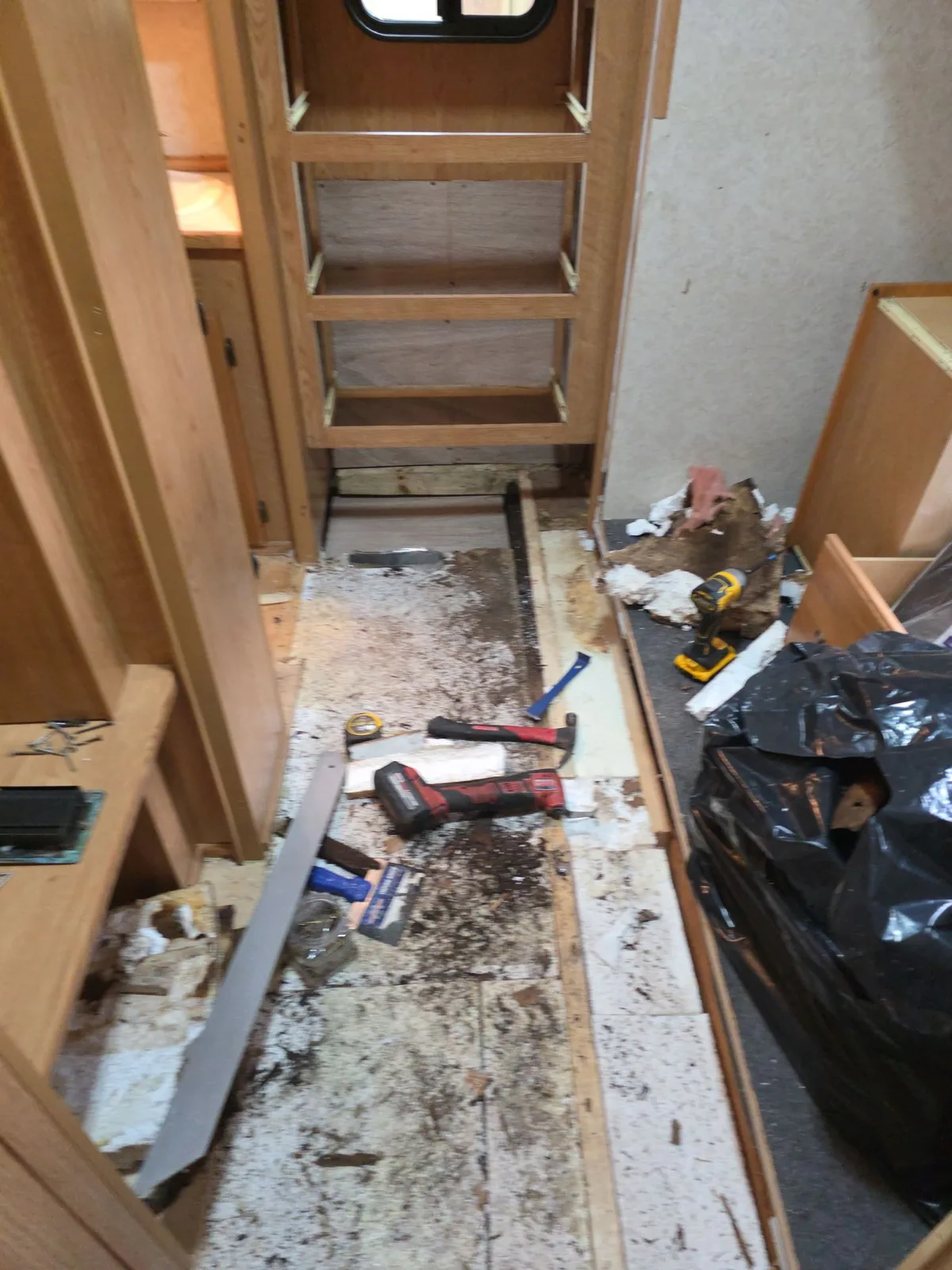
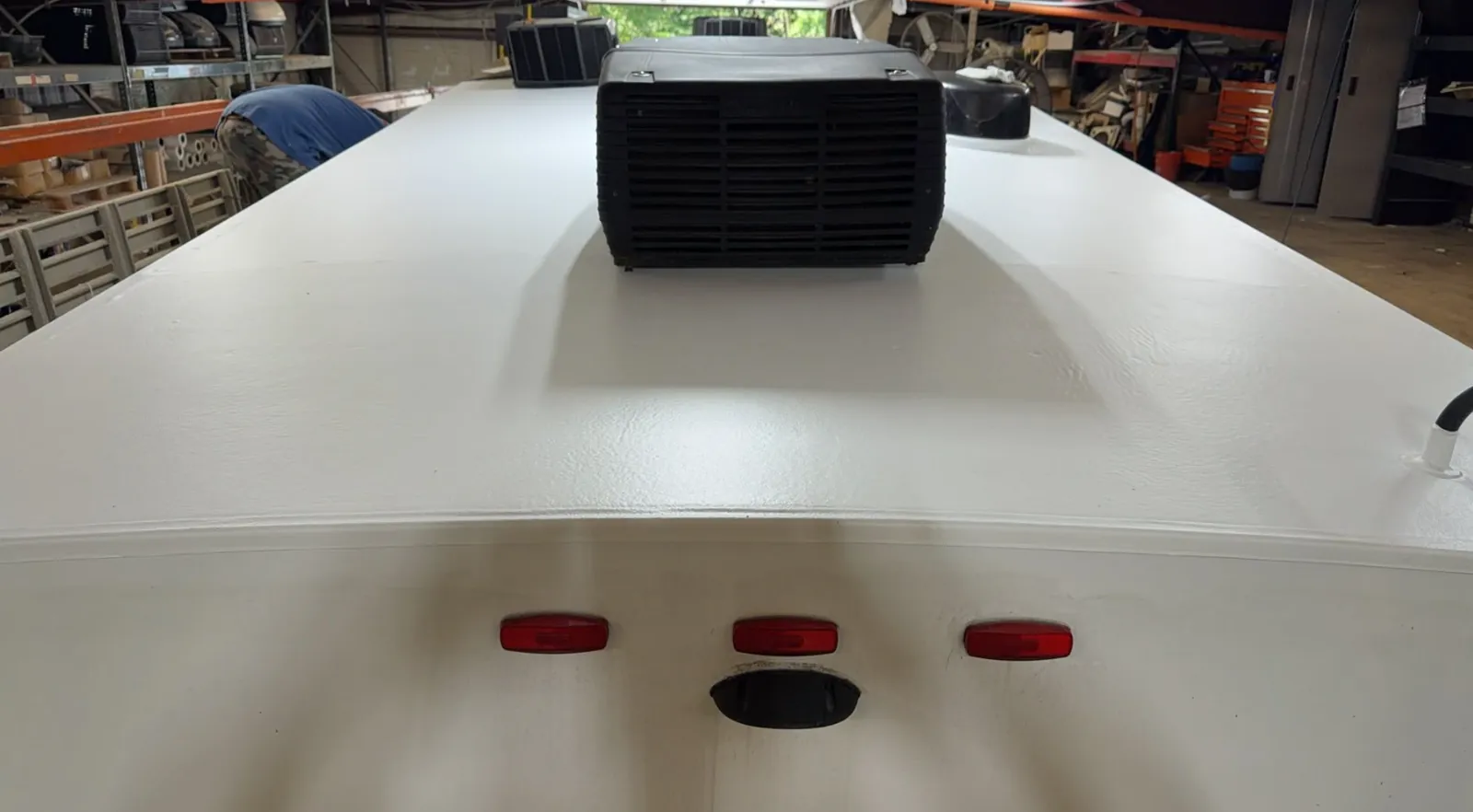
Degraded lap sealant is the biggest single category. So is a seam that opened gradually, a skylight that crazed and cracked with ultraviolet exposure, and any leak where the surrounding structure shows long-term saturation rather than recent wetting. Rot, mold and delamination are frequently excluded outright as consequences of a gradual condition.
Previous repairs done with the wrong product cause trouble too. A roof sealed with silicone, or patched over a soft area, gives an adjuster evidence that the condition was known and handled inadequately rather than repaired.
None of that means the damage is not real, and it is not the insurer being difficult. It means the policy was never written to fund maintenance, and a roof that failed slowly is maintenance by definition.
What evidence should you gather before you file a roof claim?
Everything you are going to need is available in the first hour and much of it is gone by the next day. Gather it before cleaning up, drying out or covering anything.
- Photograph the interior damage where it appears, wide enough to show the location in the coach and close enough to show the material.
- Photograph the roof from above if it is safe to do so, including any impact point, tear or missing component.
- Photograph the surroundings: the tree, the branch, the debris, the structure you contacted.
- Note the date and time you found it and the weather that day.
- Keep every receipt for maintenance and any previous roof work you have.
That last one carries more weight than owners expect. A documented history of resealing is direct evidence that the roof was maintained, which is exactly the point an adjuster will probe.
Who decides whether the damage was sudden or gradual?
An adjuster makes the determination, working from the physical evidence, the reported circumstances and whatever documentation exists. On larger claims they may bring in a specialist, and on RVs that specialist is often someone who works on coaches rather than on buildings.
What they are reading is the material itself. Wood that has been wet a long time looks and behaves differently from wood wet last week. Staining has layers. Sealant tells a story about whether it failed under load or simply aged out. These are physical findings rather than opinions, which is why an independent inspection carries weight.
This is also why a moisture survey done before a claim is useful. It establishes the state of the coach at a known date, and a survey showing a sound roof three months ago is powerful evidence that whatever happened since was an event.
What happens if the adjuster and your technician disagree?
It happens, and it is a normal part of the process rather than a breakdown of it. Most policies contain a route for exactly this, commonly an appraisal clause where each side appoints an appraiser and an umpire settles anything they cannot agree.
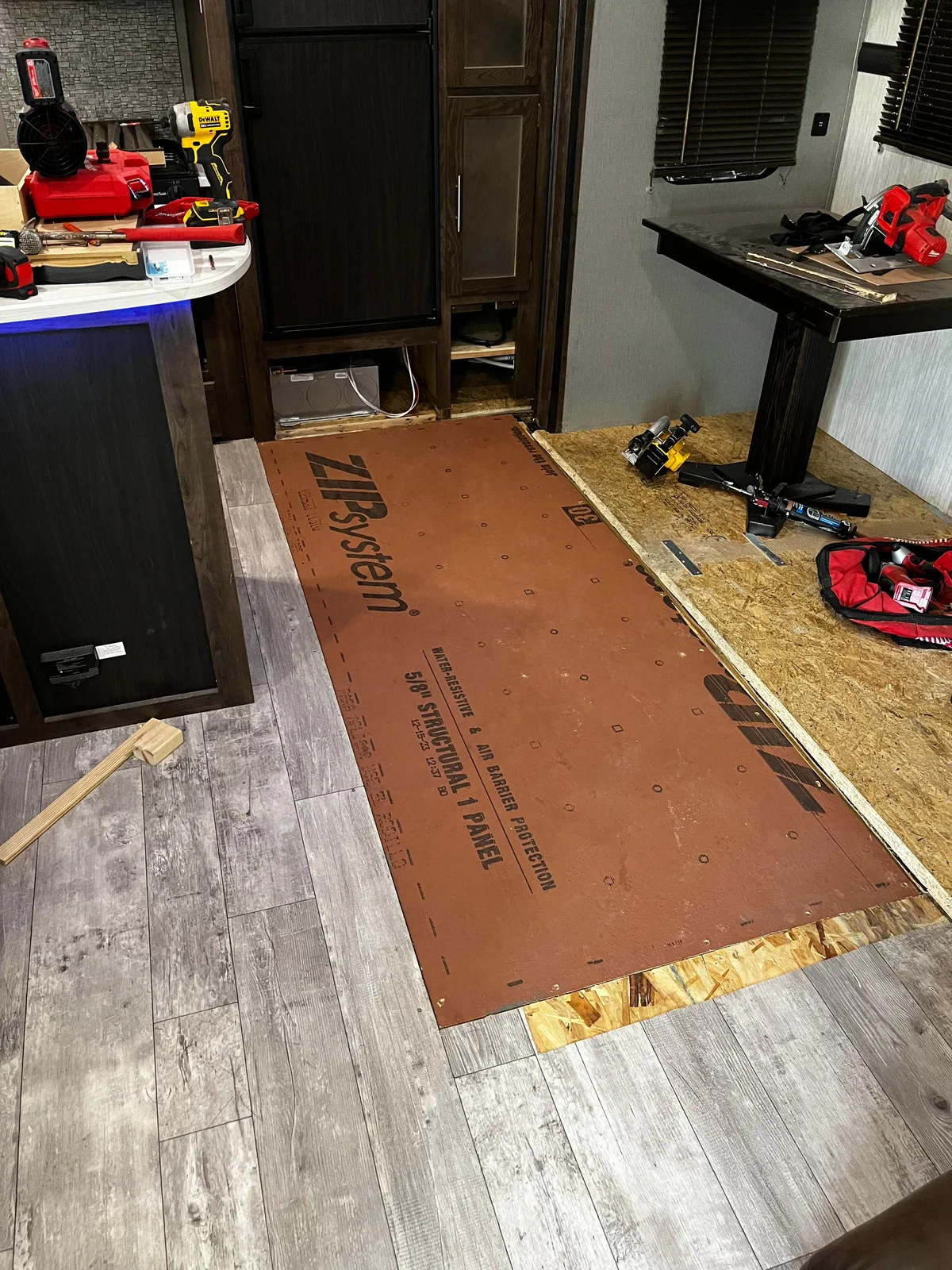
What decides these is documentation rather than argument. A written report describing what was found, where moisture was measured and what the physical evidence indicates gives an insurer something concrete to weigh. A verbal disagreement gives them nothing.
If a claim is declined and you believe the determination is wrong, ask for the reason in writing and for the specific policy language relied on. Florida's Office of Insurance Regulation publishes information on how consumers can escalate a dispute, and knowing the stated grounds in writing is the first step in either direction.
What should you do in the first hour after finding a leak inside?
Two goals, in this order: stop the damage getting worse, and preserve the evidence of how it started. They can conflict, so photograph before you intervene.
Get water out of the coach and get air moving, because the difference between a wet panel and a mold problem is measured in days in a Florida summer. Move soft furnishings and anything absorbent away from the affected area. If the roof is open to the sky and you can cover it safely, do so, and photograph it first.
Then report it. Prompt notice is a condition of most policies, and a delay is one of the easier reasons to decline a claim. Reporting early costs nothing even if you later decide not to proceed.
Do not begin permanent repairs before the insurer has had the chance to inspect, because a repaired roof is a roof whose evidence has been removed.
What a visit costs
A service call is $299 and covers the trip out to your RV and the first hour on site. Work past that first hour is quoted to you once our technician has found the fault, before we carry on. In Orlando, Lakeland, Kissimmee, Apopka and nearby the service call is $399 and time past the first hour runs $200 per hour. Written estimates are free and you approve one before any work starts. Call 888-759-1438.
Sources and further reading
Every figure above that came from a manufacturer or a standards body is linked here so you can check it yourself.
- Florida Office of Insurance Regulation - The state regulator, including consumer information on how insurance disputes are escalated in Florida.
- Florida Highway Safety and Motor Vehicles - insurance - Florida's own guidance on vehicle insurance requirements and how RVs sit within them.
- US EPA - brief guide to mold, moisture and your home - Why the first hours after water entry decide whether a wet panel becomes a mold problem.
- US EPA - mold cleanup guidance - Standards for what cleanup involves once mold has taken hold, which is what drives the cost difference.
- Dicor - roof sealant installation instructions - The maintenance standard an adjuster is implicitly measuring a roof against.
Related pages on this site
- RV insurance damage appraisal - an independent report written to be submitted with a claim
- RV insurance in Florida - the policy structures underneath these decisions
- Signs of RV water damage - how to find a leak before it becomes a claim
- RV roof maintenance guide - the maintenance record that protects a future claim
- RV repair in Tampa - inspection and appraisal across the bay area
RV roof leak insurance questions Florida owners ask
Does RV insurance cover mold from a roof leak?
Frequently not, because mold is generally treated as a consequence of a gradual condition rather than a sudden event, and many policies exclude or strictly limit it. Where the underlying leak is covered, the position can differ, which is why the cause of the original water entry matters more than the mold itself.
Will filing a roof claim raise my premium?
It can, and it is a reasonable question to weigh before filing a small one. Where the damage is close to the deductible it may be worth paying for the repair directly. Where structural damage is involved the numbers usually justify the claim regardless, because those repairs escalate quickly.
How long do I have to report an RV roof leak?
Policies require prompt notice rather than naming a fixed number of days, and prompt is judged against when you reasonably should have known. Practically, report it as soon as you find it. Delay is one of the most straightforward grounds an insurer has to decline.
Does a maintenance record really help a claim?
Yes, and it is the single most useful thing an owner can hold. Receipts and inspection reports showing the roof was resealed and checked are direct evidence against the gradual deterioration finding, which is the most common reason roof claims are declined.
Can I claim for a leak I only noticed months later?
You can file, but expect the cause to be examined closely. Materials show how long they have been wet, so a claim reported long after the event faces both the delay question and the physical evidence of prolonged saturation. Filing promptly is far stronger than filing thoroughly.
Should I get my own inspection before filing?
It often helps, particularly where the cause may be contested. An independent report establishing what was found and where moisture was measured gives you documentation of your own rather than relying entirely on the adjuster's findings, and it costs a fraction of the claim.