RV Insurance in Florida: The Coverage Gaps That Cost Owners Money
Why a water damage claim gets denied, what full-timer's coverage adds, and the policy wording worth reading on a quiet afternoon.
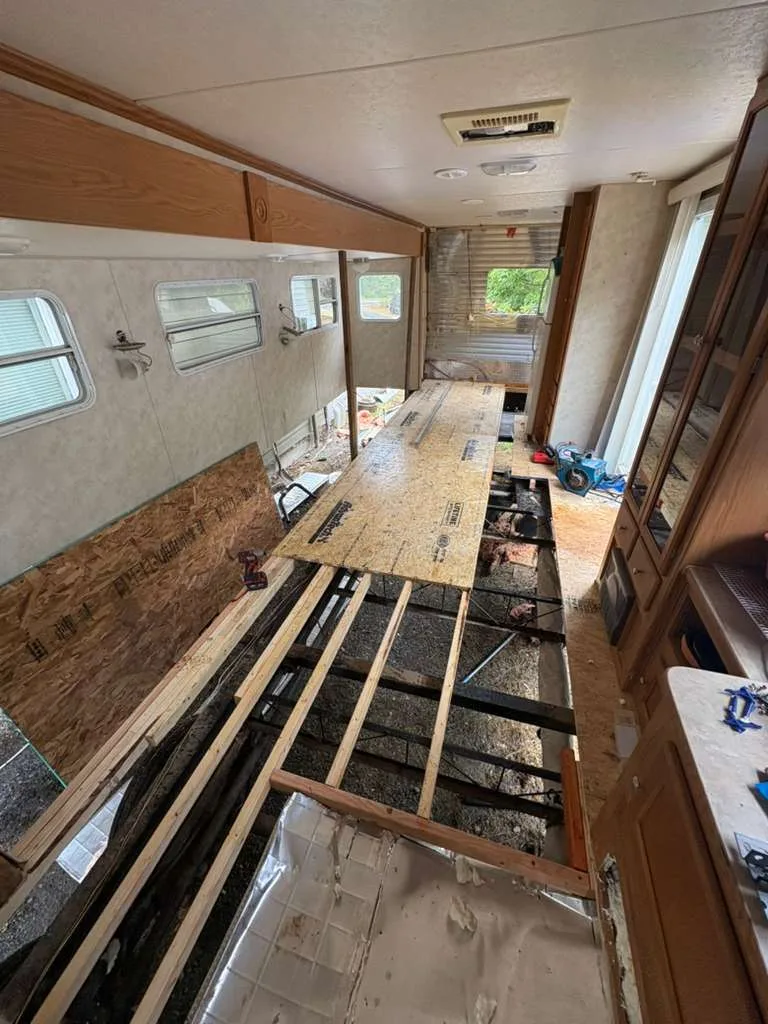
The claim most likely to be denied is water damage, and the reason is nearly always the same distinction: policies commonly cover sudden and accidental damage while excluding gradual damage from wear, deterioration or lack of maintenance. A roof seal that failed slowly over two seasons is usually read as maintenance, not as an accident. That is why keeping your seals maintained is an insurance decision as much as a repair one.
Apex RV Repair is mobile across Florida - we come to your RV. Call 888-759-1438.
We are RV technicians, not insurance agents, and nothing here is advice about your specific policy or a substitute for reading it. What we can tell you is which repairs get argued about, because we see the jobs after the claim decision has been made.
Almost every unhappy surprise falls into one of three areas: how a policy treats gradual water damage, whether the owner actually lives in the coach, and what the policy will pay if the RV is a total loss. All three are decided by wording that is available to read long before anything happens.
Is RV insurance required in Florida?
The answer depends on what kind of RV you have and how it is registered, so this is the one place to go to the state rather than to any article.
A motorhome is a self-propelled motor vehicle registered in Florida, so it falls under the state's motor vehicle insurance and financial responsibility framework in the same way other registered vehicles do. Florida's financial responsibility law sits in Chapter 324 of the Florida Statutes, and the Department of Highway Safety and Motor Vehicles publishes the current requirements. Those two sources are authoritative and this page is not.
Registration is what decides which rules apply to you, so start there rather than with the type of coach you think you own. A motorhome and a fifth wheel are treated as different things by the state even when they cost the same and sleep the same number of people.
How does insurance differ for a towed trailer and a motorhome?
A travel trailer or fifth wheel is a different case because it is not self-propelled. Liability while it is being towed is generally handled through the towing vehicle's policy, which leads many owners to assume the trailer is fully covered. It usually is not - liability while towing and physical damage to the trailer itself are separate things, and damage to the trailer typically requires coverage taken out on the trailer.
Where lenders are involved, the loan agreement will impose its own requirements regardless of what the state requires, and those are usually stricter.
Two things to verify rather than assume
First, whether your trailer has physical damage coverage of its own or only liability through the tow vehicle. Second, whether your policy covers the coach while it is parked and unoccupied in storage, which is where a great deal of RV damage actually happens.
Read the loan paperwork alongside the state requirement. Where the two disagree, the lender's terms are the ones enforced against you.
Does RV insurance cover water damage?

This is where most disputes happen, and the distinction is worth understanding before you have a wet ceiling.
Policies typically distinguish between damage that is sudden and accidental and damage that is gradual. A tree branch that punctures the roof in a storm is sudden. A roof termination that hardened, cracked and let water in slowly over two seasons is gradual, and gradual damage is commonly excluded under wear and tear, deterioration or maintenance provisions.
The awkward part is that both produce identical-looking damage inside the coach. What separates them is the evidence about the entry point - and that evidence is at the failed termination on the roof. Which produces a practical consequence:
That distinction is the whole argument in most water claims, and it is decided by what can be shown about the entry point rather than by how bad the interior looks.
What evidence decides a water damage claim?
- Do not seal over everything before an assessment if you intend to claim. Running a fresh bead over every termination erases the evidence of which one failed and how. It is also, separately, the wrong repair order - see our roof maintenance article.
- Photograph what you find, including the entry point and the interior damage, before anything is disturbed.
- Keep maintenance records. Receipts for roof inspections and resealing are what demonstrate the coach was maintained, which is precisely the question a gradual-damage exclusion turns on.
- Mold is often handled separately with its own limit or exclusion, so a claim can be accepted for water damage while the mold remediation part is capped.
The takeaway is not that insurers are unreasonable. It is that the exclusion is aimed exactly at deferred maintenance, so keeping the seals up to date is what keeps the coverage meaningful.
Which is why the maintenance record matters as much as the damage itself.
What is full-timer's coverage and do I need it?
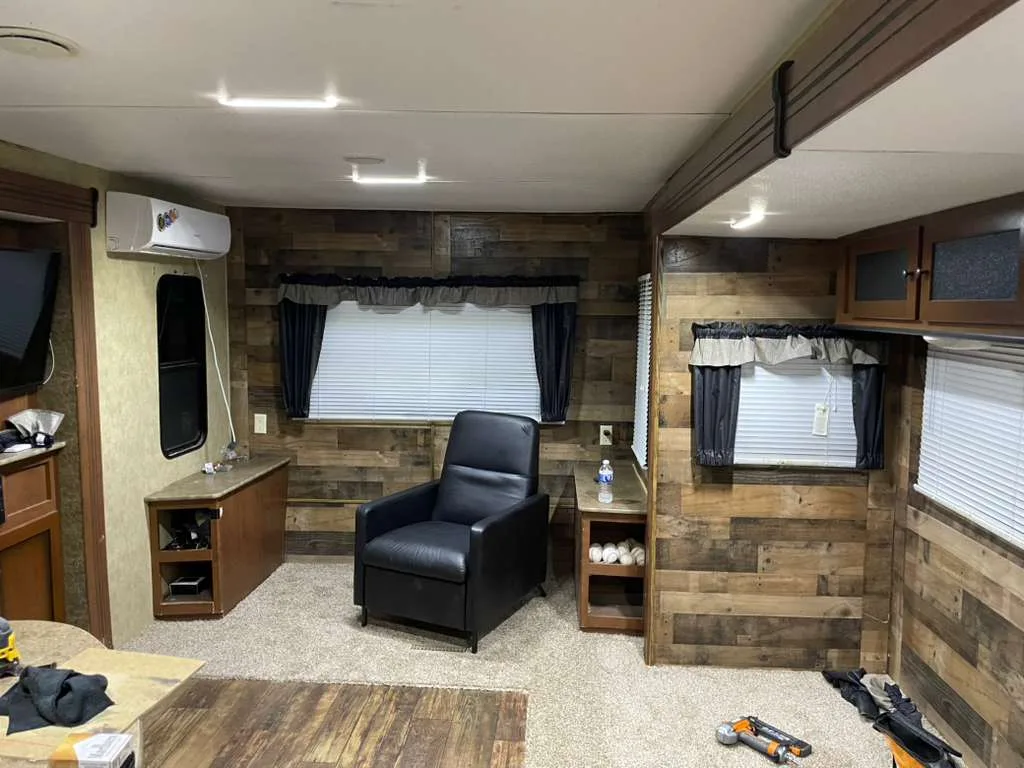
A standard RV policy is written on the assumption that the RV is a recreational vehicle and that you have a home somewhere else. That assumption carries consequences most owners never notice until it matters.
Live in the coach full time and two things change. The liability exposure that would normally sit with your homeowner's policy - somebody injured at your site, for instance - has nowhere to go. And your personal belongings, which a homeowner's policy would have covered, are now all in the RV and outside the scope of the policy that used to cover them.
Full-timer's coverage is designed to fill that gap, adding personal liability and contents coverage in something closer to the way a homeowner's policy works.
The assumption underneath a standard policy is that the coach is a second home rather than the only one, and almost every gap that catches full-timers comes from that single assumption rather than from any specific exclusion.
What does full-timer's coverage actually add to a policy?
- If the RV is your only residence, this is the gap most likely to be uninsured, and it is the one with the largest potential loss attached.
- Be accurate about how you use the coach. A policy written as recreational use on a coach that is a full-time residence can create a serious problem at claim time, and that is a worse outcome than paying for the right policy.
- Ask directly how your insurer defines full-time use and where the boundary falls, because definitions vary - some are based on nights per year, some on whether you have another residence.
This matters in Florida specifically because so many owners are here seasonally and it is genuinely unclear which category they fall into. That is a question to put to your insurer rather than to answer for yourself.
Check it before you need it. The gap only becomes visible at the point of a claim.
How does hurricane and named-storm damage work?
Storm damage to an RV is generally handled under comprehensive coverage rather than collision, which means that if a coach carries only liability there is no coverage for wind or flood damage at all.
Things worth checking on your own policy before hurricane season rather than during it:
- Whether comprehensive coverage is on the policy at all. Owners who dropped it on an older coach to save money have no storm coverage.
- Whether a separate deductible applies to named storms, which is common in Florida and can be substantially higher than the standard deductible.
- How flood is treated. Rising water and wind-driven rain are not always handled the same way, and that distinction decides claims after a storm surge.
- Whether there is a binding restriction - many insurers will not add or increase coverage once a storm is named and forecast, which means the week before landfall is too late.
- What the policy says about a coach in storage versus one in use, since that is where most of them are when a storm arrives.
Documentation is the practical preparation. Photographs of the coach in good condition, current maintenance records and a record of what is inside it are what make a post-storm claim straightforward, and they take an afternoon to produce.
What is the difference between actual cash value and agreed value?
This determines what you receive if the coach is written off, and RVs depreciate in a way that makes the distinction significant.
| Basis | What it pays | Where it bites |
|---|---|---|
| Actual cash value | Market value at the time of loss, after depreciation. | The payout can be well below what you paid or what you owe, particularly in the first years. |
| Agreed value | A figure you and the insurer set in advance. | Removes the argument at claim time, but the agreed figure needs reviewing periodically to stay realistic. |
| Replacement cost | The cost of a comparable new unit, usually only for a limited period after purchase. | Time-limited, and the definition of comparable matters. |
The difference is invisible until the coach is written off, at which point it is the only number that matters. It is worth knowing which one your policy uses before that day rather than reading it off a settlement letter.
When should you review the valuation on an RV policy?
Where this becomes urgent is a loan. If the coach is financed and the payout is based on depreciated value, a total loss can leave you owing money on an RV you no longer have. Gap coverage exists specifically for that, and it is worth asking about while the loan is new rather than later.
It is also worth reviewing after any significant upgrade. Solar, a lithium battery system or a major interior refit add real value that a standard valuation may not reflect, and the time to establish that is before a claim, not during one.
Both of those are moments where the value on the policy and the value of the coach quietly diverge, and neither one prompts an insurer to get in touch. Reviewing it is the owner's job, and it takes one phone call.
What else is worth checking on the policy?
- Emergency expense or loss of use. If the coach is your accommodation and it becomes uninhabitable, does the policy pay for somewhere to stay? For a full-timer this is not a small item.
- Roadside assistance limits. RV recovery is not car recovery. Check that the coverage actually extends to a vehicle of your size and weight, because general roadside plans often do not.
- Attached accessories. Awnings, solar arrays, satellite equipment and add-ons may have their own limit or may need to be listed.
- Personal belongings limit, and whether high-value items need scheduling individually.
- Towing and vacation liability, which cover different situations from driving liability.
- Storage or lay-up provisions. Some policies allow reduced premiums during storage months, and some restrict coverage during them. Know which you have.
- The deductible, and whether it differs by peril.
None of that requires a phone call to check. It is all in the policy documents, and an hour reading them is the cheapest insurance work you will ever do.
How does maintenance affect what a policy will pay?
More than most owners realize, and this is the part where our job and your policy actually intersect.
Because gradual damage exclusions turn on deterioration and lack of maintenance, the documented condition of the coach is what decides some claims. Two coaches with identical storm damage can end up in different places if one has a maintenance history and the other has a roof that had clearly been failing for two years before the storm arrived.
Two coaches with identical damage can be treated completely differently, and the thing that separates them is not the damage at all. It is what the owner can show about the condition of the coach before it happened, which means the paperwork from an ordinary maintenance visit is doing work long after the visit itself has been forgotten, and it is the cheapest insurance-related thing an owner can actually control.
Why does a written maintenance record change a claim?
- Keep receipts for roof inspections, resealing and seal replacement. These are the exact items a gradual-damage question turns on.
- Photograph the roof and the seals once or twice a year. Dated images showing the coach in good condition are hard to argue with.
- Deal with a known leak promptly and keep the record of it. A leak reported and repaired reads very differently from one that was ignored.
- Keep a record of upgrades and their cost, for the valuation reasons above.
- Get a written report when you have work done, rather than a verbal summary.
We provide written reports on inspections and repairs for exactly this reason. See our inspection service page for what a documented inspection covers.
Keep the reports even for work that turned up nothing. A clean inspection from eighteen months ago is evidence of maintenance in a way that a memory of having looked at the roof is not, and it costs nothing to file.
What a visit costs
A service call is $299 and covers the trip out to your RV and the first hour on site. Work past that first hour is quoted to you once our technician has found the fault, before we carry on. In Orlando, Lakeland, Kissimmee, Apopka and nearby the service call is $399 and time past the first hour runs $200 per hour. Written estimates are free and you approve one before any work starts. Call 888-759-1438.
Sources and further reading
Every figure above that came from a manufacturer or a standards body is linked here so you can check it yourself.
- Florida Highway Safety and Motor Vehicles - insurance requirements - The state's own current statement of what is required for a registered vehicle in Florida.
- Florida Statutes Chapter 324 - Financial Responsibility - The underlying law behind Florida's motor vehicle financial responsibility requirements.
- Florida Office of Insurance Regulation - The state regulator, and the right place for consumer information about insurers licensed in Florida.
- US EPA - mold cleanup guidance - Useful context for the remediation side of a water loss, which is often handled under its own policy provision.
Related pages on this site
- RV inspections - documented condition reports and moisture surveys
- RV water damage repair - the loss most often argued over
- RV roof maintenance - the maintenance record a gradual-damage exclusion turns on
- Book an inspection - mobile across Florida
RV insurance questions Florida owners ask
Will my insurance pay for a roof reseal?
Almost certainly not. Resealing is scheduled maintenance rather than accidental damage, and policies are written to exclude maintenance. What insurance may cover is damage caused by a sudden event. The uncomfortable connection is that skipping the maintenance is also what can jeopardize a later claim, so it works against you twice.
Does my auto policy cover my travel trailer?
It commonly extends liability to a trailer while it is being towed, which is not the same as covering damage to the trailer itself. Physical damage to the trailer generally needs coverage taken out on the trailer. This is the single most common coverage gap we hear about, and it is worth confirming with your insurer rather than assuming.
Do I need insurance on an RV that is in storage?
State requirements relate to registered vehicles, so that part depends on registration status and is a question for the state and your insurer. What is worth thinking about separately is that storage is where a great deal of RV damage happens - storms, theft, vandalism, falling branches - and dropping comprehensive to save money during storage removes coverage precisely when the coach is least supervised.
What is vacation liability coverage?
It covers liability arising while the RV is parked and being used as a residence at a campsite - someone injured at your site, for example - as distinct from liability arising from driving it. Many policies include some, often with a limit that assumes recreational rather than full-time use. If you live in the coach, that limit is worth examining closely.
Will insurance cover mold in my RV?
Mold is frequently handled under its own provision with a separate limit, or excluded, and it is often tied to whether the underlying water damage was covered. If the water intrusion was gradual and excluded, the mold that followed usually is too. This is one to read in your own wording, because treatment of mold varies more between policies than almost anything else.
Should I tell my insurer about solar panels or a lithium battery upgrade?
Yes, for two reasons. It affects the value of the coach for a total loss calculation, and some policies want permanently attached equipment listed to be covered. An upgrade you never mentioned is an upgrade that may not be reflected in a payout. It is a short call and it protects real money.
Do you work with insurance claims?
We provide written inspection reports, moisture surveys, documented findings and photographs, which is what an adjuster needs to assess a loss. We do not act as an advocate with your insurer and we will not characterize a gradual failure as a sudden one. Call 888-759-1438 - and if you are documenting damage for a claim, do it before anything is sealed or disturbed.
Is it worth having an inspection just for insurance purposes?
For an older coach, or one you intend to keep, a documented annual inspection is a reasonable form of protection. It establishes the condition of the coach on a date, which is exactly what a gradual-damage question later asks about. It also tends to find the small problems while they are still small, which is the main reason to do it.