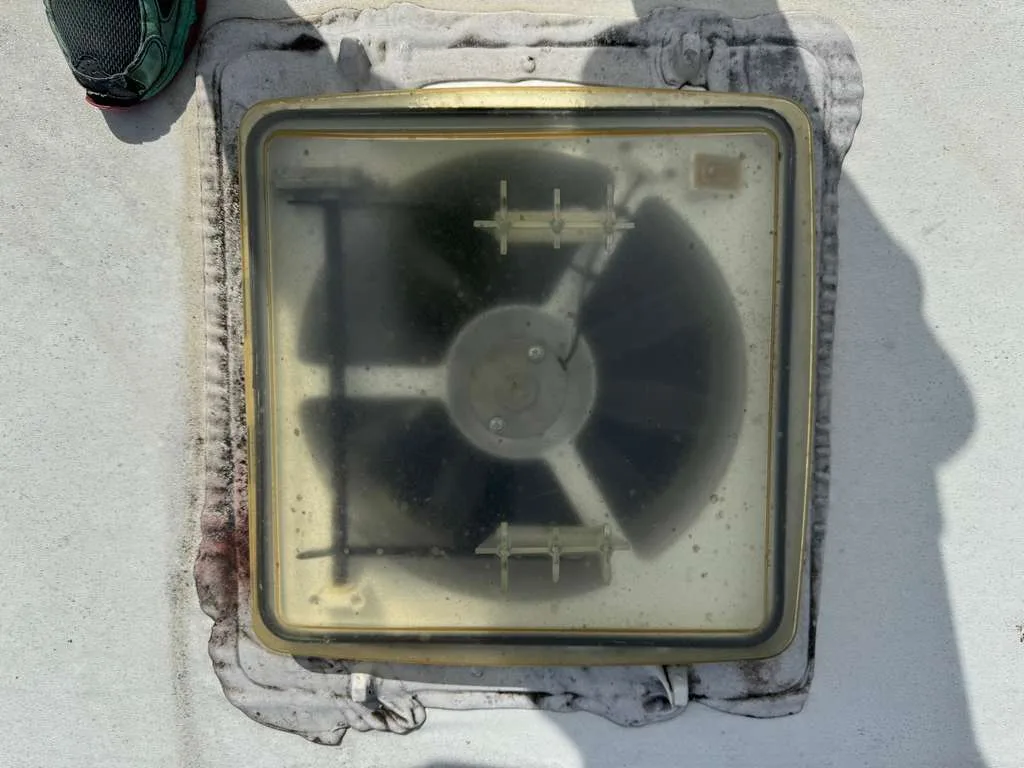
What Does an RV Roof Reseal Cost in Florida?
Why two quotes for the same roof differ by hundreds of dollars, what a cheap reseal quietly leaves out, and when resealing stops being the economical choice.
A reseal is priced by the number of penetrations and the state of the sealant already there, not by the length of the coach. That is why two quotes for the same roof can differ by hundreds. The expensive variable is preparation, and the cheap quotes are almost always the ones that skip it.
Apex RV Repair is mobile across Florida - we come to your RV. Call 888-759-1438.
Resealing is the least glamorous work done on an RV and the single best value on the whole coach. It is also the job most often quoted at two wildly different numbers for what sounds like the same work.
This page is about the money rather than the method. What drives the price up, what a low quote usually leaves out, when the job stops being worth doing at all, and what it costs to put it off another season. If you want the procedure itself, our RV roof maintenance guide covers it in full.
Why do two RV roof reseal quotes differ by hundreds of dollars?
Because they are usually describing two different jobs that share a name. The cheaper one is a bead of fresh sealant run over what is already there. The dearer one is the removal of failed sealant, cleaning and preparation of the substrate, and fresh material applied to a surface it can actually bond to.
The second takes several times longer and lasts many times longer, and from ten feet away on the day they look identical. Fresh sealant laid over old, oxidized, chalky sealant bonds to the old sealant rather than to the roof, so when the old material lets go it takes the new material with it.
The honest way to compare quotes is to ask what happens to the existing sealant. If the answer is that it stays, you are buying time rather than a repair, and it is worth knowing that going in.
What actually drives the price of a reseal?
Not the length of the coach, which is the assumption most owners arrive with. A reseal is priced by penetrations and by condition.
- The number of roof penetrations. Vents, fans, skylights, antennas, solar mounts, the air conditioner and every screw head are each a separate seam that has to be prepared and sealed.
- How far the existing sealant has failed. Sealant that lifts off in strips is quick; sealant that has gone chalky and bonded hard is slow removal.
- Roof material, because preparation and compatible product differ between EPDM, TPO and fiberglass.
- Whether anything has to come off. A vent or fan that must be removed and rebedded is a different job from one sealed around.
- Access. A coach parked under trees or tight against a neighbor takes longer and sometimes cannot be worked on at all.
A coach with a solar array, three fans and a skylight can carry more sealing work than a longer coach with a plain roof. It is the count that matters, not the footage.
Does the roof material change what a reseal costs?
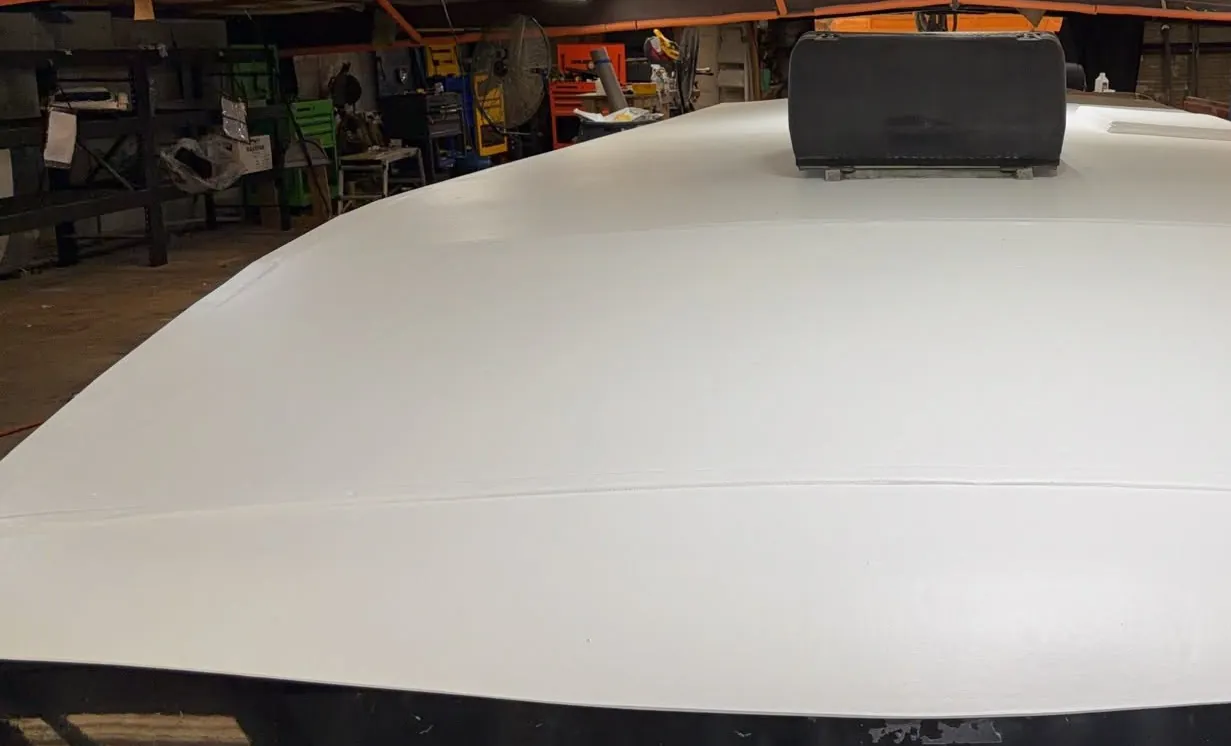
It changes the product and the preparation, and both feed into the labor. Rubber membranes are the most forgiving to work on and the most common on coaches sold in Florida. Fiberglass roofs are harder surfaces that need different preparation and show a poor job far more obviously.
The real cost difference comes from compatibility. Not every sealant belongs on every membrane, and silicone in particular has no place on a rubber roof, because nothing will bond to the surface afterwards. A roof that has been treated with the wrong product once carries an extra removal cost forever.
This is why a technician wants to identify the material before quoting, and why a quote given over the phone without knowing what your roof is made of is a guess. Dicor's own installation instructions set out which product goes where.
What makes a reseal job cost more than the standard price?
Three findings turn a routine reseal into a larger number, and all three are found rather than predicted.
The first is soft decking. If the roof flexes underfoot, water has already been in the structure and sealing over it traps the moisture rather than stopping it. The second is a previous repair done with the wrong product, which has to come off completely before anything new goes down.
The third is a penetration that has been leaking long enough to wet the framing beneath it, most often a skylight or a fan opening. That stops being roof work and becomes structural work, and the price follows.
A technician who finds any of these should stop and requote rather than seal over them. Sealing a wet roof is worse than doing nothing, because it removes the visible symptom and lets the damage continue quietly underneath.
Is a reseal cheaper than a roof replacement?
By an enormous margin, and that gap is the entire argument for keeping up with it. A reseal is materials and a technician's time. A replacement is stripping the old membrane, inspecting and often replacing decking, refitting every component that penetrates the roof, and laying new material.
The two are not really alternatives, though. They are consecutive stages of the same story. A roof that is resealed on schedule rarely needs replacing on a coach's normal life. A roof that is left goes soft, and once decking is wet, sealant cannot help it.
The decision point is whether the substrate is still sound. Sound decking with failed sealant is a reseal. Soft decking is a replacement, whatever the sealant looks like, and no amount of product changes that. A moisture survey answers that question in an hour and is the cheapest money spent on the whole job.
Will insurance pay for an RV roof reseal?
Almost never, and understanding why prevents a wasted claim. Insurance responds to sudden and accidental events. A branch through the roof in a storm is sudden. Sealant that has degraded over four Florida summers is gradual deterioration, which policies specifically exclude as maintenance.
Where the line gets interesting is what happens next. If a genuinely sudden event causes damage, the resulting repair may be covered, and a documented inspection report showing the roof was maintained beforehand strengthens that claim considerably.
The reverse is also true, and it catches people out. An insurer looking at water damage will ask whether the roof was maintained, and a coach with no record of any sealant work is a considerably easier claim to decline. Our guide to RV insurance in Florida covers how that argument tends to run.
What does a cheap RV roof reseal leave out?
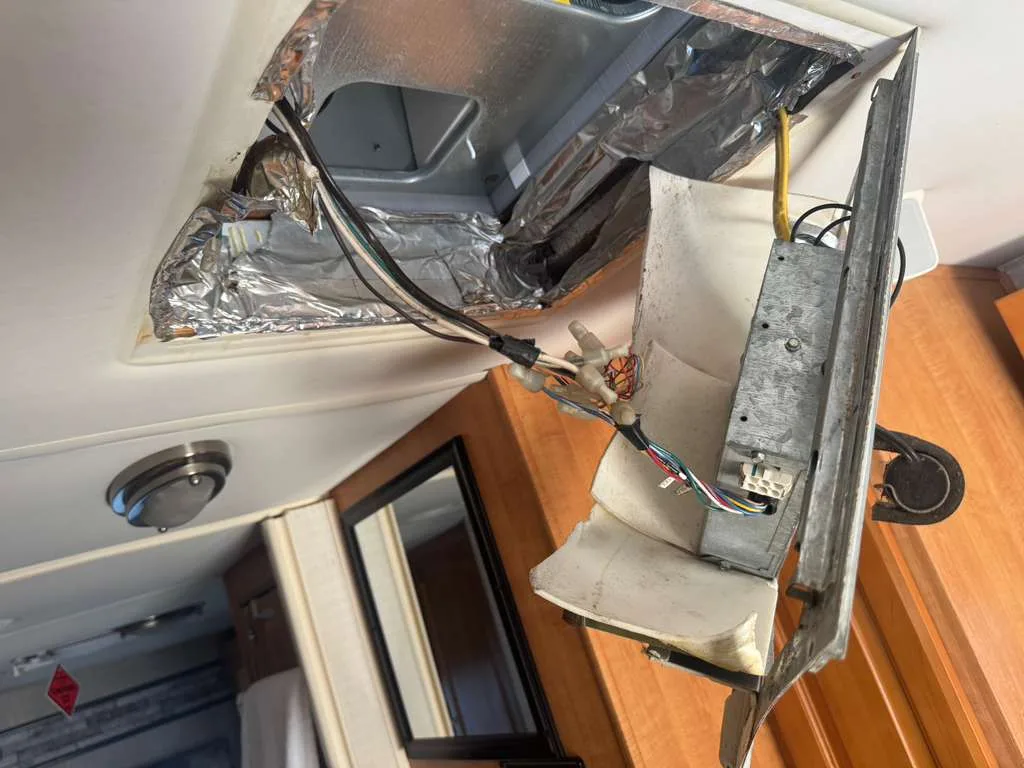
Preparation, almost always, because preparation is where the hours are. Removing failed sealant, cleaning the substrate and letting it dry properly can take longer than applying the new material, and it is invisible in the finished job.
The other common omission is the moisture check. Nobody can tell whether decking is sound by looking at the top of a sealed roof, and a reseal that goes down without that check may be sealing water in. That is the single most expensive shortcut available on an RV.
Third is product choice. A single tube of general purpose sealant is cheaper than the correct self-leveling and non-sag products for the different surfaces on one roof, and it fails first at exactly the seams that matter.
None of this is visible for about a year, which is why the cheapest quote so often wins.
How much does putting off a reseal actually cost?
The cost curve here is unusually steep, which is why we push it harder than any other maintenance item. Failed sealant is a small job. Water past the sealant into the decking is a large one. Water past the decking into the framing and the walls is the kind of repair that competes with the value of an older coach.
Florida compresses that timeline. Ultraviolet exposure degrades sealant faster here than the national maintenance intervals assume, and the daily summer storms give any opening a fresh test every afternoon. A roof left through two Florida summers after the sealant starts to go is a genuinely different roof.
The practical advice is unglamorous. Look at the roof, or have someone look at it, twice a year rather than when something appears on the ceiling. By the time a stain shows inside, the water has usually been traveling for months.
What a visit costs
A service call is $299 and covers the trip out to your RV and the first hour on site. Work past that first hour is quoted to you once our technician has found the fault, before we carry on. In Orlando, Lakeland, Kissimmee, Apopka and nearby the service call is $399 and time past the first hour runs $200 per hour. Written estimates are free and you approve one before any work starts. Call 888-759-1438.
Sources and further reading
Every figure above that came from a manufacturer or a standards body is linked here so you can check it yourself.
- Dicor - roof sealant installation instructions - The manufacturer's own preparation requirements, which are the steps a cheap quote leaves out.
- Dicor - self-leveling lap sealant - The product intended for horizontal seams and roof penetrations.
- Dicor - non-sag sealant - The vertical-surface product, which is why one tube cannot correctly seal a whole roof.
- US EPA - brief guide to mold, moisture and your home - Why trapping moisture inside a structure is worse than leaving the leak visible.
- National Weather Service - Tallahassee - Florida's summer storm pattern, which is what tests every roof seam daily from June onward.
Related pages on this site
- RV roof reseal and lap sealant service - what a mobile reseal visit covers
- RV roof maintenance guide - the method itself, in full
- Signs of RV water damage - what a roof left too long looks like from inside
- RV moisture and leak survey - the check that has to come before any sealant
- RV repair in St. Augustine - coastal sun and salt air on the northeast coast
RV roof reseal cost questions Florida owners ask
How do I know whether a quote is a real reseal or just fresh sealant on top?
Ask one question: what happens to the existing sealant. If it is being removed, cleaned back and replaced, that is a reseal. If new material goes over the old, you are buying a year or two rather than a repair, because the new sealant bonds to the old material and not to the roof.
Can I reseal an RV roof myself?
The application is within reach of a careful owner, but two things are not. Judging whether decking is sound before sealing over it takes a moisture meter and experience, and RV roofs are only walkable in specific places. Sealing a roof that is already wet is worse than leaving it alone.
Why is silicone a problem on an RV roof?
Because once silicone has been on a membrane, almost nothing will bond to that surface afterwards, including the correct sealant. It looks like a cheap fix and permanently raises the cost of every future repair on that seam, since the contaminated area has to be removed rather than sealed over.
Does a reseal fix an existing leak?
Only if the leak is at the sealant and the structure underneath is still sound. If water has been getting in long enough to soften decking, sealing the entry point traps what is already inside. That is why a moisture check comes before the sealant rather than after it.
How long should a proper reseal last in Florida?
Less than the national guidance suggests, because ultraviolet exposure and daily summer storms are harder on sealant here than in most of the country. The honest answer is that it should be inspected twice a year rather than trusted to a fixed interval, since a coach kept under cover ages very differently from one in open sun.
Is it worth resealing an older coach?
Usually yes, provided the decking is sound, because the alternative outcome is structural damage that costs far more than the coach is worth. The check that matters is not the age of the RV but whether the roof still has a solid substrate to seal to.