RV De-Winterization and Fresh Water Sanitizing in Florida
Florida RV de-winterization and fresh water sanitizing to the published 50 ppm chlorine method, not a four hour rinse. Mobile service. Call 888-759-1438.
Before any chlorine goes in, three checks decide the job: whether the coach is actually holding RV antifreeze, whether the odor is on the hot side only, and whether the free chlorine residual can survive the dwell. De-winterization and sanitizing is a published public health procedure rather than a rinse. On most Florida coaches nothing was ever winterized, so what looks like an antifreeze flush is really a biofilm problem.
What Gets Checked Before Any Chlorine Goes In
De-winterization is the process of returning a stored RV fresh water system to drinking service, and sanitizing is the disinfection step inside it. The order matters, because chlorine destroys the evidence you need to diagnose with. The first check is whether the coach is holding pink RV antifreeze at all: open a low point drain and look, since a coach stored in Florida usually gives up clear water and a stale smell instead of propylene glycol. The second check is where the odor lives. Run the galley cold tap, then the galley hot, then the bathroom, because a rotten egg smell on the hot side only points at the water heater and its magnesium anode rod rather than at the fresh tank. The third is the filter. An inline granular activated carbon cartridge left wet through a Florida summer is a bacterial substrate, so it comes out and goes in the bin before a drop of sodium hypochlorite is measured.
De-Winterization or Biofilm? Florida Changes the Question

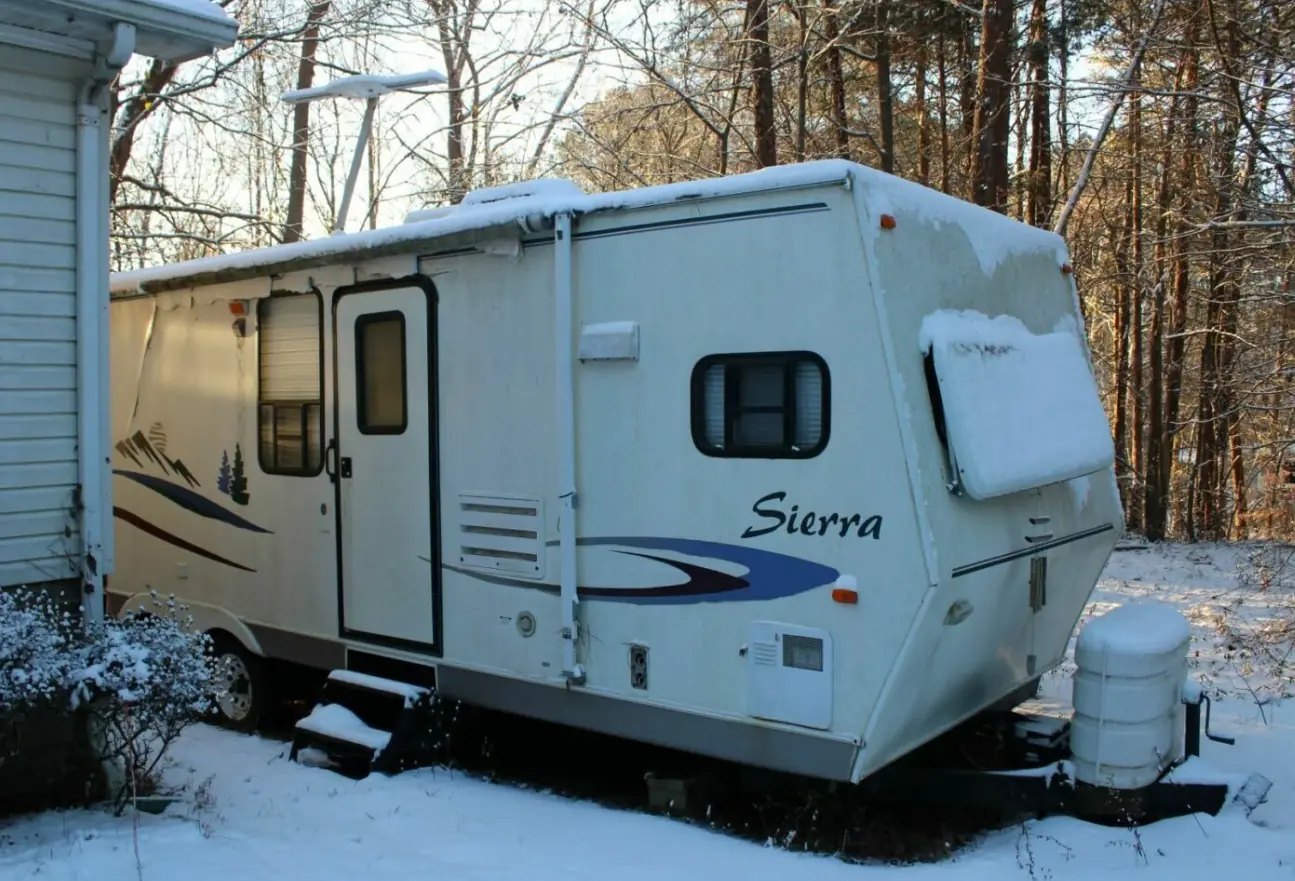
Across most of the country, spring service means chasing propylene glycol out of the lines and the water heater. A coach stored in Florida instead sat from May to November with the fresh tank full or half full, in a lot where interior temperatures run well above the shade reading outside. That is a different failure with a different fix. Antifreeze is a taste and a residue. It is suspended in the water, so volume clears it and a few tank fills finish the job. A system that sat warm and wet grows a film bonded to every wetted surface, and volume does nothing to it because that film is attached rather than floating. So for a Florida coach the honest framing is not de-winterization at all. It is disinfection of a system that has been incubating for four months, which needs a measured charge and a timed dwell. The blowout and the antifreeze fill are the northern half of the work and a separate service.
The Chlorine Dose and Dwell Time, From the Actual Sources
Public health agencies publish this exact procedure, and their figures do not match the RV convention. The Minnesota Department of Health method for a non-pressurized potable water storage tank is a minimum of 50 parts per million of free chlorine, held a full 24 hours, with a measurable residual still present when the time is up. Its only published shortcut is 200 ppm for three hours, which is four times the bleach. California's Division of Drinking Water sets a lower floor, a minimum of 10 mg/L free chlorine, but keeps the same 24 hour hold. Under that method the system is then flushed until the residual falls to or below 2.0 mg/L and sampled for total coliform before it goes back into service. RV sources almost universally say four hours. The concentration they quote is right; the dwell they quote is short by a factor of six.
The Fresh Tank Is Only Part of the Wetted Surface
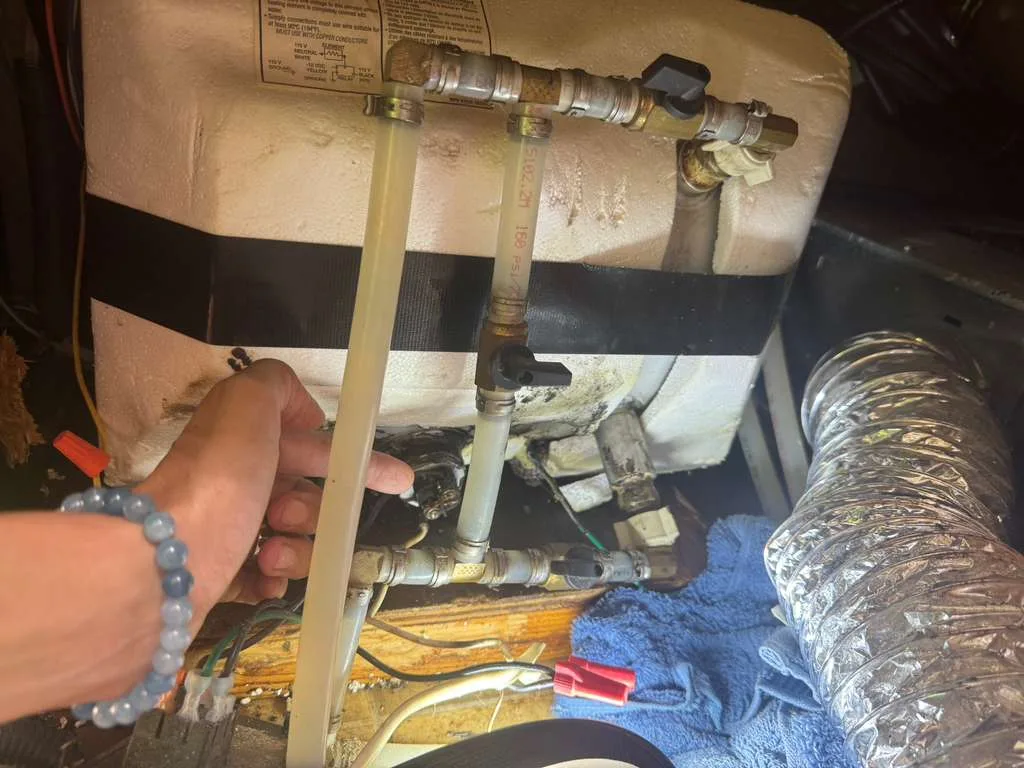
Sanitizing the fresh water tank and stopping there is the most common way this job fails. The charged water has to be drawn through everything it will later touch, which means the water pump, both the hot and cold manifolds, every faucet, the toilet and its hand sprayer, the outside shower, and the ice maker supply line if the coach has one. That includes the water heater, which is where most owners stop. A six gallon Dometic or Suburban tank sitting on bypass never sees the solution, and the moment those bypass valves go back to normal it pushes six gallons of untreated water into freshly cleaned lines. The method is to charge the tank, then open each outlet in turn and hold it until the chlorine smell arrives, then shut it. Any outlet that never smelled of chlorine is an outlet that will reinoculate the system on the first trip.
Biofilm, and Why a Wet Coach Is Harder Than a Dry One
Biofilm is a layer of bacteria bound in a matrix they secrete themselves, stuck to plastic and metal surfaces, shielding the organisms underneath from disinfectant. That is the entire reason a dwell time exists: free chlorine has to penetrate the matrix, not merely touch it. Minnesota's cleaning instructions tell operators to concentrate scrubbing on the air and water interface, because that band is where the level changes and growth is most likely to take hold. In a coach, that band is the inside wall of a fresh tank that sat half full all summer, and it is the one surface a fill and flush never reaches. The consequence is measurable rather than theoretical. If free chlorine reads zero on a DPD test kit before the dwell is up, the system had more chlorine demand than the charge could satisfy, and the correct response is to recharge it and restart the clock.
When Sanitizing Will Not Fix the Taste or the Smell
A sanitize is a disinfection, and it does not correct a hardware or chemical source. The clearest example is the rotten egg odor that shows up on the hot side only. That is hydrogen sulfide, produced where sulfate reducing bacteria meet the magnesium anode rod in a steel Suburban tank, and chlorinating the fresh tank does not touch it because the source keeps regenerating. The anode rod is its own service. Two more sources outlive a sanitize. A spent granular activated carbon cartridge gives back what it collected and will keep doing so on clean water, and a cheap hose or a new polyethylene tank can push a plastic taste that is off-gassing rather than growth. Diagnosis comes before chlorine for that reason. Sanitizing a system whose real problem is an anode rod costs a day and delays the actual repair by a week.
Park Water, Hoses in the Sun, and What This Costs
A sanitize is a moment in time, not a coating. The most common way owners undo one is the hose: any hose left coiled in the sun holds warm water between uses, which is a small incubator plumbed straight into a clean system. A drinking water rated hose certified to NSF/ANSI 61, drained and capped between hookups, is the cheap half of keeping the result. Park water varies as well. Well fed parks and older park distribution lines can deliver sediment, iron and sulfur that the coach then stores, which is why a fresh sediment and carbon cartridge goes in at the inlet after the job rather than before it. The dwell is the slow part, so this is normally staged across two visits. Our service call covers the trip out and the first hour on site, with the current rate shown in the pricing table on this page. Anything past that hour is quoted once the diagnosis is in, and approved before the work goes ahead.
Sources
Every figure on this page comes from a manufacturer document or a standards body, not from another repair site. Here is where each one comes from.
- Minnesota Department of Health - Cleaning and Disinfecting Non-Pressurized Water Storage TanksThe 50 ppm minimum free chlorine dose held for 24 hours with a measurable residual required throughout, the 200 ppm for three hours alternative, the household bleach dosing table, and the instruction to concentrate cleaning on the air and water interface where growth is most likely.
- California State Water Resources Control Board, Division of Drinking Water - Procedures for Disinfection of Tanks with Hypochlorite SolutionThe independent second public health method: a 10 mg/L free chlorine minimum, the same 24 hour hold, and flushing until the residual is at or below 2.0 mg/L before a total coliform sample is taken.
- US EPA - National Primary Drinking Water RegulationsThe 4.0 mg/L maximum residual disinfectant level for chlorine and the total coliform limit, which set the level a sanitized system must be flushed back down to.
- US EPA - Emergency Disinfection of Drinking WaterThat making water safe to drink is a different procedure from disinfecting a system: EPA specifies 8 drops of 6 percent bleach per gallon and a 30 minute stand, which is not a system sanitizing dose.
- Dometic - 6 gallon RV water heaterThat the RV water heater is a separate six gallon vessel, which is the volume of untreated water pushed back into the lines if it is left on bypass during a sanitize.
Related repairs
Other systems we service
Where we work
Service category
What this usually costs
| Item | Price | What it covers |
|---|---|---|
| Service call | $299 | Includes the trip out to your RV and the first hour on site |
| Work past the first hour | Quoted after diagnosis | We tell you what it will take before we carry on |
| Parts | Quoted per job | Special-order parts may need a deposit before we order them |
| Written estimate | No charge | You approve the estimate before any work starts |
The service call covers the trip out to your RV and the first hour on site. Anything beyond that depends on what we find, and we quote it and get your approval before carrying on.
The price ranges on this page come from our own recent jobs across Florida, not from an industry average. What you pay depends on the rig, the parts it needs and what we find on site, so we give you a written estimate before any work begins and you approve it first.
Frequently asked questions
Do you offer winterization service in Florida?
Yes, although in Florida it is usually the wrong request. Coaches here are rarely at freeze risk, so the work that actually protects the system is summer storage prep and a proper sanitize on the way back out. If the coach is heading north for the season, the blowout and antifreeze fill are a separate service that we also handle.
How much bleach does it take, and how long does it really have to sit?
The common RV figure of a quarter cup of household bleach per 15 gallons lands within a few percent of 50 ppm free chlorine on Minnesota's own dosing table, so the concentration is correct. The dwell is not. Minnesota's published method holds 50 ppm for a full 24 hours, and its only shortcut is 200 ppm for three hours. Four hours at 50 ppm appears in no primary source.
My RV was never winterized. Do I still need a sanitize?
More so, not less. A dry system that was blown out and filled with antifreeze is a poor environment for bacteria, while a system that sat warm and half full for four months is close to an ideal one. Biofilm forms on wetted surfaces, so the Florida coach that skipped winterizing entirely is the harder one to bring back into drinking service.
Why does the water still smell after I sanitized the tank?
Check whether the smell is on the hot side only. If it is, the source is hydrogen sulfide generated at the water heater's magnesium anode rod, and no tank chlorination will clear it. If both sides smell, the usual culprits are a water heater left on bypass during the sanitize, a carbon filter that was never removed, or an outlet that never got drawn through.
Can we drink the water right after a sanitize?
Not immediately. The system has to be flushed until the free chlorine residual comes back down to a drinking level, which California's procedure sets at or below 2.0 mg/L before sampling. For reference, the EPA maximum residual disinfectant level for chlorine in public drinking water is 4.0 mg/L. A test strip or DPD kit tells you when you are there far better than your nose does.