RV Warranty Claim Documentation for Extended Service Plans
We document RV component failures for extended warranty and insurance claims: part number, cause of failure, photos before teardown. Call 888-759-1438.
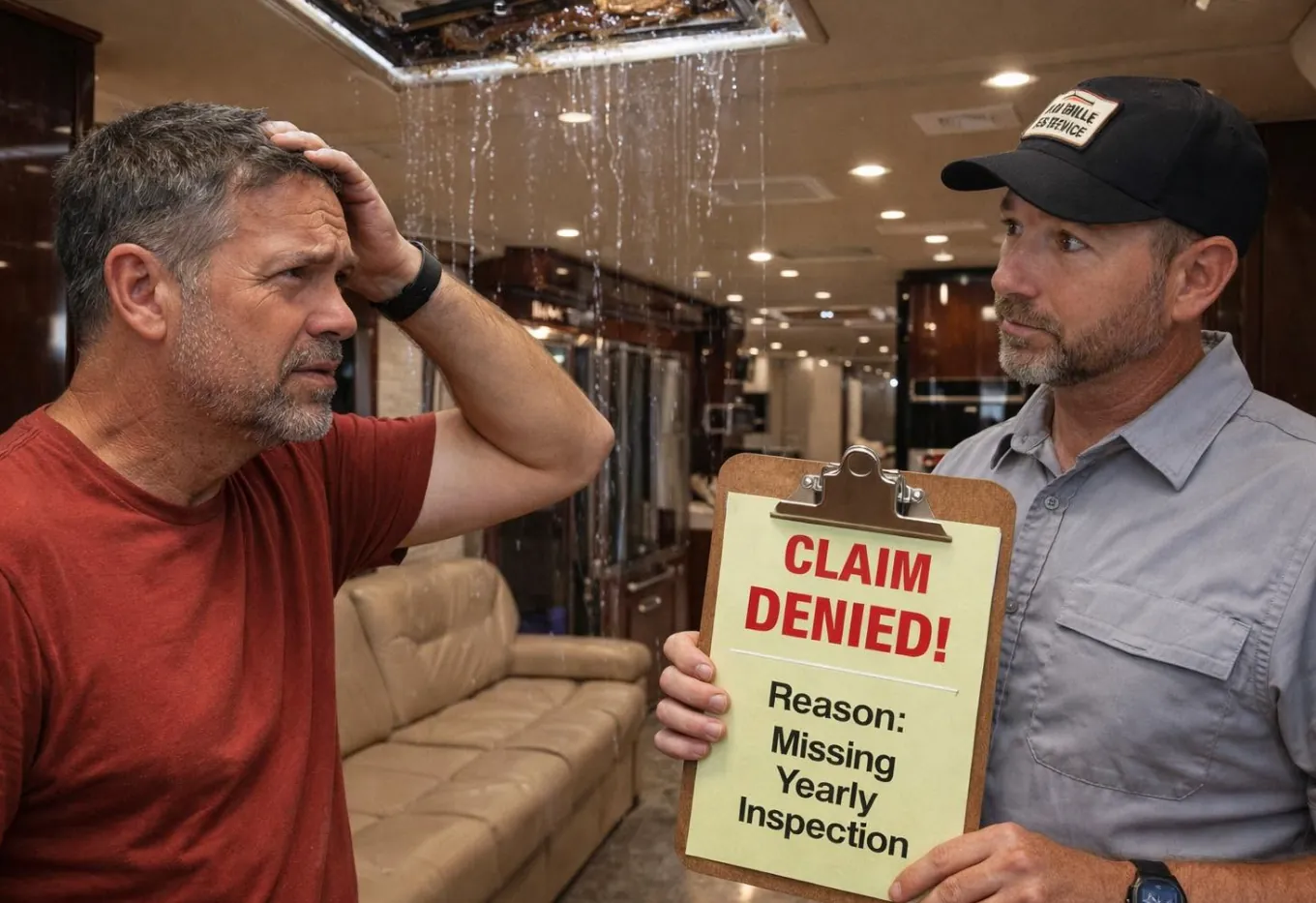
An undocumented failure becomes a denied claim, and a denied claim becomes your invoice. Extended warranty administrators and insurance carriers pay on evidence: the part named, the failure described mechanically, the cause of failure stated, and photographs taken before anything is disassembled. Apex documents that file and bills the carrier where the carrier accepts us. Confirm the claim and verify your coverage before any work starts, because the carrier decides, not the shop.
Covered Failure or Excluded Wear: the Line Every Claim Turns On
A service agreement pays for a mechanical failure. It does not pay for a part that wore out on schedule, and that single distinction settles more claims than anything else. Florida defines a motor vehicle service agreement as indemnifying the holder against loss caused by failure of a mechanical or other component part, or a part that does not function as it was originally intended. The trigger is a component that failed, not a component that aged. The Federal Trade Commission makes the same point in plainer words, warning that a contract covering only mechanical breakdowns may not cover problems caused by normal wear and tear. So a Dometic Penguin II rooftop air conditioner whose compressor will not start because the dual run capacitor has collapsed is a failure. A magnesium anode rod eaten down to its steel core in a Suburban water heater is maintenance. A lap sealant bead that has shrunk and split is maintenance as well, and that is the one Florida owners lose.
What Apex Can and Cannot Do About Your Claim
Apex does bill extended warranty administrators and insurance carriers on many jobs. Three conditions come first, and none of them are ours to waive. The claim has to be confirmed and a claim number issued before work proceeds. The policy or service agreement has to be verified as covering that specific failure on that specific component, not failures in general. And what is accepted varies by location and by carrier, since not every administrator accepts every mobile operation in every service area, and network rules differ from one carrier to the next. Nobody here can promise coverage or get a claim approved. The Federal Trade Commission is blunt about where that power sits: administrators make the decisions about authorizing the payment of claims under the contract. What we control is the quality of the file handed to them. We document the failure properly and we bill the carrier where that carrier accepts us. The carrier decides.
Pre-Authorization, the Claim Number and Teardown
Work that starts before a claim number exists is work the owner usually pays for. Administrators reimburse against an authorization they issued, not against an invoice that turns up later describing something nobody approved. The order is fixed: call the administrator, open the claim, get the number, then book the diagnostic visit. Ask on that same call whether diagnostic time is reimbursable, what the deductible is per visit or per repair, and whether the contract caps the labor rate or pays to a schedule. Teardown is its own trap. Some contracts require a teardown authorization before a sealed component is opened, and the FTC flags this exact question: if a unit must be taken apart to diagnose the fault and non-covered parts are found inside, who pays the labor to disassemble and reassemble it. Some carriers go further and require their own inspection, or an inspection by a company they name, before anything is touched.
Why Photographs Taken Before Disassembly Decide the File
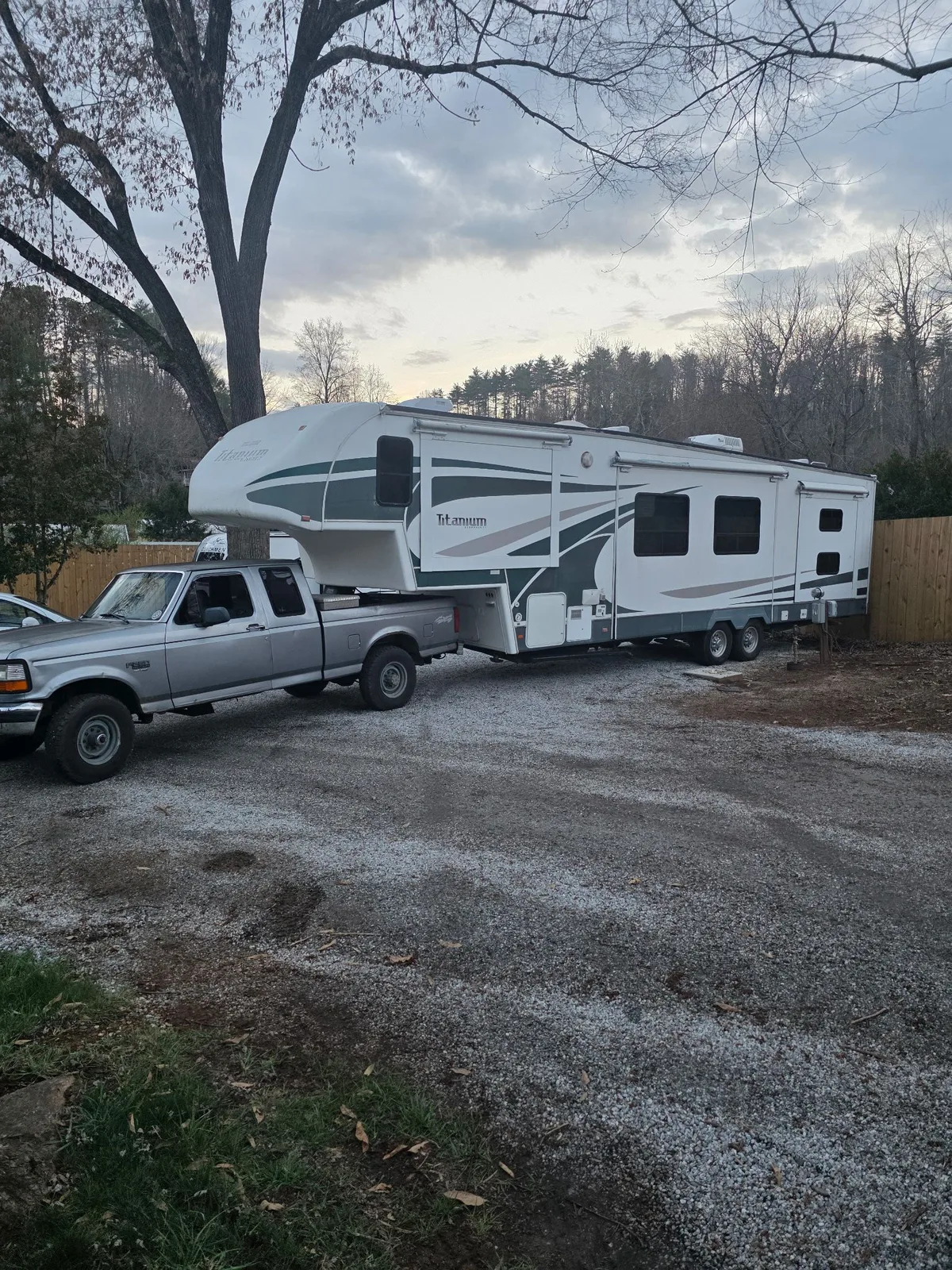
A photograph taken after disassembly proves a part is out of the coach. A photograph taken before disassembly proves how it failed. Only the second one answers the adjuster's real question, which is cause rather than condition. Some evidence exists only in place: the scorch pattern around a spade terminal, yellow ammonia residue streaking down a Norcold cooling unit, a split slide seal with the room still extended, water tracking down a sidewall from one specific fastener, a stripped tooth on a Schwintek in-wall gear still meshed with its rail. Pull the assembly first and every one of those drops to the level of a description. The sequence is wide, mid, tight. Wide places the component on the coach, mid shows it with its surroundings and fasteners, and tight puts a rule or a coin beside the damage so scale is provable. The model and serial label is photographed too, because a claim has to identify the unit, not just the fault.
The Language an Adjuster Is Actually Reading
Adjusters read three fields hardest: the part, the failure and the cause. A vague entry in any of them buys a phone call and a delay, and often a denial. The part is named by manufacturer, model family and part number where a number exists, read off the component's own data plate rather than guessed from a catalog. The failure is written mechanically: shorted, seized, open circuit, cracked casting, ruptured, will not hold pressure. The cause is the sentence that pays or does not pay, because a bearing that failed internally reads very differently from a bearing that failed after a seal let water in. Measurements carry the argument. A dual run capacitor rated 45/5 microfarads to a plus or minus six percent tolerance that reads 28 microfarads on a capacitance meter is a documented failure rather than an opinion. Where a cause genuinely cannot be determined, the file says so plainly instead of guessing.
From the Symptom You Report to the Cost and the Consequence
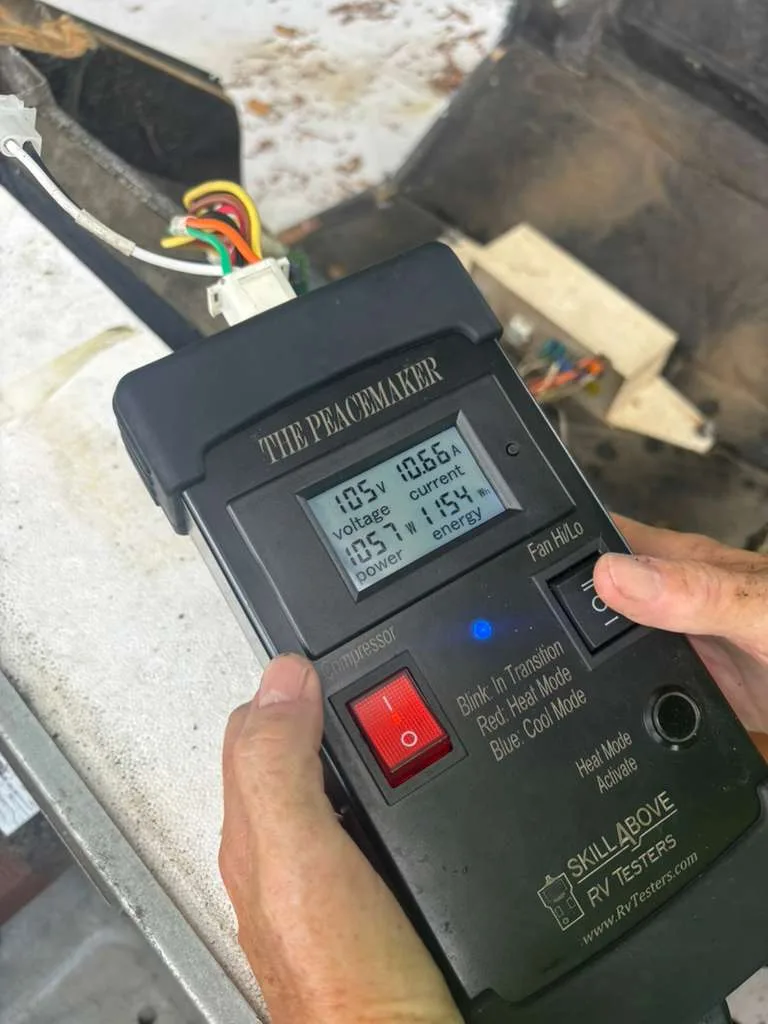
Callers describe systems rather than parts. The air will not cool, the fridge is warm on shore power, the slide walks out crooked, there is a smell in the bedroom. The visit works outward from that symptom. The reported system is confirmed to be failing, supply voltage and current draw are read at the appliance so a component fault is not confused with a supply fault, the suspect part is then tested against its own rated spec with a multimeter and a capacitance meter, and only then is it identified and photographed in place. Left alone is where it gets expensive: a weak capacitor that eventually takes the compressor with it turns a small covered part into a whole rooftop unit, and a simple claim into an argument. Report a symptom the week you notice it, even if you are not ready to repair it. The date on the record is often what decides a claim.
Water Intrusion and Storm Damage: the Two Florida Arguments
Water intrusion is the argument Florida owners lose most often, and it is lost on a definition. A carrier looks at a stained ceiling panel and asks whether a component failed or whether a sealant joint was allowed to fail, and sealant is a maintenance item on nearly every contract. Long idle periods make that argument easier for the carrier to win. A rig parked from April to November builds its own evidence quietly, and a leak found in the autumn reads as gradual on paper whatever the true start date. Dated resealing receipts and roof photographs taken before the rig was parked are what answer it. Storm damage takes a different route entirely. A branch through a roof, a hail-struck air conditioner shroud or a hurricane-lifted awning is an insurance loss rather than a service agreement claim, and the two are documented to different standards. That work sits with the insurance damage appraisal and post-hurricane assessment pages.
Sources
Every figure on this page comes from a manufacturer document or a standards body, not from another repair site. Here is where each one comes from.
- Florida Statutes 634.011 - Motor vehicle service agreement companies, definitionsThe statutory test this page turns on: a motor vehicle service agreement indemnifies the holder against loss caused by failure of any mechanical or other component part, or any mechanical or other component part that does not function as it was originally intended. The trigger is a component that failed, which is why a worn or consumed maintenance item sits outside it.
- Federal Trade Commission - Auto Warranties and Auto Service ContractsThat a service contract sold separately is not a warranty under federal law; that a contract covering only mechanical breakdowns may not cover problems caused by normal wear and tear; that administrators make the decisions about authorizing the payment of claims; the advice to find out whether pre-approval is needed before any repair; and the teardown question of who pays the labor to take a unit apart and reassemble it when non-covered parts are found inside.
- Florida Department of Financial Services - Motor Vehicle Service Agreement OverviewThe Florida consumer position: these agreements are defined at section 634.011, the company selling one must be licensed in Florida under section 634.031, a complete sample copy of the terms and conditions must be provided before sale on request, the holder is expected to maintain the vehicle as prescribed by the manufacturer, and unfair claim settlement practices include failing to affirm or deny coverage within 30 days of completed proof-of-loss statements.
- Florida Statutes 634.282 - Unlawful and prohibited activitiesThe information-gain claim, read from the statute rather than a summary: subsection (17) makes failing to provide a consumer with a complete sample copy of the terms and conditions of the service agreement prior to the time of sale an unlawful practice, and the claim settlement provisions treat failure to affirm or deny full or partial coverage, upon written request, within 30 days after proof-of-loss statements have been completed as an unfair practice.
- Dometic Corporation - Limited Two-Year Warranty, Dometic Refrigerators (Form No. 3316980.000)That a component maker's factory warranty is a separate written instrument from a service contract, issued by the manufacturer for a fixed term with its own numbered conditions, exclusions and limitations, and administered by Dometic's own warranty department rather than by the coach builder. It is the document an owner should read for a refrigerator claim instead of a broker's summary of it.
Related repairs
Other systems we service
Where we work
Service category
What this usually costs
| Item | Price | What it covers |
|---|---|---|
| Service call | $299 | Includes the trip out to your RV and the first hour on site |
| Work past the first hour | Quoted after diagnosis | We tell you what it will take before we carry on |
| Parts | Quoted per job | Special-order parts may need a deposit before we order them |
| Written estimate | No charge | You approve the estimate before any work starts |
The service call covers the trip out to your RV and the first hour on site. Anything beyond that depends on what we find, and we quote it and get your approval before carrying on.
The price ranges on this page come from our own recent jobs across Florida, not from an industry average. What you pay depends on the rig, the parts it needs and what we find on site, so we give you a written estimate before any work begins and you approve it first.
Frequently asked questions
Do you deal with third party warranty companies?
On many jobs, yes. The conditions are that the claim is confirmed and a claim number issued before work starts, and that your policy is verified as covering that specific failure. Which administrators accept us varies by location and by carrier, so it gets checked when you call rather than promised in advance. We document the failure and bill the carrier where they accept us. Coverage stays their decision.
Do you do warranty repairs?
We carry out the repair and prepare the documentation a carrier needs: the part identified from its data plate, the failure described mechanically, the cause of failure stated, and photographs taken before disassembly. Whether that repair is paid under your contract is decided by the administrator, not by us. Confirm the claim first, because work begun ahead of authorization is normally billed to the owner.
Do you work with Forest River warranty claims?
A coach builder's factory warranty is administered by that manufacturer, and manufacturers control who they authorize for warranty work and what they will pay for it. That approval has to come from them, on their claim, before the visit. Component warranties are separate: an air conditioner, refrigerator or slide mechanism is warranted by Dometic, Norcold or Lippert rather than by the coach builder, and those claims open with the component maker.
Do you do RV warranty inspections?
Yes. Some carriers require an inspection, or a teardown authorization, before any repair is approved, and some name the inspecting company themselves. The output is a condition and cause report: measured readings, part identification, photographs of the failure in place, and a plain statement of whether the component failed or wore out. It is a document, not a coverage decision.
What gets an extended warranty claim denied most often?
Two things. The first is classification: the carrier reads the fault as normal wear, deferred maintenance or a consumable, which is why cause-of-failure wording matters more than the repair description. The second is sequence: the repair was finished before the claim was opened, so there is no authorization to reimburse against and nothing left for the carrier to inspect. Missing maintenance records rank third.
What does the documentation visit cost, and is it reimbursed?
Our service call covers the trip out and the first hour on site at the rate in the pricing table on this page; anything past that first hour is quoted and approved before we carry on. Some contracts reimburse diagnostic time and some do not, and many carry a deductible per visit or per repair. Ask the administrator on the same call that opens the claim, before the visit is booked.