
RV Summer Storage Prep in Florida: Heat, Humidity, Pests
Storing an RV through a Florida summer? Mobile summerization at your lot: mold control, pest sealing, battery and tire prep. Call 888-759-1438.
Owners call in November and say the coach smells like a wet basement, or that black speckling has appeared on the ceiling board. A Florida RV parked from May to November is not fighting a freeze, it is fighting standing humidity, roof-level UV and pests. Summerization means sealing entry points, holding interior humidity below 60 percent, storing batteries at the correct state of charge, and stabilizing generator fuel before the coach sits.
What Owners Report When They Open the Coach in November
Almost nobody calls and asks for summerization. The report is a smell like a wet basement, black speckling spreading across the ceiling board, or water standing on the window frames and in the closet corners. The mechanism behind all three is the same. A sealed coach parked in the sun behaves like a terrarium: daytime heat drives moisture out of mattress foam, cushions, carpet and cabinet interiors, then the coach cools after dark and that vapor condenses on the coldest surfaces it can reach, usually window frames, aluminum ceiling ribs and the back wall of closets. Nothing carries the water away, so the same moisture cycles for six months. Black speckling on vinyl-faced ceiling panels is surface mold feeding on the paper facing and the adhesive behind it. A musty odor with no visible growth almost always means the water is still held in the soft goods, which is the easier of the two cases to fix.
What Gets Inspected Before the Coach Sits, and In What Order
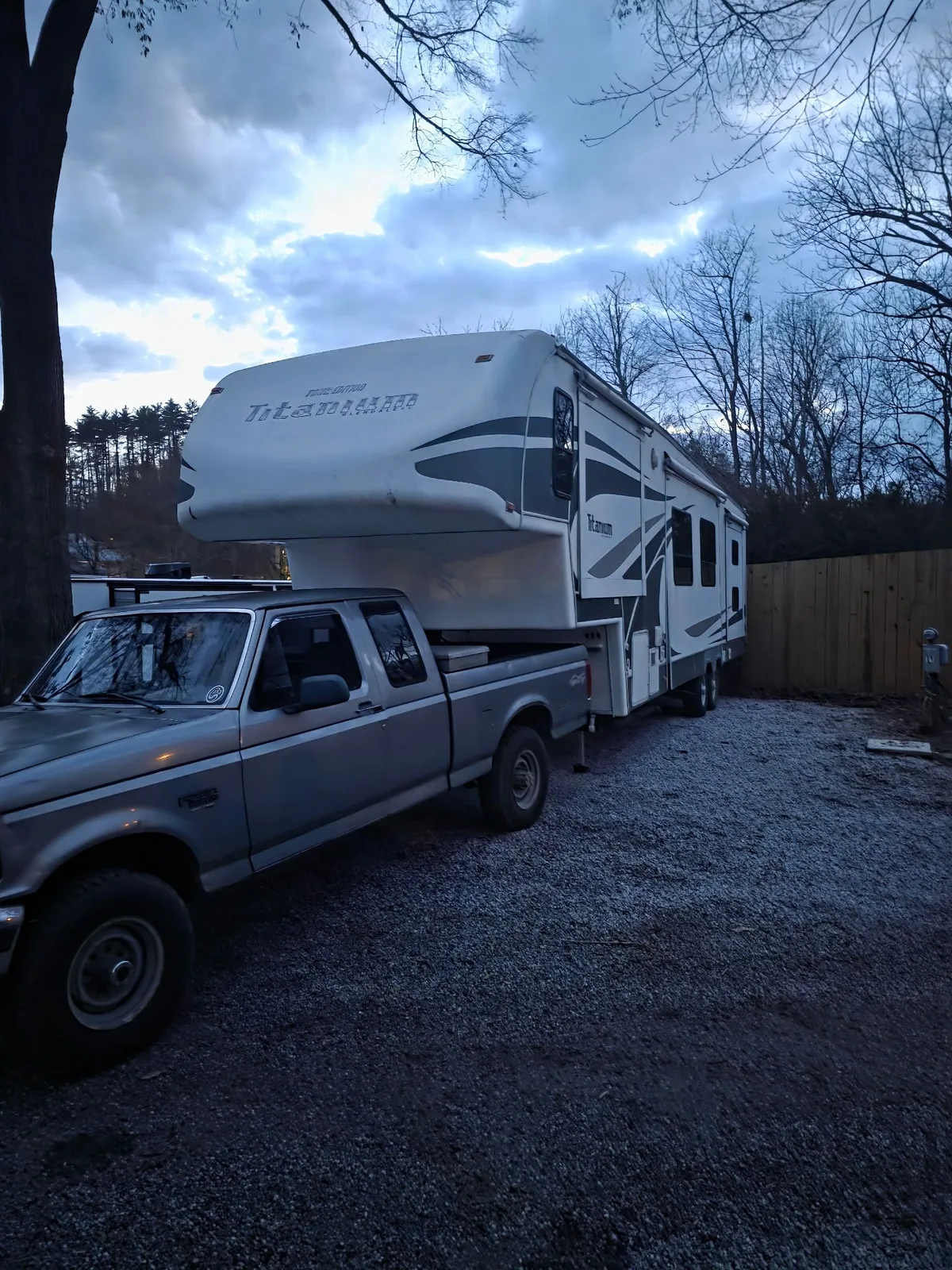
Summerization is an ordered inspection, not a shopping list of products. Order matters, because a finding at one step changes what the next step is worth. The roof comes first: the air conditioner gasket, every vent flange, the refrigerator roof vent and each run of Dicor 501LSW self-leveling lap sealant. A hairline crack in lap sealant found in May is a reseal. The same crack found in November, after a wet season of daily afternoon storms, is often ceiling panel replacement, subfloor work or sidewall delamination repair. Second is moisture history, read with a pin-type meter at the slide floor, the corner seams and under the shower pan. Third is the generator: gasoline can start to deteriorate in as little as 30 days, so the tank is treated with stabilizer and the set is run for two hours at 50 to 70 percent load to circulate it.
Battery Storage in Heat: Flooded, AGM and Lithium Want Different Things
Heat is harder on a stored battery than cold, which is the reverse of what most storage advice assumes. Trojan Battery's own maintenance guidance states that for every 18 degrees Fahrenheit above 77, battery life decreases by 50 percent, and that anything above 80 degrees accelerates self-discharge. A flooded lead-acid battery already self-discharges up to 15 percent per month at 77 degrees, and a sealed basement compartment in a Florida storage lot sits well above that all summer. Trojan puts the boost-charge trigger at 70 percent state of charge, which in this heat can arrive every six to eight weeks rather than the three to six months the same guidance allows for cool storage. Lithium runs on different rules. Battle Born specifies a full charge before storage, a 2 to 3 percent monthly self-discharge rate, and a storage range of minus 15 to 140 degrees Fahrenheit, with every load and charger disconnected so the BMS is not slowly drained.
Sealing Out Palmetto Bugs and Roof Rats Before the Coach Sits

Pest intrusion is the most expensive storage failure and the cheapest one to prevent. A parked coach is dark, still and holds food residue, and in Florida the two regular offenders are the American cockroach, which owners call a palmetto bug, and the roof rat. Neither one chews its way in. They use the openings the coach already has: the water heater and furnace access doors, the refrigerator lower vent, open seams in the coroplast underbelly, the wire chase where the harness drops into the basement, and the slide-out floor penetration. The fix is quarter-inch hardware cloth over vent openings, copper or stainless mesh packed into wire chases, and foil tape closing coroplast seams. Every crumb leaves the coach, including the pantry, the dinette drawers and the space under the fridge. Do the pantry last, because opening it again undoes the rest.
What UV Does to the Roof, Seals, Awning Fabric and Tires
Ultraviolet exposure is the slow failure, and it works on four materials at once. EPDM and TPO membranes chalk and shed plasticizer, slide-out wiper seals harden and take a permanent set, vinyl and acrylic awning fabric goes brittle at the stitch lines, and tire sidewalls develop ozone cracking. Michelin's RV tire guide is unusually specific about storage. Clean the tires with soap and water first, put a barrier such as plywood, rubber mat or cardboard between the tire and the pavement, cover the tires to block direct sunlight if the rig sits outdoors, and inflate to the maximum pressure marked on the sidewall rather than the loaded cold pressure from the weight chart. Michelin also gives the keep-or-replace line for sidewall aging: cracks shallower than 2/32 inch are acceptable in service, and cracks deeper than 2/32 inch need a dealer inspection and probable replacement. An awning goes away dry or it does not go away at all.
Air Conditioner, Dehumidifier or Cracked Vents: Choosing One
This is the question owners ask most, and the honest answer depends entirely on whether the coach has reliable shore power. Mold needs sustained relative humidity above roughly 60 percent, so the target is not a temperature, it is holding humidity under that line without creating fresh condensation. With 30 or 50 amp shore power, the effective setup is a compressor dehumidifier draining into the shower pan, with the roof air conditioner set high, around 82 degrees, purely to move air. Running the air conditioner alone at a low setpoint chills interior surfaces and can push condensation behind cabinetry and into the wall cavity. Without shore power, the answer is passive airflow plus desiccant. A MaxxAir FanMate 00-955001 vent cover lets a roof vent stay cracked through a downpour with no power at all, a second vent open at the far end creates a cross draft, and calcium chloride desiccant tubs absorb the rest. Cabinet, closet and refrigerator doors stay propped open either way.
Sources
Every figure on this page comes from a manufacturer document or a standards body, not from another repair site. Here is where each one comes from.
- Michelin RV Tires: Guide For Proper Use and MaintenanceLong term storage steps for RV tires: clean with soap and water, use a barrier between tire and storage surface, cover to block direct sunlight and ultraviolet rays, inflate to the maximum pressure marked on the sidewall, and the 2/32 inch ozone cracking keep-or-replace threshold.
- Trojan Battery: Battery MaintenanceBattery life decreases by 50 percent for every 18 degrees Fahrenheit above 77, temperatures above 80 degrees accelerate self-discharge, flooded batteries self-discharge up to 15 percent per month at 77 degrees, and stored batteries need a boost charge at 70 percent state of charge.
- Battle Born Batteries: How to Winterize and Store LiFePO4 BatteriesStore lithium batteries at full charge with all loads and charging sources disconnected, a 2 to 3 percent monthly self-discharge rate, and a storage temperature range of minus 15 to 140 degrees Fahrenheit.
- Cummins Onan RV Generator HandbookGasoline can start to deteriorate in as little as 30 days, the entire tank should be treated with stabilizer, and the genset run for two hours at 50 to 70 percent load to circulate treated fuel through the fuel system. Diesel needs stabilizer past six months of storage.
Related repairs
Other systems we service
Where we work
Service category
What this usually costs
| Item | Price | What it covers |
|---|---|---|
| Service call | $299 | Includes the trip out to your RV and the first hour on site |
| Work past the first hour | Quoted after diagnosis | We tell you what it will take before we carry on |
| Parts | Quoted per job | Special-order parts may need a deposit before we order them |
| Written estimate | No charge | You approve the estimate before any work starts |
The service call covers the trip out to your RV and the first hour on site. Anything beyond that depends on what we find, and we quote it and get your approval before carrying on.
The price ranges on this page come from our own recent jobs across Florida, not from an industry average. What you pay depends on the rig, the parts it needs and what we find on site, so we give you a written estimate before any work begins and you approve it first.
Frequently asked questions
Can you meet at my storage location?
Yes. Summerization is done where the coach sits, and most of this work happens in storage lots rather than driveways, including the yards around Kissimmee, Fort Myers and St. Augustine. What matters is access: the gate open, the coach reachable, and shore power available if you want the dehumidifier setup tested before you leave it for the season.
Should I leave the air conditioner running all summer or use a dehumidifier?
A dehumidifier, with the roof air conditioner set high, around 82 degrees, only to circulate air. The goal is relative humidity under 60 percent, not a cool interior. An air conditioner run alone at a low setpoint cools interior surfaces below the dew point of the air around them, which moves condensation from where you can see it to behind cabinetry and inside wall cavities.
What tire pressure should I store the RV at over the summer?
Michelin's RV tire guide says to inflate stored tires to the maximum pressure stamped on the sidewall, not the lower cold pressure you run when the rig is loaded to its weights. That extra pressure resists flat-spotting while the coach sits. Michelin also calls for a barrier between the tire and the pavement, covers to block direct sunlight, and pressures reset before the rig goes back into service.
Do I need to run the generator while the RV is stored?
Cummins recommends exercising an Onan set rather than leaving it idle. If you cannot get to it monthly, gasoline can begin deteriorating in as little as 30 days, so the whole tank gets treated with a gasoline stabilizer and the set is run for two hours at 50 to 70 percent load so treated fuel reaches the carburetor and fuel lines. Diesel is more stable and needs stabilizer past roughly six months.
Is my lithium battery safe sitting in a hot Florida storage lot?
Battle Born rates its LiFePO4 batteries for storage from minus 15 to 140 degrees Fahrenheit, so Florida ambient heat is inside the window. Store it fully charged, then physically disconnect it from every load and charger. Self-discharge is 2 to 3 percent per month, so a full battery holds through a six month sit, but a parasitic draw from a propane detector or a control board will flatten it well before November.
My RV is heading north for the summer instead. Does this page apply?
Only partly. A coach going north and getting used is a de-winterization and sanitize job, and a coach that will sit through a northern freeze needs a water system blowout or an antifreeze fill instead. This page covers the opposite case: the rig that stays in Florida, closed up, through the hot and wet season. Tire, battery, pest and roof steps still apply in both directions.