RV Antifreeze Fill: Burst Point, Glycol Type and P-Traps
The -50 on the jug is a burst rating, not a freeze point, and only propylene glycol belongs in a potable RV system. Mobile service: 888-759-1438.
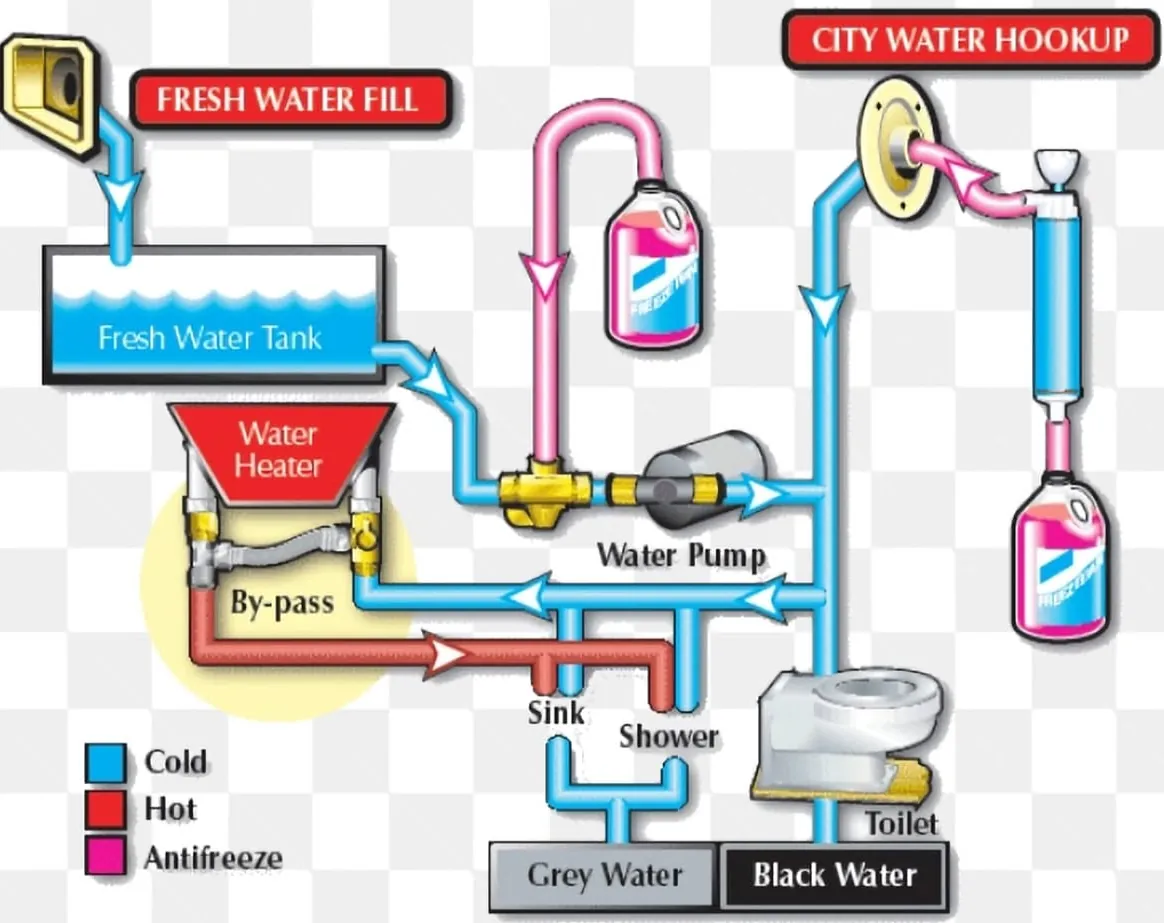
An RV antifreeze fill protects what compressed air cannot reach: the P-traps, the toilet bowl and its flush valve, the holding tanks, and every dead leg that holds water by design. The fluid has to be propylene glycol, the pink non-toxic kind, and never automotive ethylene glycol. The temperature printed on the jug is a burst rating rather than a freeze point, and most coaches that stay in Florida never need the job at all.
Propylene Glycol or Ethylene Glycol: Read the Base, Not the Color
RV and marine antifreeze is a propylene glycol solution, CAS number 57-55-6, and the Agency for Toxic Substances and Disease Registry records that the Food and Drug Administration classifies propylene glycol as generally recognized as safe for use in food. Automotive antifreeze is ethylene glycol, CAS number 107-21-1, and it is a different chemical with a different fate in the body. ATSDR describes ethylene glycol as odorless with a sweet taste, and states that as it breaks down it forms chemicals that crystallize and collect in the kidneys, along with acidic compounds that change the body's acid and base balance and affect the nervous system, lungs and heart. Propylene glycol breaks down at the same rate but forms no harmful crystals. That one difference decides everything: only the pink potable grade may enter a fresh water system, and an ethylene glycol mistake is a decontamination job rather than a flush.
What the -50 Degree Rating on the Jug Actually Measures

The temperature on a jug of RV antifreeze is a burst rating, and it is not the point at which the fluid freezes. Star brite's own safety data sheet for Premium -50 F Antifreeze, product code 314XX, gives the freezing point in section 9 as less than minus 20 degrees Celsius, which is below minus 4 degrees Fahrenheit. The label reads -50 F and the manufacturer's own document puts the onset of freezing more than forty degrees warmer than that. Both figures are correct because they describe different events. A glycol and water blend thickens into slush progressively instead of setting into hard ice, and slush does not expand with the force needed to split a PEX crimp ring or a brass elbow. Burst protection describes what the plumbing survives, not the fluid staying liquid, and water left in the lines dilutes the mix and moves both numbers the wrong way.
Two Jugs Marked -50, Two Different Chemicals Inside
Reading the temperature and ignoring the base is the costly mistake on the shelf. Star brite Premium -50 F Antifreeze, product code 314XX, is the potable grade, and its safety data sheet names propylene glycol and glycerol among the constituents with no alcohol listed at all. Star brite also sells Winter Tech Ready-To-Use -50 F Antifreeze, product code 311XX, whose safety data sheet gives ethanol at 10 to under 30 percent by weight, CAS number 64-17-5, with propylene glycol at only 1 to under 5 percent, and whose label carries a California Proposition 65 warning for methanol. Both jugs are pink and both are stamped -50 F. One is built for drinking water lines and the other is an alcohol blend sold for lay-up in plastic pipe. The base and the composition section separate them, and the printed temperature tells you nothing about which one you are holding.
The P-Traps, the Toilet Valve and the Water Heater Bypass

Antifreeze exists on this job for the parts that hold water deliberately. Each P-trap under the galley sink, the lavatory and the shower keeps a standing water seal against sewer gas, and no amount of compressed air will empty one. Thetford's winterizing guidance has owners add antifreeze and toilet seal lubricant to the bowl, and add antifreeze to each black and gray holding tank where freezing is possible. The toilet is also where a hidden fault surfaces. Callers describe a toilet that fills on its own, and a pedal valve that passes water when it should be shut will not hold a charge of antifreeze in the bowl either. The water heater leaves the loop first. Suburban's operation guide warns that antifreeze can be very corrosive to the anode rod, causing premature failure and heavy sediment in the tank, and directs owners without a bypass kit to pull the anode rod and fit a three quarter inch drain plug.
How Much You Need, and When a Florida Coach Needs None
Volume depends on the method. Pumping means dropping a siphon hose from the fresh water pump inlet into the jug and running each fixture until pink appears, which fills the entire line volume and the pump head, so a typical coach takes two to three gallons. Pouring assumes the supply lines were already dried, so the fluid goes only where water stands: roughly a cup down each P-trap, a quart into the toilet bowl, and a measured pour into each holding tank, which one gallon usually covers. A six gallon water heater left in circuit swallows its whole capacity before a drop reaches the nearest faucet, which is what a three valve bypass kit prevents. For a coach that stays on the Florida peninsula the honest number is zero, because drying the lines protects it and antifreeze only adds a cleanup.
What Owners Report, the Order of Checks, and What It Costs
These calls arrive two ways. In spring it is pink fluid still running at a tap weeks after the coach came out of storage, or a slippery taste that will not rinse away. In winter it is the opposite complaint: the coach was winterized and a fitting split anyway. The checks run in the same order both times. First confirm which fluid is actually in the system, then whether the water heater is still sitting in bypass, then each P-trap and the toilet valve, then the low point drains, then the pump. Our service call covers the trip out and the first hour on site at the rate in the pricing table on this page; anything past that first hour is quoted and approved before we carry on. Left alone, a weeping crimp behind a shower surround stops being plumbing and becomes floor and wall work.
Sources
Every figure on this page comes from a manufacturer document or a standards body, not from another repair site. Here is where each one comes from.
- ATSDR ToxFAQs for Ethylene Glycol (CDC)Ethylene glycol is odorless with a sweet taste, and its breakdown products crystallize and collect in the kidneys while forming acids that affect the nervous system, lungs and heart
- ATSDR ToxFAQs for Propylene Glycol (CDC)Propylene glycol is CAS 57-55-6, is classified by the FDA as generally recognized as safe for food use, and breaks down at the same rate as ethylene glycol without forming harmful crystals
- Star brite Premium -50 F Antifreeze safety data sheet, product code 314XXSection 9 gives the freezing point as less than minus 20 degrees Celsius on a product labeled -50 F, and the sheet names propylene glycol and glycerol with an isothiazolinone preservative under 0.1 percent
- Star brite Winter Tech -50 F Antifreeze safety data sheet, product code 311XXComposition of the other -50 F jug: ethanol at 10 to under 30 percent, CAS 64-17-5, with propylene glycol at only 1 to under 5 percent
- Suburban tank water heaters operation guideAntifreeze can be very corrosive to the anode rod, causing premature failure and heavy sediment, and a coach without a bypass kit must have the anode rod removed and a drain plug fitted before antifreeze is added
- Thetford winterizing guidance for RV sanitation systemsAdd toilet seal lubricant and antifreeze to the toilet bowl, and add antifreeze to each black and gray holding tank where freezing is possible
Related repairs
- Rv De Winterization Sanitize in Florida
- how we handle rv long term storage prep
- Florida Summerization Storage repairs
Other systems we service
Where we work
Service category
What this usually costs
| Item | Price | What it covers |
|---|---|---|
| Service call | $299 | Includes the trip out to your RV and the first hour on site |
| Work past the first hour | Quoted after diagnosis | We tell you what it will take before we carry on |
| Parts | Quoted per job | Special-order parts may need a deposit before we order them |
| Written estimate | No charge | You approve the estimate before any work starts |
The service call covers the trip out to your RV and the first hour on site. Anything beyond that depends on what we find, and we quote it and get your approval before carrying on.
The price ranges on this page come from our own recent jobs across Florida, not from an industry average. What you pay depends on the rig, the parts it needs and what we find on site, so we give you a written estimate before any work begins and you approve it first.
Frequently asked questions
Can I use automotive antifreeze in my RV water lines?
No. Automotive antifreeze is ethylene glycol, CAS 107-21-1, and ATSDR reports that it is sweet tasting and odorless, and that its breakdown products crystallize in the kidneys and acidify the blood. RV and marine antifreeze is propylene glycol, CAS 57-55-6, which the FDA classifies as generally recognized as safe in food. If ethylene glycol has entered a potable system, treat it as contamination and stop using the water rather than simply flushing it through.
Does -50 degree RV antifreeze really stay liquid at -50 F?
No, and it is not meant to. Star brite's safety data sheet for its Premium -50 F Antifreeze lists the freezing point as less than minus 20 Celsius, roughly minus 4 Fahrenheit. The -50 on the label is a burst rating: the fluid turns to slush as it cools, and slush does not expand hard enough to split a fitting. Dilution from water left standing in the lines shifts that protection warmer still.
How many gallons of RV antifreeze does one coach take?
Two to three gallons if you pump it through the whole system with a siphon kit on the fresh water pump, because every line fills before pink shows at the last fixture. Closer to one gallon if the supply lines were blown out first and you are only charging the P-traps, the toilet bowl and the holding tanks. Leaving a six gallon water heater in circuit instead of bypassing it adds its full capacity to the total.
Do I have to sanitize the system after using RV antifreeze?
Yes. Even a potable grade leaves taste and pink residue, and the Star brite Premium -50 F safety data sheet lists an isothiazolinone preservative at under a tenth of one percent. All of it has to be flushed out and the fresh water system disinfected before anyone drinks from it. That extra job is the main argument against winterizing a coach with antifreeze when it does not actually face a freeze.
My RV never leaves Florida. Do I need an antifreeze fill?
Usually not. On the peninsula, draining the tank and drying the lines protects the plumbing, and adding antifreeze only creates a flush and disinfection you did not need. The two real cases are a hard freeze in the panhandle or north Florida, where Pensacola, Tallahassee and the Gainesville corridor drop below freezing most winters, and an owner taking the coach north for the season.