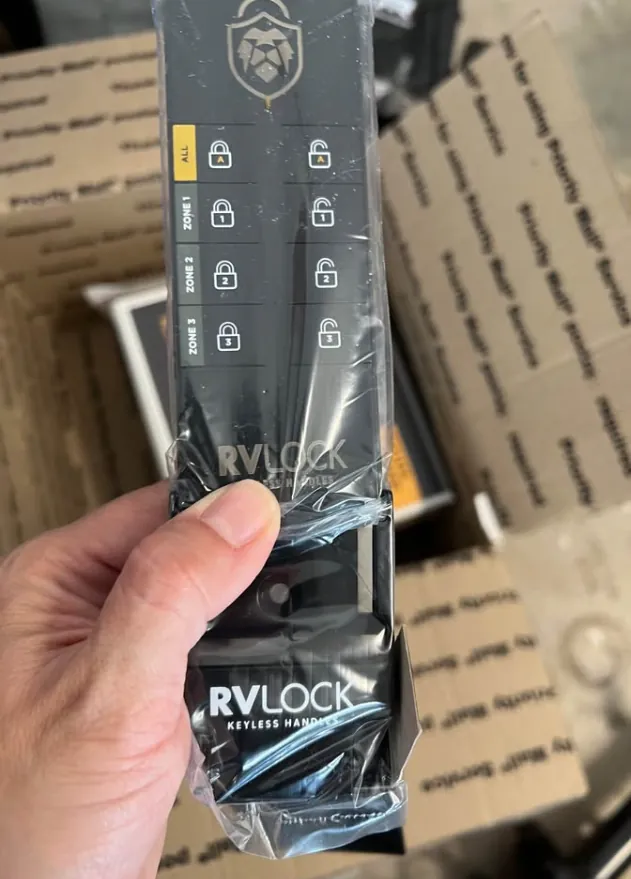
RV Compartment Lock Rekeying - Keyed Alike Baggage Locks
Mobile RV compartment lock rekeying across Florida. Keyed alike cam lock sets, cam length matching, slam latch and T-handle swaps. Call 888-759-1438.
Rekeying an RV compartment lock is a cylinder decision before it is a repair decision. Baggage doors run wafer cam locks sold as a sealed cylinder with the code already set, so a new cylinder costs less than recoding the old one. The real fork is whether you swap cylinders into a keyed alike set or replace whole latch bodies.
Rekey the cylinder or replace the latch: what decides it
Rekeying a compartment lock means putting the coach on a key code that belongs to you rather than one shared across the industry. The plain fact behind that is well known: a small pool of stamped codes, CH751 chief among them, covers a very large share of RV baggage doors from the factory. Bauer says so directly in its own product copy for the SCI cam lock. On an RV, rekeying almost never means recoding the original cylinder. Compartment doors use wafer disc tumbler cam locks that ship as a sealed unit with the code already cut, so a fresh cylinder costs less than the labor of stripping and recoding the one in the door. That narrows the decision to one question. If the latch body still closes squarely and the cam still sweeps behind the frame return, the fix is a cylinder swap and the door hardware stays. If the pawl is worn or the door no longer pulls tight, the whole unit gets replaced.
Keyed alike sets: one key for every compartment on the coach
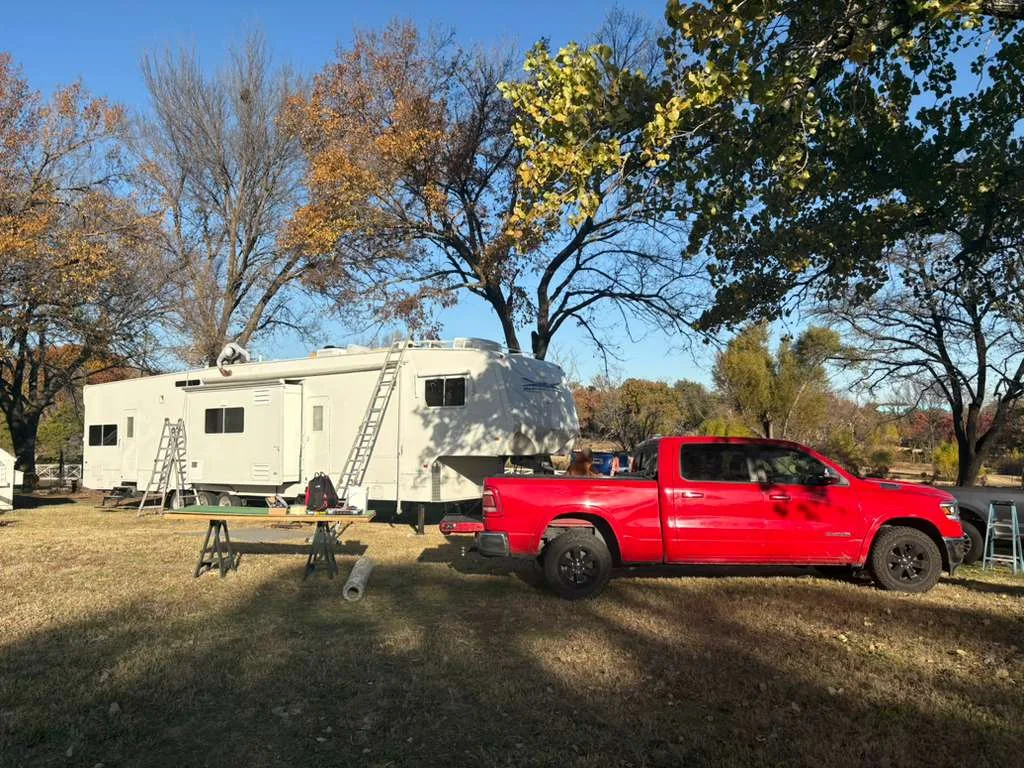
A keyed alike set means every cylinder on the rig is cut to the same private code, so a single key runs the baggage bays, the utility door and the propane hatch. That is the actual point of a compartment rekey, and it is what separates the job from simply buying one replacement lock. Bauer builds its SCI cam locks around that idea, and its Global code matching covers key codes G301 through G391 so mixed hardware can be brought onto one code. Counting comes before ordering. A mid size fifth wheel commonly carries eight to twelve keyed openings once the water bay, the generator door and the battery compartment are on the list, and every one has to be counted at the same time. Miss one and the outcome is annoying rather than dangerous. You end up carrying a second key for a single hatch, or paying a second visit to fold it in.
Cam length, bore size, and the swap that will not latch
A cam lock is sized by two numbers and both have to match the door. The first is cam length, measured from the center of the cylinder to the tip of the cam. Bauer sells the SCI cam lock in exactly four of them, 0.875, 1.125, 1.375 and 1.75 inch cams, and one step short is the most common ordering mistake. The second is cylinder length, which has to suit panel thickness. CompX lists its C8060 disc tumbler cam lock at a 1-3/4 inch cylinder and the C8053 at 1-3/16 inch, both dropping into a 3/4 inch mounting hole. The bore is where owner ordered parts come unstuck. Bauer's SCI drops into a 0.75 inch diameter cut-out with 0.65 inch flats, and those flats are the only thing stopping the cylinder spinning in the skin when the key turns. Get the cam short and the door closes, feels locked, and holds nothing.
Compression T-handles versus flush slam latches

These are two different pieces of hardware that owners often treat as interchangeable. A flush slam latch, like Bauer's BP-20, sits in a 3-5/16 by 4 inch cutout, closes with a push and holds the door against a fixed catch. A compression T-handle rotates to pull the door inward and load the seal, which is what keeps a large bay weather tight rather than merely shut. The door decides which one belongs there. Long basement bays on a diesel pusher want a compression handle, because an unsupported door of that span will drum on the road and wick water past a seal that is only resting on the frame. Small utility hatches take a flush latch, because there is no swing room for the handle throw. Moving between the two styles is a cutout change, not a lock change. That is why latch style gets confirmed on site before any hardware is ordered.
The key goes in and will not turn: our check order
Almost nobody calls about a key code. The call is that the key goes in and will not turn, or that the bay opens but no longer locks, and it is nearly always a compartment that has not been opened since spring. Our technicians work outward from the cheapest finding. First the cylinder is worked with a dry film PTFE lubricant and a light key cycle, because a stalled wafer stack in a corroded cylinder is the most common cause and it resolves inside the diagnostic hour with no parts at all. Second the cam is checked for reach and free sweep, which is where a previous owner's mismatched replacement shows up. Third the latch body and frame return get inspected for a bent pawl or a pulled rivet. Left alone the path is predictable. A stiff cylinder gets forced, forcing shears the cam off the back of the cylinder, and a twelve dollar part becomes a new latch and a patched sidewall skin.
Salt air, humidity and the bay you have not opened since spring
Rigs here do not get a winter lay up, so the locks you touch daily keep cycling and rarely seize. The failures land on the compartments opened twice a year: the sewer bay, the spare gear locker, the roof access hatch. Zinc is the reason. Most compartment cylinders and many T-handle bodies are zinc die cast, which Bauer states outright for its T-323 handle, and in salt laden coastal air that casting corrodes at the wafer slots and locks the plug solid with nothing visible from outside. Stainless is the durable answer where a stainless part exists, and CompX lists a stainless finish version of its 1-3/4 inch cam lock as MFW23168. The prevention costs nothing and almost nobody does it. Cycle every lock on the coach once a month, key in and out twice, and treat the ones you never use with a dry film lubricant instead of a wet oil that will hold salt and grit against the wafers.
What a compartment rekey costs and how long it takes
Our service call covers the trip out and the first hour on site at the rate in the pricing table on this page; anything past that first hour is quoted and approved before we carry on. Never treat any of that as a fixed quote on a coach nobody has looked at yet. Parts are the small number on this job. Bauer lists the SCI cam lock at $12.99, so a coach with eight to twelve keyed openings usually lands well under three hundred dollars in hardware. A straight keyed alike cylinder conversion across a full set of baggage doors typically fills one to two labor hours once the correct cams are on the van, because each door is a retaining nut, a cam and a cylinder. Latch body replacements run slower, and any bay needing a cutout change becomes its own visit.
Sources
Every figure on this page comes from a manufacturer document or a standards body, not from another repair site. Here is where each one comes from.
- Bauer Products - SCI cam lock specificationsThe four available cam lengths of 0.875, 1.125, 1.375 and 1.75 inch, the 0.75 inch bore with 0.65 inch flats, the keyed alike SCI system, and Bauer's own statement that the SCI design replaces the common CH751 lock.
- Bauer Products - BP-20 compartment slam latchThe flush slam latch cutout of 3-5/16 by 4 inches and that Bauer offers the BP-20 on the same SCI keyed alike system, so a slam latch can join the same single key set as the cam locks.
- CompX National - C8060 disc tumbler cam lockThat compartment style cam locks are wafer disc tumbler units, and the published cylinder lengths of 1-3/4 inch for the C8060 and 1-3/16 inch for the C8053 into a common 3/4 inch mounting hole.
- CompX Fort - MFW23168 stainless finish cam lockThat a stainless finish cam lock exists in the same 1-3/4 inch cylinder size, which is the material upgrade path away from zinc die cast cylinders in salt laden coastal air.
- Bauer Products - T-323 compartment T-handleBauer's own specification that the T-323 T-handle is of zinc die cast construction with a black powder coat finish, which is the basis for the corrosion path described for coastal air.
Related repairs
- Hitch Coupler Lock Install in Florida
- how we handle rv security camera install
- Rv Safe Install repairs
Other systems we service
Where we work
Service category
What this usually costs
| Item | Price | What it covers |
|---|---|---|
| Service call | $299 | Includes the trip out to your RV and the first hour on site |
| Work past the first hour | Quoted after diagnosis | We tell you what it will take before we carry on |
| Parts | Quoted per job | Special-order parts may need a deposit before we order them |
| Written estimate | No charge | You approve the estimate before any work starts |
The service call covers the trip out to your RV and the first hour on site. Anything beyond that depends on what we find, and we quote it and get your approval before carrying on.
The price ranges on this page come from our own recent jobs across Florida, not from an industry average. What you pay depends on the rig, the parts it needs and what we find on site, so we give you a written estimate before any work begins and you approve it first.
Frequently asked questions
Can you rekey my existing compartment locks, or do they have to be replaced?
On nearly every RV the cylinders get replaced rather than recoded. Our service call covers the trip out and the first hour on site at the rate in the pricing table on this page; anything past that first hour is quoted and approved before we carry on. The latch body, the cam and the cutout all stay put, so the door hardware you already have is reused.
Can one key open every compartment on the coach?
Yes, and that is the normal goal of the job. A keyed alike set puts every cylinder on one private code, so the baggage bays, water bay and propane hatch all run off a single key. Bauer's SCI system is built for this and its Global code matching spans key codes G301 through G391. Count every keyed opening before ordering, because adding one later means a second key or a second visit.
How do I know what cam length my compartment lock needs?
It is measured, not guessed. Bauer lists the SCI cam lock in 0.875, 1.125, 1.375 and 1.75 inch versions, and the cam gets measured from the center of the cylinder to its tip, then matched to the nearest listed length. The cam has to reach past the frame return with free sweep. One step too short and the door will close and feel locked while the cam is catching nothing at all.
My baggage key turns but the door still will not open. What is that?
The cylinder is doing its job and the cam is not. Either the cam has sheared off the back of the cylinder, the cam is a mismatched replacement that no longer reaches the frame return, or the latch pawl is bent. Cylinder and cam sit on opposite sides of the panel, so a key that turns freely with no result points past the lock and into the latch hardware.
Is a compression T-handle worth it over the flush latch that came on the rig?
On a large basement bay, usually yes. A compression handle rotates to pull the door in against its seal, which stops the drumming and the water wicking that a flush slam latch cannot address on a long unsupported door. On small utility hatches a flush latch such as the BP-20 is the better fit. Bear in mind that switching styles is a cutout change, so it is not a straight swap.