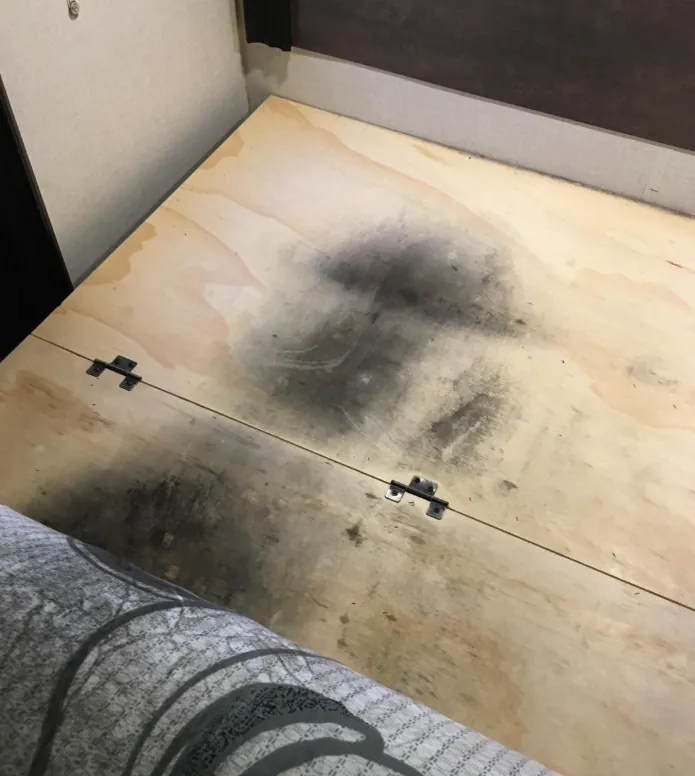
RV Mold Remediation: Fix the Moisture Source, Not the Stain
Mobile RV mold remediation in Florida. We find the moisture source, pull what is porous, clean what is not, and say when you need a specialist. 888-759-1438
RV mold remediation begins at the moisture source, not the stain. Our technicians take a relative humidity reading inside the coach, map the suspect panel with a pinless moisture meter, then trace the wet path back to the failed seal or seam that fed it. Cleaning comes after that. The EPA is direct about why: clean up the mold without fixing the water problem and the growth comes back.
What RV Mold Remediation Is, and What It Is Not
Mold remediation is the removal of mold-contaminated material plus repair of the water problem that grew it. It is not a spray, a fog or a sealed-in coating. The EPA states the purpose plainly: the point is to remove the mold rather than simply kill it, because dead mold is still allergenic and some dead molds remain potentially toxic. A product that kills growth on a panel that is still wet has changed the color of the problem and nothing else. On a coach the work runs in a fixed order. Find and fix the water entry. Remove what cannot be cleaned. Clean and dry what can. Then confirm the cavity stays dry through a full humid week before anything is closed back up. Skipping the first step is the most common reason an owner pays twice for the same wall, and it is why quoting a cleaning price before the leak is found is dishonest.
Why Failed Sealant at Florida Latitude Feeds a Mold Problem
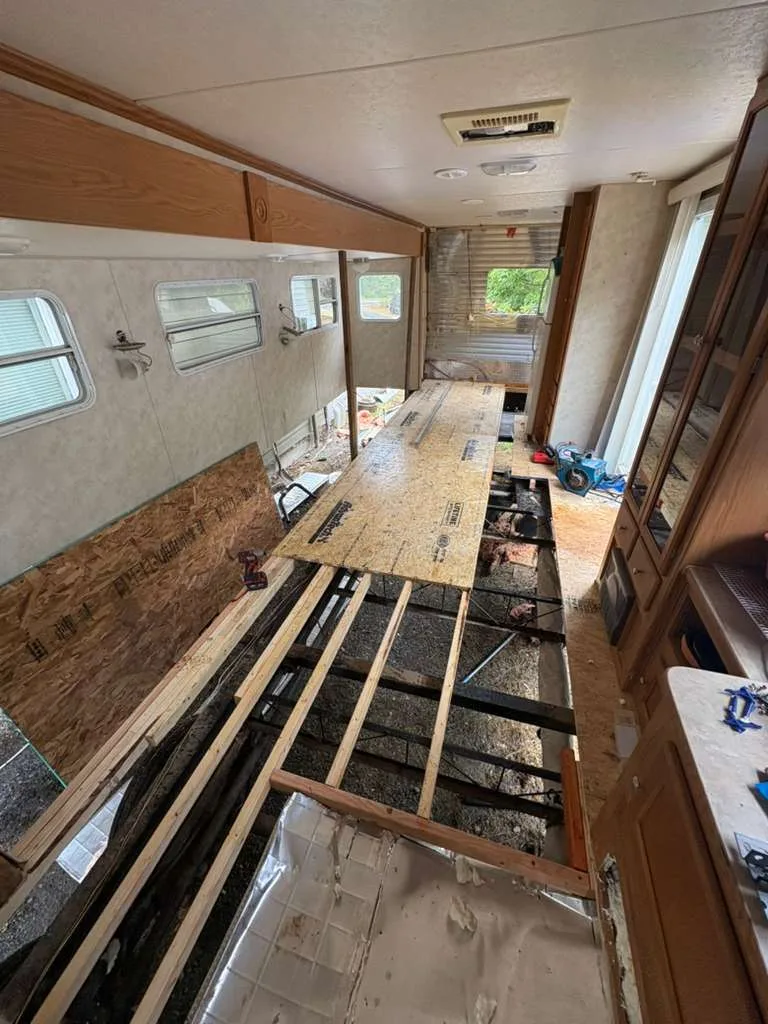
Ultraviolet exposure is what opens the path. Self-leveling lap sealant such as Dicor 501LSW goes chalky and crazes on a roof taking near-vertical summer sun, the butyl tape under a window flange hardens and loses its squeeze-out, and shade and awning fabrics get brittle along the stitch lines. None of that is mold. It is the plumbing that delivers water into a cavity where sunlight never reaches. That contrast is the whole problem: the sealant fails in the light, the growth happens in the dark behind a lauan panel or above a ceiling board, at cabin temperatures mold is comfortable in year round. A coach closed up between trips has no air movement to carry that moisture out. Interior relative humidity climbs, condensation forms on cold aluminum framing behind the wallpaper, and the seam leak stops being the only water source in the wall.
What Gets Checked, and In What Order
Owners describe a smell before they describe a stain. That is the honest starting symptom, and the sequence that follows is built to find the water rather than the mold. First a thermo-hygrometer reading with the coach closed: the EPA target for indoor air is below 60 percent relative humidity, ideally 30 to 50 percent, and a coach sitting at 70 needs a ventilation answer before anything else. Second a visual and odor sweep of the known entry points, roof penetrations, window and slide flanges, and the underbelly. Third a pinless moisture meter map across the suspect panel and two feet either side of it, because the wet area is always wider than the discolored one. Fourth a borescope pushed through a switch plate opening or a ceiling vent collar, which shows the cavity without cutting it open. Only then is the affected area measured, because area decides the whole scope.
Porous Versus Non-Porous: What Comes Out, What Gets Cleaned
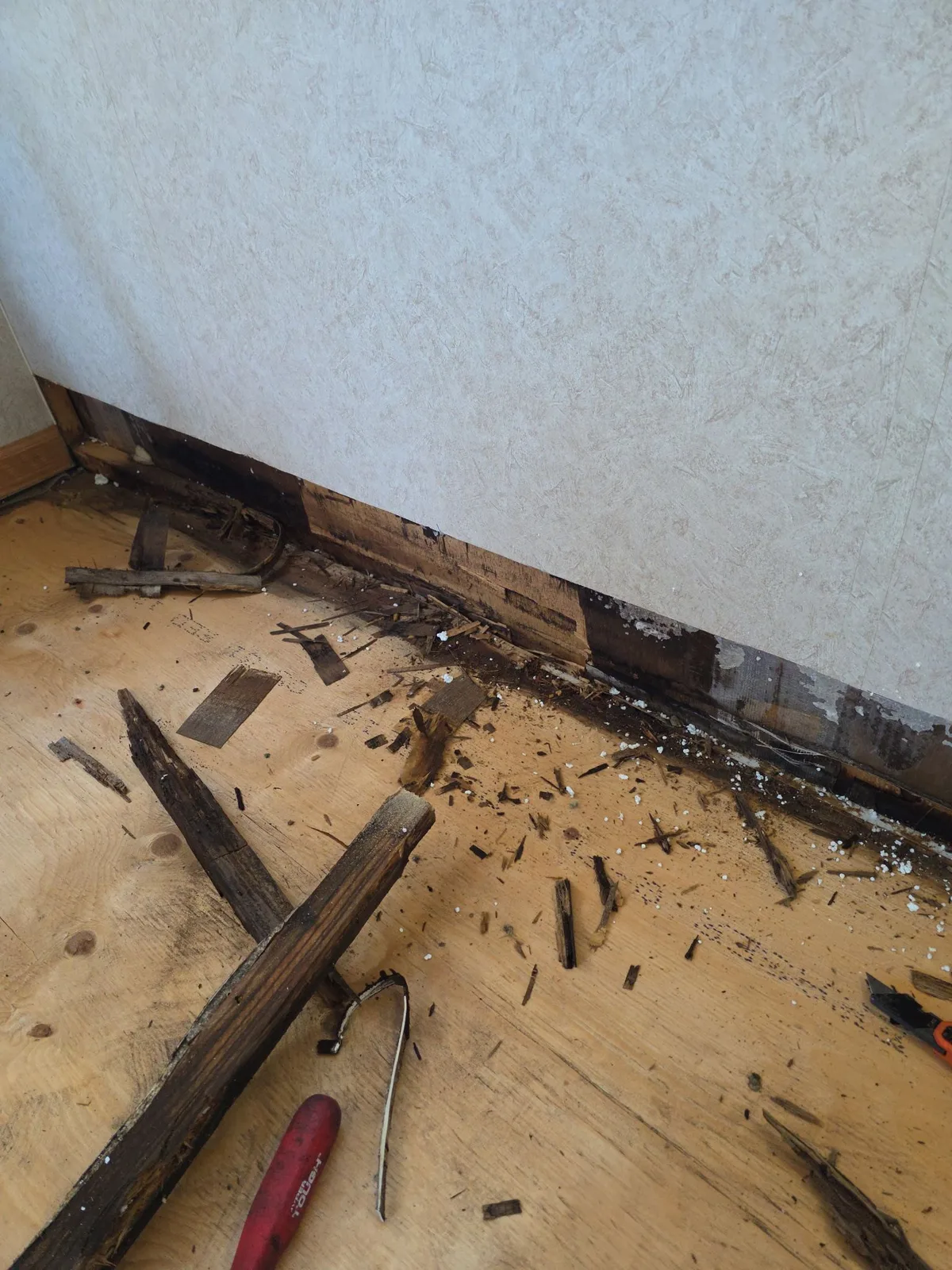
Non-porous surfaces are cleaned and kept. Fiberglass gelcoat, ABS trim, aluminum framing, PVC, glass and powder-coated steel all get wiped or scrubbed with detergent and water and then dried quickly, which is exactly the EPA damp-wipe method. Porous material is different, and this is where owners lose money arguing. Upholstery foam, carpet and pad, fabric, fiberglass batt and block foam insulation and lauan wall skin get removed rather than cleaned, because mold infiltrates porous substances and fills the crevices, so it is difficult or impossible to remove completely. Cleaning the face of a lauan panel leaves colonized glue lines and end grain behind it. The removed material goes into 6-mil polyethylene, double-bagged and sealed before it leaves the containment area, so that carrying it out through the coach does not seed the rest of the interior on the way to the trailer.
Why Bleach Is the Wrong Product, and What Containment Is For
Chlorine bleach is not the standard treatment. The EPA does not recommend a biocide such as bleach as a routine practice during mold remediation, and the reason is mechanical rather than chemical. Household bleach is mostly water, so on porous material it wets the substrate, its active chlorine spends itself on the surface, and the hyphae down inside the fibers survive to regrow on the moisture just added. On non-porous surfaces detergent and water already do the job. Never mix it with an ammonia-based cleaner. Containment is the part owners underestimate. Cutting a colonized panel with no barrier turns a localized problem into a whole-coach one, so the work area gets sheeted in polyethylene and held under negative pressure, with a HEPA vacuum used for final cleanup and its filter bagged. The minimum personal protection is an N-95 respirator, gloves and eye protection.
Where We Stop, What It Costs, and What Waiting Turns It Into
The EPA draws its line at roughly 10 square feet, about a 3-foot by 3-foot patch. Below it, a competent trade can handle the cleanup together with the source repair. Above it, or when the water came from a black tank or sewage, when the roof air conditioner ducting is contaminated, or when an occupant has asthma or a compromised immune system, the containment side belongs to a remediator certified to the ANSI/IICRC S520 standard, and we will say so rather than take the job. What we do is the RV-specific half: the leak, the panel, the insulation, the rebuild. Our service call covers the trip out and the first hour on site at the rate in the pricing table on this page; anything past that first hour is quoted and approved before we carry on. Left alone, a wall problem becomes stud rot, subfloor replacement or ceiling panel work, which is a different order of cost.
Sources
Every figure on this page comes from a manufacturer document or a standards body, not from another repair site. Here is where each one comes from.
- EPA - A Brief Guide to Mold, Moisture and Your HomeMoisture control is the key to mold control; cleaning mold without fixing the water problem lets it return; wet or damp material should be dried within 24 to 48 hours; molds produce allergens, irritants and in some cases mycotoxins; porous and absorbent materials may have to be discarded.
- EPA - Mold Remediation in Schools and Commercial Buildings, Chapter 3Chlorine bleach and other biocides are not recommended as a routine practice during mold remediation; dead mold is still allergenic; the goal is to remove contamination rather than kill it; porous materials that are wet and moldy may have to be discarded; containment held under negative pressure with 6-mil polyethylene; HEPA vacuum for final cleanup; minimum PPE of an N-95 respirator, gloves and eye protection; double-bagging removed material in 6-mil sheeting.
- EPA - Mold Cleanup in Your HomeThe roughly 10 square foot (3 ft by 3 ft) threshold above which EPA directs owners to the commercial remediation guidance and a contractor experienced in mold cleanup; do not run the HVAC system if it may be contaminated; consult a health professional if there are health concerns.
- ANSI/IICRC S520 Standard for Professional Mold RemediationThat a published consensus standard governs professional mold remediation and that certified remediation specialists work to it, which is the boundary we point customers to for large or contaminated jobs.
Related repairs
- how we handle rv ceiling panel replacement
- Sidewall Delamination Repair repairs
- Rv Subfloor Replacement
Other systems we service
Where we work
Service category
What this usually costs
| Item | Price | What it covers |
|---|---|---|
| Service call | $299 | Includes the trip out to your RV and the first hour on site |
| Work past the first hour | Quoted after diagnosis | We tell you what it will take before we carry on |
| Parts | Quoted per job | Special-order parts may need a deposit before we order them |
| Written estimate | No charge | You approve the estimate before any work starts |
The service call covers the trip out to your RV and the first hour on site. Anything beyond that depends on what we find, and we quote it and get your approval before carrying on.
The price ranges on this page come from our own recent jobs across Florida, not from an industry average. What you pay depends on the rig, the parts it needs and what we find on site, so we give you a written estimate before any work begins and you approve it first.
Frequently asked questions
Where are the leaks coming from?
On a coach with interior mold the usual sources are roof penetrations where the lap sealant has crazed, window and slide flanges where the butyl has hardened, and the roof-to-wall seam. Water tracks along framing before it shows, so the stain is rarely under the hole. That is why the moisture map runs well past the discolored area, and why a dedicated moisture and leak survey is the right first booking on a coach with no visible entry point.
Can the mold be cleaned off, or does the panel have to come out?
It depends on what the surface is made of, not on how bad it looks. Non-porous surfaces such as fiberglass, ABS, aluminum and PVC get cleaned with detergent and water and dried. Porous material such as carpet pad, upholstery foam, batt insulation and lauan wall skin is removed, because mold grows into the fiber and crevices and cannot be reliably cleaned out of them. A panel that looks lightly marked can still be colonized on the back.
Is bleach safe to use on RV mold?
The EPA does not recommend chlorine bleach as a routine mold remediation product, and on porous RV material it actively works against you. Bleach is mostly water, so it adds moisture to the substrate while its active chlorine is consumed at the surface, leaving living growth inside the fiber. Detergent and water on hard surfaces, plus removal of porous material, is the accepted approach. Never mix bleach with an ammonia-based cleaner.
Can mold in an RV make you sick?
The EPA reports that molds produce allergens, irritants and in some cases mycotoxins, and that inhaling or touching mold or spores can cause allergic reactions in sensitive people, trigger asthma attacks in mold-allergic asthmatics, and irritate eyes, skin, nose, throat and lungs in anyone. Responses vary widely between individuals. Anyone with symptoms they connect to the coach should raise it with a health professional, because that is a medical question rather than a repair one.
Do you handle the whole mold job, or do I need a remediation company?
Both happen, and the deciding factor is scope. Small contained growth with a findable leak is a repair job: fix the entry, remove the porous material, clean and dry the rest, rebuild. Large areas past the EPA 10 square foot guideline, sewage-contaminated water, contaminated ducting or an occupant with a health vulnerability call for a certified mold remediation specialist working to ANSI/IICRC S520, and we will tell you that instead of taking it on.