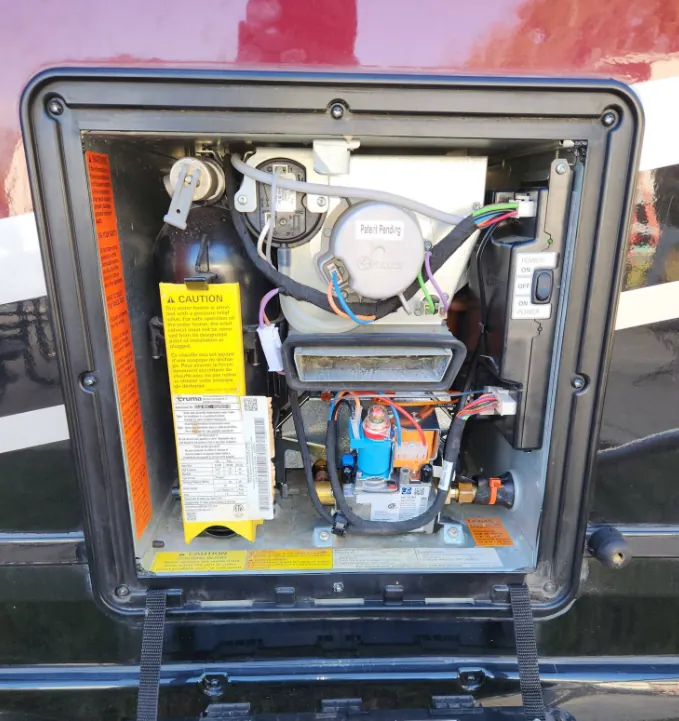
Truma AquaGo Tankless Water Heater Service and Descaling
No hot water from a Truma AquaGo? Mobile descaling, flow rate and Clean mode diagnosis across Florida, at your site. Call 888-759-1438 for a technician.
The Truma AquaGo is a propane instant water heater that holds about 0.35 gallons of water and heats on demand through a burner that modulates between 20,000 and 60,000 BTU per hour. It has no tank and no anode rod, so its maintenance item is descaling the heat exchanger, which Truma calls for after every 1,585 gallons of water used.
What an AquaGo Is, and Why It Is Not the Tank It Replaced
The Truma AquaGo is a propane fired instant water heater that drops into a sidewall opening much like a six gallon tank heater, then works on an entirely different principle. Water passes through a heat exchanger over a burner that modulates steplessly between 20,000 and 60,000 BTU per hour, and a temperature stabilizing mixing vessel smooths the outlet to about 120 F (49 C). The whole appliance holds only about 0.35 gallons of water (1.3 liters). That one number explains most AquaGo complaints, because there is no stored reservoir to hide a fault behind and no sacrificial metal protecting a steel wall. Anode rods, ECO high limit switches and tank drain valves belong to the Suburban and Atwood tank heaters covered elsewhere on this site, and none of them exist inside an AquaGo. What it carries instead is a heat exchanger with narrow passages, a 12 volt circulation pump, and a removable water inlet filter cartridge sitting behind a bright yellow Easy Drain Lever.
The 0.4 Gallon Per Minute Rule Behind Most No Hot Water Calls
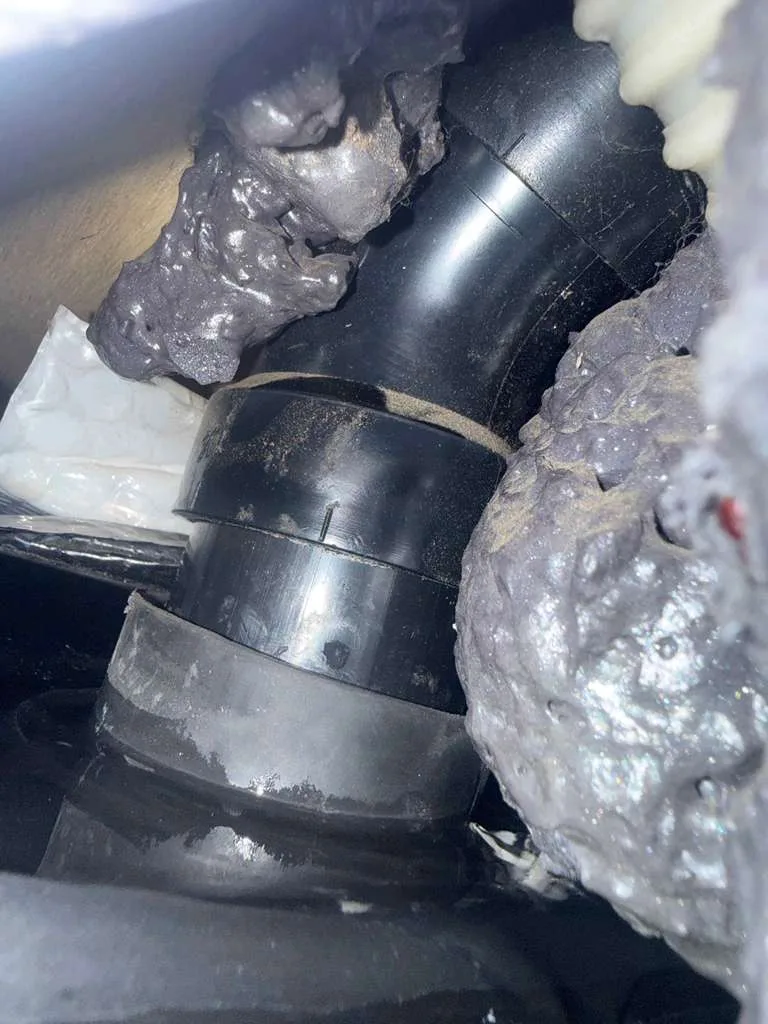
Truma states that the burner starts as soon as a hot faucet is opened and the flow of water is greater than approximately 0.4 gallons per minute (1.5 l/min). Below that figure the appliance behaves exactly as designed and makes no heat, which an owner reasonably reports as no hot water. Three ordinary things push a rig under the line. A water saving shower head set to a mist pattern can fall below it, a bathroom aerator packed with Florida scale chokes a sink to a trickle, and a galley valve cracked open for hand washing never gets close. Measuring it needs a quart jug and a stopwatch. At 0.4 gallons per minute a quart fills in 37.5 seconds, so anything slower than that at the fixture is sitting under the ignition threshold. If the fixture clears that test and the burner still refuses, the fault is inside the appliance and the checks move to gas pressure and scale.
Descaling Replaced the Anode Rod, and Florida Moves the Interval
Truma recommends decalcifying the AquaGo after every 1,585 gallons (6,000 liters) of water used, notes that low to moderate use makes this an annual task, and says harder water calls for it more often. The interval is counted in gallons rather than months, and that is where Florida owners get caught out. Much of Florida groundwater and many park supplies are hard, and a coach lived in year round never gets the winter lay up that pauses the count elsewhere. At 10 to 15 gallons of hot water a day, 1,585 gallons arrives in roughly 105 to 160 days, so the same appliance wants the procedure two or three times a year here instead of once. The cycle itself is semi automatic. Decalcification tablets go into the water inlet filter behind the Easy Drain Lever, the analog dial or Truma CP plus panel is set to Clean mode, and the run takes up to three hours and cannot be stopped once started.
Comfort Mode Versus Eco Mode, and What Each Costs in Propane
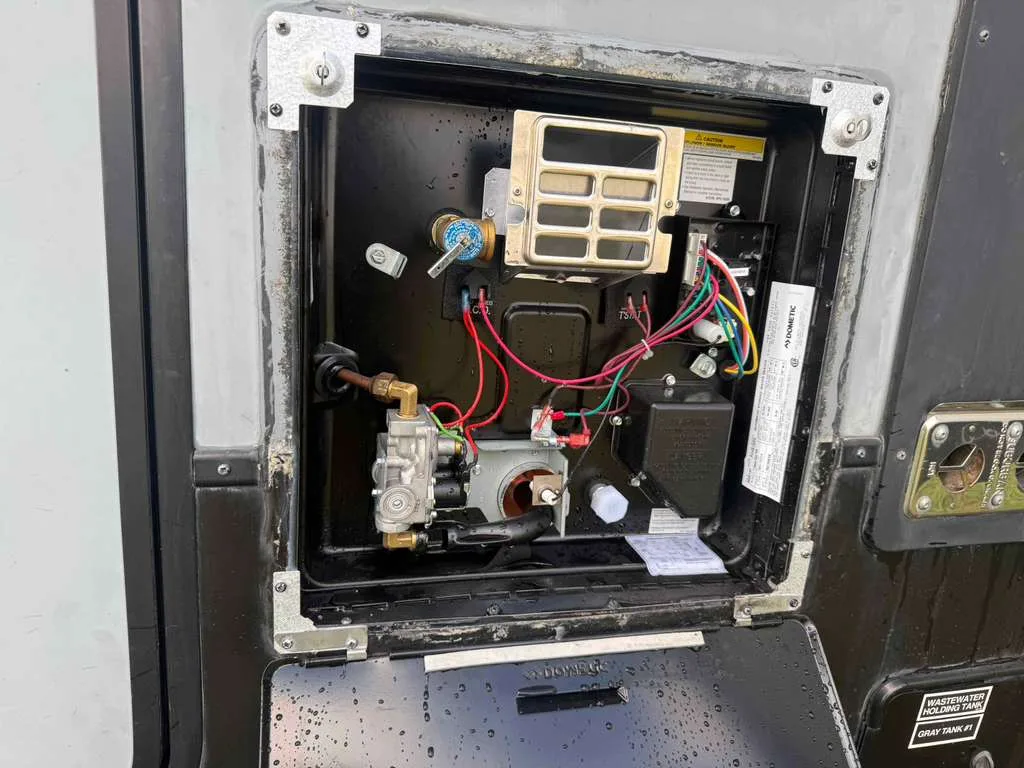
The rotary dial inside the coach carries two running positions, ECO and COMFORT, and the difference is what the appliance does between draws rather than during them. In COMFORT the unit keeps its small water volume and heat exchanger warmed, so the first seconds at the tap are already hot. In ECO it sits in standby and fires only once flow starts, which is why the first mug of water runs cool. That convenience is paid for in propane, since holding water warm means the burner and the 12 volt circulation pump cycle on their own schedule whether anyone is drawing water or not. Truma rates the appliance at 2.5 A power input on 12 V DC against 0.045 A in standby, so COMFORT also keeps a small load on the house battery around the clock. On a full hookup site with a filled bottle, COMFORT earns its keep. Boondocking on two cylinders through a Florida summer, ECO plus a few seconds of patience at the shower stretches the propane noticeably further.
How a Cold Shower Call Gets Diagnosed, In Order
It arrives as cold water at the tap, or as hot that quits after a minute. The order is fixed and it runs cheapest first. Flow comes first, because anything under 0.4 gallons per minute is the appliance behaving exactly as designed and the fix is a shower head. Second is the water inlet filter cartridge behind the Easy Drain Lever, which loads with sand and scale and cleans out in minutes. Third is the propane side, since a burner modulating across a 20,000 to 60,000 BTU per hour range is far more sensitive to a drifting regulator than a tank burner is, and Truma specifies 1.3 to 10 inches of water column at the manifold. Fourth is the fault code on the dial or the CP plus panel. Scale in the heat exchanger is what remains when those four come back clean, and it is the only one that gets worse on its own. Left long enough, a scaled exchanger stops responding to Clean mode and the appliance itself becomes the repair.
Winterizing and Storing an AquaGo When There Is No Tank to Drain
With no tank, the AquaGo layup procedure is its own job. The Truma sequence is to switch the unit off and let it cool, depressurize by stopping the pump or supply and opening every hot and cold fixture, place the unit in bypass, release the yellow Easy Drain Lever to empty the mixing vessel, then swing that lever fully down to eject the filter cartridge so the appliance drains. The cartridge is stored separately rather than left in place. Truma does not recommend high pressure air or antifreeze solutions when winterizing an AquaGo, and states that antifreeze fluid should only be used with an installed bypass kit. The sanctioned alternative for cold weather travel is the Electric Antifreeze Kit, rated to protect down to -4 F (-20 C) without drawing on propane. In Florida a hard freeze is mostly a Panhandle concern, yet the drain still matters before storage, since water standing in a warm heat exchanger is how scale gets a head start.
Sources
Every figure on this page comes from a manufacturer document or a standards body, not from another repair site. Here is where each one comes from.
- Truma AquaGo comfort plus product page and technical detailsBurner starts above approximately 0.4 gallons per minute (1.5 l/min), 20,000 to 60,000 BTU/h stepless burner, 120 F (49 C) outlet temperature, 0.35 gallon (1.3 liter) water volume, 65 psi, 12 V DC, 0.045 A standby, LP inlet and manifold pressures, and the Electric Antifreeze Kit rated to -4 F
- Truma tech tip: decalcifying your AquaGoDecalcify after every 1,585 gallons (6,000 liters) of water used, annual at low to moderate use and more often with harder water, tablets inserted into the water inlet filter behind the Easy Drain Lever, and a cycle that takes up to three hours and cannot be stopped
- Truma: time to winterize the Truma AquaGoThe drain order, bypass step, releasing the yellow Easy Drain Lever, ejecting and separately storing the filter cartridge, and the Truma position that high pressure air and antifreeze are not recommended without an installed bypass kit
- Truma AquaGo comfort product page and technical detailsThe comfort variant is listed as available for OEM and retrofit against OEM only for the comfort plus, and shares the 20,000 to 60,000 BTU/h rating and 0.35 gallon water volume
- Truma AquaGo frequently asked questionsECO and COMFORT as the two running dial positions, the analog dial and Truma CP plus decalcification sequences, and removing and storing the filter for winter
Related repairs
- our Rv Water Pump Replacement service
- Rv Black Tank Sensor Flush in Florida
- how we handle rv gray tank valve replacement
Other systems we service
Where we work
Service category
What this usually costs
| Item | Price | What it covers |
|---|---|---|
| Service call | $299 | Includes the trip out to your RV and the first hour on site |
| Work past the first hour | Quoted after diagnosis | We tell you what it will take before we carry on |
| Parts | Quoted per job | Special-order parts may need a deposit before we order them |
| Written estimate | No charge | You approve the estimate before any work starts |
The service call covers the trip out to your RV and the first hour on site. Anything beyond that depends on what we find, and we quote it and get your approval before carrying on.
The price ranges on this page come from our own recent jobs across Florida, not from an industry average. What you pay depends on the rig, the parts it needs and what we find on site, so we give you a written estimate before any work begins and you approve it first.
Frequently asked questions
Can you come out and fix my hot water tank?
Yes, our technicians work on site across Florida. An AquaGo is not a tank heater at all: it holds about 0.35 gallons of water and heats on demand, so the parts an owner expects, an anode rod or a tank drain valve, are usually not the answer. Tell us the model and whether the control is an analog dial or a Truma CP plus panel, and the right filter cartridge and decalcification tablets arrive on the first trip.
How often does a Truma AquaGo need descaling in Florida?
Truma sets the interval at every 1,585 gallons (6,000 liters) of water used, calls that an annual task at low to moderate use, and says harder water needs it more often. Florida pushes both variables the wrong way. At 10 to 15 gallons of hot water a day that count arrives in about 105 to 160 days, so two or three cleanings a year is realistic here.
Why is there no hot water at the shower but hot water at the sink?
That pattern points at flow rather than at the appliance. The burner only lights above roughly 0.4 gallons per minute, so a low flow shower head, a mist setting or a valve barely cracked open leaves the AquaGo idle while a wide open galley tap fires it normally. Fill a quart jug at the weak fixture and time it. Anything slower than about 37.5 seconds means that fixture is below the ignition threshold.
Does the Truma AquaGo have an anode rod that needs changing?
No. An anode rod exists to sacrifice itself protecting a steel tank wall, and the AquaGo has neither a tank nor a steel wall to protect. Its equivalent scheduled item is decalcification of the heat exchanger, plus cleaning or replacing the water inlet filter cartridge behind the Easy Drain Lever. Anyone quoting an anode rod for an AquaGo is reading from a tank heater parts list.
Should I leave the AquaGo in comfort mode or eco mode?
It depends on where the propane is coming from. COMFORT keeps the unit warmed between draws so hot water reaches the tap almost immediately, and the burner cycles on its own to hold that readiness. ECO fires only when a tap opens, which costs a few seconds of cool water and saves those standby burns. On full hookups, run COMFORT. Boondocking, or watching cylinder levels in summer, run ECO.
Can a badly scaled AquaGo be saved, or does it need replacing?
Most recover with the Clean mode cycle, which runs up to three hours and cannot be interrupted once it begins. Truma calls for that cycle every 1,585 gallons and sells decalcification tablets for it, and hard water shortens the interval between them. The units that do not recover are the ones left years without a descale, where the passages have narrowed enough that flow at every fixture drifts toward the 0.4 gallon per minute threshold. Cleaning no longer restores output at that stage.