Cummins Onan Generator Control Board Repair and Fault Codes
Onan control board faults, blink codes and what they actually mean, diagnosed on site anywhere in Florida by mobile RV technicians. Call 888-759-1438.
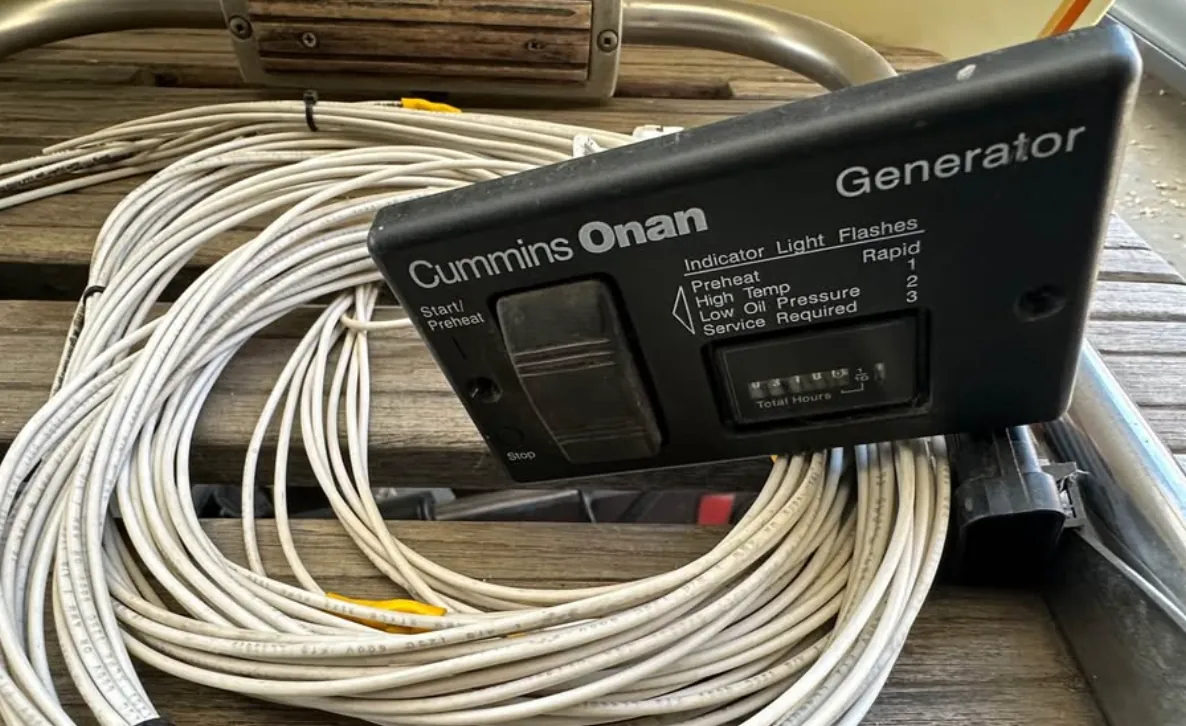
The control board on a Cummins Onan RV generator, called the control card in Onan literature, is one circuit card in the control box behind the maintenance access cover. It runs the start and stop sequence, the ignition, the governor drive and the voltage regulator, and it reports every shutdown by blinking a numeric fault code on the status light.
What the Control Card Does, and Which Onan You Actually Have
The control card sits in the control box behind the generator's maintenance access cover, alongside the control switch and its status indicator light. It watches speed and output voltage, drives the ignition and governor, sequences cranking, and blinks the fault code that every later step depends on. There is no single Onan board, and that matters before anyone orders a part. The gasoline KY series, sold as the 3.3KY, 3.6KY and 4KY, runs a two-pole self-excited alternator at 3,600 rpm and is microprocessor regulated. The HGJAA and HGJAB cover the 5.5, 6.5 and 7.0 kW sets, with the gasoline HGJAB carrying fuel injection and an altitude adjust knob. The HDZAA diesel is different again: a single-cylinder direct injection engine with a three-phase permanent magnet alternator, and an integrated controller plus AC output inverter instead of a conventional card. Codes, connectors and part numbers differ across all three.
Reading the Blink Code Before Anyone Orders a Part

Every blink-code Onan reports its last shutdown the same way. Three blinks means a service fault is stored, and pressing STOP/PRIME once makes the control flash a two-digit second-level code: the tens digit, a brief pause, then the units digit. Code 36 reads as three blinks, pause, six blinks, long pause, repeat. Four blinks on its own means overcrank, which is cranking without starting for 15 to 20 seconds on a KY set and 30 seconds on an HGJAA or HGJAB. Two blinks on the HGJ sets is low oil pressure. A status light flashing at high frequency is not a code at all: it is Engine Run Only mode, where the engine runs and AC output is switched off. The code stops flashing after five minutes, fifteen on an HGJAA, and pressing STOP/PRIME three times within five seconds restores it.
Which Codes Point at the Board, and Which Only Look Like It
Four codes in the HGJAA and HGJAB list name the card or its processor: Code 35 is an EEPROM error caught during self test, Code 42 a ROM error, Code 43 a RAM error, and Code 51 a general processor malfunction. That is four of the thirty-one codes in that manual, and three of the seventeen on a KY set, which has no Code 51 at all. The rest send you elsewhere. Code 29 means battery voltage above 19 volts. Code 32 means cranking speed under 180 rpm for more than two seconds. Codes 13 and 15 mean the connected load is too large, not that regulation has failed. Codes 27, 41, 45, 47 and 48 are sense faults, and a sense fault is wiring, rotor or ignition until proven otherwise. Codes 33, 34 and 44 are unassigned, so a first-level 3 or 4 misread as a second-level code starts a hunt for a fault nobody reported.
The Order a Suspected Board Gets Worked, and What Each Step Rules Out
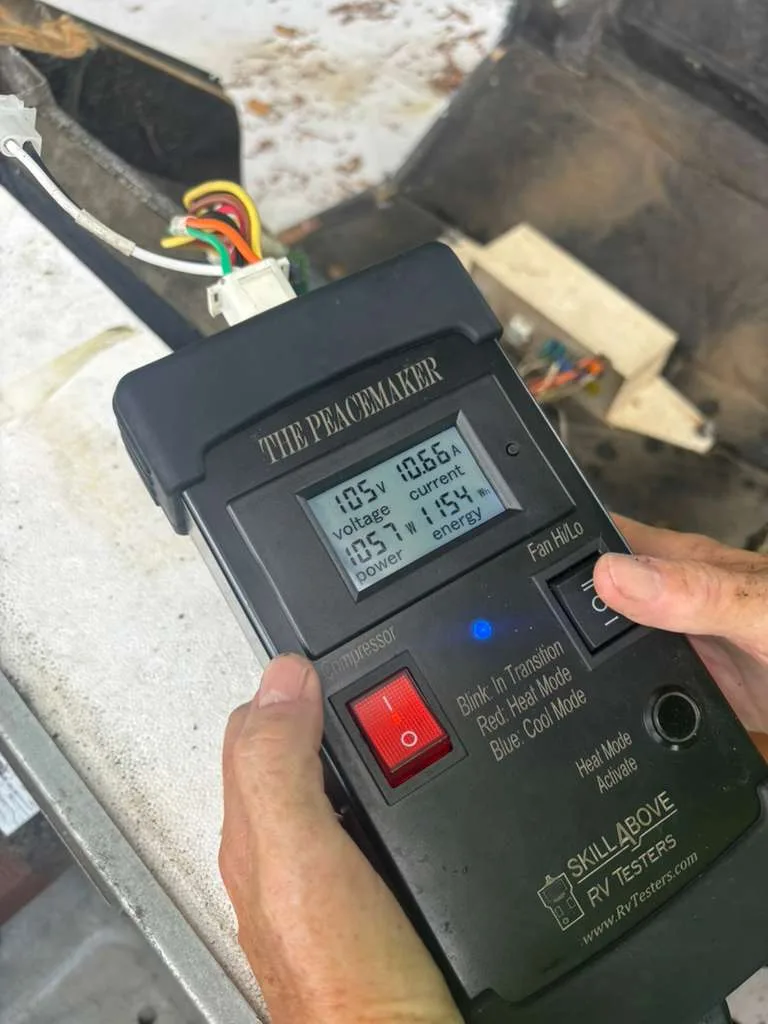
Owners describe this two ways: the generator will not start and the light just blinks, or the inside panel is dead. Our technicians read the code at the generator's own control switch first, because the remote panel is only an eight-pin connector - pin A battery ground, pin B stop/prime, pin C start, pin E hour meter, pin F status light - so a dead remote proves nothing about the card. Cranking voltage comes next, then the grounds. Cummins warns in the installation manual that bolted frame joints exposed to corrosive conditions are a poor current path, and that the mounting bolts are not an adequate bond. Only after that do the control box connectors come apart. Each step either clears the card or narrows the fault. That sequence is the point: a board ordered before the blink code is read is the most commonly wasted part on an RV generator, and it stops being returnable once fitted. The card itself is quoted against the model and spec letter on the nameplate, once the diagnosis has named it.
Why Boards Die at the Connector in a Florida Bay, and When the Part Is Worth It
A control card in an under-coach bay lives in warm salt-laden air, road spray and constant vibration, so it fails at its edges long before it fails at a chip. Green oxide on plated connector pins, a cracked solder joint at a relay or connector shell, and a corroded frame ground all produce the same symptoms as a dead card, which is why cleaning and reseating the connector can bring one back. Hours matter too, because coaches here run the generator for air conditioning all year, so the 150-hour oil and filter interval and the 450 and 500-hour service points come round several times a season rather than once. That sets the honest arithmetic: the board is quoted against the model and spec letter on the nameplate, and it is worth fitting when compression and the alternator are sound. Left alone, a corroded connector becomes repeat no-starts and a stack of good parts replaced for nothing.
Sources
Every figure on this page comes from a manufacturer document or a standards body, not from another repair site. Here is where each one comes from.
- Cummins Onan Operator Manual, RV Generator Set HGJAA and HGJAB (A035D009)The full HGJAA and HGJAB fault code list including Code 35 control card failure, Code 42 and 43 processor errors and Code 51, plus the blink code reading procedure and Engine Run Only mode
- Cummins Onan Operator Manual, RV Generator Set KY series (981-0159)The shorter KY series code table for the 4KY, 3.6KY and 3.3KY, the 15 to 20 second overcrank window, and the absence of Code 51 on that family
- Cummins Onan Operator Manual, RV Generator Set HDZAA (0983-0103)That the HDZAA diesel reports worded fault messages rather than blink codes, and the repeated caution to perform a stator check with a Megger before replacing the inverter
- Cummins Onan Installation Manual, RV Generator Set HGJAA and HGJAB (A035D005)The eight-pin remote control connector pin assignments and the warning that bolted frame joints in corrosive conditions and generator set mounting bolts are not an adequate bond
Related repairs
- our Generator Fuel System Rebuild service
- Generator Auto Start Install in Florida
- how we handle onan generator service
Other systems we service
Where we work
Service category
What this usually costs
| Item | Price | What it covers |
|---|---|---|
| Service call | $299 | Includes the trip out to your RV and the first hour on site |
| Work past the first hour | Quoted after diagnosis | We tell you what it will take before we carry on |
| Parts | Quoted per job | Special-order parts may need a deposit before we order them |
| Written estimate | No charge | You approve the estimate before any work starts |
The service call covers the trip out to your RV and the first hour on site. Anything beyond that depends on what we find, and we quote it and get your approval before carrying on.
The price ranges on this page come from our own recent jobs across Florida, not from an industry average. What you pay depends on the rig, the parts it needs and what we find on site, so we give you a written estimate before any work begins and you approve it first.
Frequently asked questions
Do you have availability to look at my generator?
Yes. Generator diagnostics are mobile, so a technician comes to the coach rather than the coach going to a shop. Have the two-digit fault code ready if the set will still blink one, along with the model and spec letter stamped on the generator nameplate, because those two things decide which manual and which connector layout the visit is worked from. If the fault does turn out to be the control card, the part is quoted separately against that nameplate.
Could I pay you to bench test a generator?
A removed set can be tested, but on a board complaint the bench is rarely where the answer lives. Most blink codes describe the battery, the grounds, the alternator or the connected load, and none of those behave on a bench the way they behave wired into a coach. The more useful sequence is reading the two-digit code in place, then measuring cranking voltage and voltage drop across the ground path.
How do I get my Onan to show its two-digit fault code?
Watch the status light inside the control switch. Three blinks means a service fault is stored, and pressing STOP/PRIME once makes the control flash the code as a tens digit, a pause, then a units digit. Press it again to stop the flashing. If nothing flashes, the code has timed out after five minutes, and pressing STOP/PRIME three times within five seconds brings it back.
Is Code 36 a failed control board?
No. Code 36 is Engine Stopped, which means the engine quit without the control commanding it. The manual points to fuel level, the generator's own fuel pickup tube, the LPG supply, the spark plug lead, the air filter and mechanical damage. It is one of the codes most often blamed on the board, when the card is only reporting that the engine died underneath it.
Why do these boards fail at the connector in a Florida coach?
Because the bay is the harsh part, not the silicon. Warm humid salt air, road spray and vibration attack plated connector pins and solder joints, while the processor sits protected in the middle of the card. Corroded grounds compound it, and the installation manual specifically warns about bolted frame joints exposed to corrosive conditions and says the mounting bolts do not count as a bond.
Is a new board worth it on a high-hour generator?
That depends on the hour meter and on what else is due. On the HDZAA diesel there is a hard manufacturer rule: check the stator before replacing the inverter, because fitting a new inverter to a shorted winding damages the new part. On the gasoline families a card is usually worth fitting when compression and the alternator are sound, and rarely worth it when they are not.