12V Parasitic Draw Diagnosis - RV Battery Flat in Three Days
Battery dead in three days with everything switched off? We meter the draw at the negative post and pull fuses to find the circuit. Call 888-759-1438.
A 12V parasitic draw is current still leaving the house battery after every switch is off. Some of it is normal, because a propane alarm and a fridge board never sleep. Finding it means putting an ammeter in series at the negative battery post, letting the boards settle, then pulling fuses one at a time until the reading drops. Normal is never zero on a modern coach.
What a 12V parasitic draw is, and what a normal one measures
A parasitic draw is current leaving your house battery while everything is switched off. It is not a fault by itself, because a coach is never fully asleep. A Safe-T-Alert 30-441-P propane alarm is specified at 100 mA at 12 vDC, and its own MTI Industries manual orders it onto wiring that cannot be turned off by a wall switch. Add a carbon monoxide alarm, a refrigerator control board holding its settings, a stereo keeping station memory, and an inverter idling in standby, and a healthy rig sits in the low hundreds of milliamps. Automotive guidance puts normal under 50 mA and calls anything over 100 mA suspect. That is correct for a pickup and wrong for a fifth wheel, where one UL 1484 alarm that code will not let you switch off spends the entire automotive budget on its own. Abnormal is not a fixed figure. Abnormal is whatever you measure above the loads you can actually account for.
Turning "flat in three days" into a milliamp target
Before anyone touches a meter, the complaint tells you the size of what you are hunting. A single Group 27 flooded battery holds roughly 90 amp-hours, and you get about half of that before the plates start sulfating, so call it 45 usable amp-hours. Three days is 72 hours. Divide 45 by 72 and the answer is 625 mA. That is a big leak, and it is almost never a radio. A Victron Phoenix 12/1200 left switched on is specified at 10 W of zero-load power, which is about 780 mA at 12.8 volts. By itself that empties the usable half of a Group 27 in roughly 58 hours, which is the three-day complaint almost to the hour. The same inverter in ECO mode draws 1 W, near 78 mA, and would need over three weeks. Do the division before the diagnosis. It tells you whether to look for one large load or several small ones.
How our technicians find the circuit, in order
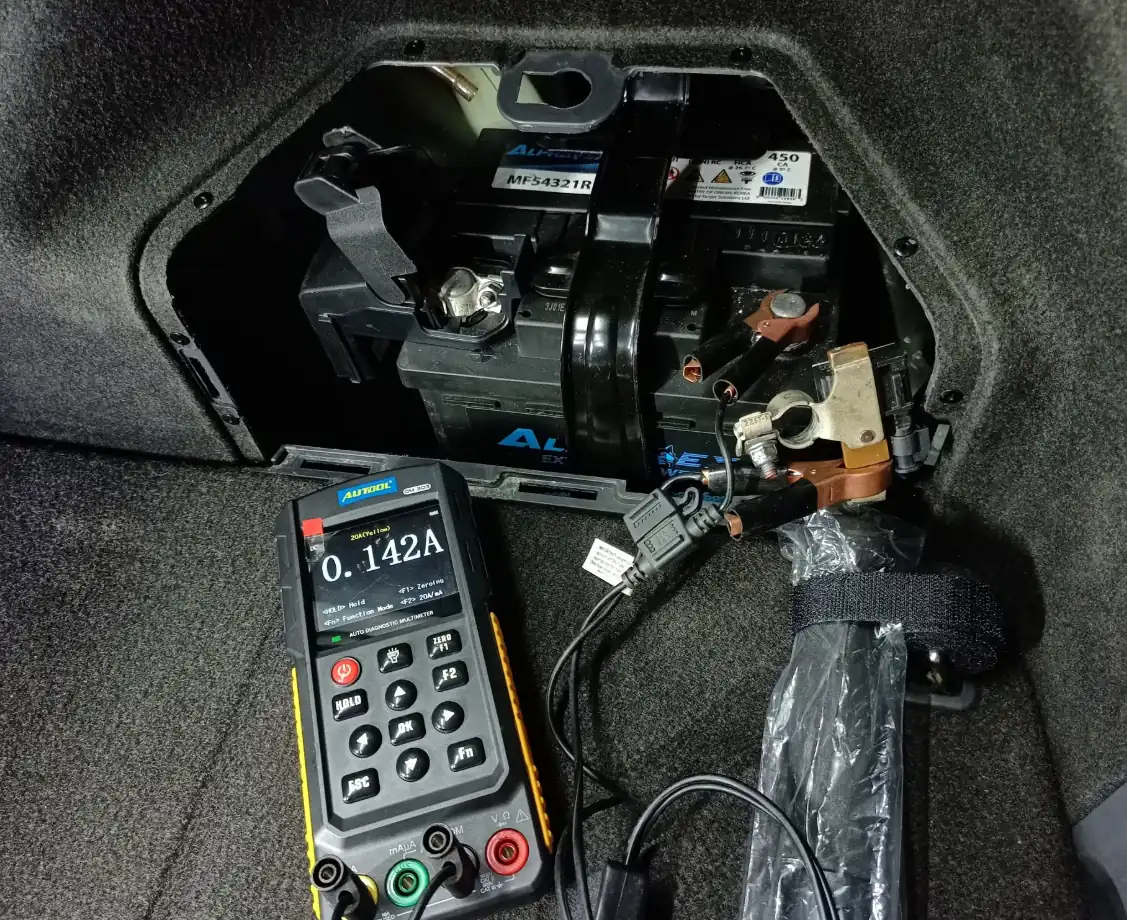
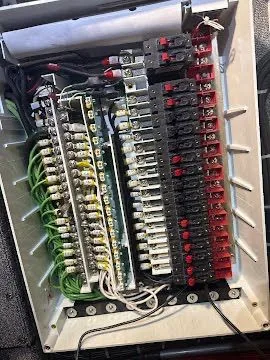
Everything the coach draws has to pass through the negative post, so that is where the measurement belongs. Our technicians pull the negative cable and bridge the gap with the meter in series, red lead on the battery post and black lead on the cable that came off, so the whole load runs through it. A Fluke 87V starts in the 10A jack, because entering an unknown load on the mA jack blows the meter fuse instead of reading it. Once the number falls below 400 mA, the lead moves to the mA jack for resolution. Settling time matters more than owners expect, because control boards stay awake for several minutes after power returns, so the first reading is never the sleeping draw. Then ATC blade fuses come out one at a time with a pause after each. The fuse that makes the number drop names the circuit. A DC clamp meter is faster and never breaks the circuit, but most resolve to 0.01 A at best, too coarse for an answer that sits under 100 mA.
Why a battery disconnect switch does not disconnect everything
Owners flip the disconnect, come back to a dead bank, and conclude the battery is bad. An Intellitec Battery Disconnect 100A is a latching relay that opens the one cable it is wired into and nothing more. Anything landed on the battery posts ahead of that relay stays live, and on most coaches that includes the propane alarm, whose manual requires unswitched power, the emergency start circuit, and any inverter fed straight off the posts through its own fuse block. Humid Florida storage then adds its own load. Fire ants nest inside warm relay housings and slide controller enclosures, and a colony plus condensation bridges low-current contacts well enough to keep a board half awake. Rodent-chewed insulation lying against a frame rail does the same thing permanently, and no fuse-pull will find it, because a chafe to bare metal sits upstream of any fuse. The switch is a storage convenience, not a diagnosis, and it only hides the fault.
The usual culprits, and what a draw becomes if you leave it
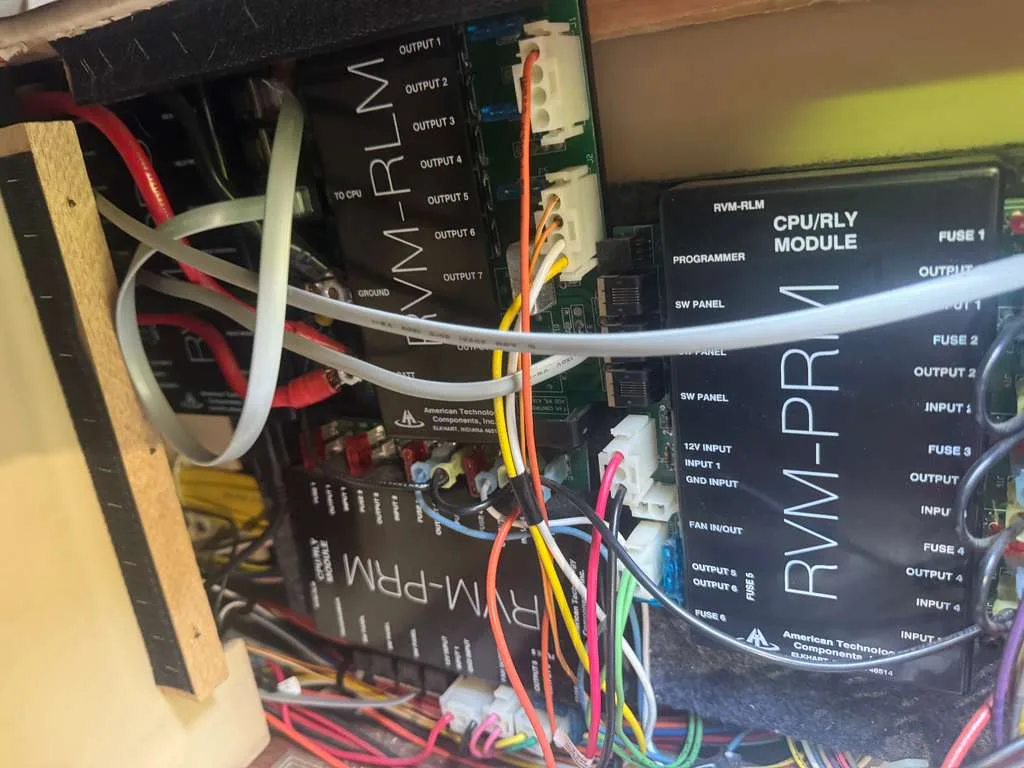
The order of suspicion rarely changes. An inverter switched on at its remote panel, the propane alarm doing its job, a stereo memory circuit, a Lippert slide controller that never went to sleep because a limit switch never reported the room home, and corroded ground studs or a wet seven-way connector leaking to the frame. Left alone, the cost is not the electricity. Repeated deep discharge sulfates a flooded bank permanently, so owners replace batteries that were never faulty, then watch the new set die the same way inside a season. The draw is still there. It is just wearing a more expensive battery now, and a lithium bank bought to solve it will empty on the same schedule.
Find the draw before buying the battery, not after. The measurement takes minutes with a clamp meter on the negative lead, and it is the only thing that tells you whether the bank was ever the problem.
Sources
Every figure on this page comes from a manufacturer document or a standards body, not from another repair site. Here is where each one comes from.
- Fluke - How to find parasitic battery drain with a multimeterThe method itself: disconnect the negative cable, put the meter in series at the post, start in the 10A jack and move to the mA jack below 400 mA, then pull fuses one at a time. Also the under-50 mA normal and over-100 mA suspect thresholds this page argues are too low for an RV.
- MTI Industries Safe-T-Alert 30-441-P and 30-442-P owner manual (PDF)Current draw of 100 mA at 12 vDC, conformance to UL 1484, and the manual's own instruction to connect only to wiring that cannot be turned off by a wall switch, which is why a healthy RV baseline sits above the automotive figure and why a disconnect switch misses this load.
- Victron Energy Phoenix Inverter VE.Direct 250VA-1600VA datasheet (PDF)Zero-load power of 10 W for the 12/1200 and 1 W in ECO mode, which converts to roughly 780 mA and 78 mA at 12.8 volts. That is the figure that makes an inverter left switched on match the three-day flat battery almost exactly.
- Intellitec Products - Battery Disconnect 100AThat the disconnect is a latching relay intended to remotely disconnect either the chassis or the auxiliary battery and draws power only when it changes state, so it opens the cable it is wired into and leaves anything landed ahead of it energized.
Related repairs
- Rv Transfer Switch Repair
- our Lithium Battery Conversion service
- Rv Converter Charger Repair in Florida
Other systems we service
Where we work
Service category
What this usually costs
| Item | Price | What it covers |
|---|---|---|
| Service call | $299 | Includes the trip out to your RV and the first hour on site |
| Work past the first hour | Quoted after diagnosis | We tell you what it will take before we carry on |
| Parts | Quoted per job | Special-order parts may need a deposit before we order them |
| Written estimate | No charge | You approve the estimate before any work starts |
The service call covers the trip out to your RV and the first hour on site. Anything beyond that depends on what we find, and we quote it and get your approval before carrying on.
The price ranges on this page come from our own recent jobs across Florida, not from an industry average. What you pay depends on the rig, the parts it needs and what we find on site, so we give you a written estimate before any work begins and you approve it first.
Frequently asked questions
How much do you charge for RV electrical diagnosis?
Our service call covers the trip out and the first hour on site at the rate in the pricing table on this page; anything past that first hour is quoted and approved before we carry on. A parasitic draw is billed on time rather than a flat rate, because the fuse hiding the fault could be the second one pulled or the twenty-second. If the answer turns out to be an inverter left switched on, the visit is short.
What is a normal parasitic draw on an RV?
Higher than the under-50 mA figure quoted for cars. A single Safe-T-Alert 30-441-P propane alarm is specified at 100 mA at 12 vDC on its own, and a CO alarm, a fridge control board and a stereo memory circuit sit on top of that. A rig in the low hundreds of milliamps with everything off is usually behaving. The useful test is not a number at all. It is whether the reading matches the sum of the loads you can name.
Why does my battery still go dead with the disconnect switch off?
Because the switch opens one cable, not every load. A latching disconnect relay such as the Intellitec Battery Disconnect 100A cuts the bank it is wired into, while anything landed directly on the battery posts ahead of it keeps drawing. The propane alarm is required to be on unswitched power. Emergency start circuits and inverters wired straight to the posts through their own fuse block are the other two that routinely survive the switch, and an inverter is the one large enough to flatten a bank on its own.
Can I just disconnect the negative cable when I store the RV?
It stops the draw, and it also stops the charging, so a flooded bank left isolated through a hot summer self-discharges and sulfates anyway. Disconnecting also erases the evidence, so if you want the fault found, leave the coach as it failed. A better storage answer is to find the draw first, then leave the bank on a maintaining charge rather than isolated and quietly dying on its own through a Florida summer.
How long does it take to find a 12V parasitic draw?
Most are found within the first hour, because the meter goes on the negative post and the fuse panel is a short list. Time gets spent on the two harder cases: a load that only appears after the boards finally sleep, which means waiting several minutes between readings, and a chafed wire grounding to the frame ahead of any fuse, which no fuse-pull can isolate because it never passes through a fuse, and has to be traced by hand along the harness run.