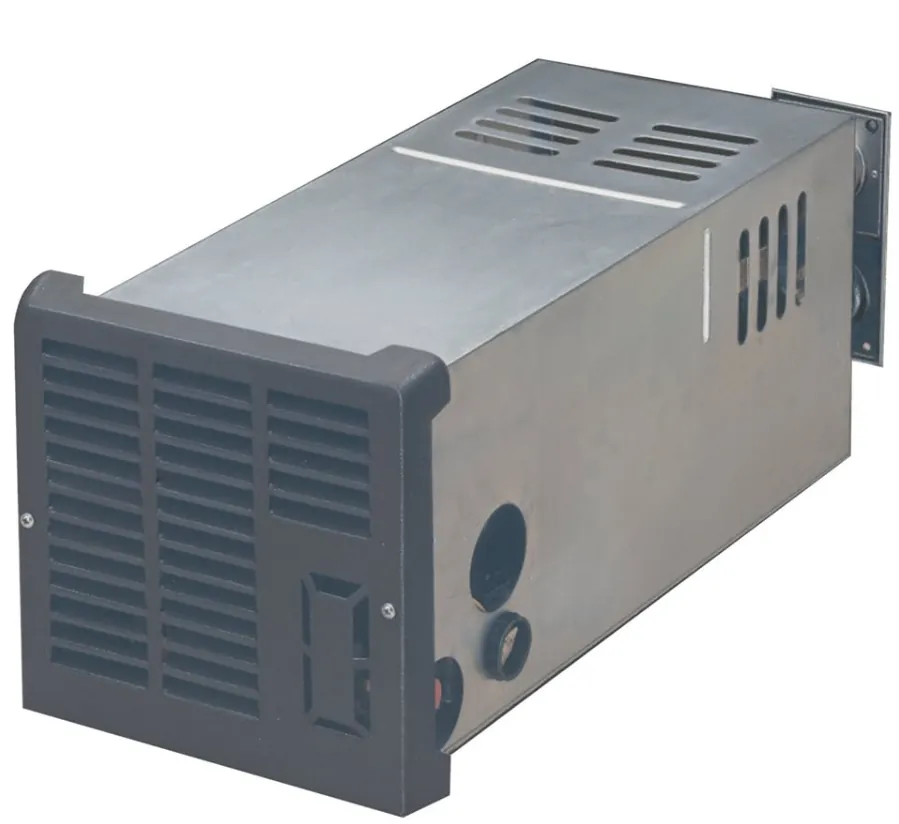
Suburban RV Furnace Repair: NT and SF Series No-Heat Fix
Suburban NT and SF furnace runs but no heat? Sail switch, limit switch and ignition faults diagnosed in order across Florida. Call 888-759-1438.
A Suburban NT or SF furnace that spins its blower but never lights rarely fixes itself, and every extra thermostat cycle pushes more unburned propane past a sooting burner until the fault hardens into a board or gas valve. Ignition runs in a fixed order: blower, sail switch, gas valve, spark, flame sense. A failure at any one of those five steps sounds identical from inside the coach.
Blower Runs, No Heat: What Owners Actually Hear
No heat with a running fan is the most common way an RV furnace fails, and it is also the least informative symptom in the coach. The sound you hear is a single 12-volt motor turning two wheels on one shaft, a combustion air wheel feeding the sealed burner and a room air wheel pushing heat into the ducts. That motor starts on the thermostat call alone, so hearing it proves only that the thermostat closed and the board has power. It proves nothing about propane, spark or flame. Owners describe four versions of this. The fan runs and never lights. It lights, burns a moment, then drops out. It heats for a few minutes and then blows cold air until it cycles. Or it starts, quits after several tries, and keeps blowing for a while before going silent. Each of those four maps to a different step in the ignition sequence, and that sequence is what makes them separable.
The Suburban Ignition Sequence, Step by Step
A Suburban furnace ignites in a strict order and stops at the first step it cannot prove. The wall thermostat closes and sends 12 volts to the module board, a three-try control with local flame sense that both sparks and senses through the same electrode. The board starts the motor, and Suburban tells owners to allow roughly 30 seconds of motor operation before the main burner lights. Airflow from that motor lifts a light vane called the sail switch, which is wired in series with the gas valve, so no airflow means no gas. Once the sail switch closes, the board energizes the 12-volt gas valve and fires the electrode. The flame must then be sensed within the trial period or the board shuts the valve and tries again. After three failed attempts it locks out, keeps the blower running about five minutes to purge, and stops. Only a thermostat reset clears that lockout.
Why the Sail Switch Will Not Close
The sail switch is a spring-loaded vane sitting in the blower stream, and its only job is to prove air is moving before propane is allowed to flow. It fails safe, which is exactly why a bad one looks like an ignition problem: the blower runs, the board waits, nothing ever lights. The usual causes are mechanical rather than electrical. Dust and carpet lint load the room air wheel until it no longer moves enough air, a flexible duct gets crushed behind a cabinet, or a duct pulls off its collar. Aftermarket in-line duct booster fans are a specific trap, and Suburban states plainly that air boosters cause the furnace to cycle on limit and produce erratic sail switch operation. Diagnosis is direct. Pull the access door, spin the wheel by hand feeling for drag, then meter the switch with a multimeter while the blower runs. The NT-16/20SQ and SEQ sail switch is part 525028.
Return Air and the 55 Square Inches Nobody Measures
The limit switch is a thermal disc that opens when the heat exchanger runs hotter than its rated trip point, and starved return air is the usual reason it trips. Suburban's own listing for the SF-Q, model 2552A, calls for 55 square inches of required return on a 20,000 BTU per hour unit that runs at 12 volts and draws 5.1 amps through two 4-inch ducts. The company's ducting guide walks a real cabinet: a grate of nine rows of four louvers, each 4 inches by half an inch, yields 72 square inches and passes. Behind that grate, a cabinet built only to the 1-inch clearance-to-combustibles minimum measures 34 square inches, and once side ducts are attached it drops to 26. That is under half the requirement, in a coach that met every published clearance. Heat for a few minutes, then cold air, then a cycle, is that geometry talking. Limit switches are model-specific and the SF versions carry color dots, green 525006 and blue 525035.
What Rare Use Does to a Furnace in Florida
A furnace here might run a dozen nights a year and then sit humid and motionless for the other eleven months, which is the condition that kills it. Mud daubers and orb weavers build in the burner tube and the combustion air path, and a partially packed tube gives a lazy yellow flame, soot at the vent, or no light at all. The obvious owner remedy is specifically prohibited: Suburban instructs that screens must never be installed over the vent for any reason, because they restrict and cause unsafe operation. Corrosion is the second rare-use failure. A frame ground that reads fine at rest can drop enough under blower load to drop the board out mid-cycle, so measure voltage drop while the motor is turning. Propane is the third. A furnace is usually the largest single draw in the coach, and Suburban warns that gas valves must be fully open, never partially. Orifice 180224 is a number 56 on NT-16SQ and SEQ.
Order of Diagnosis, Typical Cost, and What Waiting Turns It Into
The order matters more than the parts list. Confirm 12 volts at the board under blower load rather than at rest. Confirm the motor spins freely and both wheels are clean. Confirm the sail switch closes. Then open the burner access door and look at the tube, the orifice and the electrode gap, and only after that look at propane supply and the module board. Boards get replaced last because they are the most expensive thing to guess at. Our service call covers the trip out and the first hour on site, and the current rate is in the pricing table on this page. What runs past that hour depends on which of those five steps the fault sits at, and it is quoted after the diagnosis and approved before we go further. Waiting is what changes the bill. Repeated resets soot the burner, and Suburban treats soot as a visual warning that combustion is incomplete, with instructions to shut the unit down immediately.
Sources
Every figure on this page comes from a manufacturer document or a standards body, not from another repair site. Here is where each one comes from.
- Suburban (Airxcel) - All Suburban Gas Furnaces Operation GuideAllow about 30 seconds of motor operation before the burner lights; stop after three failed ignition attempts and do not keep cycling the thermostat; lockout runs the blower five more minutes; never install screens over the furnace vent; soot means incomplete combustion and the unit must be shut down; gas valves must be fully open, never partially.
- Suburban - Furnace Ducting GuideAir boosters cause the furnace to cycle on limit and produce erratic sail switch operation; the worked return-air example showing 72 square inches of grate but only 34 square inches of cabinet path, dropping to 26 with side ducts, against a 55 square inch minimum.
- Suburban - SF-Q Series Furnace (model 2552A) specificationsSF-Q rated 20,000 BTU per hour at 12 volts, 5.1 amp draw, two 4-inch ducts required and 55 square inches of required return air.
- Suburban - RV Factory Replacement Parts Manual (Rev G)Part numbers by model: sail switch 525028 for NT-16/20SQ and SEQ, color-dot coded SF limit switches 525006 and 525035, burner orifice 180224 as a number 56 on NT-16SQ/SEQ, and the three-try local-flame-sense 12 VDC ignition control module.
Related repairs
Other systems we service
Where we work
Service category
What this usually costs
| Item | Price | What it covers |
|---|---|---|
| Service call | $299 | Includes the trip out to your RV and the first hour on site |
| Work past the first hour | Quoted after diagnosis | We tell you what it will take before we carry on |
| Parts | Quoted per job | Special-order parts may need a deposit before we order them |
| Written estimate | No charge | You approve the estimate before any work starts |
The service call covers the trip out to your RV and the first hour on site. Anything beyond that depends on what we find, and we quote it and get your approval before carrying on.
The price ranges on this page come from our own recent jobs across Florida, not from an industry average. What you pay depends on the rig, the parts it needs and what we find on site, so we give you a written estimate before any work begins and you approve it first.
Frequently asked questions
Why does my RV furnace blower run but never produce heat?
Because the blower starts on the thermostat call alone, before propane is ever involved. Hearing it only confirms the thermostat closed and the board has 12 volts. The furnace then has to prove airflow at the sail switch, open the gas valve, spark the electrode and sense flame. A failure at any one of those steps leaves the blower running with no heat, so the sound alone tells you nothing about which step actually stopped.
How many times should I try restarting a Suburban furnace that will not light?
Three, and then stop. Suburban's operation guide says that after three attempts with no ignition you should turn the furnace off and call a service agency, and specifically that you should not continue cycling it through the thermostat trying to start it. Each failed try opens the gas valve and sprays propane into a burner that never lights it. That sooting is what turns a cheap switch failure into a heat exchanger problem.
Why does my furnace put out heat for a few minutes and then blow cold?
That pattern is almost always the limit switch opening on high heat exchanger temperature, and the usual cause is restricted return air rather than a bad switch. Suburban calls for 55 square inches of return area on the SF-Q, and their ducting guide documents cabinets that met every clearance rule and still delivered only 26 to 34 square inches once side ducts were run. Swapping the switch does not fix geometry.
Can insects nesting in the furnace really stop it from lighting?
Yes, and it is one of the more common reasons a rarely used furnace fails after long humid storage. Mud daubers pack tubes with mud and orb weavers thread the combustion air path. A partly blocked burner tube gives a lazy yellow flame, soot at the exterior vent, or no ignition at all. Clearing it means pulling the burner access door and inspecting the tube directly, not spraying anything into the vent.
Is it worth repairing an older Suburban furnace or should it be replaced?
It depends entirely on which part failed. Sail switches, limit switches, gas valves, motors and module boards are all individually serviceable, and Suburban still lists them as factory replacement parts by model number. A sooted or cracked heat exchanger is a different matter and is not a repair. Suburban also sells furnace core replacement modules that slide into the existing cabinet, which avoids re-ducting the coach for a full unit swap.