
RV Solar in Florida: What a Rooftop Array Will and Won't Run
Why your array never makes its rated power, how to size from real daily usage, and the honest answer about running an air conditioner.
Panels are rated under standard test conditions at a cell temperature of 25C. A panel lying flat on an RV roof in Florida at midday is far hotter than that, and output falls as cell temperature rises. So plan on delivered amp hours per day rather than nameplate watts, and treat any calculation built on the number printed on the panel as the best case you will never see.
Apex RV Repair is mobile across Florida - we come to your RV. Call 888-759-1438.
Solar on an RV is one of the few upgrades that reliably delivers what it promises - as long as what you were promised was the right thing. The disappointment almost always comes from expecting a number that was never achievable.
Florida makes that gap wider than most places. There is plenty of sun, which is the good news, and the heat that comes with it is exactly what reduces what a panel actually produces.
Why does my 400 watt array never make 400 watts?
Because nameplate wattage is a laboratory figure measured under standard test conditions, and one of those conditions is a cell temperature of 25C. Nothing on a Florida roof in July is at 25C.
Photovoltaic cells lose output as they get hotter. A panel mounted flat against a hot RV roof with little airflow behind it runs considerably above ambient air temperature, and the output falls accordingly. That loss is before you account for anything else.
Then the rest of the chain takes its share:
- Angle. A flat rooftop panel is only pointed at the sun near the middle of the day, and only in the right part of the year. Tilting matters more than people expect, which is why portable panels you can aim often outperform their rating relative to fixed ones.
- Wiring losses, which rise with cable length and fall with cable size.
- Charge controller efficiency, which is high on a good MPPT but not one hundred percent.
- Shade. Partial shading of one panel can affect an entire series string, which is why a single overhanging branch can cost far more than its share of the roof.
- Dirt. In Florida that means pollen in spring and salt film near the coast, both of which reduce output measurably.
What actually reduces solar output between the panel and the battery?
The practical takeaway is to plan on delivered amp hours per day, measured through a shunt-based battery monitor, rather than on watts printed on a box. Once you have a week of real numbers from your own coach, sizing stops being guesswork.
Airflow behind the panels is the one installation detail with a direct effect on this. Panels standing off the roof on mounts run cooler and produce more than panels bonded flat to the membrane, and in Florida that difference is not small.
Both of those are installation decisions rather than equipment ones, which is why two coaches with identical panels can deliver noticeably different amp hours per day. Plan on what the monitor shows over a week rather than what the array is rated at, because the rated figure is a laboratory number and the monitor is measuring your roof.
How many solar panels do I need to run an air conditioner?
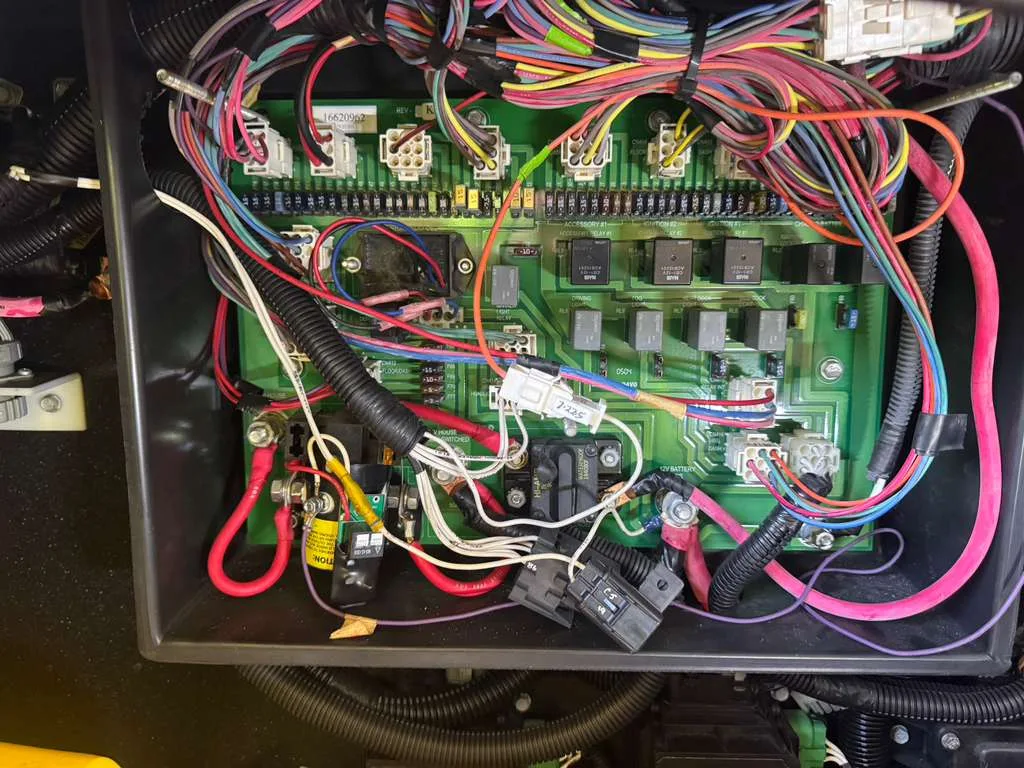
This deserves a straight answer rather than an optimistic one: running a rooftop air conditioner through a Florida afternoon from a typical RV rooftop array is not realistic, and anyone telling you otherwise is selling something.
The arithmetic is unforgiving. An air conditioner is a large continuous load, it runs hardest exactly when the coach is hottest, and it is running for hours rather than minutes. Meeting that from solar alone requires an array considerably larger than most RV roofs can carry, a battery bank sized to cover the hours the panels are not producing, and an inverter capable of the start-up surge.
What is realistic on a well-designed system:
The awkward part is that this arithmetic does not improve with better panels. It is roof area against a continuous load, and Florida supplies the least forgiving version of both.
What is realistic to run from RV solar in Florida?
- Running lights, fans, water pump, phone and laptop charging, and a modern compressor refrigerator indefinitely.
- Covering the coach's standing loads so a stored or parked coach does not go flat.
- Running an air conditioner for a limited period - to take the edge off, or to bridge a gap - on a large bank with a suitably sized inverter, at the cost of a substantial part of your stored energy.
- Meaningfully reducing generator runtime, which for many owners is the actual goal.
If air conditioning off-grid is the requirement, the honest solution is a generator, or shore power, with solar handling everything else. That is not a failure of solar - it is using each source for what it is good at. Our generator article covers the other half of that pairing.
Which is the honest framing of solar on an RV: it covers the quiet loads extremely well, and the one load almost everybody asks about first is the one it cannot carry.
MPPT or PWM - does the controller type matter?
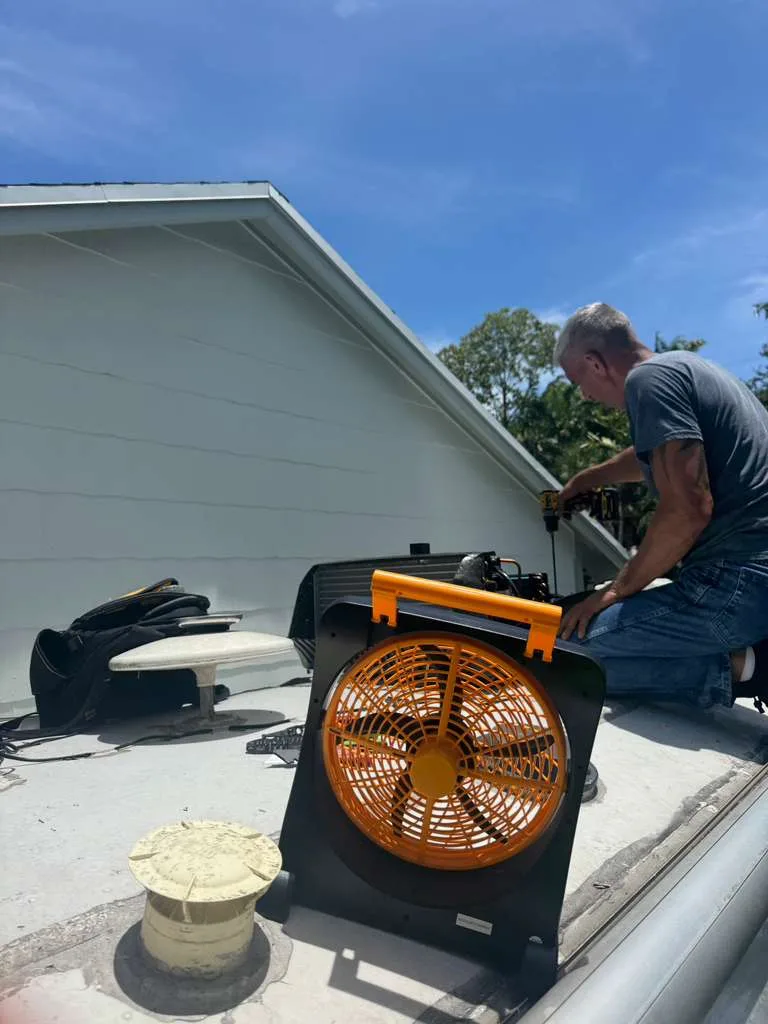
Yes, and more so on the panel voltages typically used now.
A PWM controller essentially connects the panel to the battery, which drags the panel down to battery voltage. If the panel's optimum operating voltage is close to battery voltage that is a small loss. If the panel operates at a much higher voltage - as most modern panels do - the difference between the panel's best operating point and battery voltage is simply thrown away.
An MPPT controller actively finds the panel's maximum power point and converts the excess voltage into additional current. In practical terms it recovers a meaningful share of what PWM discards, and the advantage grows in exactly the conditions where you need it most: partial sun, high panel voltage, and lower light.
The choice is worth making deliberately rather than accepting whatever came bundled with a panel kit, because the controller is the cheapest part of the system to get right and the most expensive one to have wrong.
What do installers get wrong when configuring a solar controller?
Two installation points matter as much as the controller choice. The controller has to be configured for your battery chemistry - critically so with lithium, where the wrong profile leaves the bank chronically short. And controllers themselves derate at high ambient temperature, so a controller mounted in a hot sealed bay in a Florida summer is not delivering its rated output. Victron, for instance, specifies full rated output up to a stated ambient temperature and derating above it. Where you mount it is a design decision, not a convenience.
Get either of those wrong and the hardware is not the problem, the settings are. A lithium bank charged on lead-acid parameters will never reach full, and it looks exactly like an undersized array for as long as nobody thinks to check the configuration behind it.
How do I size a system from what I actually use?
Measure rather than estimate, because estimates are consistently wrong in the same direction.
- Fit a shunt-based battery monitor first, before buying any panels. It is the cheapest part of the project and it is the only thing that turns this from guesswork into arithmetic.
- Camp the way you normally camp for a week and record amp hours consumed per day.
- Note the worst day, not the average. The system has to cope with an overcast Florida afternoon, not a perfect one.
- Work out how many amp hours per day the array needs to replace, then allow for the losses above rather than assuming nameplate.
- Size the battery bank to carry you through the hours and days the panels are not producing. Panels replace energy; batteries are what let you use it at night.
- Then check that the roof can physically carry the array, and that mounting it does not compromise the roof.
Step five is where most undersized systems go wrong. People buy panels and keep the batteries they had, then find the system still runs out overnight. The panels were never the constraint.
If a lithium upgrade is part of the plan, do it in the right order and with the charging system in scope - see our battery upgrade article, because the solar controller is one of the chargers that needs a lithium profile.
How do the wires get through the roof without causing a leak?
This is the part of a solar installation most likely to cost you money later, and it is nothing to do with electricity.
Every mount foot and every cable entry is a new penetration through a roof that was sealed at the factory and has been baking in Florida sun ever since. A solar array can easily add a dozen or more new places for water to get in.
- The cable entry should use a proper roof gland designed for the purpose, not a hole and a blob of sealant.
- Mount feet must be bedded and sealed with a product appropriate to your specific roof membrane - EPDM, TPO and fiberglass do not all want the same sealant.
- Everything the installation adds joins your twice-yearly roof inspection list permanently. More penetrations means more terminations to check.
- Adhesive-mounted panels avoid penetrations but bond flat to the roof, which runs the panels hotter and reduces output. That is a real trade-off rather than a free win.
It is worth having the roof inspected before an installation as well. Adding an array to a membrane that is already near the end of its life means removing it all again when the roof is done. Our roof maintenance article covers how to assess that.
Ask how the roof will be sealed
A solar quote that does not say which sealant will be used on your membrane, and how the cable entry is made, is not a complete quote. The electrical side of a small RV solar install is straightforward. The roof is where the expensive mistakes are.
Is portable or roof-mounted better in Florida?
They solve different problems and plenty of owners end up with both.
| Roof mounted | Portable | |
|---|---|---|
| Convenience | Always working, nothing to set up or put away. | Set out and packed away each time, and it has to be secured against theft. |
| Aiming | Fixed flat, so it only sees good sun in the middle of the day. | Can be aimed at the sun, which often more than makes up for a smaller panel. |
| Shade | Whatever shades the coach shades the panels. | Can be placed in sun while the coach sits in shade - a significant advantage in Florida, where you want the coach shaded. |
| Roof integrity | Adds penetrations that must be sealed and maintained. | None. |
| Heat | Runs hot on the roof unless mounted with airflow behind. | Usually cooler, particularly if set on a stand rather than flat on the ground. |
That shade row is the one people underestimate here. In Florida you generally want the coach parked in shade, which is precisely where fixed rooftop panels produce least. A modest portable panel placed in the sun can outperform a larger rooftop array on the same day.
What is worth handing to an installer?
Fitting a battery monitor, recording your usage, and choosing between portable and fixed are all owner decisions and the ones that most affect whether you are happy with the result.
Where to bring someone in: the roof penetrations, the DC wiring and fusing, and integrating the controller with the rest of the charging system so the converter, the alternator path and the solar controller are not fighting each other over the same battery bank.
The failure we would most like to prevent is the one where the electrics are fine and the roof leaks. That damage shows up a year later, well away from the panels, and by then nobody connects it to the installation. See our electrical service page for how we scope solar work.
Ask for the roof penetration detail in writing before work starts.
What a visit costs
A service call is $299 and covers the trip out to your RV and the first hour on site. Work past that first hour is quoted to you once our technician has found the fault, before we carry on. In Orlando, Lakeland, Kissimmee, Apopka and nearby the service call is $399 and time past the first hour runs $200 per hour. Written estimates are free and you approve one before any work starts. Call 888-759-1438.
Sources and further reading
Every figure above that came from a manufacturer or a standards body is linked here so you can check it yourself.
- Victron - solar charge controllers - Manufacturer range and documentation, including the MPPT and PWM distinction and configuration for battery chemistry.
- Victron SmartSolar MPPT charger manual (PDF) - Includes the ambient temperature at which output is fully rated and the derating behavior above it - the reason controller location matters in Florida.
- Victron SmartSolar MPPT datasheet (PDF) - Specification detail for sizing a controller to an array and a battery bank.
- Dicor - roof sealant installation instructions - Surface preparation and product selection for the roof penetrations a solar installation creates.
Related pages on this site
- RV electrical and solar - panels, controllers, batteries and 12 volt systems
- RV battery upgrades - sizing the bank that stores what the panels collect
- RV roof repair - the penetrations an array adds, and how they are sealed
- Book a service call - mobile across Florida
RV solar questions Florida owners ask
Will solar keep my RV batteries topped up in storage?
Yes, and this is one of the highest-value uses of a small array. A stored coach has continuous standing loads - detectors, monitors, appliance boards - that will flatten a bank over weeks. A modest panel and controller offsets those indefinitely. Make sure the controller is set for your battery chemistry, because it will be running unattended for months.
Can I add panels to an existing RV solar system?
Often yes, but the charge controller has to be able to handle the additional current and the array voltage, and how you combine the panels matters. Mixing panels of different ratings in the same string can drag the string down to the weakest one. It is worth checking the controller's limits before buying anything.
Do solar panels work on cloudy days in Florida?
They produce, but much less. An overcast Florida afternoon can drop output dramatically, and Florida gets those regularly in summer. This is why the battery bank matters as much as the array - the panels replace energy over the good hours and the bank carries you through the bad ones.
How often do RV solar panels need cleaning?
Whenever they are visibly dirty, which in Florida means after pollen season and more often near the coast where salt film builds up. It is a real output loss rather than a cosmetic issue. Clean them the same way you clean the roof, gently and with the membrane in mind, since you are standing on it.
Does solar reduce how often I need to run the generator?
For most owners that is the honest benefit and the one worth buying it for. Solar covers the steady daily loads so the generator is needed only for the big ones - typically air conditioning and high-draw appliances. Fewer generator hours also means less fuel, less noise, and less of the storage-related generator trouble that comes from a set that is rarely run.
What size inverter do I need with solar?
The inverter is sized by what you want to run, not by the array. It also has a standing draw of its own even with nothing plugged in, which quietly consumes amp hours over a day, so an inverter much larger than you need costs you energy continuously. Size it to your actual loads and switch it off when it is not in use.
Do you install RV solar systems?
Yes, including panels, controllers, wiring, fusing and integration with the existing charging system, done where the RV is parked anywhere in Florida. We will also tell you honestly if what you want is not achievable from a rooftop array before anything is ordered. Call 888-759-1438.
Will solar void my RV roof warranty?
That depends on your coach manufacturer's terms and on how the installation is done, so read your warranty rather than assuming either way. What is universally true is that penetrations must be sealed correctly with a product suited to your specific membrane, and that a poorly sealed installation causes water damage that no warranty covers regardless.