Why Is My RV Refrigerator Not Cooling?
Absorption refrigerators fail in ways household fridges never do. How to separate a dead cooling unit from a board fault, a power problem, or an ambient temperature the fridge was never designed for.
Check which power source it is failing on before anything else. An absorption fridge that cools on propane but not on electric has a power or heating element fault, not a dead cooling unit. One that fails on both, with a smell of ammonia or a yellow residue behind it, has usually lost the cooling unit itself.
Apex RV Repair is mobile across Florida - we come to your RV. Call 888-759-1438.
The refrigerator in most RVs is not a small version of the one in your kitchen. It is an absorption unit with no compressor and no moving parts, driven by heat rather than by a motor, and it fails in ways a household fridge never does.
That difference decides everything about the diagnosis. This page walks the checks in the order that separates the cheap faults from the expensive one, starting with the single question that rules out half the possibilities.
Why is my RV refrigerator not cooling?
Start by establishing which power source it fails on, because that one answer splits the problem in half. An absorption refrigerator can run on propane or on electricity, and both do the same thing: apply heat to a sealed system to drive the cycle.
If it cools on propane but not on electricity, the sealed system is fine and the fault is on the electric side, usually the heating element, its thermal fuse or the supply reaching it. If it cools on electricity but not on propane, the sealed system is again fine and the fault is in the gas train, the burner or the igniter.
If it fails on both, the cooling unit itself is the suspect. That is the expensive answer and the one worth confirming carefully rather than assuming, because a control board that has stopped commanding heat produces exactly the same symptom.
Establishing this costs nothing and it changes the entire conversation.
Why does the fridge work on propane but not on electric?
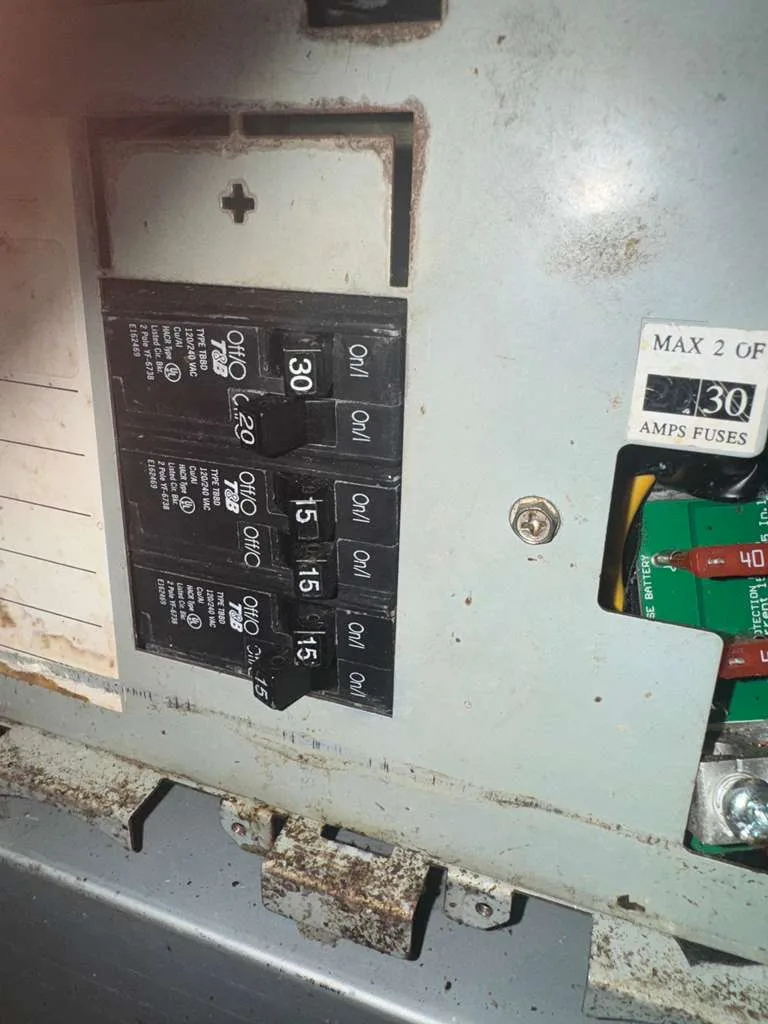
Because the electric side is a simple heating circuit and simple circuits fail in simple ways. The most common cause is the heating element itself, which is a resistive element that eventually opens. The second is a thermal fuse, fitted deliberately to fail before anything else does.
Before either of those, though, check what the fridge is actually being offered. A tripped breaker, a failed outlet behind the unit, or a coach running on a weak supply can all starve the element without anything on the fridge being wrong at all.
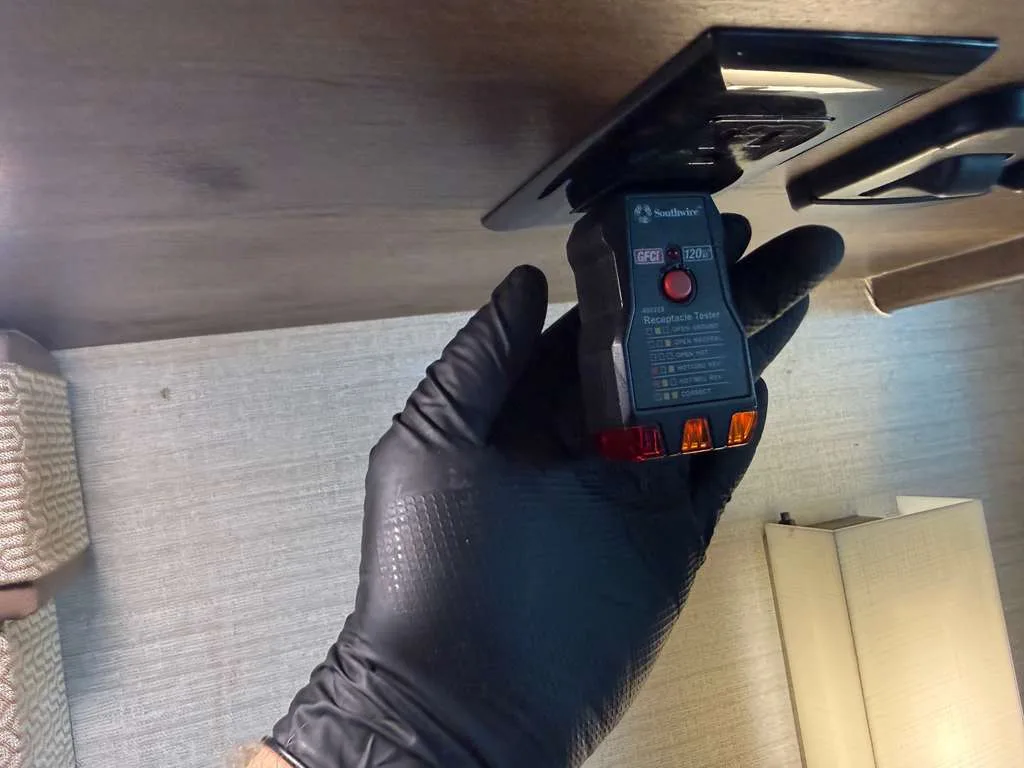
This is worth ruling out first because it is free. Confirm the breaker, confirm the coach has good shore power, and confirm the outlet behind the refrigerator is live. A surprising share of no-cool-on-electric calls end there, with nothing wrong inside the refrigerator at all and the coach's own supply to blame.
How do you reset an RV refrigerator?
There is a genuine reset and it is worth doing before anything is condemned. Switch the refrigerator off at its own control, then remove power completely, which means the coach breaker off and the propane supply closed. Leave it for several minutes so the control board loses its stored state entirely.
Restore power and start it on one source only, then watch what it does. Starting on one source rather than automatic mode tells you far more, because automatic switching can mask which side is actually working.
If the unit throws a fault code, note it exactly and note whether it appears immediately or after the unit has tried to run. Boards commonly report a failure to detect the burner flame, which is a gas or igniter matter, not a cooling unit failure.
A reset that produces normal cooling means the board had latched a fault, and the fault behind it is still worth finding.
What does it mean to burp an RV refrigerator?
It refers to shutting the unit down, taking it out of the coach and turning it over, then leaving it inverted for several hours before refitting it. The intent is to shift the ammonia solution inside the sealed cooling unit past a blockage that has formed while it stood.
It does sometimes work, on a unit that has been stored a long time on an incline and has developed a vapor lock. Owners hear about it because when it works, it is dramatic and free.
What is worth saying plainly is that it is not a repair. It does not address the reason the blockage formed, it works on a minority of cases, and lifting a refrigerator out of a coach is genuinely awkward. It is a reasonable thing to try on a unit already written off, and a poor first response to a fridge that stopped cooling yesterday.
Is the cooling unit dead or is it the control board?
These two present almost identically from the front of the refrigerator and differ enormously in cost, which makes the distinction the most valuable one on this page.
A failed cooling unit usually leaves evidence at the back. The tell-tale signs are a sharp ammonia smell around the rear vent, and a yellow or greenish powdery residue on the tubing where the solution has escaped. Either of those confirms a sealed system failure, and sealed systems are not repaired in the field.
A board fault leaves none of that. The unit is intact and simply is not being commanded to heat, which is why it stays warm on both sources while looking perfectly clean behind. Boards are a replaceable part and a considerably smaller job.
Looking behind the fridge through the exterior vent takes two minutes and frequently answers the question before anyone is dispatched.
How hot is too hot for an absorption fridge in Florida?
This is the answer most owners are not given, and in Florida it explains a real share of complaints. Absorption refrigerators reject heat to the air around them, and their ability to do that falls away as ambient temperature climbs. Above roughly the high nineties, many units simply cannot maintain their rated interior temperature.
That is a design limit rather than a fault. A coach parked in open sun with the refrigerator wall facing west can push the space behind the unit far above the outside air temperature, and the fridge is then working against conditions no absorption unit was built for.
The practical fixes are about the airflow behind the unit rather than the unit itself. Clear the rear vent path, confirm the vent fan runs if one is fitted, and park so the refrigerator side is shaded where you can.
A fridge that only struggles on the hottest afternoons is usually healthy and badly sited.
Why is the freezer cold but the fridge is not?
Because both compartments are cooled by the same fins, and the fresh food side depends on air moving down from the freezer. If that path is obstructed, the freezer stays cold and the lower compartment drifts warm.
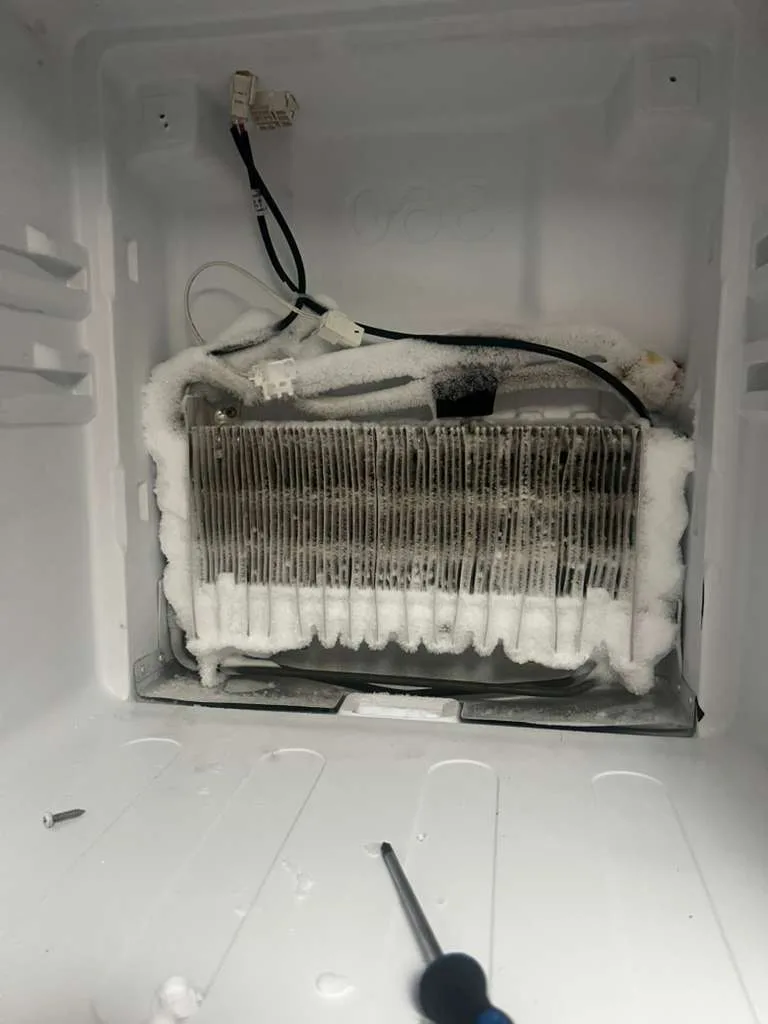
The most common obstruction is ice. When frost builds across the freezer fins it blocks the airflow the lower compartment relies on, which is why the hero image on this page matters: that unit is not short of cooling, it is short of air.
Two other causes account for most of the rest. A failed interior circulation fan, if the model has one, and a door seal that no longer closes properly, which lets humid Florida air in and turns into frost overnight.
Defrosting fully and then watching whether frost returns within days separates a one-off from a seal problem.
When is a residential fridge conversion the better answer?
When the cooling unit has failed on a coach you intend to keep, the arithmetic often favors changing the technology rather than replacing like with like. A residential compressor refrigerator is unaffected by ambient temperature in the way an absorption unit is, cools faster, and holds temperature in a Florida summer without argument.
The trade is electrical. A residential unit needs consistent power, which in practice means adequate battery capacity and an inverter sized for it, so the conversation quickly becomes one about the coach's electrical system rather than about the refrigerator.
For a coach that lives on shore power at a park, that is straightforward. For one that boondocks regularly, it means real battery and inverter capacity, and the honest version of the quote includes that.
Our residential fridge conversion page sets out what the change involves.
What a visit costs
A service call is $299 and covers the trip out to your RV and the first hour on site. Work past that first hour is quoted to you once our technician has found the fault, before we carry on. In Orlando, Lakeland, Kissimmee, Apopka and nearby the service call is $399 and time past the first hour runs $200 per hour. Written estimates are free and you approve one before any work starts. Call 888-759-1438.
Sources and further reading
Every figure above that came from a manufacturer or a standards body is linked here so you can check it yourself.
- Dometic documents database - Manufacturer manuals and model lookup for the absorption refrigerators fitted to most coaches, including leveling and operating limits.
- OSHA - electrical hazards - Why testing a live heating element circuit behind a refrigerator is treated as qualified work.
- NOAA - US Climate Normals - Florida's normal summer temperatures, which is the context for an absorption fridge reaching its design limit.
- National Weather Service - Tallahassee - Regional conditions behind the humidity that turns into frost on freezer fins overnight.
Related pages on this site
- Norcold cooling unit replacement - what a sealed system failure actually involves
- Residential fridge conversion - the alternative to replacing like with like
- Dometic fridge board repair - the far cheaper fault that presents the same way
- RV electrical safety - why the supply is checked before the appliance
- RV repair in Clearwater - mobile appliance service on the Gulf coast
RV refrigerator questions Florida owners ask
How long should an RV refrigerator take to get cold?
Considerably longer than a household one. An absorption unit typically needs somewhere between four and eight hours to reach temperature from ambient, and longer in Florida heat. Judging it as failed after an hour is the most common false alarm we hear about.
What does an ammonia smell behind the fridge mean?
It means the sealed cooling unit has lost its charge, and that is a confirmed sealed system failure rather than a suspicion. Look for a yellow or greenish powdery residue on the tubing at the same time. Sealed systems are not repaired in the field, so this is a cooling unit replacement or a conversion decision.
Can I run my RV refrigerator while driving?
Many owners do, on propane, and manufacturers publish their own guidance on it. What matters for cooling is that the unit needs to be reasonably level to work at all, so a long drive on a steep camber affects it more than the motion does.
Does an RV fridge need to be level?
Yes, and it matters more than most people expect. The absorption cycle relies on gravity moving liquid through the system, so a unit left running badly out of level can develop a blockage that permanently damages the cooling unit. Level the coach before running the refrigerator for any length of time.
Why does my fridge work at home but not at the campground?
Usually the power reaching it rather than the fridge. Park pedestals and long cords deliver different voltage under load than a household outlet, and a heating element starved of voltage produces heat too slowly to drive the cycle properly. Check the supply before condemning the appliance.
Is it worth replacing the cooling unit or the whole refrigerator?
It depends on the age of the unit and how long you plan to keep the coach. Replacing a cooling unit restores the original design and its original limits in heat; a residential conversion changes those limits but brings electrical requirements with it. Both are legitimate, and the right answer depends on how the coach is used.