How Do You Tell If an RV Converter Is Bad?
A flat battery bank gets blamed on the batteries far more often than it should. The measurement that tells you which one has actually failed takes two minutes.
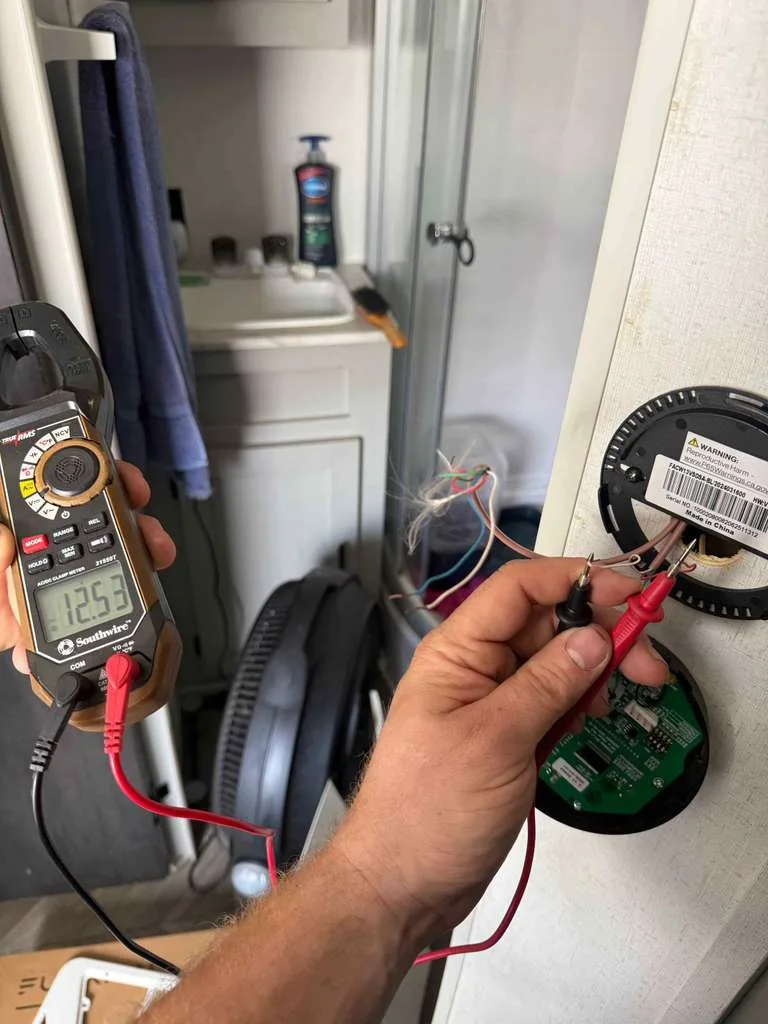
Measure battery voltage with the coach plugged into shore power. A healthy converter holds the bank somewhere in the high thirteens or low fourteens while charging. A reading that sits at battery resting voltage, around 12.6 or below, with shore power connected means nothing is charging and the converter is the first suspect.
Apex RV Repair is mobile across Florida - we come to your RV. Call 888-759-1438.
The converter is the part of an RV nobody thinks about until the lights dim. It takes 120 volt shore power and turns it into the 12 volt supply that runs almost everything in the coach, while keeping the house batteries charged.
When it fails, the symptom looks exactly like dead batteries: everything works on shore power for a while, then the coach starts behaving oddly and the bank will not hold a charge. Owners replace the batteries, and a few weeks later the new ones are flat too.
How do you tell if an RV converter is bad?
With one measurement, taken in the right condition. Plug the coach into shore power, let it settle for a few minutes, then read the voltage at the house battery terminals.
A working converter pushes the bank above its resting voltage while charging, typically somewhere in the high thirteens or low fourteens depending on the charging stage and the battery chemistry. That elevated reading is the converter doing its job.
If the reading with shore power connected sits at around 12.6 volts or below, which is roughly what a rested battery shows on its own, then nothing is charging it. The battery is simply sitting there supplying the coach until it runs down. That single comparison, charging voltage against resting voltage, is the whole test.
It also explains the classic symptom. Everything works normally for a day or two on battery alone, which is why the fault so often gets blamed on the batteries.
What voltage should you see when the converter is working?
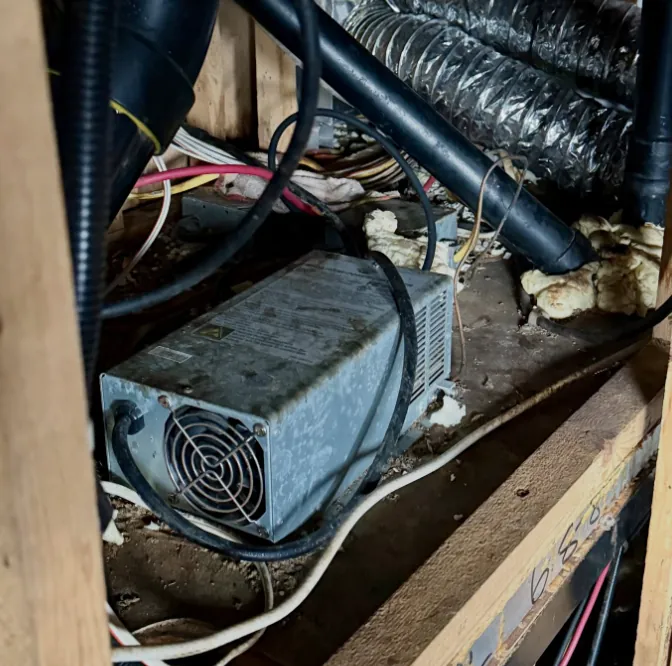
Higher than the battery would show on its own, and the gap is the point rather than any single number. Modern converters charge in stages, so the exact figure moves depending on how depleted the bank is and how long it has been on charge.
A bank that has just been run down draws a higher voltage while it takes the bulk of its charge. As it fills, the converter steps down and holds a lower maintenance level so the batteries are not cooked by sitting on charge indefinitely.
So a reading taken five minutes after plugging in and one taken the next morning should genuinely differ, and both can be correct. What should never happen is a reading at or below resting voltage while shore power is connected, because that means no charging is taking place at any stage.
Chemistry matters too. Lithium banks charge to different setpoints than lead-acid, which is a separate problem covered in our battery upgrade guide.
How do you reset an RV power converter?
There is no reset button on most converters, but there is a sequence worth running before anything is condemned, because it clears the two faults that most often masquerade as a dead unit.
Disconnect from shore power. Check the converter's own fuses, which are usually a pair of automotive blade fuses on the unit itself and are frequently the entire fault. Check the 120 volt breaker feeding it, which can trip without anything else in the coach going dark. Then reconnect and measure again.
Some converters also have a thermal cutout that shuts the unit down when it overheats and restores itself once it cools. A converter installed in a poorly ventilated bay in a Florida summer can cycle in and out on that protection all afternoon, which reads as intermittent charging rather than a clean failure.
If the fuses are good, the breaker is on and the voltage still does not rise, the unit itself is the suspect.
Is it the converter, the batteries, or something between them?
There is a third possibility that gets missed, and it is common enough to check before anyone buys a part.
- The converter is producing correct voltage but it is not reaching the batteries, because of a corroded terminal, a loose connection or a failed disconnect switch.
- The batteries are genuinely finished and will not accept a charge, which shows as voltage that rises while charging and collapses the moment load is applied.
- A battery disconnect or salesman switch has been left open, so the bank is isolated from the charging circuit entirely.
- One bad cell in a bank of otherwise healthy batteries is dragging the whole string down.
The way to separate them is to measure in two places: at the converter output and at the battery terminals. Correct voltage at the converter and low voltage at the batteries means the problem is the wiring between them, not either component.
Why is my inverter working but not charging the battery?
Because on most coaches those are two different devices doing opposite jobs, and confusing them sends people looking in the wrong place.
An inverter takes 12 volt battery power and produces 120 volt output, so the household outlets work with no shore power connected. A converter does the reverse. An inverter running perfectly proves the batteries still hold usable charge; it says nothing at all about whether anything is refilling them.
The exception is an inverter-charger, a single combined unit that does both. On a coach fitted with one, the charging function can fail while the inverting function carries on, producing exactly this symptom from one device. Which one you have decides where a technician looks.
If the coach runs beautifully off-grid and dies after a night on shore power, the charging side is the problem regardless of which architecture is fitted.
What kills an RV converter in Florida?
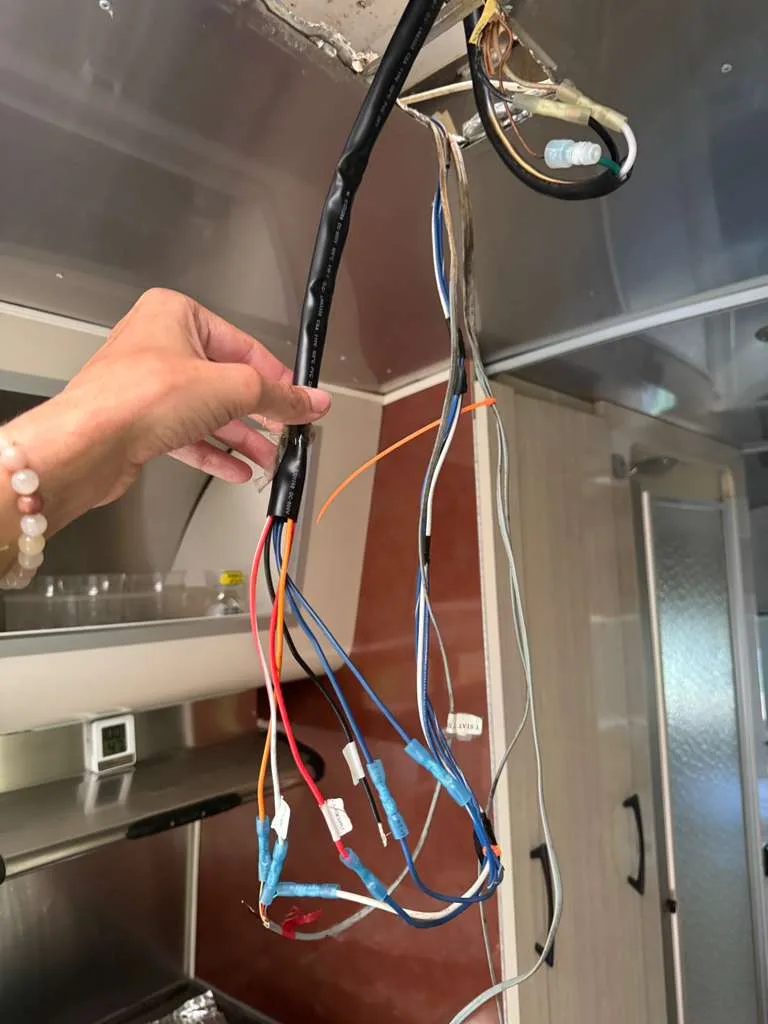
Heat, mostly, and it is worth understanding because it is largely preventable. Converters are switching power supplies that generate heat in normal operation and depend on airflow to shed it. Mounted in a closed basement bay on a coach parked in open sun, the ambient temperature around the unit can be far above the outside air.
The second cause is supply quality. Low voltage at a busy park pedestal makes the converter work harder for the same output, and voltage spikes stress its components directly. This is the argument for a surge protector or an energy management device that also watches voltage rather than only surges.
Third is humidity and corrosion, particularly near the coast. Salt air reaches terminals and connections, and a high resistance connection generates its own heat under load.
Ventilation, clean terminals and protected supply between them prevent most converter failures we see.
Can a bad converter damage the batteries?
Yes, in both directions, which is why this is worth catching early rather than living with.
A converter that stops charging leaves a lead-acid bank sitting partially discharged, and lead-acid batteries sulfate when they are left in that state. A few weeks of it does permanent capacity damage, which is exactly why owners who replace the batteries without fixing the converter find the new ones failing too.
A converter failing the other way is worse. One stuck at a high charging voltage boils the electrolyte out of flooded batteries and cooks sealed ones, and it can do that damage in days rather than weeks.
The tell for the second case is a smell. A sharp sulfurous odor around the battery bay means charging voltage is too high, and that is a stop-now situation rather than a book-it-in one.
Is it worth upgrading rather than replacing like for like?
Often yes, and the deciding factor is what the coach's batteries are, not what its converter was.
Older converters were built as single-stage units that hold one voltage indefinitely. They keep a battery alive but never charge it properly, and they are hard on the bank over time. A multi-stage replacement charges faster, holds a sensible maintenance voltage and treats the batteries considerably better.
The upgrade becomes necessary rather than optional if the coach has moved to lithium. Lithium chemistry wants different charging setpoints, and an old lead-acid converter will either undercharge it permanently or push it somewhere it should not go.
For a coach still on lead-acid with a working converter, there is no urgency. For one that has just eaten a set of batteries, replacing the converter with a modern multi-stage unit is usually cheaper than the next set.
What a visit costs
A service call is $299 and covers the trip out to your RV and the first hour on site. Work past that first hour is quoted to you once our technician has found the fault, before we carry on. In Orlando, Lakeland, Kissimmee, Apopka and nearby the service call is $399 and time past the first hour runs $200 per hour. Written estimates are free and you approve one before any work starts. Call 888-759-1438.
Sources and further reading
Every figure above that came from a manufacturer or a standards body is linked here so you can check it yourself.
- Victron Orion XS DC-DC charger datasheet (PDF) - Published charging stages and setpoints, which show why a correct reading changes depending on how long the bank has been on charge.
- Victron Orion-Tr Smart DC-DC charger manual (PDF) - Manufacturer documentation on multi-stage charging and why chemistry decides the setpoints.
- Victron - solar charge controllers - How solar charging sits alongside shore power charging rather than replacing it.
- OSHA - electrical hazards - Why measuring at the converter's 120 volt side is treated as qualified-person work.
Related pages on this site
- RV converter and charger repair - what a mobile electrical visit covers on this fault
- RV battery upgrade guide - why chemistry changes what the converter has to do
- RV electrical safety - pedestal voltage, surge protection and the 12 volt side
- RV 12V parasitic draw diagnosis - when the charging is fine and something is quietly consuming it
- RV repair in Sarasota - mobile electrical service on the southwest coast
RV converter questions Florida owners ask
What voltage means my RV battery is not charging?
A reading at or below roughly 12.6 volts at the battery terminals while the coach is connected to shore power. That is approximately what a rested battery shows on its own, so seeing it while plugged in means nothing is being added and the bank is simply supplying the coach until it runs down.
How long does an RV converter last?
Highly variable, and driven by heat and supply quality rather than age. A unit in a well-ventilated bay on a coach with surge and voltage protection can run for many years. The same unit in a closed bay on a coach parked in Florida sun and fed by a weak pedestal has a much harder life.
Can I test the converter myself?
The battery terminal measurement is reasonable for a careful owner with a multimeter, and it answers the main question. Testing at the converter output means working near live 120 volt connections, which is where we would draw the line for anyone without electrical training.
Why did my new batteries go flat too?
Because the converter was never the thing that got fixed. If nothing is recharging the bank, a new set discharges exactly like the old one did, and lead-acid batteries left partially discharged sulfate and lose capacity permanently. Measure the charging voltage before buying batteries, not after.
Does solar make the converter unnecessary?
No. Solar charges the bank when there is sun, and the converter charges it from shore power. They complement each other rather than replace each other, and a coach that spends time plugged in still needs a working converter regardless of how much solar is on the roof.
My converter fan runs constantly. Is that a problem?
Not by itself, since many units run their fan whenever they are charging hard. It becomes a signal when it is constant on a bank that should be full, which suggests the unit is working harder than it should or is heat-soaked in a poorly ventilated bay.