Do You Need to Winterize an RV in Florida?
Where in Florida a freeze is a real risk, what storage prep should look like instead, and the one valve that causes most spring plumbing complaints.
Florida is not one climate. The panhandle and north Florida see freezing nights most winters and an RV stored there needs real freeze protection. South Florida effectively does not, and the threat to a stored coach there is humidity, pests and ultraviolet rather than ice. Work out which Florida your RV actually sits in, then prepare for that risk instead of copying a northern checklist.
Apex RV Repair is mobile across Florida - we come to your RV. Call 888-759-1438.
Winterizing is one of the few RV topics where advice written for one part of the country is actively wrong in another. A checklist written for Michigan applied to a coach in Naples wastes a weekend and antifreeze. The same checklist in Tallahassee is entirely appropriate.
The more useful framing for most Florida owners is not winterizing at all but storage preparation - because the coach is going to sit, and what damages a stored coach here is not frost.
Does it actually freeze in Florida?
In part of it, regularly. The state spans a lot of latitude and the difference between its ends is real.
- The panhandle and north Florida - Tallahassee, Gainesville, Jacksonville and inland - see freezing nights in a normal winter. A coach stored there with water in the system is genuinely at risk.
- Central Florida gets occasional freezes, usually brief and overnight. The risk is real but intermittent, which makes it easy to be caught out because most winters nothing happens.
- South Florida rarely reaches freezing. Full plumbing winterization there is generally unnecessary.
Two other factors matter as much as the map. Inland sites get colder than coastal ones at the same latitude, and low-lying areas collect cold air overnight, so a rural inland storage lot can hit freezing on a night the nearby city does not.
How long does it have to stay below freezing to matter?
The other factor is exposure time. Water freezing in a pipe needs both a low enough temperature and long enough at it. A brief dip to just below freezing an hour before sunrise is much less likely to burst a line than a long cold night. That is why central Florida gets away with it most years and occasionally does not.
If you want a defensible answer for your own storage location rather than a rule of thumb, NOAA's climate normals give the actual station data for it. That is a better basis than the general advice, because your site is what matters.
Both of those are why a blanket rule about Florida is useless. The number that matters is the one for your own storage location on your own worst night, not the one for the state.
What should I do instead of winterizing in south Florida?
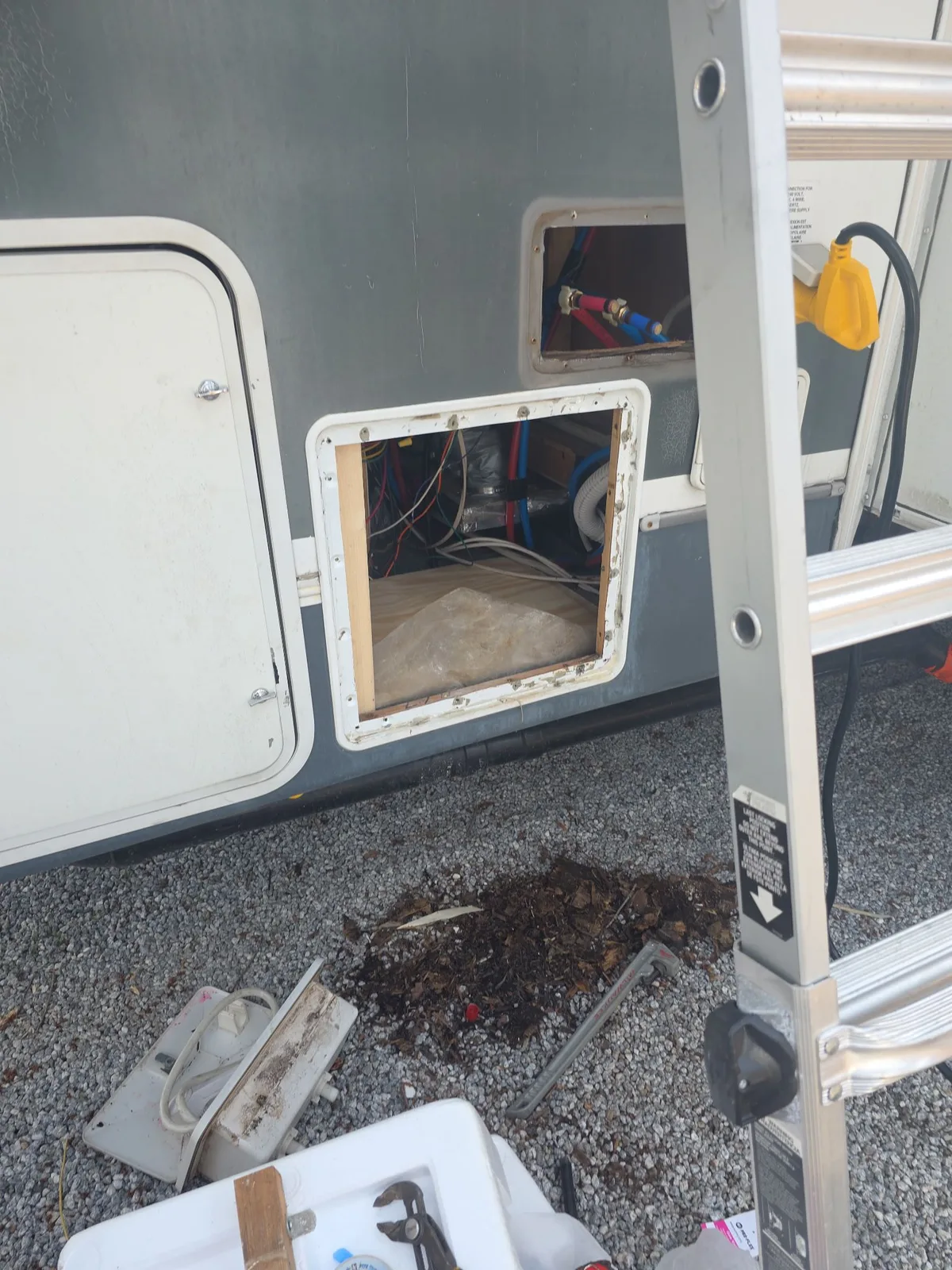
Prepare for the things that actually attack a coach sitting still in a hot, humid, sunny, insect-rich environment.
- Moisture control inside. This is the top item. A sealed coach in Florida humidity grows mold with no leak at all. Leave vents cracked where security allows, run a dehumidifier or the air conditioner periodically if there is power, and use desiccant in closed spaces.
- Empty and clean the water system. Not for freeze protection - to stop stagnant warm water breeding bacteria in the tank and the water heater. Drain, sanitize, and leave it dry.
- Empty and rinse the waste tanks. A part-full black or gray tank sitting through a Florida summer is a smell and seal problem you will inherit later.
- Pest exclusion. Block every opening you can - the furnace and water heater exteriors, the refrigerator vent, and any gap into the underbelly. Rodents in a generator bay or an appliance are a common and expensive Florida storage outcome.
- Batteries. Either disconnect them or keep them maintained by a charger or a small solar panel. Standing loads will flatten a bank over months and a flat lead-acid battery left in Florida heat does not come back.
- UV protection. Cover if you can. If not, at least cover the tires and treat the seals, since sun is what ages both.
- Exercise things. Run the generator monthly under load, cycle the slides and the awning, and run the leveling system. Almost everything on a stored coach fails from sitting rather than from use.
Nearly all of that also applies to a coach in north Florida - it just gets freeze protection on top rather than instead.
How do I actually protect the plumbing from a freeze?
Two approaches, and mixing them up is where people get into trouble.
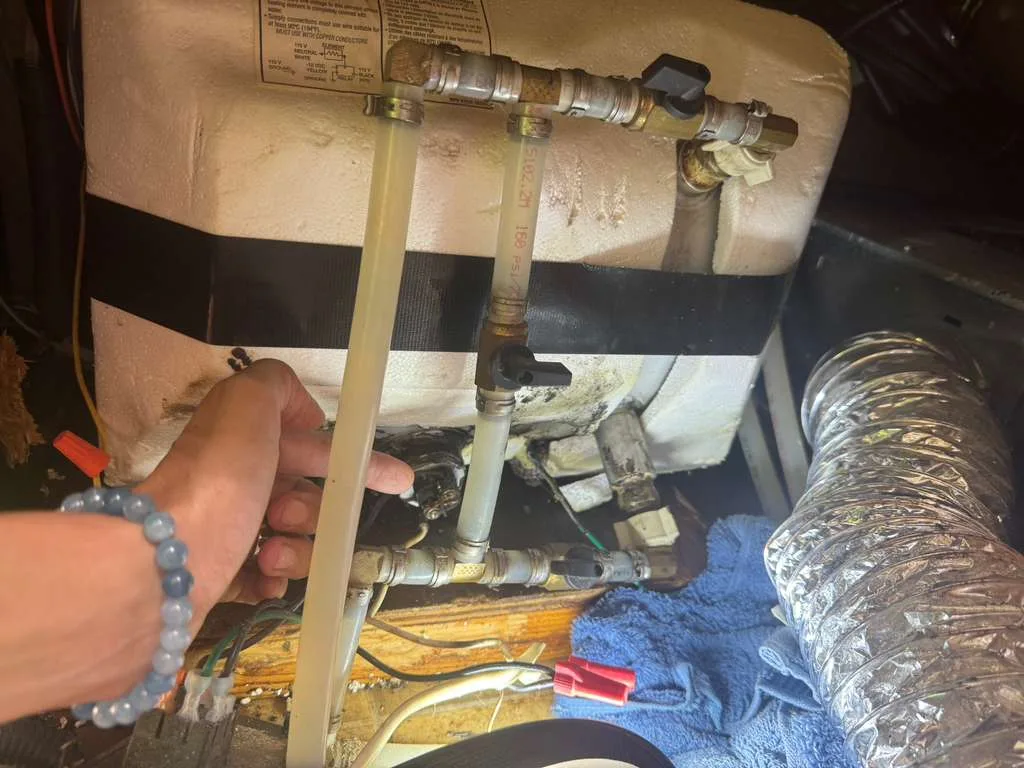
Draining alone empties the tanks and lines through the low-point drains and leaves the system dry. It is simple, uses no chemicals, and its weakness is that low points, traps, the pump and the water heater can retain water even when the system looks empty. That trapped water is what bursts.
Antifreeze displaces water throughout the system with RV-specific non-toxic antifreeze, so anything left behind is protected. It is the more thorough approach and it is what a north Florida coach should have.
Whichever you use, two things must happen without exception:
- The water heater must be drained and bypassed. Filling a water heater tank with antifreeze wastes several gallons and achieves nothing, which is why the bypass exists.
- Never put automotive antifreeze in an RV fresh water system. Ethylene glycol is toxic. RV antifreeze is a different product for exactly this reason.
The valve that causes spring complaints
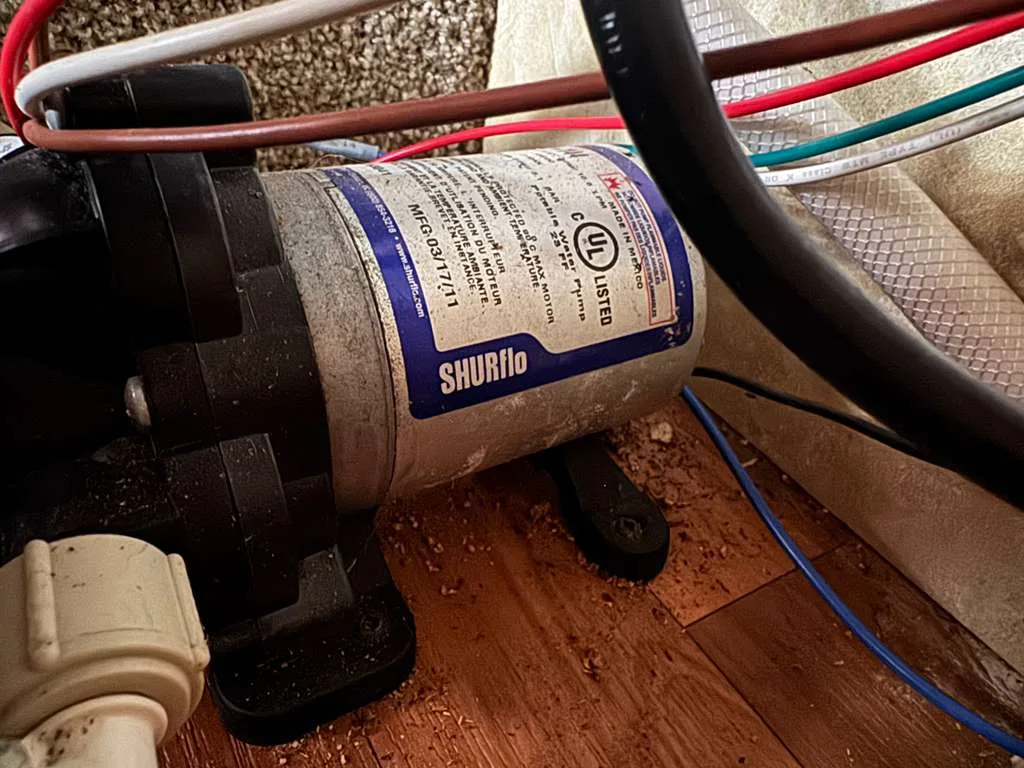
The most common plumbing call after a Florida winter is a water pump that will not stop cycling - and the cause is usually the water heater bypass or a winterizing valve left partly open at recommissioning. Water simply circulates back to the tank and the system never builds pressure. Before you suspect a leak or a failing pump, put your hand on every valve you moved in the autumn.
Should I leave my RV plugged in during storage?
It depends on what your converter does when it has nothing left to do.
The advantage is obvious: the batteries stay charged and you can run the air conditioner or a dehumidifier periodically, which addresses the biggest Florida storage risk.
The caution is the converter. A converter that holds a proper maintenance stage indefinitely is fine. An older one that sits at a high output regardless of state of charge will slowly cook a lead-acid bank, boiling off electrolyte over months, and the owner discovers it in the spring.
So the real question is not whether to leave it plugged in. It is what your particular converter does once the batteries are full, and that is a specification with a definite answer rather than a judgement call, and it is printed on the unit or in its manual.
How do you tell whether your converter is safe to leave plugged in?
- A modern multi-stage converter or one with a storage mode: leaving it plugged in is generally the better option.
- An old single-stage converter: either replace it or disconnect the batteries for storage.
- Lithium: check what your battery manufacturer recommends for long-term storage state of charge, because it is often not full, and holding it at a float voltage for months is not what it wants.
- No power at the storage site: disconnect the batteries or fit a small solar panel and controller. A bank left connected to standing loads for months will be flat and possibly ruined.
This is also where testing current rather than voltage pays off - a converter that reads a healthy voltage may be delivering almost nothing. Our battery article explains that check.
Look it up before the coach sits for months rather than after. A converter that cooks a bank does it slowly and silently, and the first symptom is usually a battery that will no longer hold overnight.
How do I stop mold in an RV stored in Florida humidity?
By denying it moisture, because you cannot control the temperature and you are not going to reduce Florida's humidity.
- Make sure the coach is dry before it is closed up. Any damp fabric, carpet or cushion is a starting point.
- Take out anything that holds moisture or feeds growth - food, linens, towels, paper.
- Get some air movement. Roof vents cracked under covers, or vent covers that allow airflow in rain, make a substantial difference.
- Use desiccant in enclosed spaces and check it, since it saturates.
- If there is power, run the air conditioner on a timer or a dehumidifier with a drain. This is the most effective option by a wide margin.
- Leave cabinet and closet doors open and the refrigerator propped open so still air is not trapped in small compartments.
- Visit. A coach checked monthly gives you a chance to catch a smell or a stain while it is still small.
That last one is worth repeating. Most serious mold problems in Florida storage are not fast - they are slow problems nobody looked at for six months. Our water damage article covers the early signals worth checking on those visits.
What does recommissioning after storage involve?
- Walk the roof and check every termination before you put water anywhere near the coach. Storage is exactly when sealant fails unobserved.
- Inspect for pests, in the generator bay, the furnace and water heater compartments, and the refrigerator vent especially.
- Return every valve you moved to its running position - and write down which ones you moved before storage, because next spring you will not remember.
- Sanitize the fresh water system before using it, then fill and pressurize it and check every fitting for leaks while you watch.
- Charge and test the batteries under load rather than trusting a resting voltage.
- Start the generator and run it under load. If it has sat unexercised, expect fuel system trouble rather than being surprised by it.
- Cycle the slides, awning and leveling system while you are still parked somewhere convenient.
- Check the tire condition and pressures. We do not fit tires, but they are the item most worth looking at before a coach that has been sitting goes anywhere - a set that has aged in Florida sun tells you something before you are on the interstate.
The order matters. Roof first, water last. Finding a failed roof termination after you have filled the system and driven off is a much worse day.
When is storage prep worth paying someone for?
Draining, sanitizing, moving valves, fitting desiccant, excluding pests and running things monthly are all owner tasks.
Where a visit earns its money is the inspection either side of storage. A roof and seal inspection before the coach sits, and a systems check when it comes back out, are the two moments when a problem is cheapest to find. Anything that developed over six unattended months is easier to fix in the storage lot than at a campground three hundred miles away.
It is also the sensible time for gas appliance checks, since those are the ones that are least safe to guess about after a coach has been sitting. See our winterization and storage service page for what a visit includes.
Book it before the coach sits rather than after, because the whole point is preventing what a season of standing still does.
What a visit costs
A service call is $299 and covers the trip out to your RV and the first hour on site. Work past that first hour is quoted to you once our technician has found the fault, before we carry on. In Orlando, Lakeland, Kissimmee, Apopka and nearby the service call is $399 and time past the first hour runs $200 per hour. Written estimates are free and you approve one before any work starts. Call 888-759-1438.
Sources and further reading
Every figure above that came from a manufacturer or a standards body is linked here so you can check it yourself.
- NOAA - US Climate Normals - Actual station data for your storage location, which is a far better basis for a freeze decision than general advice about Florida.
- National Weather Service - Tallahassee - One of the NWS offices covering north Florida, where freeze events are a normal part of winter.
- Suburban water heaters operation guide (PDF) - Manufacturer procedure for draining and bypassing a water heater, including why it must be bypassed before antifreeze.
- Cummins RV generator operator manual (PDF) - Manufacturer storage and exercise guidance for the onboard generator, the component most damaged by sitting unused.
Related pages on this site
- RV winterization and storage prep - seasonal prep and recommissioning
- RV plumbing repair - the system freeze protection is protecting
- Spotting RV water damage - what to look for on a storage visit
- Book a storage visit - mobile across Florida
RV storage and winterizing questions Florida owners ask
What temperature does an RV need to be winterized at?
There is no single number, because damage depends on how cold it gets and how long it stays there. A brief dip to just below freezing before dawn is far less dangerous than a long night well below it. What matters is the pattern at your storage site through a normal winter, which the NOAA climate normals for your nearest station will tell you far better than a rule of thumb.
Can I just drain the water instead of using antifreeze?
In central and south Florida that is usually adequate. Further north it is riskier, because low points, traps, the pump and the water heater can hold water even when the system looks drained, and that trapped water is what splits fittings. If freezing is a normal event where the coach sits, use antifreeze.
Do I need to winterize if I use my RV through the winter in Florida?
No, but keep an eye on the forecast if you are in the northern half of the state. A coach in use has water in it, and a single hard night is enough. If a freeze is forecast, running a small heat source inside, leaving cabinet doors open so warmth reaches the plumbing runs, and dripping a tap are all reasonable short-term measures.
How long can an RV sit before something goes wrong?
Damage from sitting starts almost immediately and accumulates: seals take a set, fuel begins to degrade, batteries discharge, and humidity works on the inside continuously. A month is not a problem. Six unattended months in Florida is where the expensive discoveries happen, which is why monthly visits and exercising things matter more here than the calendar date.
Should I cover my RV in storage?
If you can, yes - UV is the main thing aging your roof, seals, awning and tires, and a cover removes most of it. Use a breathable RV cover rather than a tarp. A non-breathable cover traps moisture against the coach, which in Florida humidity trades a sun problem for a mold problem.
Do I need to worry about tires during storage?
They are worth attention, though it is not something we take on as a service. Sun ages sidewalls, flat spots develop over long periods, and pressure falls with time and temperature. Covering them, parking on a barrier rather than directly on hot asphalt, and checking pressures before moving are all worth doing - and if what you see concerns you, a tire specialist is the right call.
Do you do storage prep and recommissioning on site?
Yes. Water system draining or antifreeze, water heater bypass, appliance checks, battery and generator work, and roof and seal inspection are all mobile jobs done at your storage location anywhere in Florida. Call 888-759-1438 and tell us roughly where in the state the coach sits - that changes what the visit should cover.
My pump will not stop running after storage. What is it?
Check the water heater bypass and every winterizing valve first. A valve left partly open lets water circulate back to the fresh tank, so the system never builds pressure and the pump never satisfies. It is by far the most common cause and it costs nothing to rule out before anyone starts looking for a leak.