RV Plumbing Problems: How to Diagnose Them Before You Buy Parts
The pressure test that tells you whether the pump is at fault, and the anode mistake that destroys a water heater tank.
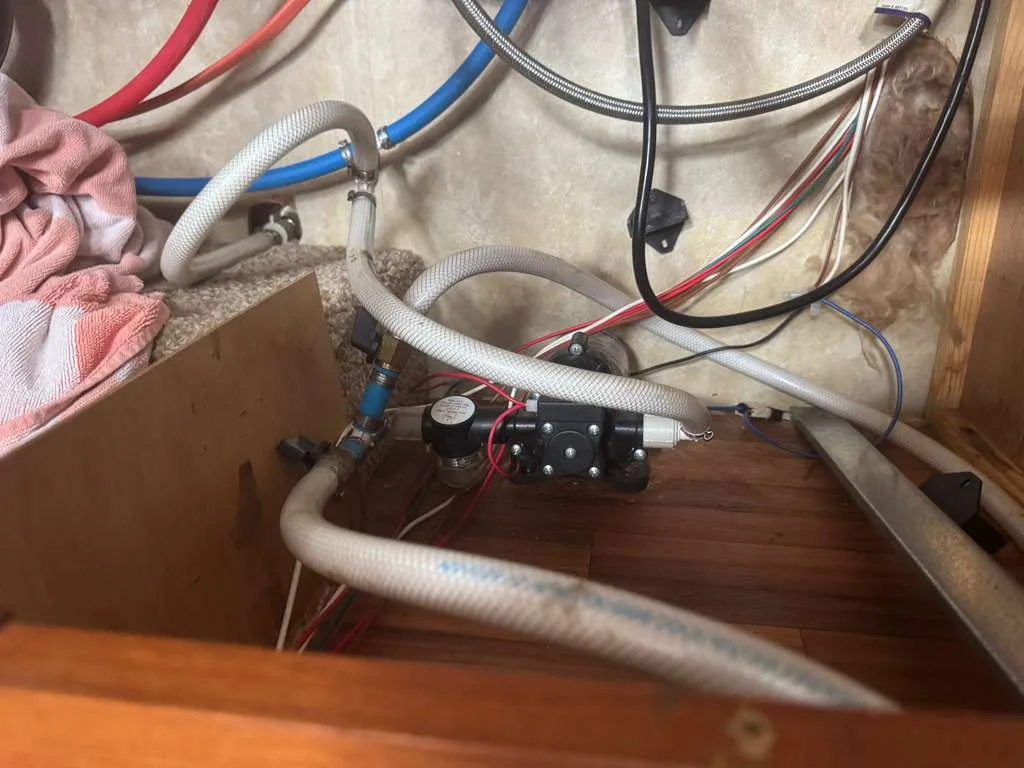
A water pump that clicks on every couple of minutes with every tap closed is telling you the system will not hold pressure, which is a leak or a valve - not usually a failing pump. Isolate it with a simple hold test before buying anything: bring the system up to pressure, switch the pump off, and watch.
Apex RV Repair is mobile across Florida - we come to your RV. Call 888-759-1438.
RV plumbing gets blamed for a lot of things that are not plumbing failures. The pump takes most of that blame, because it is the noisy part and the one that announces the symptom.
Almost all of it can be narrowed down without tools more exotic than a flashlight and some patience, and doing that first is what stops you replacing a pump that was never the problem.
Why does my water pump keep cycling when no tap is open?
Because the system is losing pressure somewhere, the pump senses the drop and starts to restore it. It is behaving correctly. Something is letting pressure go.
Run the hold test before anything else. Turn the pump on and let it come up to pressure and shut off on its own. Then switch the pump off at the switch and simply watch and listen for two minutes.
- Pressure holds for the full two minutes. The pump and its internal check valve are both sound. Nobody should be selling you a pump. The leak is downstream and you now know where not to look.
- Pressure falls away with the pump off. There is a leak in the system, and the next job is finding it rather than replacing anything.
- Pressure only falls while the pump is powered. That points back at the pump's own check valve or internal seals, and now the pump is a fair suspect.
That one test splits the problem in half in two minutes, and it is the step people skip because the pump is the obvious villain.
The Florida snowbird special
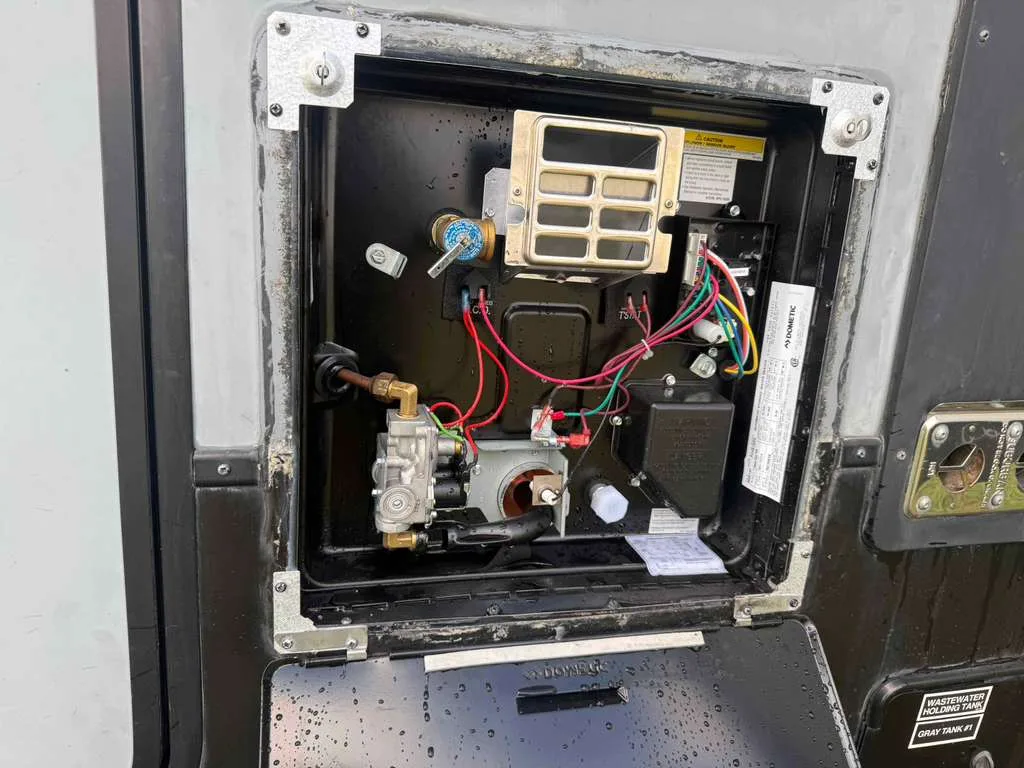
The most common cause of endless cycling on a coach that has just come out of storage is not a leak at all - it is a water heater bypass or winterizing valve left partly open after spring recommissioning. Water simply circulates back to the fresh tank, the system never builds pressure, and the pump never stops. Check every bypass and winterizing valve before you chase anything else.
How do I find a leak in RV plumbing I cannot see?
Work from the accessible outward, because most of an RV's plumbing is reachable if you know where to look.
- Check every bypass, winterizing and low-point drain valve. A valve left cracked open is the single most common cause and costs nothing to rule out.
- Open every access panel and bay you have. Look under the sinks, behind the toilet, at the water heater connections and around the pump itself. Feel the floor at each - a slow drip shows as a damp patch long before it shows as water.
- Look at the city water inlet and the low-point drains from outside. These leak to the ground and can run for months without anyone noticing.
- Check the toilet flange and the shower pan surround. Both drip into the floor structure rather than onto it, which is why they cause disproportionate damage.
- If nothing is visible and the system still will not hold, the leak is inside a wall or under the floor, and that is where a moisture meter becomes the tool rather than a flashlight.
The urgency here is different from a roof leak. A plumbing leak is fed every time the pump runs rather than only when it rains, which is why plumbing is behind a large share of the worst floor damage we see. Our water damage article covers what that looks like once it has been going a while.
Why does my RV water smell like rotten eggs?
That sulfur smell comes from bacteria in the water heater interacting with the sacrificial anode. It is a chemistry problem in the tank rather than dirt in the lines, and the cure depends on which water heater you have.
Sanitizing the fresh system and flushing the tank clears it in most cases. If it returns quickly, the anode itself is part of the reaction and the anode material may need to change - but only if your heater is a type that takes an anode at all, which brings us to the mistake that destroys tanks.
Two practical notes before you change anything. Flush the tank at the drain rather than just running taps, because the sediment feeding the reaction sits at the bottom where taps never reach it. And if the smell returns within days rather than weeks, stop replacing anodes and have the tank looked at - a return that fast usually means the tank itself is scaled.
Does my RV water heater need an anode rod or not?
This is the highest-stakes item on this page, because getting it wrong ruins the appliance.
The distinction is the tank material:
| Tank type | Anode | What goes wrong |
|---|---|---|
| Porcelain-lined steel (Suburban) | Yes - the anode is a designed part of the system and doubles as the drain plug. Suburban specifies its own replacement rod. | Letting the anode waste away entirely. Once it is consumed the tank lining is on its own and corrosion attacks the steel. |
| Aluminum-clad (Atwood-type) | No. These tanks are not designed to use one and take a plain drain plug instead. | Fitting an anode anyway - usually via an adapter, because the thread is different. That introduces exactly the dissimilar-metal reaction the tank was designed to avoid, and it pits the tank from the inside. |
Two tank materials, two completely different answers, and the wrong one is not a compromise - it is a slow failure that ends in a replacement tank.
What happens if you fit an anode rod to the wrong tank?
The tell is the thread. If the anode you bought does not thread straight into your heater and someone suggests an adapter, that is the moment to stop. The parts are not interchangeable and the adapter is the failure, not the fix.
For a steel tank, treat the anode as a consumable. Pull it during an annual flush and look at it: heavily eaten away means it has been doing its job and needs replacing. A rod that looks new after a year in Florida water is worth a second look, because it may not be making proper electrical contact.
An adapter here is not a workaround, it is the failure. Threading an anode into a tank that was never designed to take one introduces exactly the dissimilar-metal reaction the tank material exists to avoid, and it pits the tank from the inside where nobody sees it until it leaks.
Can I use household plumbing parts in an RV?
Some, but the differences matter more than they look.
- Water lines. Most modern coaches use PEX, and the fittings are common with residential work - but the crimp or expansion system must match the tooling and the fitting type. A joint made with the wrong system looks identical and fails later.
- Pressure. An RV system runs off a pump with a set cut-off, or off a city inlet through a regulator. Fitting parts rated for household pressures is generally fine; the risk runs the other way, when a coach is connected to a high-pressure campground supply without a regulator. That is a real failure mode in Florida parks and it is what a regulator exists to prevent.
- Movement. This is the difference people underestimate. A house does not go down the interstate. Lines, fittings and supports in an RV are dealing with constant vibration and flex, so anything rigid, unsupported or under strain will eventually fail even though it would last decades in a wall at home.
- Fixtures. Many residential fixtures physically fit but are heavier, use more water than an RV pump and tank system is sized for, and are built for a rigid mounting surface rather than a thin panel.
The practical rule: material compatibility is usually fine, and mechanical support is where RV plumbing differs. Every line should be supported so that road movement is taken by the support and not by the joint.
Why is my RV toilet leaking at the base or not holding water?
Two different faults with two different levels of urgency.
A bowl that will not hold water is almost always the blade seal in the flush valve. It hardens, gets debris under it, and stops sealing. The consequence is not water on the floor - it is that tank odor now has a clear path into the coach, which is why a toilet that will not hold water often gets reported as a smell problem.
One is an inconvenience you can live with for a week and the other is quietly wetting the floor structure, so it is worth knowing which you have before deciding how urgent it is. The symptoms are easy to tell apart once you know what separates them, and the difference decides whether this is a weekend job or a call this week.
Why is water at the base of an RV toilet the serious one?
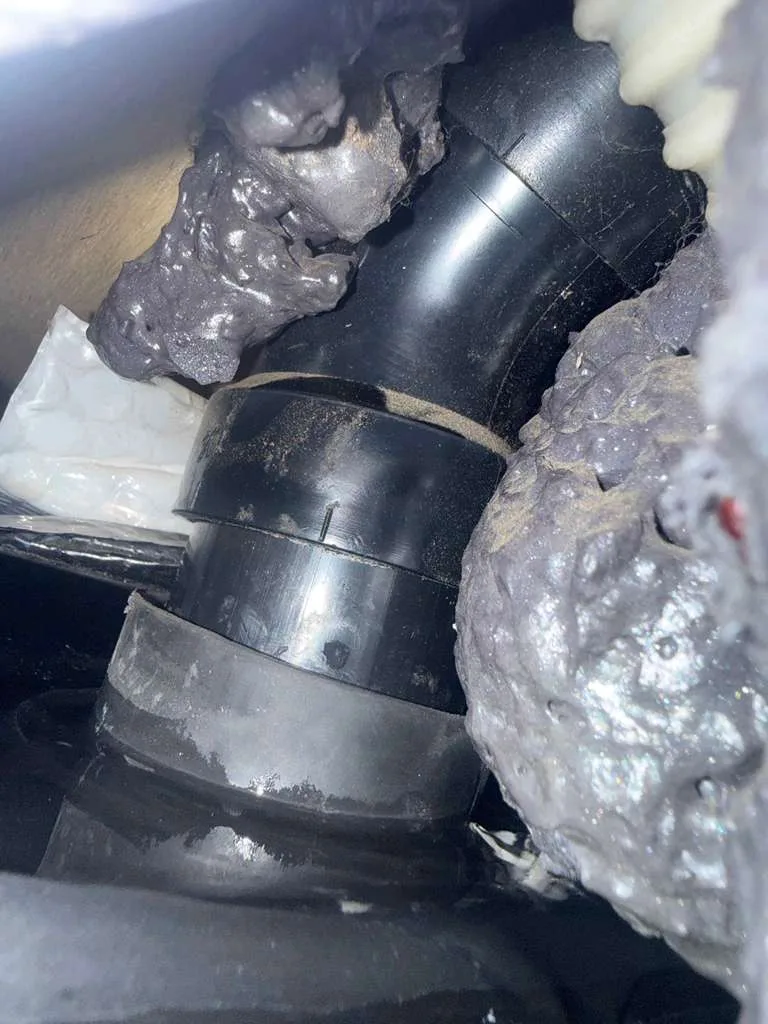
Water at the base is the more serious one. That is the floor flange seal, and it leaks downward into the floor structure rather than out onto the surface, so what you see is a fraction of what is happening. It is also frequently a symptom rather than a cause: a flange that has loosened is often loose because the floor beneath it has already softened.
So a toilet weeping at the base deserves a look at the floor around it before it is simply reseated. Reseating a toilet onto compromised decking buys a short reprieve at best.
Check the floor before reseating anything. A toilet put back onto decking that has already softened will sit correctly for a while and then move again, and the second repair costs considerably more than the first.
What plumbing maintenance actually matters in Florida?
- Use a pressure regulator on city water every single time. Campground supply pressure is not under your control and it is what splits fittings.
- Sanitize the fresh water system on a schedule. Warm water sitting in a tank in a Florida summer is an excellent environment for the bacteria behind that sulfur smell.
- Flush the water heater annually, and inspect the anode at the same time if your tank takes one.
- Keep drain traps wet. A dry trap on a coach that has been sitting lets tank gas straight into the living space, and it is often mistaken for a leak or a mold smell.
- Exercise the pump periodically during storage. Diaphragms take a set and seals dry out when they never move.
- Check under every sink and around the water heater when you check the roof. Two minutes with a flashlight, twice a year, is what turns a plumbing leak into a repair instead of a floor replacement.
See our RV plumbing service page for what a mobile visit covers, including pressure testing and leak location.
When does a plumbing leak stop being a DIY job?
Valve checks, the hold test, sanitizing, flushing the heater, replacing a blade seal and looking for damp with a flashlight are all reasonable owner jobs and they narrow the problem substantially.
Where to stop: anything involving the gas side of a water heater, anything where water has already reached the floor structure, and any leak you cannot locate. That last one matters because a leak you cannot find is a leak that is going somewhere you cannot see, and continuing to run the system while looking for it is doing damage the whole time.
Turn the pump off and leave it off until it is found. That single decision has saved more floors than any repair on this page.
Photograph where the water appears before you mop it up. Where it shows is rarely where it starts, and that picture is often the only record of the path it took.
What a visit costs
A service call is $299 and covers the trip out to your RV and the first hour on site. Work past that first hour is quoted to you once our technician has found the fault, before we carry on. In Orlando, Lakeland, Kissimmee, Apopka and nearby the service call is $399 and time past the first hour runs $200 per hour. Written estimates are free and you approve one before any work starts. Call 888-759-1438.
Sources and further reading
Every figure above that came from a manufacturer or a standards body is linked here so you can check it yourself.
- Suburban - replacement anode rod - The manufacturer's own statement that its porcelain-lined steel tanks use a sacrificial anode which also serves as the drain, and that non-Suburban parts are not approved.
- Suburban water heaters operation guide (PDF) - Operation and maintenance detail including flushing and anode servicing.
- Suburban - tank water heaters - Product range and tank construction, useful for identifying which type is fitted to your coach.
- Dometic documents database - For Atwood-lineage water heaters and other Dometic plumbing components, look up the manual for your exact model rather than a similar one.
Related pages on this site
- RV plumbing repair - leak location, pumps, water heaters and fixtures
- RV water damage - what to do once a leak has reached the floor
- RV winterization and storage prep - the bypass valves behind most spring plumbing complaints
- Book a service call - mobile across Florida
RV plumbing questions Florida owners ask
How long should an RV water pump hold pressure with the pump switched off?
A healthy system should hold for at least a couple of minutes with no obvious drop. That result tells you the pump's internal check valve and diaphragm are sound and sends you looking downstream instead. It does not prove there is no leak at all, but it does rule out the part most often replaced unnecessarily.
Why does my water pump run loudly or pulse hard?
Air in the system, a partly closed valve, a restricted inlet strainer, or a pump that has lost its mounting isolation and is now transmitting vibration into the structure. Pumps are meant to be mounted on soft feet - if those have compressed or the pump has been screwed down hard, an otherwise healthy pump gets much louder.
Can I leave my RV connected to city water all the time?
Many people do, with a regulator fitted. The risk you accept is that a fitting failure inside the coach is then fed continuously by mains pressure rather than emptying a tank and stopping. If you are away from the coach for long periods, turning the supply off at the spigot removes that risk entirely.
How often should I sanitize the fresh water system?
At least annually, and again any time the coach has sat with water in the tank through a Florida summer or is coming out of storage. Warm standing water is where the sulfur smell starts, and sanitizing addresses the cause rather than masking it.
My water heater works on electric but not on gas. Is that a plumbing problem?
No, that is the gas and ignition side - typically the igniter, the gas valve, the thermal cutoff or supply pressure. It is worth mentioning when you book because it changes what needs to be on the truck. Gas appliance faults are not owner-diagnosis territory.
Is a tankless water heater worth fitting in an RV?
It removes the tank, the anode and the recovery wait, which are real advantages. It also demands more of the gas supply, is more sensitive to inlet water temperature and flow than a tank unit, and installation is not always a straight swap. Worth doing with clear expectations rather than as a fix for a heater that simply needs service.
Do you do plumbing repairs on site?
Yes. Pressure testing, leak location, pump work, water heater service, toilet and fixture work and PEX repairs are all mobile jobs done where the RV is parked, anywhere in Florida. Call 888-759-1438 and describe the symptom - the hold test result, if you have run it, tells us a great deal before we arrive.
Why does my gray tank smell worse than my black tank?
Because gray water is soap, grease and food residue, and that mixture goes anaerobic in a warm tank quickly. Florida heat accelerates it. Regular flushing and not letting the tank sit part-full for weeks does more than any additive, and a dry trap will make any tank smell seem worse than it is.