Mobile RV Repair in Panama City, Florida
The Panhandle runs on its own clock and its own weather, and salt air here takes the hardware before it takes the paint.
Exterior hardware is what salt air takes first on the Emerald Coast - compartment latches, hinges, steps and locks seize long before anything cosmetic goes wrong. The part most owners get wrong is the response. A thin penetrating spray frees a latch for a fortnight and then evaporates, leaving the mechanism drier than before and pulling in more salt.
We are mobile - we come to your RV in Panama City. Call 888-759-1438.
This end of Florida is a different place from the peninsula in almost every way that affects a coach, and the hardware is where you notice it first.
This page is about what actually belongs on an exterior latch here, because the aerosol most people reach for is the wrong one.
Why do compartment latches seize on the coast?
Because a latch is a small mechanism with tight clearances sitting in the open, and salt does two things to it at once. Airborne salt is hygroscopic, meaning it attracts and holds moisture, so a deposit on a latch keeps a film of damp salt water in contact with the metal long after the air has dried out. That drives corrosion inside the mechanism where you cannot see it, and the corrosion products take up more space than the metal they came from, which is what actually jams the moving parts. At the same time salt and grit wash into the mechanism and act as an abrasive on the surfaces that need to slide. The result is a latch that gets progressively stiffer over a season and then one day will not turn at all. Nothing failed - it silted up and corroded shut.
The St Andrews job: a Georgetown with three latches seized
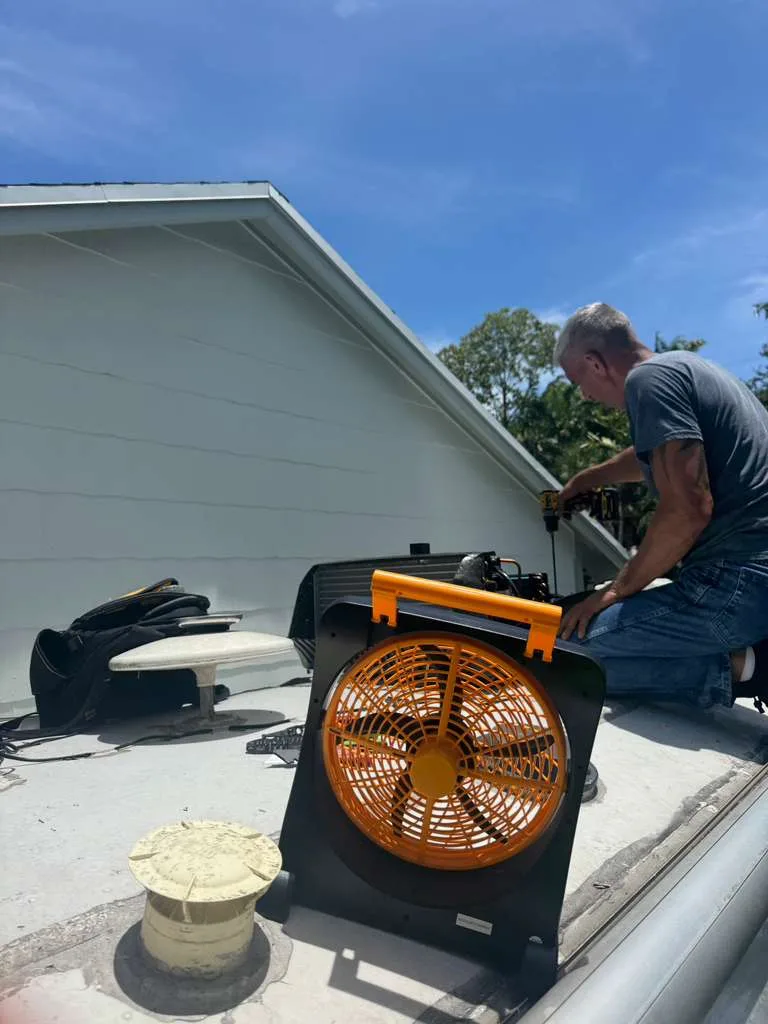
A 2021 Forest River Georgetown Class A at St Andrews State Park with all three exterior compartment door latches seized from salt corrosion. We cleaned the latch housings out, lubricated them with a marine-grade grease and adjusted all three doors, and they were working properly within two hours. The detail worth taking from it is that the doors needed adjusting as well as the latches freeing. A latch that has been forced while stiff pulls its striker out of alignment, so once the mechanism moves freely again the door is still fighting a misaligned catch and the owner concludes the repair did not hold. Cleaning, lubricating and then adjusting is the full job. Doing the first two and skipping the third is how a latch that was fixed on Tuesday feels wrong again on Friday.
What should I actually put on exterior hardware?
Something that stays where you put it. The common mistake is reaching for a thin penetrating aerosol, which is genuinely useful for freeing something already stuck but is not a lubricant - it displaces water and then largely evaporates, leaving the mechanism with less protection than it had before and a fresh appetite for salt. What belongs on a latch or hinge in coastal air is a grease or a lubricant formulated to stay in place and resist salt water, applied to a mechanism that has been cleaned out first. Putting lubricant on top of dried salt and grit just makes a paste that grinds. For lock cylinders specifically, use a lock lubricant rather than grease, because a heavy product in a cylinder picks up dust and eventually seizes it. And do it on a schedule rather than when something stops working.
How often should a coach on this coast be rinsed?
After any period near the water, and properly rather than quickly. The point is to dissolve and carry away salt deposits, which means fresh water reaching the places salt actually settles - hardware, hinges, latches, the steps, the underside of the coach and the roof, not just the flat panels that look dirty. A wash that cleans the sides and ignores everything else moves the problem rather than solving it. Two additions are worth the effort. Dry or blow out the mechanisms afterwards rather than leaving standing water in them, since the aim was to remove moisture and salt together. And re-apply lubricant to anything you have just flushed, because you have washed out whatever protection was in there. None of this is difficult and all of it is cheaper than hardware. Fresh water is the only tool that actually removes salt, and there is no product that replaces it.
Is the Panhandle really different from the rest of Florida?
Different enough that borrowed advice fails here, in three specific ways. Bay County is in the Central time zone rather than Eastern, which sounds trivial until a service window or a parts pickup is arranged an hour out. The winter is genuinely cold by Florida standards, so freeze protection on a stored coach is a real consideration here in a way it is not four hundred miles south. And the seasons run opposite to the peninsula's - spring break and summer are the busy months on this coast while the snowbird counties fill in winter, so autumn and winter are usually the easiest time to get both a campsite and a service slot. Add the distances, which are larger out here than the map suggests, and planning ahead matters more than it does in a dense metro.
Where is the camping around Panama City?
On the beach, mostly, and it is the reason people come. St Andrews State Park sits on the point at Panama City Beach and is the best known site in the county. Panama City Beach Campground is a commercial site on the Parkway. Deer Lake State Park is east along the coast toward Santa Rosa Beach and is a quieter, smaller proposition. Florida State Parks publish that their full-facility campsites include water, electricity and a dump station as part of the campground, which covers the state park sites here. Book well ahead for anything between spring break and the end of summer, since those are the peak months on this coast: Florida residents can reserve state park sites eleven months out and non-residents ten. Every one of these sites puts the coach in salt air, which is what the rest of this page is about.
Camping on the Emerald Coast
Bay County and the counties east of it have some of the best beach camping in the state, and every one of these sites puts a coach in salt air.
What a visit costs in Panama City
The service call is $299 and covers the trip out to your RV and the first hour on site. Work past that first hour is quoted to you once our technician has found the fault, before we carry on. Written estimates are free and you approve one before any work starts. Call 888-759-1438.
Sources for the Panama City detail
- St Andrews State Park - the state's page for the park where the job above took place
- Deer Lake State Park - the smaller coastal park east toward Santa Rosa Beach
- Florida State Parks - RV camping - confirms full-facility campsites include water, electricity and a dump station
- Suburban water heaters operation guide (PDF) - the drain and bypass procedure behind the winterizing answer above
What Bay County owners book most
- RV locks and security - latches, lock cylinders and compartment doors
- RV inspections - the seasonal hardware and corrosion check
- Winterization and storage prep - the Panhandle version, where freeze protection is real
- RV roof repair - fasteners and flashings in salt air
Panama City and Bay County RV questions
My compartment latch will not turn. What should I spray on it?
A penetrating spray will free it, but do not stop there - it is not a lubricant and it largely evaporates, leaving the mechanism drier than before. Clean the housing out, then apply a grease made to stay put and resist salt water. Lubricant on top of dried salt and grit just makes a paste that grinds.
Can I use the same product on the door locks?
No. Use a lock lubricant in a cylinder rather than grease - a heavy product in a lock picks up dust, packs the wafers and eventually seizes it. Grease belongs on latches, hinges and steps. It is a small distinction that saves a locksmith call.
I freed the latch but the door still does not sit right. Why?
Because a latch that has been forced while stiff usually pulls its striker out of alignment. Once the mechanism moves freely the door is still fighting a misaligned catch. Cleaning, lubricating and then adjusting is the full job, and skipping the adjustment is why a latch fixed on Tuesday feels wrong again by Friday.
How often should I rinse the coach here?
After any period near the water. Get fresh water to the places salt settles - hardware, hinges, latches, steps, the underside and the roof - rather than just the panels that look dirty. Then dry the mechanisms out and re-apply lubricant, because the rinse washed out whatever protection was in there.
Does it get cold enough to winterize in Panama City?
Far more so than in the peninsula. The Panhandle gets genuine cold snaps, and a coach stored here through winter with water in the system is at real risk. Draining alone leaves water in low points, traps, the pump and the water heater, which is what bursts.
When is the quiet season on this coast?
Autumn and winter, which is the reverse of the snowbird counties. Spring break and summer are the peak months on the Emerald Coast, so state park sites and service slots are both easier to get from October onward. It is the best window for anything non-urgent.
Do you cover Panama City Beach and along the coast?
Yes, across Bay County - Panama City, Panama City Beach, Lynn Haven, Callaway, Parker and the state park sites. Travel is inside the service call rather than billed separately. Distances out here are larger than the map suggests, so booking a day or two ahead makes a real difference to the slot you get.
Anything to know about scheduling in the Panhandle?
Bay County is in the Central time zone rather than Eastern, which is worth confirming when a service window is agreed - an hour's confusion is easy to create and annoying to fix. Beyond that, plan a little further ahead than you would in a dense metro, because the distances between jobs are longer.