Mobile RV Repair in Ocala, Florida
Where northern coaches arrive for the winter still set up for one, and the first fault is usually a valve nobody turned back.
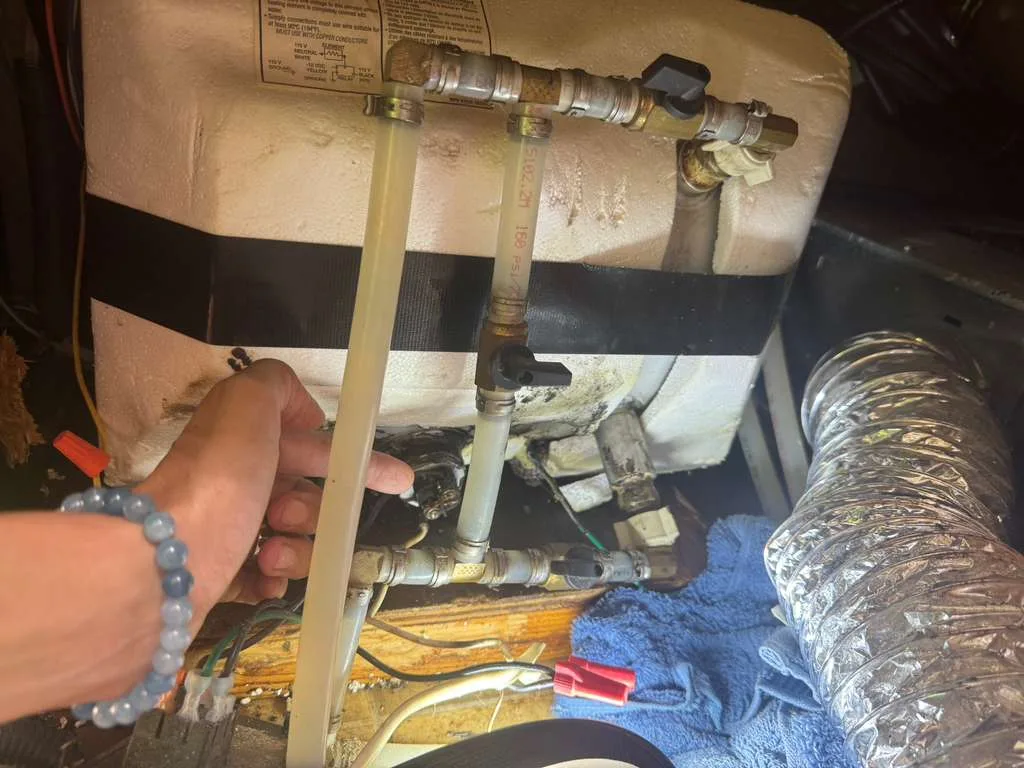
Marion County takes in a lot of coaches that drove down from somewhere cold, and the single most common first call is no hot water. Nine times out of ten nothing has failed. The water heater bypass valve is still in the winterize position from storage, so water never reaches the tank, and turning a valve fixes what the owner assumed was a dead appliance.
We are mobile - we come to your RV in Ocala. Call 888-759-1438.
Recommissioning gets a fraction of the attention that winterizing does, and it is the half where things actually go wrong.
This page is the de-winterizing sequence in the order it has to happen, because doing it out of order is how people damage an appliance that was working perfectly.
Why does no hot water usually mean a valve rather than a failure?
Because of what the bypass is for. When a coach is winterized the water heater is drained and taken out of the circuit so antifreeze does not have to fill a tank holding several gallons, and that is done with one or more valves that route water past the heater instead of through it. Come spring, the plumbing gets refilled and everything works normally - taps run, the pump primes, cold water is fine - except the tank is still isolated and still empty. The heater then either sits there doing nothing or, worse, fires with no water in it. So the sequence is not a guess, it is a check: find the bypass valves, confirm they are in the normal running position, confirm the drain plug or anode is back in and tight, then fill the tank and only afterwards switch the heater on. Every step in that order exists for a reason.
The Alexander Springs job: a Montana with the bypass still closed
A 2019 Keystone Montana High Country at Alexander Springs in the Ocala National Forest, reported as no hot water. The bypass valve had been left in the winterize position, so we re-plumbed the bypass, tested the ignition and had hot water inside forty-five minutes. It is worth being straightforward about why that is on this page: it is not an impressive repair, it is the most common call we take from coaches arriving for the season, and the owner had been told by two people that the water heater was finished. The thing that turns it from a five-minute check into a call-out is that nobody knows where their bypass valves are until they need them. Find them once, in daylight, when nothing is wrong, and photograph the correct running position. That photograph is worth a service call.
What order does de-winterizing have to happen in?

Water heater last, and that is the rule that prevents the expensive mistake. Start by refitting the drain plug or anode rod and confirming it is properly tight, since a heater filled with the plug loose empties itself into the compartment. Return the bypass valves to their running position. Flush the antifreeze out of the fresh system with the heater still bypassed, so several gallons of it do not end up in the tank for no reason. Then fill the water heater tank, open a hot tap and run it until the air is out and the flow is steady, which confirms the tank is genuinely full. Only then switch the heater on, gas or electric. Firing a heater with an empty or partly empty tank is what destroys an element, and it is entirely avoidable by leaving it until the end.
What else needs doing on a coach that sat all summer?
Sanitize the fresh system before drinking from it, because a tank that stood warm for months is not the same tank you left. Then work through the things that fail from standing rather than from use. Batteries lose capacity sitting under parasitic loads and want testing under load rather than at rest, since a battery that reads a healthy voltage can still collapse the moment anything asks it for current. The generator wants running under load rather than idled, as stale fuel and a varnished carburetor are the classic storage failure. Check the tires, which age on the calendar rather than on mileage and lose pressure quietly over months. Cycle the slides and awnings so seals that have taken a set in one position get moved. And look at the roof terminations, which hardened all summer with nobody up there.
Does camping in the national forest change anything mechanically?

It changes the demands rather than the faults. Forest sites are sandier, less level and more shaded than a commercial resort, and often have partial hookups or none, which shifts the load onto the systems that a full hookup normally covers. That means the battery bank, the inverter or converter, the generator and the fresh and waste tank capacity all matter in a way they simply do not at a full-service site. It also means the failures that show up are the ones you would never notice on shore power - a bank that will not hold overnight, a generator that will not start, a pump that has lost its prime. Sandy ground adds the usual leveling problem, since a small jack foot on soft sand sinks and a wide rigid pad under each one is the answer. Shade brings debris onto the roof and into the slide seals.
Where is the camping around Ocala?
Mostly springs, and it is some of the best in the state. Silver Springs State Park sits east of the city on the river. Alexander Springs Recreation Area and Juniper Springs Recreation Area are both inside the Ocala National Forest, which is where a large share of the county's camping actually happens. Because the state park is in the mix, the dump station question has a clear answer for that side - Florida State Parks publish that their full-facility campsites include water, electricity and a dump station as part of the campground - while forest recreation areas vary and are worth checking individually before you arrive. Marion County is also unusual in having no single dominant season: snowbirds come for the springs, the equestrian calendar runs much of the year and hunting season brings its own traffic, so availability here is steadier than in the resort counties.
Springs and forest camping around Ocala
Marion County is spring country, and a large share of the camping is inside the Ocala National Forest rather than at commercial resorts.
What a visit costs in Ocala
The service call is $299 and covers the trip out to your RV and the first hour on site. Work past that first hour is quoted to you once our technician has found the fault, before we carry on. Written estimates are free and you approve one before any work starts. Call 888-759-1438.
Sources for the Ocala detail
- Suburban water heaters operation guide (PDF) - the manufacturer's own draining, bypass and filling procedure behind this page
- Suburban - replacement anode rod - the anode that doubles as the drain plug and has to be back in before filling
- Silver Springs State Park - the state's page for the park east of the city
- Florida State Parks - RV camping - confirms full-facility campsites include water, electricity and a dump station
What Marion County owners book most
- Winterization and recommissioning - both directions, done in the right order
- RV plumbing repair - water heaters, bypass valves and sanitizing
- RV generator service - the classic post-storage failure
- RV electrical repair - batteries and charging after months standing
Ocala and Marion County RV questions
I have no hot water after storage. Is the heater dead?
Almost certainly not. The water heater bypass valve is usually still in the winterize position, so water never reaches the tank. Find the bypass valves, return them to the running position, fill the tank and run a hot tap until the flow is steady before switching anything on. It is the most common call we take from arriving coaches.
Where are the bypass valves on my RV?
Behind or beside the water heater, usually reachable from an interior access panel or the compartment behind it, and the arrangement varies by coach. Find them once in daylight when nothing is wrong, and photograph the correct running position. That photograph is genuinely worth a service call.
What order should I de-winterize in?
Water heater last. Refit and tighten the drain plug or anode, return the bypass valves, flush the antifreeze out with the heater still bypassed, then fill the tank and run a hot tap until the air is out. Switch the heater on only after that - firing it with an empty tank is what destroys an element.
Do I need to sanitize before using the water?
Yes. A fresh tank that stood warm for months is not the same tank you left, and antifreeze residue in the lines needs flushing out regardless. Sanitize, flush thoroughly, then use it. It is a straightforward job and it is the difference between water that is safe to drink and water you hope is.
My batteries read fine but everything dies at night. Why?
Because resting voltage says almost nothing about capacity. A battery that has sat under parasitic loads for months can show a healthy voltage and still collapse the moment anything draws current from it. Testing under load is the only check that means anything, and it is the standard finding on a coach coming out of summer storage.
Do you come out into the Ocala National Forest?
Yes, to the recreation areas and the dispersed sites, and it is a good share of the work here. Tell us the site and whether there is power available when you book, because most electrical diagnosis needs a supply to test against and a lot of forest sites have none.
Is there a dump station at the forest recreation areas?
It varies by site, so check the specific recreation area before you arrive. The state park side is more predictable - Florida State Parks publish that their full-facility campgrounds include a dump station as part of the campground, which covers Silver Springs.
When is the quiet time for booking service in Marion County?
There is not a strong one, and that works in your favor. Marion has no single dominant season - the springs, the equestrian calendar and hunting season spread the traffic across the year - so availability here is steadier than in the coastal resort counties where everything happens between November and April.