Mobile RV Repair in Daytona Beach Shores, Florida
A mile-wide barrier strip with water on both sides, and one side of the coach taking everything the wind carries.
Daytona Beach Shores is a barrier strip barely a mile wide with the Atlantic on one side and the Halifax River on the other, and the wind almost always comes off the ocean. That produces a failure pattern you will not see inland: one side of the coach takes the abrasion while the other stays clean.
We are mobile - we come to your RV in Daytona Beach Shores. Call 888-759-1438.
Almost every RV maintenance list assumes a coach wears evenly. On a narrow beachside strip it does not, and the difference is visible if you know to look for it.
That asymmetry is the useful thing about this page, because it changes both what fails and what is worth inspecting.
Why does one side of the coach wear out faster here?
Because the wind on a barrier strip is directional, and it carries sand. Air coming in off the Atlantic hits the ocean-facing side of the coach continuously, so that side is receiving both the salt aerosol and the fine grit while the sheltered side gets very little of either. Over a season the difference is measurable rather than theoretical: the seals, awning fabric and window gaskets on the exposed side are being sandblasted at low intensity for weeks, and rubber that has been abraded stops conforming even where it has not visibly torn. The practical consequence is worth acting on. If you have a choice of orientation on a site, put the awning and the slides on the sheltered side, and when you inspect the coach, look hardest at the side that faces the water rather than checking both equally and finding neither.
The Shores seal job: a Dutch Star sandblasted on one side
A 2019 Newmar Dutch Star at a beachside site near Daytona Beach Shores, with slide-out seals torn from wind-driven sand abrasion. We replaced the full slide seal kit and treated the new rubber. What made the job instructive was where the damage was: the seals on the ocean-facing slide were finished while the seals on the opposite room were still serviceable, on the same coach, of the same age, under the same owner. That is the asymmetry described above showing up as a repair bill. It also changes the advice we gave afterwards, which was not about seals at all - park with the slides away from the water where the site allows it, and rinse the exposed side more often than the sheltered one. Same coach, same seals, considerably longer life. It is the cheapest advice on this page and it saved that owner a second seal kit.
Should I still put the awning out on a beachside site?
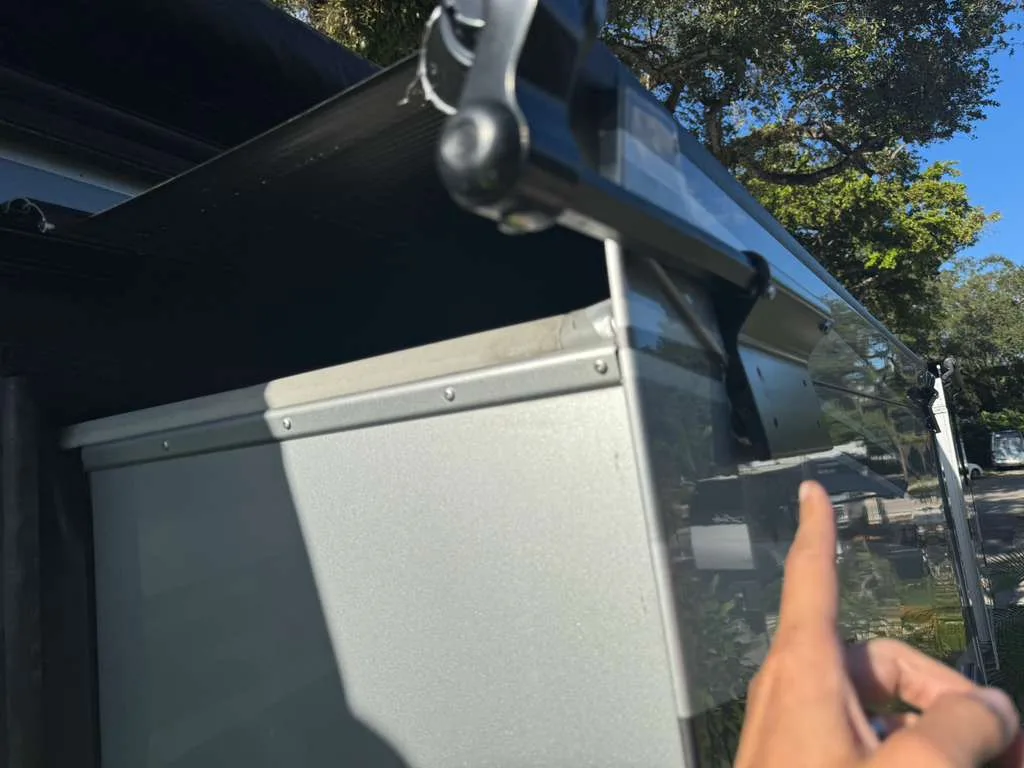
Yes, with more discipline about bringing it in than you would need inland. An extended awning on an exposed barrier strip is a large flat surface in wind that has nothing to slow it down for a thousand miles. Wind does not simply push it sideways either - it gets underneath, lifts, and turns the awning into a wing, at which point the load goes into the arms and the mounting rail rather than the fabric. That is why awning damage here so often arrives with sidewall damage attached, since a rail pulled away from the wall takes fasteners, sealant and sometimes a section of skin with it. Never leave it out overnight or when you leave the site, set a slope so water runs off, and treat tie-downs as flap control rather than storm protection, because that is all they are.
Where can I actually park an RV in the Shores?
Not on the strip itself, mostly. Daytona Beach Shores is a narrow residential and condominium corridor with very little space for a coach, so the realistic camping is north and south of it. Tomoka State Park sits inland on the rivers just above Daytona, and New Smyrna Beach Campground is a straightforward run south. Canaveral National Seashore continues down the barrier island beyond that and is worth knowing about for its own sake. Because most of the camping in this county is state park, dumping is a solved problem: Florida State Parks publish that their full-facility campsites include water, electricity and a dump station as part of the campground. What that means is a Volusia beachside trip needs a plan for parking rather than a plan for waste, which is the opposite of most places.
What should I inspect after a season on the coast?
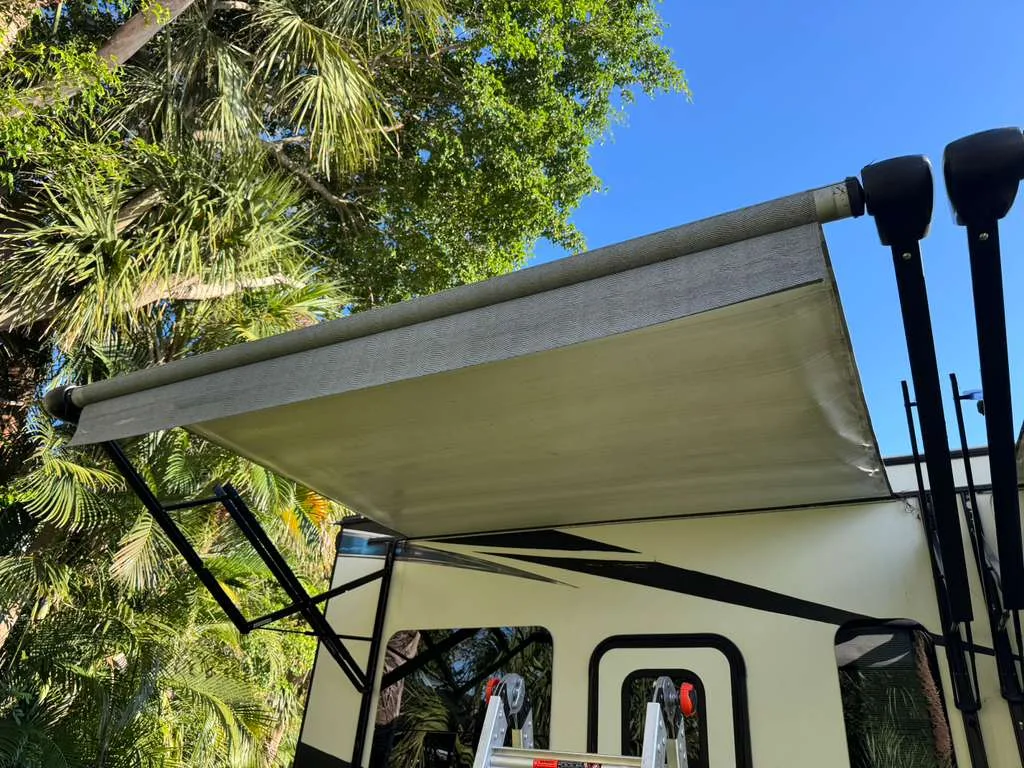
The exposed side first, and specifically the rubber. Slide wipers and bulb seals that have gone hard, taken a permanent set or stopped springing back when pressed are finished even where they look intact, and abrasion brings that on faster than sun alone. Then the awning fabric where it sits in the roll, since grit trapped there grinds every time it opens. Then the shore power inlet and plug, because a corroded connection develops resistance, resistance under load makes heat, and heat makes the connection worse until something melts. Then the hydraulic jack rods, wiped clean and looked at for scoring. Finally the roof terminations, which fail here for the ordinary Florida reason rather than a coastal one but fail no less often for it. That is one visit and it covers everything this location does to a coach.
Do you come out to beachside sites in this area?
Yes, to the parks north and south of the Shores, to the condominium and residential addresses along the strip where a coach is parked for a visit, and to storage yards inland. What is worth mentioning when you book is the wind, because on an exposed barrier site it decides what can safely be done that day - roof work and awning work in particular. Access is the other thing to sort in advance: several properties along the strip have restrictions on where a coach can sit and for how long, and it is far better to establish that on the phone than to find out with a technician on site. Give us the address or the park and site number and we will work it out before anyone sets off. Storage yards inland are the other half of the work here, and those usually need the facility notified rather than the owner present.
Where to park near Daytona Beach Shores
The Shores itself is a narrow residential strip with very little RV parking, so the practical sites are north and south of it.
What a visit costs in Daytona Beach Shores
The service call is $299 and covers the trip out to your RV and the first hour on site. Work past that first hour is quoted to you once our technician has found the fault, before we carry on. Written estimates are free and you approve one before any work starts. Call 888-759-1438.
Sources for the Daytona Beach Shores detail
- Tomoka State Park - the nearest state park camping to the Shores, with its own page for facilities
- Florida State Parks - RV camping - confirms full-facility campsites include a dump station
- Lippert - awnings support - manufacturer documentation for awning hardware and manual override
- Lippert - Master Owner's Manual, Slide-Outs - the wiper and bulb seal arrangement behind the asymmetric wear described above
What fails first on a beachside coach
- RV awning service - fabric, arms and the rail through the sidewall
- RV slide-out repair - wiper and bulb seals on the exposed side
- RV electrical repair - shore power inlets and corroded terminals
- RV inspections - the end-of-season coastal check
Daytona Beach Shores RV questions
Why did the seals on one slide fail and not the other?
Because the wind here is directional. On a barrier strip the ocean-facing side of the coach takes the salt and the sand while the sheltered side gets very little, so identical seals of identical age wear at completely different rates. Park with the slides away from the water where the site allows it, and inspect the exposed side harder than the other.
How windy does it need to be before I bring the awning in?
Sooner than instinct suggests on an exposed strip. Wind gets under an extended awning, lifts, and turns it into a wing, and once that starts the load goes into the arms and the rail rather than the fabric. There is no penalty for retracting an awning that turned out not to need it, and there is a large one for the reverse.
Is there anywhere to camp in Daytona Beach Shores itself?
Not really. The Shores is a narrow residential and condominium strip with very little room for a coach. The practical sites are north at Tomoka State Park or south toward New Smyrna Beach. If you are visiting someone on the strip, check the property's rules on where a coach can sit before you arrive.
Does the salt here reach the inland side of the coach too?
Some of it, because a barrier strip is only a mile wide and salt aerosol does not stop at the center line. The difference is degree rather than presence: the exposed side gets far more, which is why it fails first, but a rinse should cover the whole coach and particularly the underside rather than only the side facing the water.
My awning rail has started to weep after a windy season. Urgent?
Yes, more than it looks. The awning rail is fastened through the sidewall and sealed, and those fasteners work under load every time the awning is used. A loose rail fastener or failed sealant along the rail is a genuine water entry point into the wall, and water inside a wall is a much bigger repair than an awning.
Do you work at condominium and residential addresses on the strip?
Yes, subject to whatever the property allows. Several buildings along here restrict where a coach may sit and for how long, and some prohibit work being carried out on it. Establishing that when you book rather than on the day is what keeps it to one visit.
Is there a dump station nearby?
Florida State Parks publish that their full-facility campgrounds include a dump station as part of the campground, which covers the state park camping in this county. Check the specific loop you are booked into, because facilities can vary within a park and the assumption is not worth making with full tanks.
How far do you travel along this stretch of coast?
From Ormond Beach down through Daytona, the Shores, Port Orange and New Smyrna Beach, plus inland across Volusia County. Travel is inside the service call rather than charged separately, so where you are on the strip does not change the price of the visit.